

Bisbee, located in the Mule Mountains between the San Pedro and Sulphur Springs valleys in southeastern Arizona, was Arizona’s premier mining camp by 1900 with its signature mine, the Copper Queen.
Named after San Francisco Judge DeWitt Bisbee who, although responsible for securing financial backing for the Copper Queen Mine, probably never visited the Mule Mountains.
Contrasting fortunes beset several of the personalities who influenced Bisbee’s early mining history including George Warren and James Douglas.
Prospectors were attracted to the colorful outcroppings of rich oxide and carbonate ore bodies located in Tombstone Canyon. An outcrop of cerussite (lead carbonate) in limestone from Bucky O’Neil Hill was discovered by army scout Jack Dunn while employed in a scouting party from Fort Bowie under the command of Lieutenant Rucker in 1877.
Dunn later selected Warren, the namesake of the Warren Mining district, to grubstake his discovery, supplying him with money, food and supplies in exchange for a share of his mineral finds.
Warren took Dunn’s discovery as his own venture, enlisting the finances of others to cut development costs, multiply his holdings and increase his profit margin at a later sale. Dunn later retired as a scout, never having profited from his discovery and leaving Arizona for the east in 1885.
By 1880 more than 100 claims were recorded or staked as an influx of prospectors and speculators further developed Mule Gulch. Ore was freighted from Bisbee to Fairbank and transported by rail across country to Phoenixville, Pennsylvania, for processing.
Local wood from the slopes of the Mule Mountains and distant Huachuca Mountains to the west fueled the Rankin & Brayton smelter at the foot of the Copper Queen Glory Hole.
Although Warren held one-ninth interest in the Copper Queen Mine, he lost it and a potential fortune worth millions in a foolhardy wager with Tombstone Canyon neighbor George Atkins wherein he claimed he could outrun a man on horseback at 100 yards. The affair occurred in front of an audience in the town of Charleston, located west of Bisbee along the banks of the San Pedro River on July 4, 1880.
Afterward, Warren squandered the profit made on his remaining mining properties living out his years in Bisbee as a drunken derelict.
The Copper Queen Mine went through a succession of owners eager to sell for a profit while its ore grade remained high, assaying in some cases at 22 percent copper per one-half ton.
Development of the Copper Queen Mine began in earnest in 1881, when James Douglas, then a metallurgical consultant for Phelps, Dodge & Co. and superintendent of a copper smelter and refinery complex in Phoenixville, saw samples of its ore.
Phelps, Dodge & Co. sent Douglas to Arizona to examine several mining claims including the Atlanta in Bisbee and the Longfellow near Clifton.
Upon the advice of Douglas, Phelps, Dodge & Co. purchased the Atlanta claim adjacent to the Copper Queen in 1881 for $40,000 subsequently investing $60,000 on exploration. No profit was made until 1884 when at 210 feet below the surface of the barren limestone was replaced with a copper-rich ore body of malachite that shortly thereafter was accessed by a crosscut from the Copper Queen Mine.
Litigation between owners of both the Copper Queen claim and Atlanta claim was resolved upon an amicable merger between the two resulting in the formation of the Copper Queen Consolidated Mining Co., later becoming a subsidiary of Phelps, Dodge & Co.
Douglas, who wisely accepted a share of the mine instead of cash for his initial consulting services, was handsomely rewarded with prosperous stock and the presidency of the Copper Queen Consolidated Mining Co., which was only the beginning of both his and Phelps Dodge’s successes in Bisbee.
Sources
Bailey, Lynn R. 1983, Bisbee: Queen of the Copper Camps.
Douglas, James. 1899, The Copper Queen mine, Arizona.
Epler, William C. 1978, Bisbee Vignettes.
Graeme, R.W. 1987, Bisbee, Arizona Dowager Queen of Mining Camps: A Look at Her First 50 Years.
Francaviglia, Richard V. 1982, Copper Mining and Landscape Evolution: A Century of Change in the Warren Mining District, Arizona.
Mine tales: Contrasting fortunes in the Mule Mountains
1 of 3
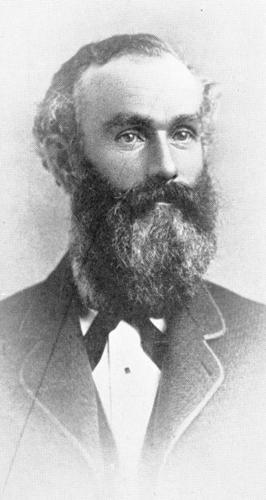
Jack Dunn, discover of the Bisbee ore deposits in 1877 near Castle Rock in the Mule Mountains. (Courtesy of Arizona, Prehistoric, Aboriginal, Pioneer, Modern)
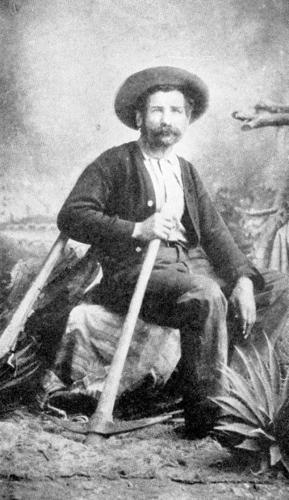
George Warren, whose portrait perhaps influenced the likeness of the miner that later appeared on Arizona’s official state seal. (Courtesy ofArizona, Prehistoric, Aboriginal, Pioneer, Modern)
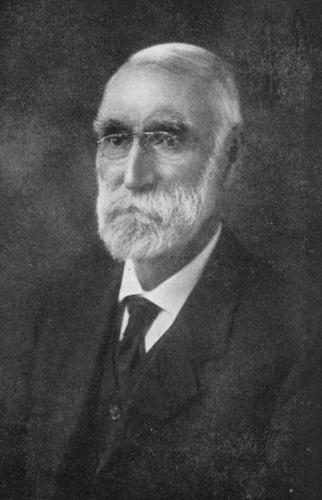
James Douglas had the insight to recognize the mineral potential that existed below the surface of both the Atlanta and Copper Queen Mines (Courtesy of Who's Who in Arizona)


