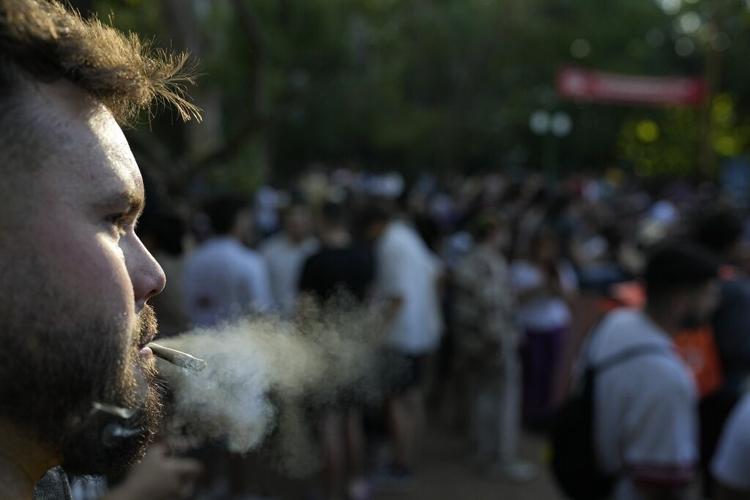
PHOENIX — State senators have decided the right to smoke marijuana ends where a neighbor's nose begins.
On a 20-9 bipartisan margin Monday, the Senate agreed to make it a crime if there is "excessive marijuana smoke or odor'' and if the person creating the nuisance either acted intentionally or "knowingly and substantially interferes with the comfortable enjoyment of life or property.'' That could land someone in jail for up to four months with a $750 fine.
But Sen. J.D. Mesnard could not get colleagues to approve a broader proposal, which would have declared all marijuana smoke and odor wafting from a neighbor's yard to be a hazard to public health — and subject to jail time and fines. So now his Senate Bill 1725 pretty much handles these disputes as a civil matter between neighbors.
People are also reading…
The Chandler Republican said he and his family have been forced inside when one or more neighbors — he doesn't know who — have chosen to light up in their private yards.
Only thing is, a 2020 state law allows any adult to purchase and use marijuana.

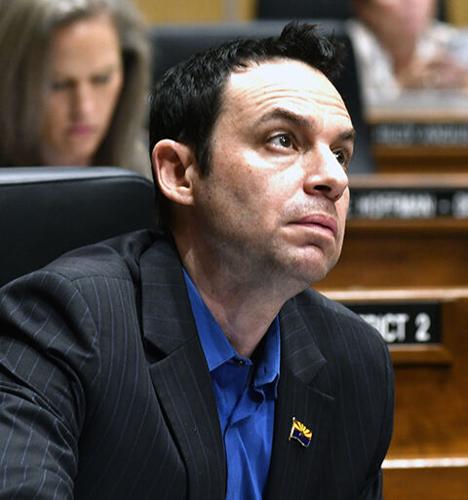
Sen. J.D. Mesnard
That voter-approved measure does restrict smoking in public places. But there are no limits on people using marijuana on their own properties, including outdoors.
There are also laws already making it illegal to recklessly create or maintain a condition that "endangers the safety or health of others.''
But Mesnard said that's not sufficient to protect families like his, which is why he proposed involving the police and criminal penalties. That was not going to get the necessary votes for approval, however.
The new version defines excessive smoke and odor as something "detectable by a reasonable person of ordinary sensibilities on other private property'' that occurs for more than 30 consecutive minutes on a single day.
'Healthy air is a right'
Tempe Democratic Sen. Mitzi Epstein said she doesn't think creating a new state law is a good solution for a problem among neighbors.
"I'd like for neighbors to come to a friendly agreement, maybe to decide what days they can smoke and what days they will not,'' she said, suggesting that should apply to anything: tobacco, pork steaks, cannabis, wood.
"Anything you are smoking stinks,'' Epstein said.

State senators have decided the right to smoke marijuana ends where a neighbor's nose begins.
But she said there are larger issues at play — enough for her to vote to support the proposed new law.
"We must have a right to breathe clean air,'' she said. "The right of a person to smoke ends at a neighbor's nose, in my opinion. And health is a right. And healthy air is a right.''
The legislation also drew support from Sen. Theresa Hatathlie, who said the smoke that comes into her property interferes with the ability of her family to use its yard.
"And I don't like it,'' said the Tuba City Democrat. "I don't drink, I don't smoke, I don't consume any of these things. And so I have to remove myself; I have to remove my granddaughter because I don't want her impacted.''
'Where does that end?'
Tempe Democratic Sen. Lauren Kuby said she understands how smells can be offensive. But she questioned if creating a new state law is the way to go.
"Where does that end?'' she asked, citing her own experience: "I'm always shouting about how I'm a vegan. Well, the smell of barbecued meat? You may all love it. But it's really disgusting. It turns my stomach.''
Phoenix Democratic Sen. Analise Ortiz pointed out that the 2020 law allowing adults to use marijuana was approved by voters. Lawmakers are constitutionally precluded from altering anything that restricts that right, she said.
"This bill makes the consumption of marijuana on a person's own property a potential Class 1 misdemeanor or criminal petty offense,'' Ortiz said. She said it could lead to someone being evicted from an apartment by "an overzealous landlord.''
Mesnard has conceded that the voter-approved law legalizing marijuana may be a legal hurdle for SB 1725.
So he crafted a backup plan, putting the same provisions into Senate Concurrent Resolution 1048, a measure that would go on the November ballot. That proposal, which would bypass any potential veto by Democratic Gov. Katie Hobbs, was approved by the Senate on a 16-14 margin. It, too, now goes to the House.
Howard Fischer is a veteran journalist who has been reporting since 1970 and covering state politics and the Legislature since 1982. Follow him on X, Bluesky and Threads at @azcapmedia or email azcapmedia@gmail.com.