

Hello, out there, dear readers. My column, “Looking Forward to Yesterday,” in Saddlebag Notes is now in its ninth year. I would not be published without your years of support, feedback, and inspiration. Many thanks for your kind messages to my editor at Saddlebag Notes and to me. Please let her know what you think: Stephanie Caffall-Smith at SCaffallSm@tucson.com and me at franchise@att.net.
At 9:45 AM on 9/11, White House loudspeakers came to life. Most in the complex didn’t know they existed. People were told to evacuate the White House and the Eisenhower Executive Office Building after securing classified equipment and to find a place to hide. Executives were forced to go underground to the bunker complex below the East Wing. Many ended up on the street because no procedure was in place. First Lady Laura Bush was taken to the secure bunker under the East Wing after the second airplane struck the Towers. She said she heard a “woosh” as the heavy steel door closed in the tunnel. That is one of the more recent uses of the White House's underground tunnels.
Back in the day, within days of the Japanese attack on Pearl Harbor on December 7, 1941, the Secret Service realized the White House could be a target. The building is made of soft sandstone, offering little to no protection. Days after Pearl Harbor, work began on an inclined tunnel from the White House to the Treasury Building basement to ferry President Franklin Roosevelt, who was wheelchair-bound, to safety.
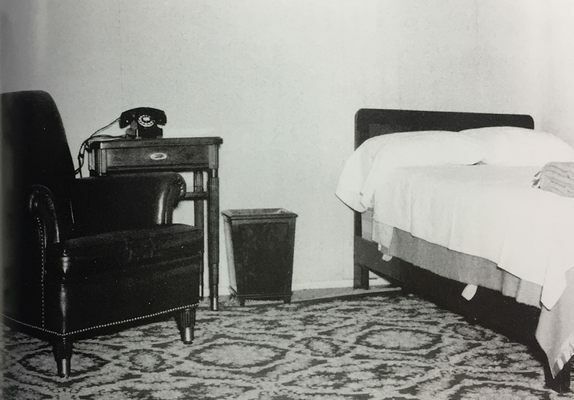
The Treasury was built in 1859-60 on immense granite foundations, with bank vaults set in solid stone and multiple barrel-vaulted basement levels. A vault in the second-floor basement was converted into a 10-room Presidential apartment suite, including a command center and living quarters. Supplies were stockpiled for Roosevelt, his family, and staff.
In 1942, a presidential bunker was built. It measured 1,600 square feet and had 7-foot-thick walls to protect against bombing. The two-story East Wing was built over the bunker. Recent news reports indicate that the President's Emergency Operations Center (PEOC) was destroyed during the recent clearing of the East Wing to make way for a proposed White House Ballroom.
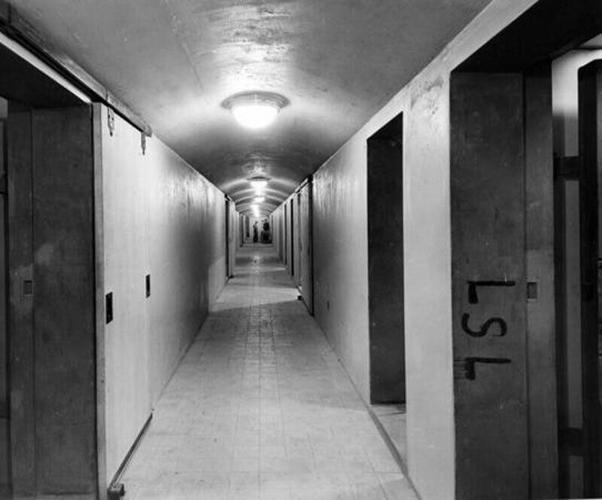
The primary White House tunnel, which most are aware of, is a 761-foot structure that connects a sub-basement of the East Wing to an area near the US Treasury Building. The tunnel is 7 feet tall and 10 feet wide. It is built in a zigzag pattern to resist the concussive effects of a bomb blast. The Secret Service guards the tunnel, which is equipped with cameras, alarms, and cipher locks.
Over time, it became known as “The Tunnel of Love” because it was used by people, including military personnel, to exit the White House without public or press attention. It has been reported that the tunnel was used by male White House aides to sneak their girlfriends and mistresses into the building. President Johnson used the tunnel to avoid Vietnam War protesters when departing the White House.
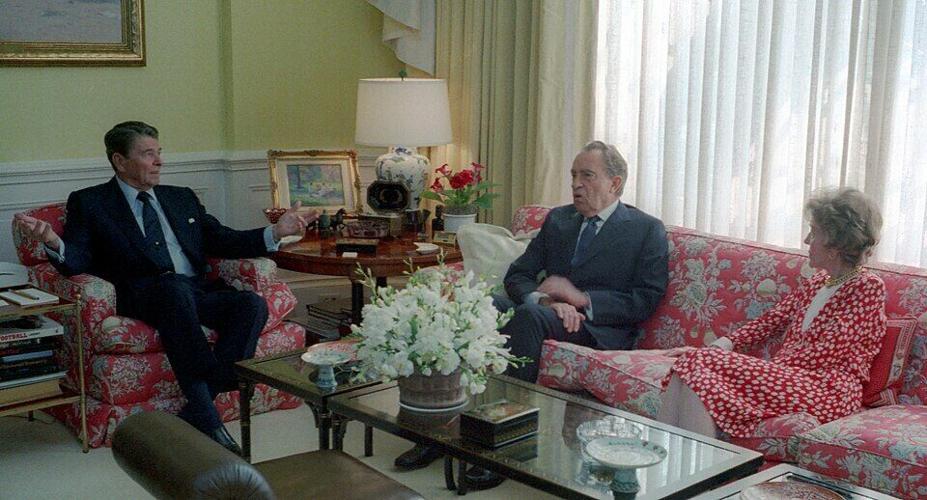
According to contemporary news reports, a 150-foot tunnel was built from the Oval Office to a location in the East Wing. The tunnel is purportedly accessed through a door adjacent to the president’s restroom and leads to a staircase that descends into the tunnel. This tunnel was referred to as “Project Zip” to provide the president with a private exit to the PEOC (now demolished) in an emergency. During the Reagan presidency, the tunnel was allegedly used to allow Richard Nixon discreet access to the Oval Office for one last consultation with Reagan.
During the Civil War, General Winfield Scott drafted plans to evacuate Abraham Lincoln to the Treasury Building if the South attacked the White House. Following the Battle of Fort Sumter in 1861, the Treasury Building became the last refuge in the event of an attack on Washington. Gen. Scott considered it the “last stand” of the federal government if the capital city was overrun. Sandbags surrounded the building, and Union soldiers stood guard inside and outside, protecting the underground vaults.
During my time in Washington, I became aware of several related tunnels. A network of tunnels runs from the Treasury Building to several banks along Pennsylvania Avenue and is used to safely transfer cash. One of my favorite restaurants, Joe’s Stone Crab Restaurant, located at the corner of 15th and H Streets, is one of the most elegant eateries in the city and has a tunnel that ends in its basement. It’s in the historic 1907 Union Trust Bank building, a block and a half from the Treasury Department. The restaurant preserved the marble columns for the dining room, paying homage to the bank’s remarkable architecture.
-30-
Award-winning writer Jerry Wilkerson lives in SaddleBrooke. He is a former press secretary for two U.S. Congressmen and a former correspondent for CBS NewsRadio 780 and the Chicago Daily News. Wilkerson is a Navy veteran and has served as a Police Commissioner. Email: franchise@att.net


