

What’s doing this?
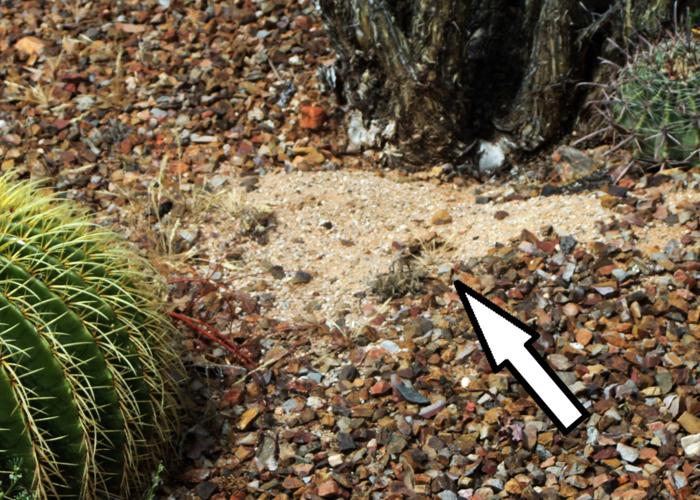
One thing that you soon notice if you have a gravel or dirt yard is that it is pocked with holes. Maybe it’s just dirt spread out or in small piles on top of your landscape gravel. What is going on? Who’s making these holes? In the Sonoran desert there are many critters living much of the time beneath the surface of the ground. Here in SaddleBrooke it is most likely:
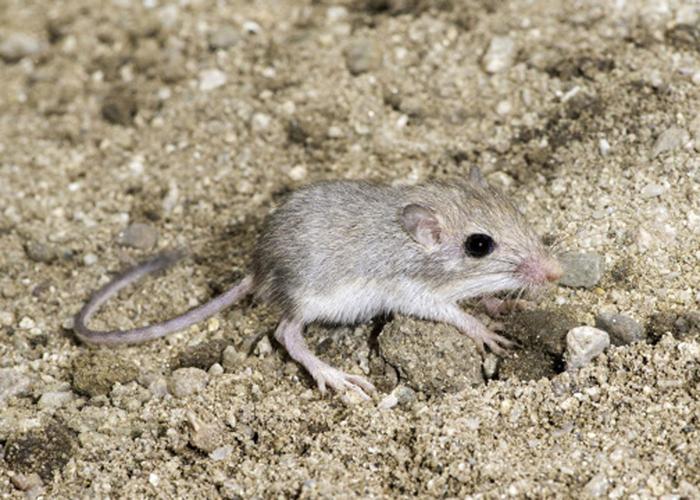
Bailey's pocket mouse, or (Chaetodipus baileyi) is a species of rodent in the family Heteromyidae. It is found in Arizona, California, New Mexico and Mexico. This mouse has a long, tufted tail and coarse, grayish fur. However it’s not really a mouse, but a rodent that, along with several other species of pocket mice and kangaroo rats, belongs to a unique order of mammals known as “Heteromyids” that are neither mice nor rats. It measures about 3 inches from the tip of its nose to the base of its tail and its very long tail adds another 4 inches or so to its total length.
Bailey’s Pocket Mouse
Bailey's Pocket Mice are solitary, nocturnal, and live in burrows. Pocket Mice mostly eat seeds, using their "pockets," fur−lined, external cheek pouches, to bring seeds to their nests, where they store them. The fur lining of the cheek pouches is an adaptation for desert life: the seeds the rodents carry do not absorb body water the way they would if they were carried in the mouth. Bailey's Pocket Mouse is the only Sonoran desert rodent able to eat jojoba seeds, which are toxic to most mammals.
Bailey’s Pocket Mice do not interact with humans. They don’t invade structures, chew on drip lines and they don’t seek out humans’ food. These animals, like a few other desert species, don’t need to drink in order to survive. They do just fine extracting moisture from their food. And, like hamsters, these animals can store food in their cheek pouches.
They forage mainly on seeds of shrubs and forbs but also eats insects and green vegetation seasonally. In Arizona, Bailey's pocket mouse forage mainly in gravelly soil and are active yearlong although individuals may become torpid over short periods during high summer temperatures.
Predators include owls, coyotes, badgers, snakes and landscapers.
 Japanese company invests in mine near Mount Lemmon


