

DUBAI, United Arab Emirates — A young Saudi woman's plea for help after she was stopped in an airport in the Philippines en route to Australia where she planned to seek asylum has triggered a firestorm on social media and drawn attention to the plight of female runaways.
For runaway Saudi women, fleeing can be a matter of life and death, and they are almost always doing so to escape male relatives.
Under Saudi Arabia's conservative interpretation of Islamic law, a male guardianship system bars women from traveling abroad, obtaining a passport, marrying or even leaving prison without the consent of a male relative. Most Muslim-majority countries do not have similarly restrictive guardianship laws.
The mystery around what triggered Dina Ali Lasloom's cry for help has only added to concerns for her safety.
In a video that appears to be shot with a mobile phone, the 24-year-old says her passport was taken from her at Manila's international airport in the Philippines on Monday on her way to Australia. She alleges that Philippine airport officials confiscated her passport at the request of Saudi diplomats until her relatives could arrive to take her to Saudi Arabia.
People are also reading…
"If my family come, they will kill me. If I go back to Saudi Arabia, I will be dead. Please help me," she pleads in the video. Lasloom says she is recording the video at the airport so the public "know that I'm real and here."
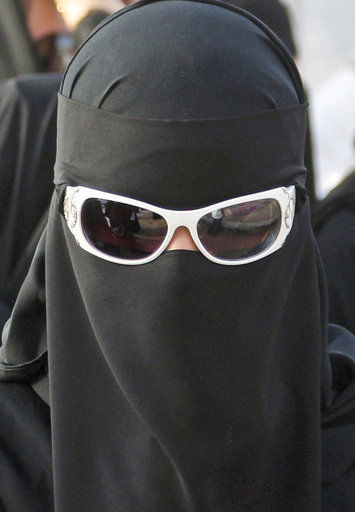
Wearing a beige coat, the woman does not show her face in the video. Most women in Saudi Arabia cover their face with a veil known as a niqab. Many do so believing it is a religious obligation, in addition to covering their hair and body. Some also cover their faces due to social pressure.
"I am kept here as a criminal. I can't do anything," Lasloom says in the video. The Associated Press could not independently verify the video's authenticity.
Women's rights advocates in Saudi Arabia say Lasloom was ultimately forced to board a plane to the kingdom with two of her uncles, who flew from Riyadh. They said authorities then took her to a women's shelter because of the attention around her case.
She cannot leave, however, without a male guardian's permission. Activists say only officials and relatives can contact her there.
Although there are no official statistics, anecdotal evidence from cases reported in Saudi media and from human rights advocates suggest dozens of Saudi women — some with their children— have attempted to flee abroad in recent years. These publicized cases have brought increased attention to what activists say has become a "trend".
This is despite gains made in recent years for Saudi women, including the right to run in, and vote in, local elections in 2015, and a government effort to increase women's participation in the workforce.
Women who have managed to flee abroad say they were barred from marrying or forced into marriages. Others have told rights groups that male relatives were abusive and confiscated their salaries.
"Many of them, they just want to be free," said Moudi Aljohani, who says she spoke with Lasloom when she was at Manila airport. Aljohani herself fled the kingdom last year and is seeking asylum in the U.S.
Aljohani, 26, says her family felt she'd become "too Americanized" after a year of study in Miami. What was supposed to be a weeklong visit home turned into months of confinement, she says.
"The eight months of being locked in Saudi Arabia has created an angry, rebellious person inside of me that I don't want to be silent anymore," she said. "What happened to me in Saudi Arabia created a person who just wants to speak out."