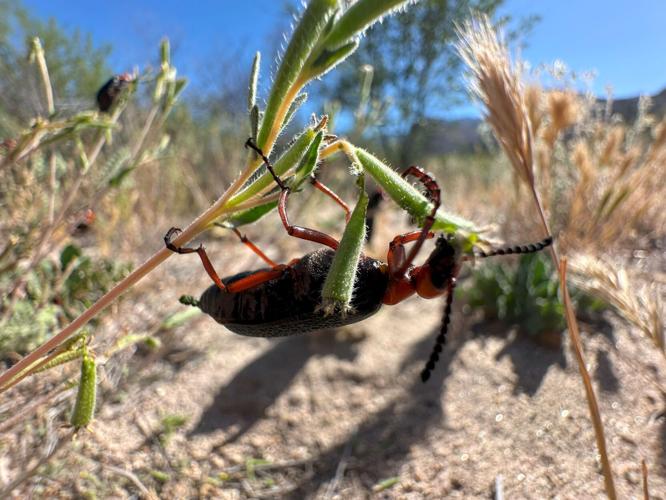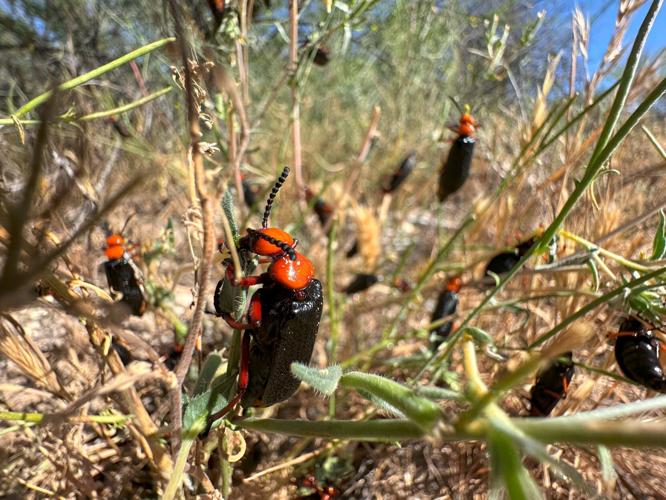
Judging by a recent swarm spotted at Catalina State Park, it's blister-beetle season in Southern Arizona. And as the name of the bug suggests, it's best to look but not touch.
Arizona is home to almost 150 different species of blister beetles, and they all share one unpleasant characteristic: a toxic defensive chemical called cantharidin in their blood that can cause severe skin irritation and blistering.
The ones now being seen at the state park on the eastern edge of Oro Valley are an orange-and-black variety commonly known as master blister beetles or desert blister beetles.
“You're most likely seeing the mating swarms that happen this time of year,” said entomologist Gene Hall, who manages the University of Arizona’s massive insect collection.
People are also reading…
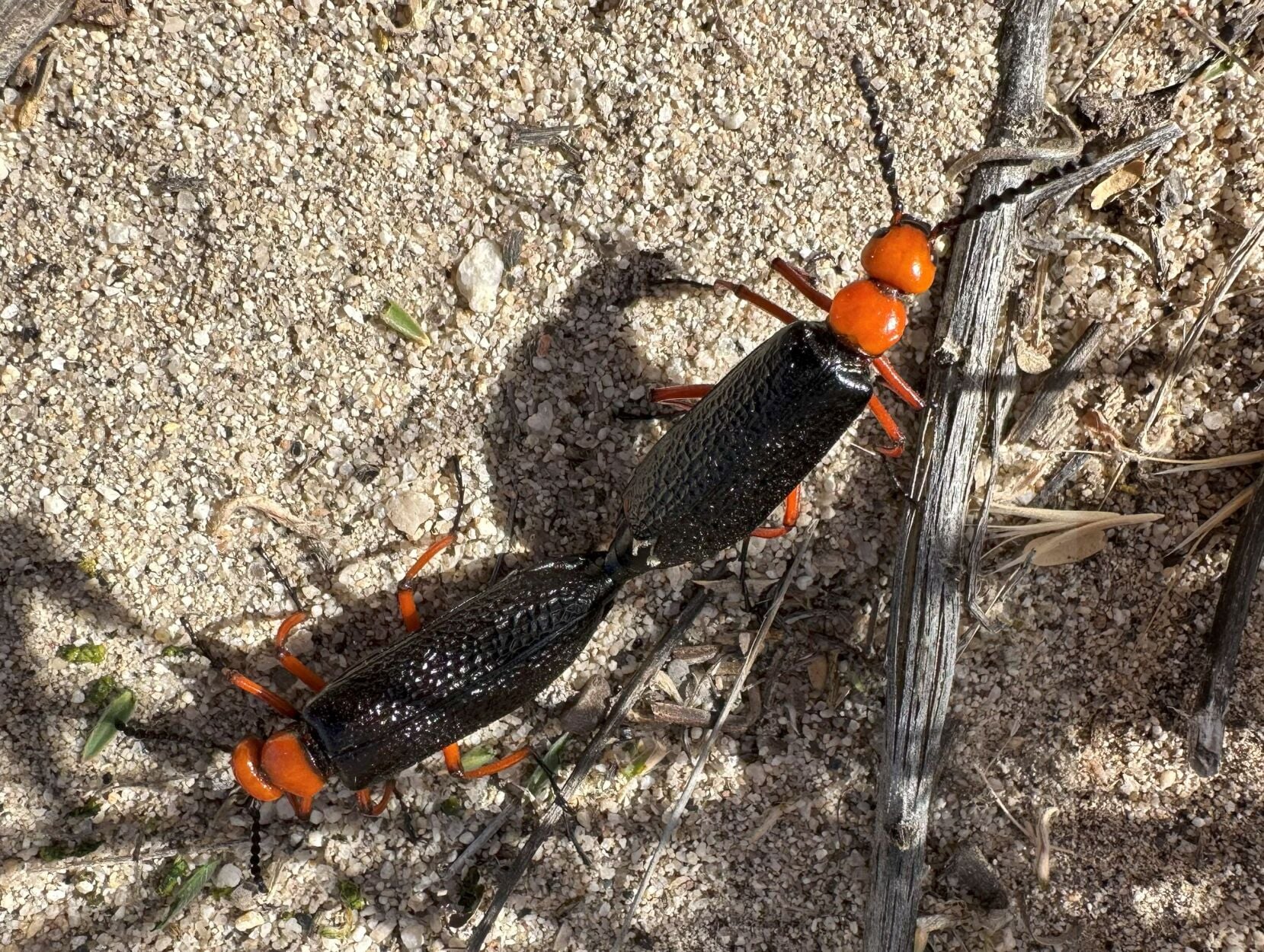
These two mating master blister beetles, seen at Catalina State Park on Friday morning, could stay attached to each other for a day or more.
Master blister beetles typically emerge in spring to find mates and feed on brittlebush and other native flowers. They can grow to as much as two inches long, with bright red-orange coloring on their heads, legs and upper thoraxes and textured black shells over their wings.
“They’re kind of freaky looking,” said Catalina State Park manager Steve Haas.
He first noticed them about three weeks ago, near the junction of the Canyon Loop Trail and the Sutherland Trail. He’d never seen beetles like that — let alone so many of them — in his 15 years with the park, he said.

A swarm of master blister beetles seen Friday at Catalina State Park.
“I just kind of did a doubletake. They definitely stand out, especially when there’s a bunch of them on one little bush,” Haas said.
By Friday morning, the swarm had moved to a different part of the Canyon Loop, where hundreds of the beetles could be found feeding and fornicating in the brush along the trail, less than half a mile from the parking lot.

Master blister beetles feed on plants at Catalina State Park on Friday.
Though they can fly, these bugs seemed mostly content to scuttle along the ground and climb into the low weeds and grass in search of blossoms to eat.
Some of the males could be seen courting females by climbing on their backs and brushing their heads with their antennas. Others were being dragged along behind their still-foraging mates, since two bugs can stay attached to each other for hours — sometimes a day or more — once mating begins.
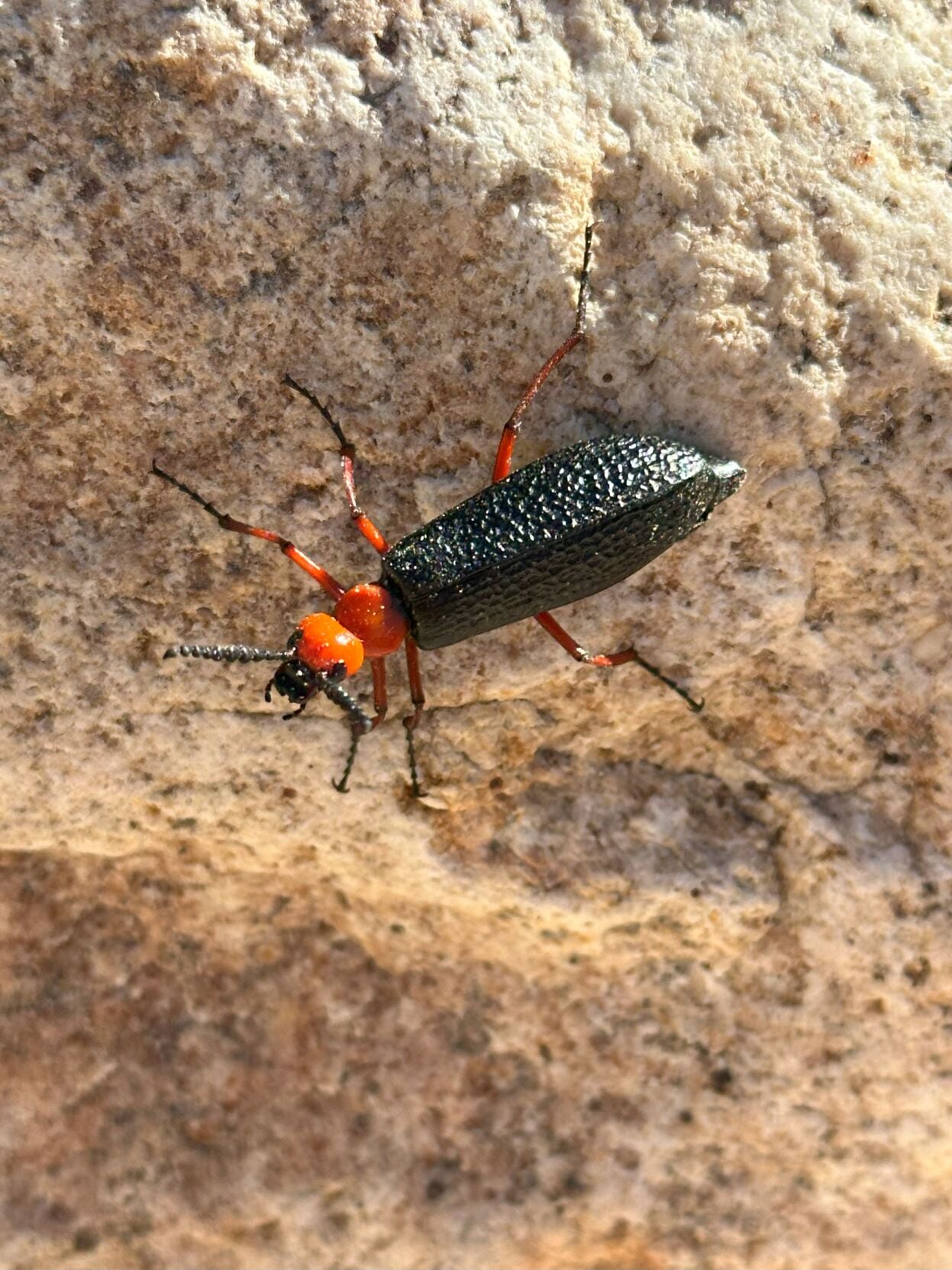
A master blister beetle crawls across a rock at Catalina State Park on Friday.
The other species most commonly seen in the Tucson area is the iron-cross blister beetle, which runs slightly smaller than the master and is easily distinguished by its red head and yellow back marked by a black cross.
According to Hall and other U of A researchers, master blister beetles mostly stick to the desert and don’t often turn up in agricultural fields, but the adult bugs can do some damage if enough of them invade a garden or a crop.
The bigger risk they pose is by contaminating food and forage products during harvesting. If enough of the beetle’s toxin is ingested, it can cause illness or death, especially in horses, though instances of such poisoning are rare and usually the result of hay bales with dead beetles in them.
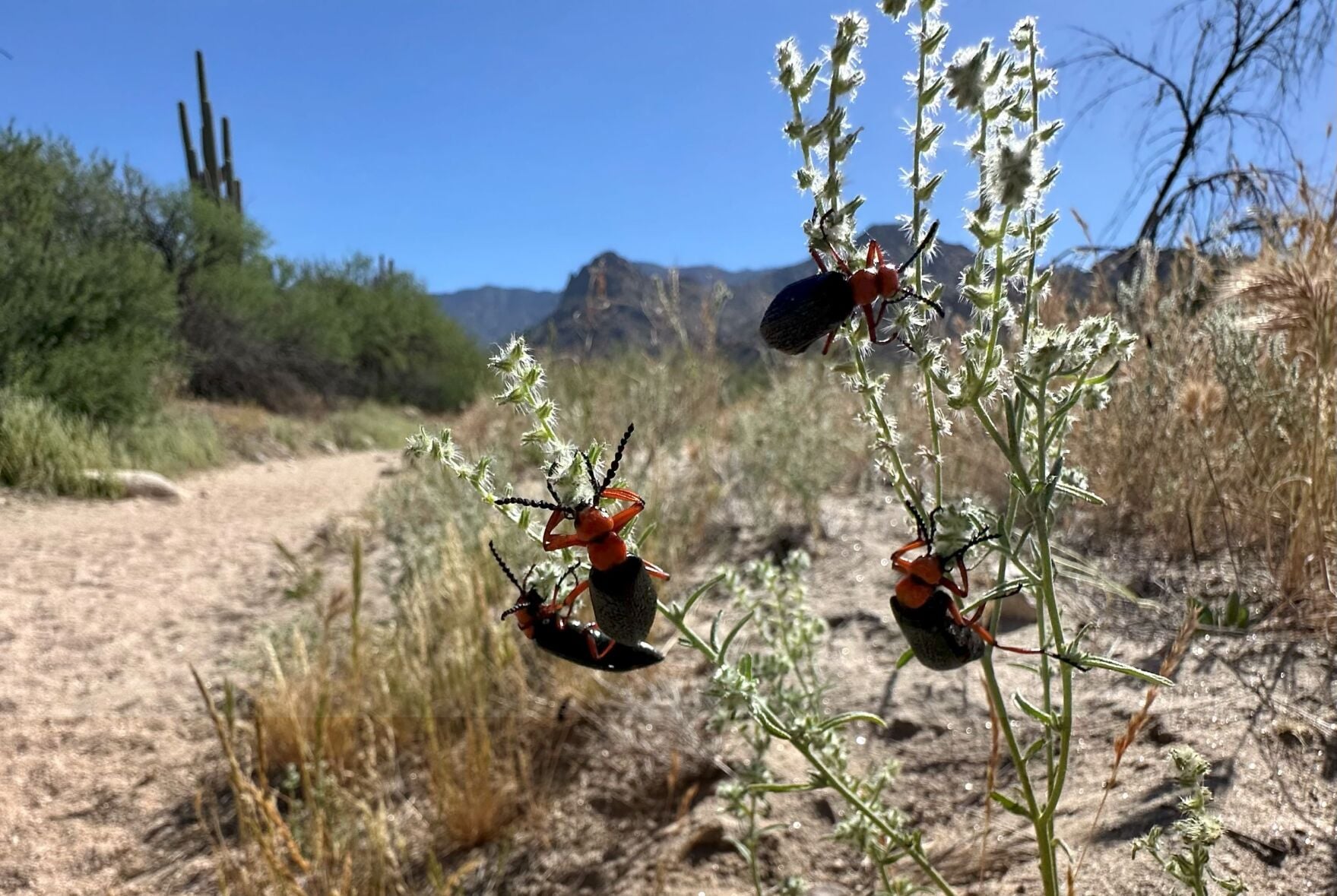
Master blister beetles dine on plants growing along the Canyon Loop Trail at Catalina State Park on Friday.
An informational poster produced by Hall and company notes that while no antidote exists for cantharidin poisoning, not all species produce the same amount of the toxin. Little is known about how cantharidin levels vary in individual beetles, the researchers said.
In other words, if you spot one during your hike, feel free to snap a picture, but don’t pick it up.