

(Originally published Nov. 30, 2008)
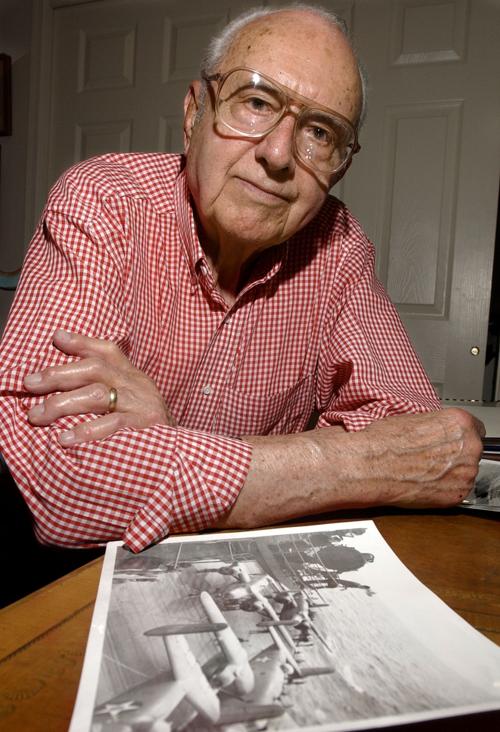
World War II hero David "Davey" M. Jones - one of the famed Doolittle Tokyo Raiders - died Nov. 25, 2008, in Tucson at the age of 94.
Jones, a University of Arizona alumnus, retired from the Air Force as a two-star general in 1973 after a long and decorated military career. He received the Distinguished Flying Cross, Purple Heart and numerous other honors.
He was one of the raiders who used B-25 bombers to hit targets in Japan in April 1942, a few months after Japan's attack on Pearl Harbor.
"Medium bombers had never been flown from a carrier, and sailing so far into enemy territory endangered the U.S. Navy task force," the U.S. Air Force fact sheet on the raiders says of the high-risk operation.
People are also reading…
Jones, who was 28 at the time of the raid, recalled the one-way mission in an April 2004 Arizona Daily Star article.
"You knew when you started that we didn't have enough fuel to make it, period. But you couldn't think about that," he said.
After the raid, Jones bailed out in China, where the Chinese helped him return to the United States, the U.S. Air Force's biography of him says.
In 1944, Hollywood paid homage in the film "Thirty Seconds Over Tokyo," starring Spencer Tracy as Doolittle.
Another Doolittle Raider, retired Air Force Master Sgt. Ed Horton Jr., died last week at age 92, the day after Jones. He died in Florida, The (Panama, Fla.) News Herald reported.
The U.S. Air Force's biography of Jones tells of other events in his military career:
In December 1942, he was shot down over Bizerte, North Africa, when he was second in command of a light bomb group.
He spent 2 1/2 years as a prisoner of war in Stalag Luft III and led the digging team on the tunnel "Harry," the basis for the movie "The Great Escape," starring Steve McQueen.
"He was so modest he didn't even try to be modest," said Tom Collins, a close friend of Jones, who had lived in Tucson since 1998. "He was calmly in command of himself and everything around him."
Jones would often talk about his experiences in a "joking way," Collins remembers. "He had quite a sense of humor."

