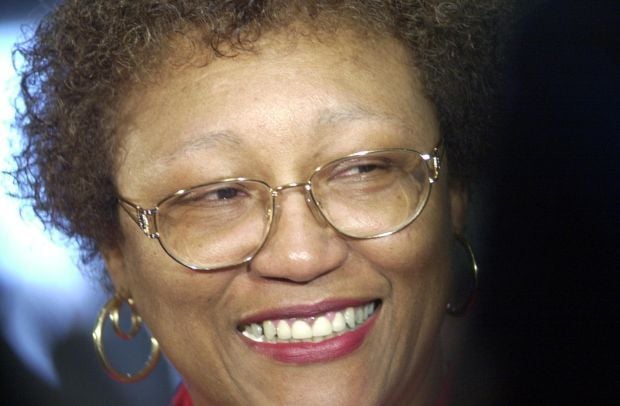
In the 1970s, Odiemae Elliott attended Pima College and the UA on the GI Bill, a would-be nurse who was part of the women’s Army Air Corps from 1951 to 1960.
A single mom, she worked the graveyard shift at Tucson’s VA Hospital, and when her middle son, Sean Elliott, became a consensus All-American at Arizona in 1988, Odiemae hoped to attend her first UA road game: the 1988 Final Four in Kansas City.
Her co-workers at the hospital raised about $1,500. But before Odiemae made reservations, she called UA associate athletic director Bob Bockrath to make sure it was permissible to accept the money.
It was, absurdly, against NCAA rules. Odiemae Elliott raided her small savings account to get to Kansas City.
She asked Bockrath if she could get a copy of the cumbersome NCAA rules manual, which she read before and during her son’s senior season, in which Sean Elliott became the NCAA Player of the Year.
People are also reading…
In the 1988-89 season, Odiemae took out a loan for $20,000 to pay for her son’s insurance against injury leading up the 1989 NBA draft. She only attended one road game that season: the Sweet 16, in which No. 1 seed Arizona was shocked by UNLV.
In the corridor near the UA’s locker room that night in Denver, a security man allowed Odiemae access in an off-limits area. She embraced Sean; he sobbed on her shoulder for what seemed like forever. That scene remains frozen in my mind. Never in history have a mother and her son so captured Tucson’s imagination.
I didn’t see Odiemae again until 1995, when I ran into her in the waiting area at the Tucson airport. She talked about her upbringing in rural Holy Springs, Mississippi.
“I grew up in a time and place that if a black person got sick and died, no one cared,” she told me that day. “They’d write down ‘heart failure’ on the death certificate and move on.”
Now all of that has changed. Odiemae Elliott died last week of cancer. She was 77. She made us care.