

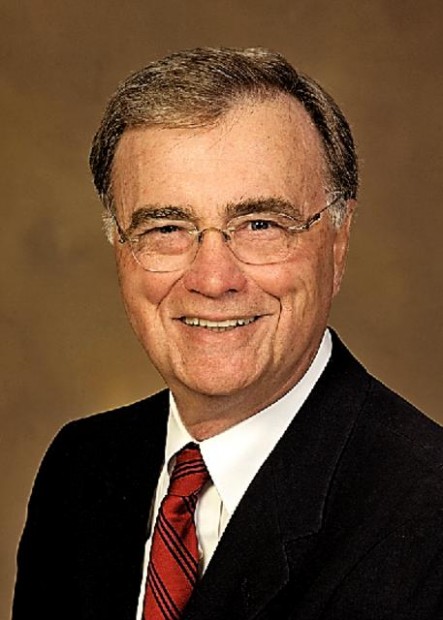
The Tucson-based Critical Path Institute was founded in 2005 as a public-private partnership with the U.S. Food and Drug Administration. Its main goal is to improve the drug-development process so that pharmaceuticals can come to market more quickly.
Last October, the group received a $4 million grant from the Agency for Healthcare Research and Quality to support its Arizona Center for Education and Research on Therapeutics, a partnership between C-Path and the University of Arizona.
The FDA is expected to put its support behind a new drug-development process using "biomarkers" that tell if there is kidney injury. Dr. Raymond Woosley, C-Path's president, has worked frequently with the FDA and other pharmaceutical giants to speed up the development process.
Q C-Path was formed just a few years ago. Briefly, what successes has it had since then in getting drugs more quickly to market?
People are also reading…
A We've been able to bring together industry scientists and government scientists, the regulators and regulated. We got them to agree to new processes of how medicines are tested. That had never existed before.
There had always been a process to get drugs approved, but it was long and cost too much money. The only way companies could change it was to change it themselves and have the FDA accept it. We were able to create a very finite process and get seven new tests through the system to replace two tests that are 100 years old.
Q: The FDA has been accused of overlooking safety concerns in the past, such as with the drug Vioxx. How can C-Path bring drugs to the market faster while also ensuring safety?
A: I think critics often fail to realize that the FDA has found these problems. . . . When it was found, the FDA worked with the industry to work it out. They didn't have the staff to really protect the public, and it's been underfunded and understaffed for more than two decades. They didn't have the staff to find them quickly. Everyone was pointing fingers at everyone, and Congress was the problem.
We want science-based medicine. We don't want snake oils. A lot of people don't realize is that the FDA has its problems, but it is the difference between a drug that is very well-tested compared with the snake oil that is untested.
Q: There have been fewer drugs developed during the last decade, but some consumers criticize pharmaceutical companies for not spending enough on research and development. Why haven't we seen more innovative drugs as of late?
A: A lot of people point out that it's more complicated today, but there's another aspect of it: The drugs that we have today are developed to treat symptoms, like high blood pressure. So when you're treating a symptom, you're using drugs that are pretty far down on the pathway.
Newer drugs are more specific to the mechanism. As we've learned what causes allergy and what causes cancer, we have treatments that get to the root of the problem. They only work with the small subset.
A lot of drugs haven't made it through the process because the process was development for blockbusters. The regulatory process hasn't evolved into personalized medicine.
Q: Does C-Path's presence in Tucson encourage the growth or movement of other biotech companies here? How does Tucson's growth in that area benefit the biosciences?
A: There are several reasons here. Roche (now owner of Ventana) wanted Ventana. But the decision to leave it here was because of C-Path. And it's not just C-Path — it's the whole environment, such as outstanding science at the university.
The UA created what is now Sanofi-Aventis (from Selectide). It's to bring those kinds of scientists out of the university and translate it into commercial products. It's to bring the FDA in to help the companies, but to help the companies know where the puck is going to be.
It's not what the FDA requires today. When the FDA talks about the critical path being changed, the C-Path Institute is helping to make that change. We try to communicate to the companies in how it's likely to be over the next couple of decades.
On Mondays, catch an interview here with people active in Tucson business. Find an extended version of this interview at AzStarBiz.com.