


GILA BEND — In dozens of simple ponds in Gila Bend, something is happening that could help ease the nation's dependency on foreign oil.
The project is not controlled by an army of scientists or funded with millions of dollars worth of government research grants — it's a desert shrimp farm that is changing with the times to produce biodiesel from algae, using some of the same algae that feed the shrimp.
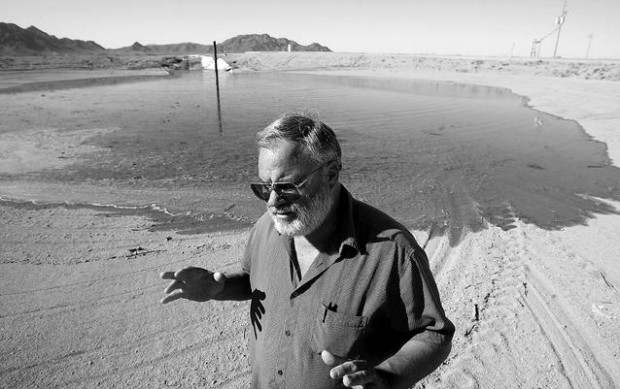
"Shrimp farmers don't raise shrimp, they raise algae," said Gary Wood, owner of Desert Sweet Shrimp, which is transitioning to a new name, Desert Sweet Biofuels, with its new focus.
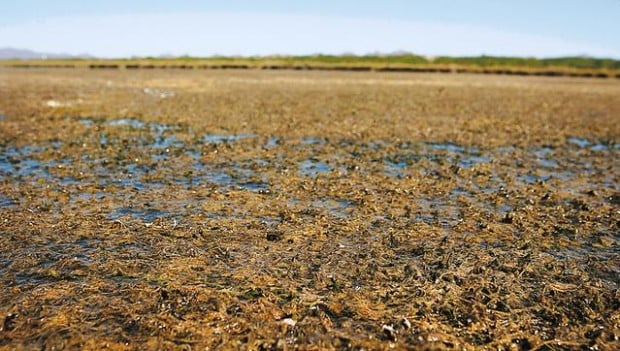
The 50 ponds don't look impressive now — more like craters filled with murky water. But Wood said soon they will look like bubbling pools of split pea soup teeming with algae soon to be transformed into fuel.
Energy policy has become a hot-button issue, as seen in Tuesday's presidential debate. Every year, the United States imports billions of dollars worth of oil, and Wood said his company will bring some of that money back home, while protecting the environment by cutting carbon-dioxide emissions.
People are also reading…
"I've heard a lot of people saying 'drill baby drill' when they should be saying 'grow baby grow,' " Wood said. "We're going to grow our way out of this."
Wood said his company has always tried to focus on sustainability. The company started in 1995 to grow shrimp sustainably after commercial shrimp fishing endangered the ocean.
With biodiesel prices at $4.81 a gallon, according to the U.S. Department of Energy, Wood hopes to produce it for less than $3 a gallon.
He said his farm has the potential to produce 5,000 gallons of biofuel per acre in two years, and he expects the first gallons of biofuel to be ready in three to four months.
Algae is transformed into biofuels by pressing the oil out of the algae and then adding lye, sodium and ethanol as a catalyst to make the fuel more pure. The lye, sodium and ethanol can be reused.
Desert Sweet has done research trying to find the best strain of algae, and plans to test cultured and indigenous strains of algae. Wood said the company will look for the best strain until it finds "the one that will be a magic bullet."
The climate in Gila Bend is perfect for growing algae, Wood said, because of its warm nights and bright sunlight.
Biofuels made from algae have an advantage over biofuels made from soybeans, palm oil or corn because algae is not a source of food, growing algae does not use agriculturally fertile land and algae can be grown in treated wastewater, said Joel Cuello, a professor of agricultural and biosystems engineering the University of Arizona.
Cuello said biofuels from algae need to be mass-produced to make them economically feasible.
Biofuels production has fallen on hard times in other parts of the nation.
A plant in Missouri producing biodiesel from soy had to close after producing 94,000 gallons of fuel over two weeks, The Associated Press reported.
But Desert Sweet Biofuels is moving ahead optimistically, and this became apparent Saturday when it officially launched the venture with an event attended by 70 people.
"It's the salvation for our country and a solution to what's going on in the world," Wood said. "It's so important — our country is really hurting."
From algae to fuel
• Algae is turned into biofuel in a process called transesterification.
• Biofuels made from algae contain around 90 percent of the energy in regular diesel but produce less CO2.
• Some forms of algae consist of more than 50 percent oil.
• Many vehicles would not have to convert to run on biodiesel.