

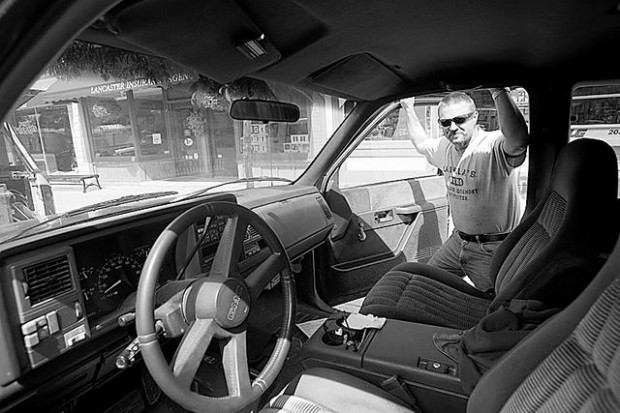
CLINTON, Mich. — Tom Wright's dark-blue GMC Sierra extended-cab pickup is 12 years old, but so far he's dismissed any thought of replacing it.
Although it has 165,000 miles on the odometer, Wright said times are a little too slow in the carpentry business to replace the truck, which he uses for work and to haul around his family.
Much to the detriment of Detroit's Big Three, people like Wright are delaying truck purchases, cutting into profits and forcing Ford Motor Co., General Motors Corp. and DaimlerChrysler AG's Chrysler Group to idle some assembly lines.
Pickup sales overall are off 15.7 percent in the first seven months of the year from the same time last year.
Sales of Ford's F-series pickups, the highest-selling vehicles in the nation, are down 12.3 percent. The No. 2 seller, the Chevrolet Silverado, is off 20.1 percent as the company changes production to a new model. Dodge's Ram line is down 11.7 percent.
People are also reading…
Last week Ford announced that it would cut production by 168,000 vehicles, or 21 percent, in the fourth quarter to bring supply back in line with growing inventories. GM already has cut vehicle production by 7 percent to 8 percent in the third quarter, and Chrysler on said Wednesday that it would cut production in the fourth quarter by an unspecified amount. The company already had announced a 10 percent cut in third-quarter production, mostly in trucks and sport utility vehicles.
Wright, 45, who lives near Clinton, a village about 60 miles southwest of Detroit, said he gets mailings from his dealer telling him it's time to buy. But as long as the Sierra remains dependable and the economy remains uncertain, he'll keep it.
"I just have a hard time justifying $30,000 for a new truck right now to replace this one," he said while installing new windows in a downtown building. "There's no sense in spending the money right now, the way I look at it."
Two kinds of truck buyers
Industry analysts say the people delaying truck purchases fall into two categories: Those like Wright who use pickups primarily for work and those who use pickups as their personal vehicles.
Most sales are for personal use, and analysts say that with $3-per-gallon gasoline, many of those customers are leaving the market for more fuel-efficient vehicles.
"The customers who don't have a need for the product have opted for something else," said Tom Libby, senior director of industry analysis for J.D. Power and Associates.
So the Big Three, which rely more on trucks for profits than their foreign competitors do, are likely to face more hard times as truck demand softens even further in the second half of the year, analysts say.
Nearly 32 percent of Ford's sales came from pickup trucks through July of this year, the highest percentage in the industry, according to Autodata Corp. GM's was 25 percent, while Toyota's was at 11.5 percent.
Kip Penniman, an analyst with KDP Investment Advisors in Montpelier, Vt., predicted that Ford would be particularly hard-hit later in the year as GM and Toyota come out with brand-new pickups that could cut into the F-series' market share.
"If they don't do something with the pickup trucks, which is their bread and butter, these guys are just going to see some very sharp distress over the next several years until they finally turn around," Penniman said.
Eventually, new ones needed
It's customers like Wright, though, who also bring hope to industry executives. No matter what happens to fuel prices or the economy, Wright and thousands of others will someday have to replace their trucks.
"I have to have a truck for what I do," said Wright, who hauls tools and other work supplies in the bed. "I would not think of anything else."
Some analysts expect the pickup market to stabilize later this year.
"Large pickups certainly haven't boomed this year," GM Chairman and CEO Rick Wagoner said in a recent interview.
"From our experience, they've held in there pretty well," he said, adding that GM is in the final months of selling relatively old models. "That segment seems to be a little more robust to the fuel-economy prices than maybe the large SUVs are."
If gas costs stay high, manufacturers that rely on pickups and SUVs will continue to suffer, said Ken Bernhardt, professor of marketing at Georgia State University in Atlanta.
"Let's say I'd rather be Honda and Toyota than Ford and GM if gas prices stay at $3 or higher," he said.
Pickup truck sales have dropped during the first seven months of this year from the same time last year. A look at sales figures by market segment and model:
All pickups 2,029,192 1,711,067 -15.7
Full-size pickups 1,150,302 1,313,226 -15.3
Compact pickups 401,653 333,323 -17.0
Luxury, specialty pickups 77,237 64,518 -16.5
Ford F-150 to F-350 534,659 469,159 -12.3
Chevrolet Silverado, C-K 480,134 383,752 -20.1
Dodge Ram 1500 to 3500 244,629 215,967 -11.7
GMC Sierra, C-K 158,077 124,565 -21.2
Toyota Tundra 75,578 67,743 -10.4
Nissan Titan 53,162 44,528 -16.2
Lincoln Mark LT 4,063 7,512 84.9
Source: Autodata Corp.