

COLUMBIA, S.C. — Soft music plays in the background of a new TV ad campaign as it urges viewers to only use payday loans for emergencies. One scene shows a broken-down car. Another depicts a young boy in a doctor's office, his arm in a sling.
"Please borrow only what you feel comfortable paying back when it's due," says Darrin Andersen, president of the Community Financial Services Association. A new emblem will tell borrowers which lenders meet his trade group's requirements, Andersen says in the ad.
The $10 million campaign, announced last month along with some industry policy changes, came as states from Virginia to New Mexico consider legislation to limit payday-lending practices. But it's not stopping consumer watchdogs and people already in debt from questioning the motives of an industry whose loans' annual interest rates can exceed 400 percent.
"Payday lenders make it easy for consumers to get trapped in predatory debt," said Teresa Arnold, legislative director for AARP in South Carolina.
People are also reading…
Payday lenders offer quick cash advances — for a fee — secured by a postdated personal check from the borrower. Customers are supposed to repay the loan once they receive their next paycheck. Borrowers who can't pay often "roll over" the loan repeatedly, leading to more charges that can quickly add up and lead to a cycle of debt. Customers are drawn to the lenders because, unlike banks and credit unions, they don't run credit checks.
Rena McFadden and her husband are two people who've become trapped. Her husband has been dealing with lenders threatening court action unless the McFaddens quickly repay the $2,400 they owe.
"The time to repay is too short. He's been trying to talk to them, but they won't talk," said McFadden, a 39-year-old who works in a dry-cleaning shop. "They want the money by the next payday. How are you supposed to pay your bills?"
There are more than 22,000 payday-advance locations in the United States that garner $6 billion annually in revenues, according to Steven Schlein, a spokesman for the financial services association, which represents about two-thirds of payday-lending companies.
The payday-loan industry's biggest change would give customers more time to pay back a loan with no financial penalty. This "extended payment plan" would be available at least once a year and provide borrowers between two and four extra months to pay off loans. It was paired with the ad campaign and a ban on ads that promote payday advances for "frivolous purposes" like vacations.
But lawmakers are still pushing changes. In South Carolina, home to Advance America, the nation's largest payday lender, lawmakers are considering a measure that would cap at 36 percent the annual interest fee on the loans and limit the number of payday loans a consumer could have with a single payday-loan company.
Eleven states already have similar interest-rate limits on payday lenders, according to consumer watchdogs, and the payday-lending industry considers such rates too low to remain profitable. New proposals in 10 other states would impose similar limits, said Carol Hammerstein, a spokeswoman for the Durham, N.C.-based Center for Responsible Lending.
Hammerstein said the push for new interest-rate limits comes in the wake of caps imposed last fall by Congress. Legislators put a 36 percent annual cap on loans to military service members following disclosures that thousands of troops were in debt to payday lenders.
Jamie Fulmer, director of investor relations for Spartanburg, S.C.-based Advance America, said the loans are paid back on time by the vast majority of customers and that penalties for bouncing checks or making late credit-card payments are more severe than payday loan rates.
He said the industry was willing to consider "reasonable" changes, but that South Carolina Republican State Rep. Alan Clemmons' proposal to cap the loans was a backdoor attempt to end them. It would amount to the industry earning only $1.38 per $100 for a two-week loan — far too little to cover overhead, he said.
AARP in South Carolina is not content with the industry program announced last week. Arnold said the number of payday lenders in the state has more than doubled over the last five years. AARP's 2005 survey of credit counselors found that one in four clients had payday loans — usually multiple loans — and that the loans were a major part of their credit problems.
"It's not unusual to see clients paying $1,600 for a $500 loan," Arnold added.
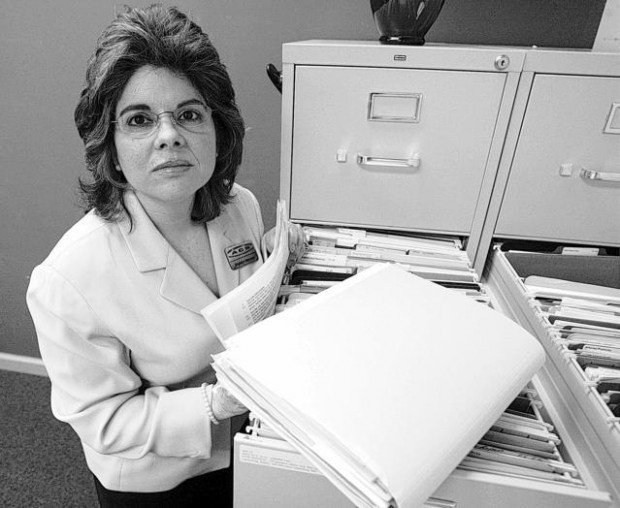
At Fort Jackson, the head of the installation's consumer advocacy and financial advising programs said she knows soldiers who had been paying up to 900 percent interest on loans.
"We've seen some pretty ugly cases," said Madelyn Mercado.
local angle
Payday-loan outlets have been popping up in Tucson and across Arizona since the Legislature in 2000 exempted payday lenders from the state's usury law, which caps the interest rate on loans made by financial institutions at 36 percent annually.
A study released in December by the Center for Responsible Lending, a nonprofit group critical of payday lending, found that Arizonans paid $139 million in excessive fees to payday lenders in 2005, part of some $4.2 billion in excess fees paid nationally. Arizona had more than 700 payday-loan outlets in 2005, the study said.
— Arizona Daily Star