

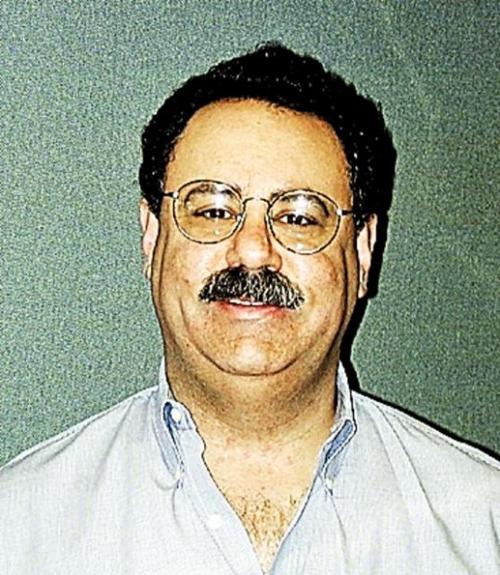
With 97 employees and more than 1,000 customers, Tucson-based SEBRA is one of the city's largest biotech companies.
The 34-year-old firm produces precision instruments for blood banks, catheter manufacturers, biotechnology firms and medical-device manufacturers worldwide.
In April of 2005, Roger Vogel took over as SEBRA's president and CEO after serving as general manager of IBM's Tucson storage-systems development operation.
Here are excerpts from an interview with Vogel on Friday.
Q After 20 years as an IBM employee, what prompted you to accept your position as the head of a medical equipment company?
A I had a great career at IBM. What I learned there positioned me to be successful in my current role. Though they recruited me from back East, and though I became a vice president, I managed to spend it all here in Tucson. When I found myself with a top IBM job in Tucson and no real career advancement without moving east, I felt it was time to change. It was pretty exciting to move to a small, dynamic company looking to grow.
People are also reading…
Q: To what extent does SEBRA collaborate with the University of Arizona?
A: First, the university is a key source of professionals for us. Overall I'd say around 20 percent of our employees are UA graduates. We get involved in other ways as we can. For example, participating on the advisory council of engineering, and in the past participating on the Eller council. Probably the most significant collaboration took place a number of years ago when we jointly worked on development of electrophysiology technology. Though it's not commercialized yet, it did result in a number of patents and shared intellectual property that we have with the university.
Q: As the second-largest biotech firm in Tucson, what is SEBRA's role in advancing Southern Arizona's reputation as a bioscience hub?
A: SEBRA products are sold in 85 countries and our brand is well respected. Many companies know that SEBRA is based in Southern Arizona, and that we manufacture our products here. Our catheter manufacturing stations are considered best of breed and are used by many catheter developers and manufacturers. We also have key partnerships with major biotechnology companies to develop biotechnology sealers and sterile connectors throughout the whole biopharmaceutical industry.
Q: Industry analyses show a trend toward outsourcing the manufacturing of medical devices in order to focus on product design, though some companies are reluctant to follow suit for fear of risking product quality. Does SEBRA outsource its manufacturing, and if so, how are the safety risks overcome?
A: We do outsource our components, and we have for many years. However, we continue to do final assembly and quality inspection here in Tucson to ensure all the products meet pretty rigid standards. We have, in addition to quality control and manufacturing, a separate quality assurance team, and we've implemented quality processes that have earned the ... highest level of certification a medical device company can achieve.
We also make sure we're compliant with good manufacturing practices as defined by the FDA. We qualify every vendor we use and we carefully monitor what they ship us. I'm pretty proud to say we make really reliable products. The Tucson Red Cross has used some of our products for over 20 years.
Q: What do you foresee as the industry's biggest challenge for 2008? Your company's biggest challenge?
A: The rising cost of health care with respect to the industry. The stress on Medicare and the baby boomers entering the time of life where they're requiring more health care is both a challenge and an opportunity for the medical device manufacturers. I really believe it's incumbent upon us to innovate and bring products to market that bring better efficiency to health care providers without compromising patient outcome and safety.
