We all know that yard sales and thrift shops are great places to save money when you need to refresh your wardrobe or get end tables to refinish.
But they can also be a trove of buried treasures that provide extra income. We’ve all heard the stories of someone purchasing a painting at a yard sale for $10, only to find it’s actually worth millions. Ah, if only I were that lucky.
I’ve often wondered how people know when they’ve found something good. Is it a hunch? Or do they have expert knowledge ?
Turns out, it could be a little of both. Some resale shoppers have specific items they know about and look for . Others look for things like markings on the bottom of glassware. And often, it’s luck.
While most of us probably won’t come across a life-changing multimillion-dollar painting, there are ways to find treasures at resale shops .
People are also reading…
I spoke with an appraiser for Antiques Roadshow, a thrift-shop owner and an online reseller to get tips on how to find treasures among piles of junk and how to turn them into money. Here’s what they had to say.
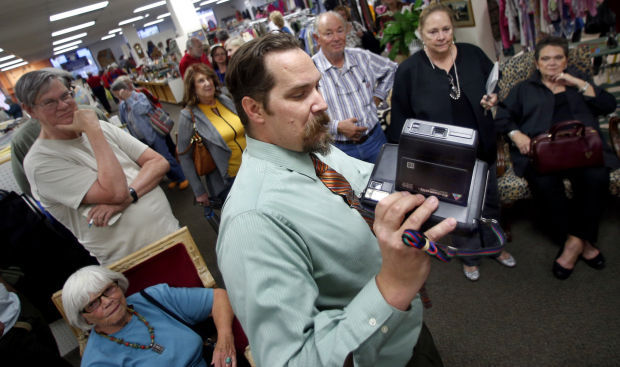
1. James Supp, appraiser for Antiques Roadshow and owner of Coronado Trading Co., 5049 E. Fairmount St.
Supp has been a thrift-store and yard-sale shopper most of his life and an appraiser for about nine years.
According to Supp, the first thing you want to do when you find something interesting is decide on its intended use. Are you going to resell it or display it in your home? If it’s going to be resold, condition is everything. A glass item worth thousands of dollars can be reduced in value to just a few dollars if it has a minor chip.
To find its value, look for identifying markings. The item itself will often tell you if it’s worth anything, Supp said. For example, many items will have a serial number and company name stamped underneath. Look those up on the Internet with your smartphone. Supp suggested looking at eBay’s listings to see if that type of item is currently selling, and for how much.
If an item has no labels or numbers on it, researching it “becomes an art form,” Supp said.
If the price is right and you think you can make a little money on it, get it and research it at home by typing keywords describing the item in an online search engine or eBay.
Sometimes, just picking up something that looks interesting is a good way to find a treasure.
“I love strange items,” Supp said. “The more esoteric, the better.”
He picked up a light at a yard sale for $2 because he thought it was cool. It turned out to be a military light from World War II. People who collect military items buy them for about $350 on eBay.
Supp says you can make at least $1,000 a month reselling thrift-store stuff if you know what you’re looking for and what not to waste your time on. For example, Hummel figurines and items with “limited edition” written on them are usually not worth much.
Older vintage dolls do really well, where crystal and collectible glassware tend to not sell. Old magazines don’t sell either, unless they’re pre-1920s and in mint condition. Vintage advertisements, signs and movie memorabilia sell really well, he said.
If you’re going to resell gold or silver pieces, Supp said it’s important to watch the market, since values fluctuate. He added that art is the No. 1 underpriced item at thrift stores.
Supp found a signed Picasso print he paid $20 for at a thrift store. It turned out to be worth between $7,000 and $9,000. He also buys framed art just for the frames, which are usually worth more than the art.
If you do find an item you think is worth a lot of money — over $1,000 — Supp says it’s worth getting a professional appraiser to look at it before selling. If it’s $500 and under, he takes his chances and goes straight to eBay.
For larger items or items that won’t bring in more than $100, Supp suggests selling on Craigslist.
It takes time to gain knowledge of what people will buy. You have to shop regularly, since thrift-shop inventories change daily. “You have to really enjoy it,” Supp said. “It’s fun to buy something for $20 and getting $300 to $400 for it.”
2. Kim Kysar, owner of Betty Blue’s Junk Shop, 262 S. Plumer Ave.
Kysar shops regularly to fill her thrift shop with unique items. She says she has luck pretty much everywhere she looks — which could be yard sales, estate sales or online — because she’s not going for the same items everyone else is . But finding those items boils down to experience and knowing what people buy in her shop.
“I pretty much go with my gut and experience,” Kysar said. “Some items you just know will sell quickly and for a good price. Some items people are always looking for, and some are unusual and unique and will sell for that reason.”
Kysar doesn’t recommend doing a lot of research on the phone when you’re out shopping. “Picking can get a little cutthroat at times, so you have to be on your toes, not your phone,” she said. Rather, it’s best to go with your gut if the price is right and research it when you get home, she said.
If you do want to research on your phone, she says it’s a good idea to be discreet, so the item isn’t suddenly taken off the sales floor or upped in price.
“I mean, if it’s a 50-cent coffee mug that looks unique to you, and you know you could at least get $1.50 to $3 at your yard sale, roll the dice,” she said. “That’s what makes this fun and exciting. Your purchases and profits will grow with your experience, if you’re consistent.”
Kysar said she has found that people tend to think items such as plates, stamps, sports cards, comics and the like are valuable because they were sold as collectibles. “But, in general, those items aren’t worth much today, unless they were made in a very limited quantity,” she said.
Once Kysar purchases an item for her store, she researches it to decide on a price. Reselling a high-value item can be tricky in-store.
“In Tucson’s market, we’ve found we can get more online for anything special or of a higher collectible value, if only because it puts that piece in front of a global audience, since we sell worldwide,” she said. “In general, items less than $25 will sell quicker in person.”
Her formula is simple. She figures out what the item has sold for in the last few weeks and reduces that for the Tucson market. “If we aren’t able to get that price in the shop, we up the price and list it online.”
3. Laurie Velger, online reseller and thrift-store shopper.
Velger is collecting inventory to launch her online store, Elvee’s Closet at Etsy.com. Her focus is pop-culture memorabilia, Beatles memorabilia and Depression-era glassware.
Velger isn’t new to resale. Prior to her Etsy venture, she sold compact discs, DVDs and books on Amazon. “It started as a need for income,” Velger said. “But it turned into enjoyment.”
One of her favorite finds is a Bohemian candlestick she got for less than $3 at a thrift shop. She found it’s worth upward of $65.
Deciding whether to buy an item boils down to three things for Velger:
“I look to see if it attracts me,” she said. “Is it pretty? Will somebody else like it?”
Then she looks to make sure it’s in perfect condition. And, finally, she wants to make sure she can make at least $10 more than she spent on the item, since she has to spend time cleaning, photographing and writing about it for the website.
“I was looking for alternatives for employment,” Velger said. “Being close to 60, it’s hard to get a job that pays more than $10 an hour. I can make more looking through thrift stores.”
Contact reporter Angela Pittenger at 573-4137 or apitteng@azstarnet.com. Follow her on Twitter @CentsibleMama or on Facebook at facebook.com/centsiblemama