

Local employers continue to offer in-house training and expand partnerships with schools and government groups in an effort to develop qualified, high-skilled workers.
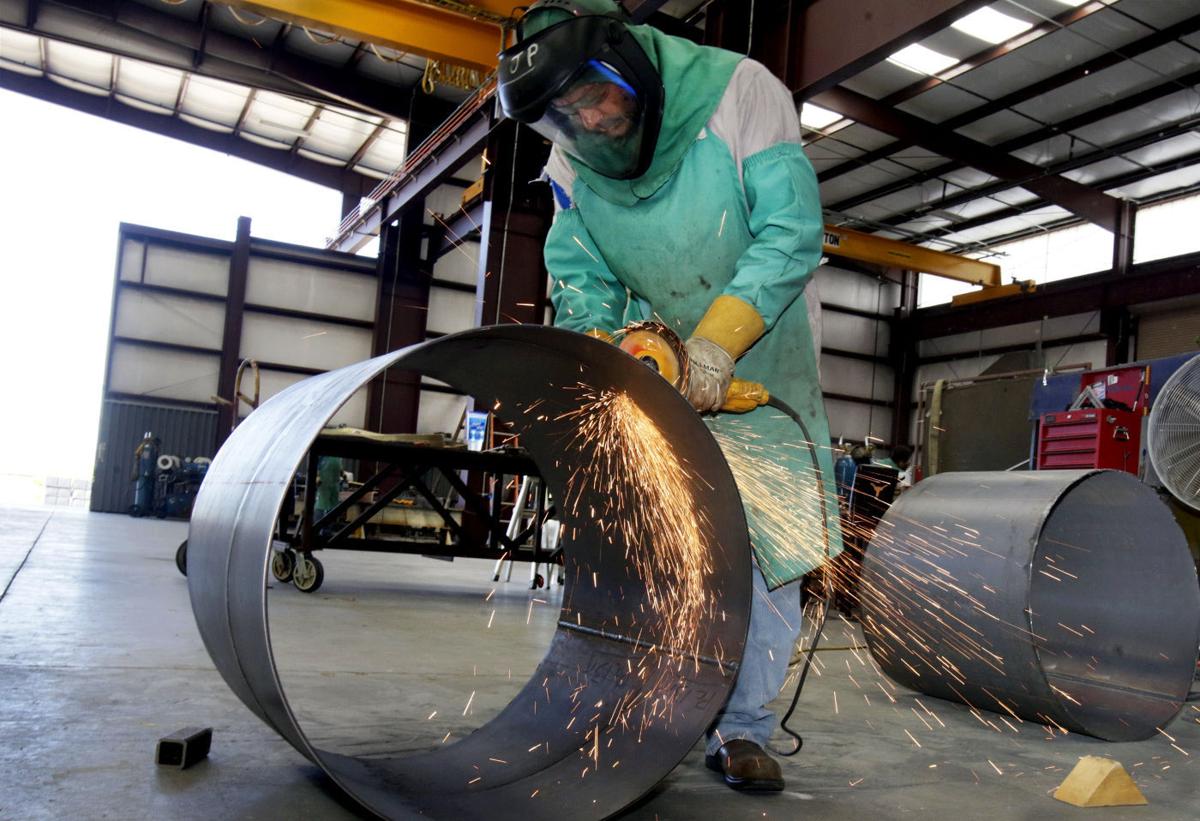
Tucson-based Caid Industries has offered welder training for almost 15 years. While the program saw some slowdown during the recession, over the last four years the company has refocused its training efforts, said Laurie Vance, vice president at Caid.
“It’s hard to find welders in the Tucson market, at least those that have the specific skills that we need here,” she said. “This program is an investment, so last year we spent about $80,000 paying our people to learn advanced skills. The year before that it was $90,000.”
Caid not only pays its employees to acquire new skills or certifications, it also offers workers doing unskilled labor the chance to train.
People are also reading…
“If someone has the right mix of job skills, they show up on time, they work hard, then they may get the opportunity to learn a new skill,” Vance said.
The company is also working with Pima Community College to develop a welding program and does outreach to other community colleges in Arizona, including Northland Pioneer, Arizona Western and Cochise College.
For many employers, teaming up with high schools and colleges has proved to be the best way to guide the growth of the workforce they need.
“The partnership between industry and educational institutions, such as Pima, is really good,” said Dylan Bearce with Tucson Electric Power. “We’re able to build these programs by industry, with industry, for industry, and it’s truly nice to have input on courses.”
Bearce is one of several TEP employees who teach PCC students as part of the Get Into Energy program, which awards students an Electrical Utility Technology certificate.
Students who complete the program are eligible to apply to internships at TEP and may pursue an associates in applied science degree, said Joanne Kingman, workforce and business development program manager at the college.
The program was created thanks to a $1.8 million Trade Adjustment Assistance Community College and Career Training grant from the U.S. Department of Labor awarded in 2012.
Another grant, announced in September, will give PCC $2.5 million that will be used to develop a degree pathway in industrial technology with certificates in instrumentation, industrial maintenance, industrial mechanic and mechatronics — as well as new certificates in basic industrial and advanced industrial welding.
The program’s success and the new degrees have already sparked interest from mining company Freeport-McMoRan Copper & Gold and from Southwest Gas, Kingman said.
“Once you have a good story to tell and you start talking to employers about what you’re doing, they’re willing to jump on board,” she said.
Another example of the importance of working together, Kingman said, is the Southern Arizona Manufacturing Partners, or SAMP, a group of more than 30 manufacturing companies in the Tucson area.
The group works with the Pima County Joint Technical Education District, the Pima County One-Stop Career Center, PCC, Tucson Magnet High School and Desert View High School to support technical education.
Formed in 2012 to address the shortage of entry-level machinists in the region, the group celebrated its first graduating class in January.
Although its focus is machinists, that’s only the beginning, said Caid’s Vance.
“I envision SAMP as eventually becoming kind of an umbrella, to where welding, machining and other manufacturing sectors all come together and talk about trade programs and how to develop and grow those people locally,” she said.
Employers working with schools provides everyone involved with an advantage, Bearce said. Schools can better prepare their students for the real world and companies can hire people who are ready to work.
“The colleges only know so much. There’s an education side to it and there’s an industry-needs side to it,” he said. “When you partner up you get what you’re actually looking for. You’re not getting something that’s not necessarily translatable.”


