

Being financially literate may be an important part of successfully entering adulthood, but it’s often hard to make teenagers understand how it’s relevant to their lives.
A new app developed at the University of Arizona wants to change that.
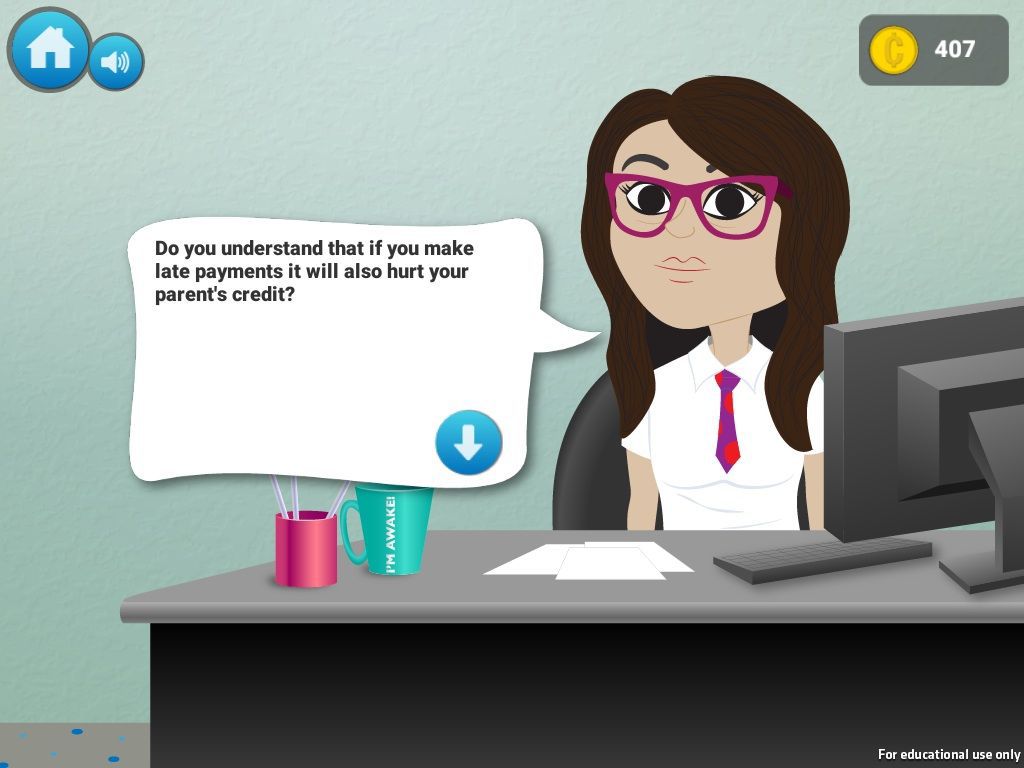
Smart Car, available free for iOS and Android devices, casts users as either 16-year-old Nora or 18-year-old Max, just as they begin their journey of buying a used car.
“To buy your first used car you have to know about credit, and you have to know about savings, and all these concepts that are taught in your financial education class, but here’s a case where you actually get to use these things,” said Robert Lanza, project director for the app.
Through an interactive storyline, multiple-choice trivia questions and mini-games, the app teaches users the basics of making a large purchase. Players can get through the game in about 10 minutes, with their choices determining the outcome.
People are also reading…
The development team showed off the project and got user feedback over two years at the Tucson Festival of Books, where parents really picked up on it, Lanza said.
“Parents would say, ‘They don’t listen to me, but if they actually learn this through the game, maybe they’ll take away what I’m trying to tell them,’” he said.
The intended audience, 16- to 21-year-olds, has also responded positively to the app, Lanza said, with focus groups at the university and players during public demonstrations enjoying the experience.
Educational software games, such as “The Oregon Trail” or the Carmen Sandiego series, have a long history of helping young people learn while having fun.
“Video games are particularly effective because they create the incentive to want to go farther,” Mike Staten, director of the university’s Take Charge America Institute, said in a news release. “You’re working through these levels, and oftentimes you’re picking up concepts and you don’t even realize it.”
There is already discussion on starting on version 2.0 of the app and possible improvements to the user experience, Lanza said.
“The next step for us is really refining how to better deliver the educational content. How to really communicate to the young people what they need to look out for,” he said.


