

Scale insects; attracting lizards; watering may be problem
- Updated
Answers to your gardening questions from an expert in Southern Arizona.
- By Peter L. Warren Special to the Arizona Daily Star
- Updated
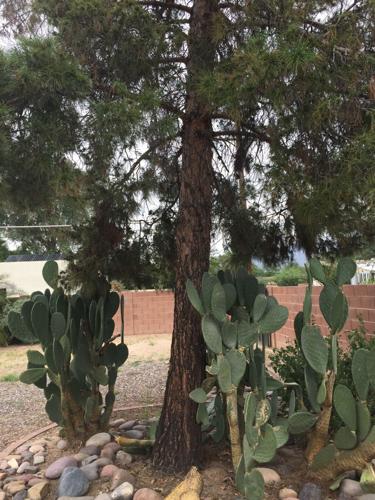
Q: My pine tree is not doing well. I was wondering if pine beetles causing the problem.
A: I looked at your tree and I saw no sign of bark beetles. The signs to look for are red-boring dust on the bark, exit holes in the bark, and overall discoloration of the needles from green to a straw color. While your tree does show some dead needles, it doesn’t show the widespread discoloration typically seen on trees with beetle infestations. The tree appears to be too dry and I couldn’t tell if the soaker hose nearby is functioning or not. If not, that would be a good thing to fix and put on a schedule either manually or with a drip irrigation controller using the schedule describe above in the citrus question.
Peter L. Warren is the urban horticulture agent for the Pima County Cooperative Extension and the University of Arizona. Email questions to
- By Peter L. Warren Special to the Arizona Daily Star
- Updated
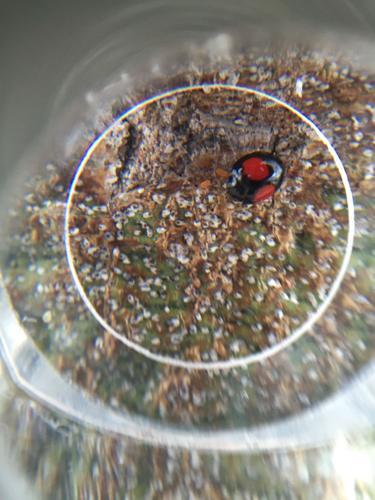
Q: I have a mature palo verde tree in my back yard that has what appear to be some kind of white scale on the trunk and several main branches — it almost looks like cement or mortar. On some of the smaller limbs there are some blemishes that look like they might be eruptions in the bark. Happened to see a woodpecker working very hard on one of these areas yesterday. Tree seems to be losing some leaves. How do I save this tree?
A: There is a species of scale insect that infests palo verde trees, especially those in urban environments. In some cases, the scale population is so high that they completely cover the bark on parts of the tree. The appearance you described begins with small eruptions in the bark. I’ve seen many like this in downtown Tucson and on the University of Arizona campus.
While these insects will feed on sap and reduce the vigor of the trees, they aren’t likely the primary problem. Trees in urban areas surrounded by buildings and other hard surfaces are subject to more stress than the trees out in the open desert. Scale insects, like many other insects, seem to be attracted to stressed trees. So there are a couple things you can do. One is to take good care of your tree if you aren’t already properly irrigating and pruning. The second is you can treat the trunk where the scale insects reside. Typically, the recommendation for scale management is a horticultural oil spray when the immature scale insects, called crawlers, are moving about the tree. This usually happens in late winter once the weather warms sufficiently for them to reproduce. The exact timing depends on local microclimates but usually there is at least a two-week window. Keeping an eye on the situation with a magnifier should allow you to see when the immature scale insects are active. You might also find predator insects such as the twice-stabbed lady beetle feeding on these scale insects. That is why I recommend horticultural oil instead of something stronger.
Peter L. Warren is the urban horticulture agent for the Pima County Cooperative Extension and the University of Arizona. Email questions to

- By Peter L. Warren Special to the Arizona Daily Star
- Updated
Q: I have a navel orange tree in my yard and I noticed this year that as the oranges are getting ripe in many cases they are splitting in half and falling off the tree. Not sure why or what would cause this. Any feedback would be great.
A: Oranges often split due to uneven irrigation. We usually notice this after significant rain events. The trees are unaccustomed to a lot of water at once and the split fruit is the result. The way to mitigate this is to water the trees more deeply throughout the year so that large amounts are less of a shock to their system.
For citrus, the recommendation is to provide water every seven to 10 days in the summer to a depth of 36 inches. In the fall and spring you can adjust the timing to once every 10 to 14 days and in the winter once every 14 to 21 days. Using a drip irrigation system is best and the emitters should be arranged in a circular fashion near the drip line of the tree. Based on the size of your tree, four emitters would be sufficient.
Peter L. Warren is the urban horticulture agent for the Pima County Cooperative Extension and the University of Arizona. Email questions to
- By Peter L. Warren Special to the Arizona Daily Star
- Updated
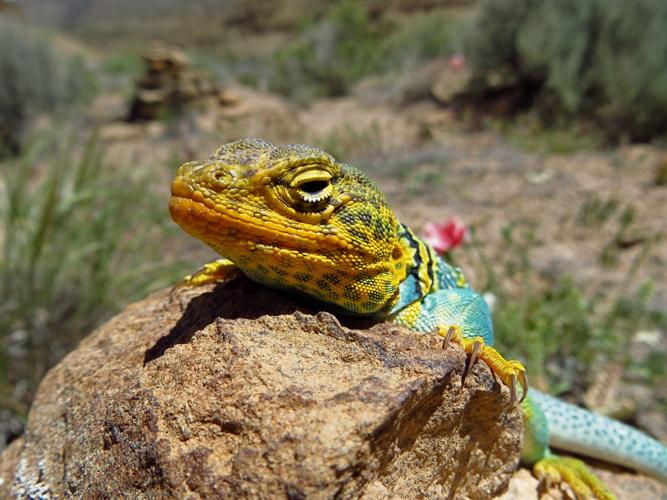
Q: I was surprised to read your answer to the Green Valley lady who wanted to relocate lizards. I am the opposite of her: I would love to relocate some lizards from my office building area to my home, if I could catch them. I live in the northwest area of Tucson near the Tucson Mountain foothills and we do have a few lizards. I would like to know how to encourage them to stay and bring their friends.
A: The Arizona Native Plant Society has a brochure on its website that describes how to make your yard lizard friendly. You can also check the Tucson Herpetological Society website for more information on lizard species.
In short, providing a variety of plants and shelters for lizards should entice them to make homes in your landscape. Lizard-friendly plants can be trees, shrubs, cacti, and flowering plants that provide places to forage, bask, hibernate, and breed. Native plants such as prickly pear cactus, desert spoon, and cholla cactus work well for this purpose. Lizards need protection from predators like cats, dogs, and birds. A simple way to provide protection is by creating rock or log piles. These piles will give lizards places to bask and forage. If you build it, they will come.
Peter L. Warren is the urban horticulture agent for the Pima County Cooperative Extension and the University of Arizona. Email questions to
- By Peter L. Warren Special to the Arizona Daily Star
- Updated
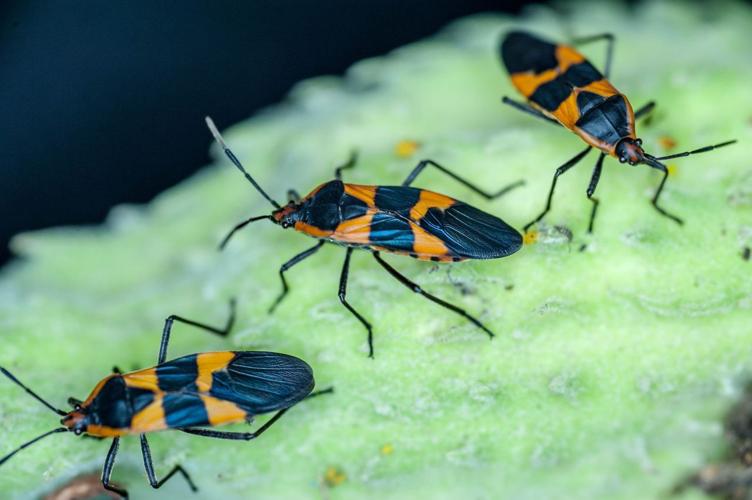
Q: I planted milkweed last year in order to attract monarchs to my yard. This year I had a bunch of caterpillars, then I found milkweed assassin bugs. I have not seen any caterpillars since. My question is, are the assassin bugs harmful to the monarchs? I read they are beneficial, but they do kill caterpillars. Nothing I can find says they are bad for monarchs, but I’m thinking they are. Please let me know what I should do.
A: There is a common bug found on milkweed that resembles the assassin bug and feeds only on the plants. The species you are seeing is the large milkweed bug (Oncopeltus fasciatus) as opposed to the small milkweed bug that may also be found. I am seeing them on my milkweed now and the caterpillars that were on my plants just finished pupating. I saw an adult butterfly emerging this weekend. So I would bet the life cycles of these insects are giving you the impression there is cause and effect when there is none.
Peter L. Warren is the urban horticulture agent for the Pima County Cooperative Extension and the University of Arizona. Questions may be emailed to tucsongardensage@gmail.com

- By Peter L. Warren Special to the Arizona Daily Star
- Updated
Q: I had to cut limbs off of my organ pipe cactus and another tubular cactus because they were blocking the sidewalk to my house. Can I transplant those limbs? Hate to throw them away.
A: The short answer is yes. My retired colleague, Jack Kelly, described the steps this way. First, in case you didn’t already, you should make sure the cut you made to remove the cutting from the parent plant was with a sharp knife so the parent plant will have an easier time sealing the wound. Cutting at a 45 degree angle will protect the parent plant by reducing the chance of water collecting in the wounded area. Square off the base of the cutting, dust with sulfur and/or rooting compounds and let air dry for up to several months until the cut is callused over to prevent rot. Most cactus species are propagated during August through October when nighttime temperatures are 60 degrees or above and soil temperatures are warm and conducive to rooting. After the callus has formed, fill a container with 50 percent pumice or perlite and 50 percent peat or compost. Cuttings should be placed deeply enough in the container so the cuttings will not fall over. Irrigate the cuttings when the soil is slightly damp, and keep them in a bright area. Light levels are important. The dappled shade of a tree will often provide a great location for rooting to occur. With most species, rooting should occur within 4 to 6 weeks in summer. For some species such as organ pipe cactus (Stenocereus thurberi), rooting may take several months. Once the cuttings are rooted, the growing tip will show signs of new growth. At this time the cuttings will become “plump,” indicating that roots have formed and that water and nutrient uptake has occurred. Cuttings may be grown in 1 or 2 gallon containers for up to a year without requiring transplanting.
Peter L. Warren is the urban horticulture agent for the Pima County Cooperative Extension and the University of Arizona. Questions may be emailed to tucsongardensage@gmail.com
- By Peter L. Warren Special to the Arizona Daily Star
- Updated
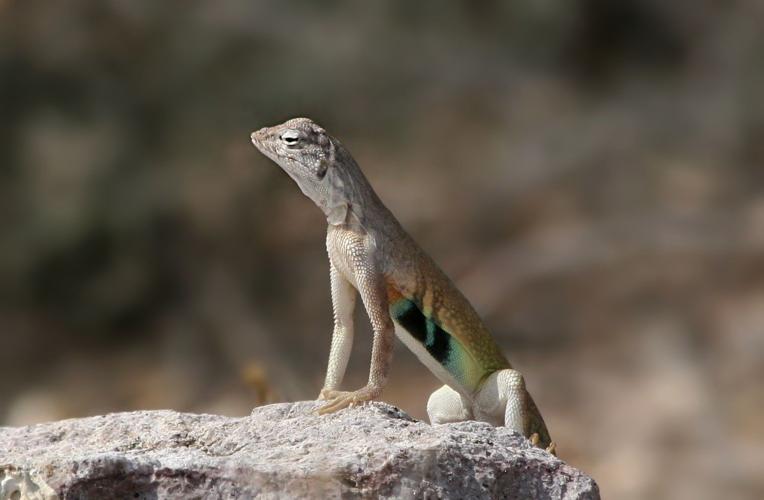
Q: We have lived in Green Valley in a well-established subdivision for about 10 years. Initially we had an occasional lizard, but for the past two years we have in increasing number, which range from small to large (these are not the Gila monsters). The small ones are a real nuisance as they get under the screen doors and into the house. Is there any way to trap and relocate the lizards? My dog doesn’t seem to bother them.
A: I am afraid that lizards are just part of living in the desert. Even if you trap and relocate them, others would likely replace them. I expect they are making homes in your area because there is food and shelter nearby. And let’s also not forget that relocating wildlife, lizards or rodents for example, outside your property isn’t legal without a license from Arizona Game & Fish. There are businesses that can do this for you and they are listed on the azgfd.com website. Probably the best thing you can do is make sure your house is well sealed with door sweeps and any other holes protected with fine mesh hardware cloth. You might also consider the benefits of lizards. They are great predators of insects that might otherwise be bothering you and your plants.
Peter L. Warren is the urban horticulture agent for the Pima County Cooperative Extension and the University of Arizona. Questions may be emailed to tucsongardensage@gmail.com
- By Peter L. Warren Special to the Arizona Daily Star
- Updated
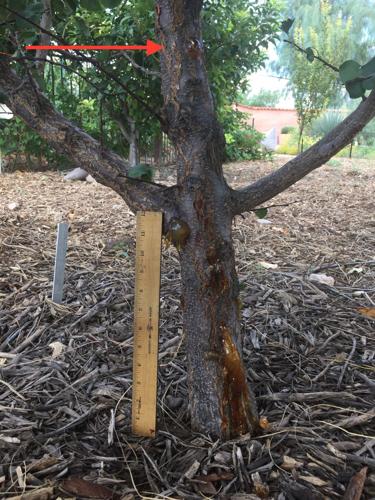
Q: Our apricot tree has yellow ooze on the trunk, which we think could be a fruit tree borer. Do you have any words of wisdom about how to control this insect on this tree and others, as well as how we might treat this particular infection?
We’d like to use the IPM approach that you instilled in us. We’ve heard about covering damaged areas of bark, insect traps and other products, poking wires into larvae holes, etc.
A: After looking at the tree, I think it might be gummosis rather than a peach tree borer. The main reason is the location of the gum. The borer you mentioned typically attacks less than one foot from the soil line. I see gum higher on the trunk and also some near a pruning cut on the north side of the tree.
The gummosis pathogen is known as Cytospora canker and is caused by a fungus, Leucostoma cincta. It invades and kills bark and cambial tissue through wounds such as pruning cuts, sunscald, hail, etc. Gumming from cytospora is dark amber in color, and if you scrape the outer bark, the dead phloem will appear cinnamon brown in color.
Cytospora canker is an opportunistic pathogen, meaning that it invades trees through wounds. It can be found almost everywhere, so prevention is the key to management. Management for cytospora includes making proper pruning cuts (i.e., do not leave stubs or do not make “flat cuts” that remove the branch collar where healing would normally occur) and do not prune in wet weather.
Affected limbs should be pruned back to healthy wood and make sure you sterilize pruning tools with 10 percent bleach between cuts. If a tree is severely affected, it’s best to remove it and start over. Prevention also includes keeping trees healthy with optimal watering, mulching, nutrition, etc.
Peter L. Warren is the urban horticulture agent for the Pima County Cooperative Extension and the University of Arizona. Questions may be emailed to
- By Peter L. Warren Special to the Arizona Daily Star
- Updated
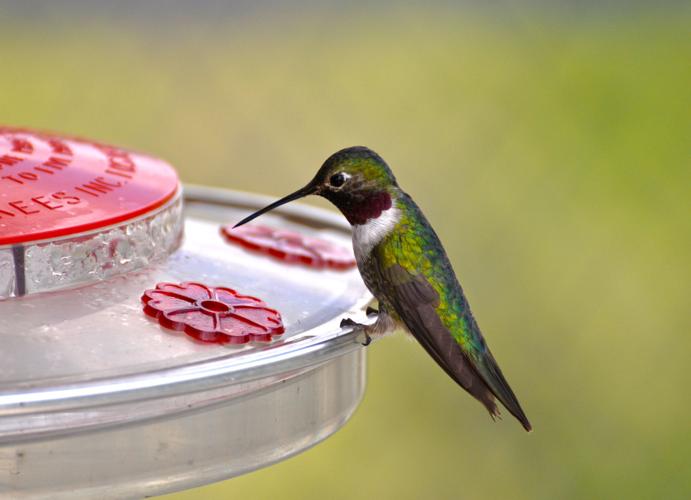
Q: Last year I was advised to try swabbing the feeding ports with canola, or like oil to discourage bees at our hummingbird feeders but that doesn’t seem to have any effect this year. I don’t know what kind of bees, and I don’t want to kill them, but I’m tired of them.
A: Planting a variety of flowering plants nearby as an alternative for the bees would likely lessen their visits to your hummingbird feeders. Bees seem to prefer flowers to feeders if they are available. Flowers have chemical cues and visual cues to attract them.
Bees might also visit your feeders for the water. If there hasn’t been any rain lately you could put out a bowl of water with something floating in it so they won’t drown. Just be sure to rinse it out every few days so you don’t breed mosquitoes.
Peter L. Warren is the urban horticulture agent for the Pima County Cooperative Extension and the University of Arizona. Questions may be emailed to
- By Peter L. Warren Special to the Arizona Daily Star
- Updated
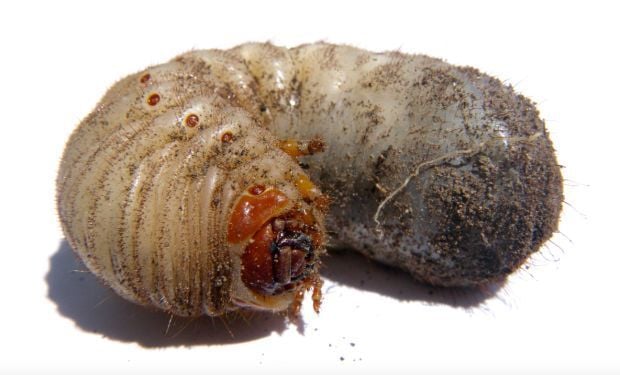
Q: I vegetable garden in Rubbermaid water troughs, 300-gallon and smaller due to the round tailed ground squirrels that are abundant in my area, Green Valley. Short of emptying them now and then and hand picking the grubs what do you suggest as an organic remedy for my grub problem?
A: Just a few grubs in a container garden is not unusual or necessarily a problem. Turning the soil can expose the grubs to the surface and birds would be likely predators. There are multiple species of white grubs and their diets differ somewhat so knowing which ones you have may be helpful.
The largest of these grubs we commonly see are the fig beetles (Cotinus mutabilis). These beetles seek soil that has a significant amount of organic matter in which to lay eggs so our nice vegetable gardens and compost bins with fresh compost and manure are prime real estate. The grubs feed primarily on decaying organic matter and occasionally plant roots so we don’t usually consider them to be pests to manage as much as helpful decomposers.
Peter L. Warren is the urban horticulture agent for the Pima County Cooperative Extension and the University of Arizona. Questions may be emailed to
- By Peter L. Warren Special to the Arizona Daily Star
- Updated
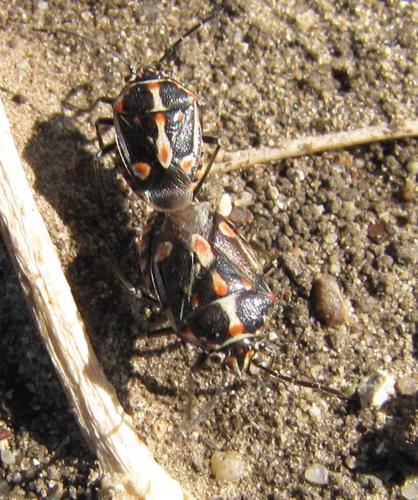
Q: May I call upon your expertise in sharing some insight on this insect attracted to the broccoli starts?
A: That is the bagrada bug (Bagrada hilaris). It was first found in California in June of 2008. Since 2010 it has been found in many parts of Arizona including Yuma, La Paz, Maricopa, Pima and Pinal counties.
This relatively new pest insect is native to Africa, India and Pakistan among others. Although damage attributed to bagrada bugs has been observed in corn, cotton, potatoes plus other crops and weeds, members of the plant family Brassicaceae have been more heavily affected in home gardens. The brassicas include many cool season vegetables, such as kale, mustard, cabbage, arugula, broccoli, cauliflower, radishes, and brussels sprouts.
If your plants are heavily infested you might just pull them up and destroy them. A smaller infestation can be treated with pyrethroid insecticides. If you prefer nonchemical methods, you can squish them individually or drown them in soapy water.
Peter L. Warren is the urban horticulture agent for the Pima County Cooperative Extension and the University of Arizona. Questions may be emailed to
- By Peter L. Warren Special to the Arizona Daily Star
- Updated
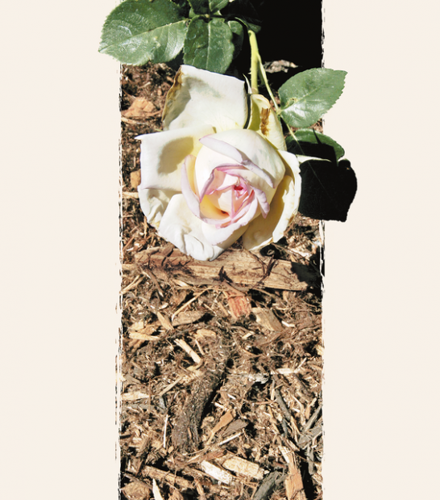
Q: I would like to add a wood-mulch product to my vegetable garden. The product I would like to use is made from mesquite and eucalyptus wood. Would adding the eucalyptus chips as a component to the soil be okay? I have read mixed opinions regarding the addition of eucalyptus chips — some say it is beneficial and some say it will inhibit the growth of vegetable plants. What is your opinion/recommendation?
A: This is a bit of a myth. Some plants produce chemicals that affect nearby plants, in some cases preventing germination or restricting their growth. While some trees do have an allelopathic quality, that soon ends once the wood is chipped into mulch.
These wood chips should be no different from any other mulch. They do provide long-term, slow-release fertilizer, and there is some weed suppression, mostly from blocking sunlight.
Peter L. Warren is the urban horticulture agent for the Pima County Cooperative Extension and the University of Arizona. Questions may be emailed to
- By Peter L. Warren Special to the Arizona Daily Star
- Updated
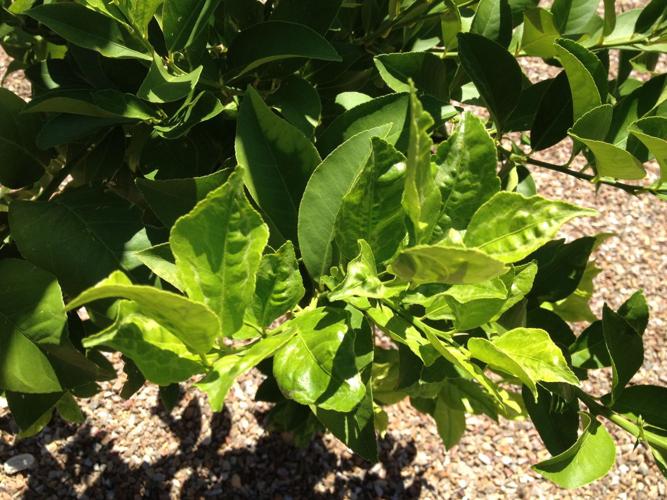
Q: Would you be able to help me identify the pest causing puckering of new growth leaves on our young lemon tree in Marana? I would also appreciate your advice for treatment.
A: The damage you are seeing is caused by thrips. These tiny insects feed on new growth in the bud stage, causing distortion. The good news is they do not cause significant damage to the plant and can be ignored. The leaves will still be able to photosynthesize. Their damage is largely cosmetic, and for this reason we do not recommend any treatment.
Peter L. Warren is the urban horticulture agent for the Pima County Cooperative Extension and the University of Arizona. Questions may be emailed to
- By Peter L. Warren Special to the Arizona Daily Star
- Updated
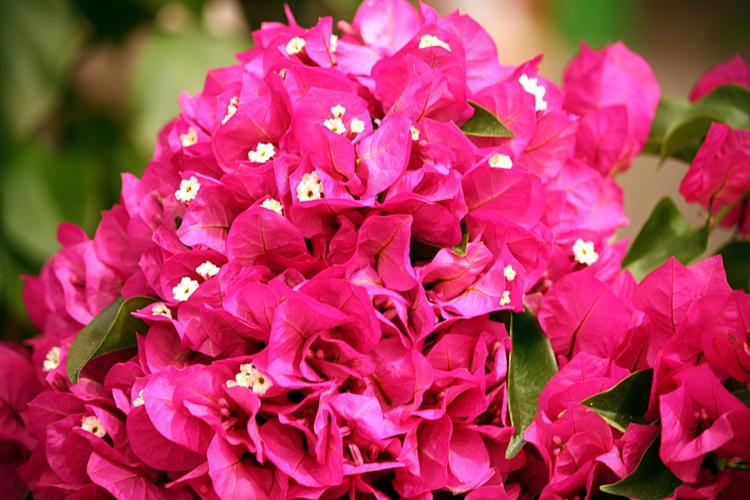
Q: How often should you prune bougainvillea in Green Valley?
A: Pruning bougainvillea should be done after flowering has ceased or as early as possible in spring after frost danger has passed. During the growing season, you can prune to direct growth as needed. How often is personal, since some folks like to let them go into wild-looking shrubs, while others prefer a tamed approach.
Peter L. Warren is the urban horticulture agent for the Pima County Cooperative Extension and the University of Arizona. Questions may be emailed to
- By Peter L. Warren Special to the Arizona Daily Star
- Updated
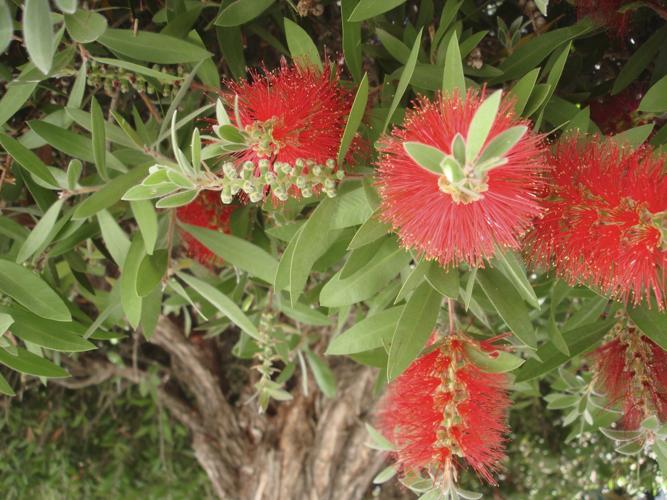
Q: We have a bottlebrush tree that is failing to thrive. It does not bloom much, nor does it seem to put out that much new growth. We have had this house for 15 years, so it is older than that.
We have had to trim off several dead branches over the years and recently lost a big branch due to wind. We feed it and water it, but not overly so in either case. Would trimming it way back stimulate growth? If so, when? Are there any fertilizers or soil builders that might help?
A: Bottlebrush can live to be 50, so it could be suffering from old age. The most common problem with them is irrigation. Since they aren’t desert plants, they need deep watering, to a depth of 24 to 36 inches every couple weeks in the summer, every three weeks in the spring and fall, and every month in the winter. Drip irrigation on a timer is ideal. I know you said you water it, but you didn’t say how much, so that’s the recommendation in case you didn’t know. A general-purpose, slow-release fertilizer once a year in the spring or fall is all you need. You could also put a 1-inch layer of compost around the root zone, being careful to keep it off the trunk, to give it some slow-release fertilization when it rains or is irrigated.
From the photo, it appears there are some dead limbs that could be pruned. Some varieties respond to hard pruning, but without knowing which one you have I wouldn’t recommend pruning it back too much. One-third is the rule of thumb to avoid too much stress on the plant. Pruning after flowering is the best time.
Peter L. Warren is the urban horticulture agent for the Pima County Cooperative Extension and the University of Arizona. Questions may be emailed to
- By Peter L. Warren Special to the Arizona Daily Star
Q: My pine tree is not doing well. I was wondering if pine beetles causing the problem.
A: I looked at your tree and I saw no sign of bark beetles. The signs to look for are red-boring dust on the bark, exit holes in the bark, and overall discoloration of the needles from green to a straw color. While your tree does show some dead needles, it doesn’t show the widespread discoloration typically seen on trees with beetle infestations. The tree appears to be too dry and I couldn’t tell if the soaker hose nearby is functioning or not. If not, that would be a good thing to fix and put on a schedule either manually or with a drip irrigation controller using the schedule describe above in the citrus question.
Peter L. Warren is the urban horticulture agent for the Pima County Cooperative Extension and the University of Arizona. Email questions to
- By Peter L. Warren Special to the Arizona Daily Star
Q: I have a mature palo verde tree in my back yard that has what appear to be some kind of white scale on the trunk and several main branches — it almost looks like cement or mortar. On some of the smaller limbs there are some blemishes that look like they might be eruptions in the bark. Happened to see a woodpecker working very hard on one of these areas yesterday. Tree seems to be losing some leaves. How do I save this tree?
A: There is a species of scale insect that infests palo verde trees, especially those in urban environments. In some cases, the scale population is so high that they completely cover the bark on parts of the tree. The appearance you described begins with small eruptions in the bark. I’ve seen many like this in downtown Tucson and on the University of Arizona campus.
While these insects will feed on sap and reduce the vigor of the trees, they aren’t likely the primary problem. Trees in urban areas surrounded by buildings and other hard surfaces are subject to more stress than the trees out in the open desert. Scale insects, like many other insects, seem to be attracted to stressed trees. So there are a couple things you can do. One is to take good care of your tree if you aren’t already properly irrigating and pruning. The second is you can treat the trunk where the scale insects reside. Typically, the recommendation for scale management is a horticultural oil spray when the immature scale insects, called crawlers, are moving about the tree. This usually happens in late winter once the weather warms sufficiently for them to reproduce. The exact timing depends on local microclimates but usually there is at least a two-week window. Keeping an eye on the situation with a magnifier should allow you to see when the immature scale insects are active. You might also find predator insects such as the twice-stabbed lady beetle feeding on these scale insects. That is why I recommend horticultural oil instead of something stronger.
Peter L. Warren is the urban horticulture agent for the Pima County Cooperative Extension and the University of Arizona. Email questions to
- By Peter L. Warren Special to the Arizona Daily Star
Q: I have a navel orange tree in my yard and I noticed this year that as the oranges are getting ripe in many cases they are splitting in half and falling off the tree. Not sure why or what would cause this. Any feedback would be great.
A: Oranges often split due to uneven irrigation. We usually notice this after significant rain events. The trees are unaccustomed to a lot of water at once and the split fruit is the result. The way to mitigate this is to water the trees more deeply throughout the year so that large amounts are less of a shock to their system.
For citrus, the recommendation is to provide water every seven to 10 days in the summer to a depth of 36 inches. In the fall and spring you can adjust the timing to once every 10 to 14 days and in the winter once every 14 to 21 days. Using a drip irrigation system is best and the emitters should be arranged in a circular fashion near the drip line of the tree. Based on the size of your tree, four emitters would be sufficient.
Peter L. Warren is the urban horticulture agent for the Pima County Cooperative Extension and the University of Arizona. Email questions to
- By Peter L. Warren Special to the Arizona Daily Star
Q: I was surprised to read your answer to the Green Valley lady who wanted to relocate lizards. I am the opposite of her: I would love to relocate some lizards from my office building area to my home, if I could catch them. I live in the northwest area of Tucson near the Tucson Mountain foothills and we do have a few lizards. I would like to know how to encourage them to stay and bring their friends.
A: The Arizona Native Plant Society has a brochure on its website that describes how to make your yard lizard friendly. You can also check the Tucson Herpetological Society website for more information on lizard species.
In short, providing a variety of plants and shelters for lizards should entice them to make homes in your landscape. Lizard-friendly plants can be trees, shrubs, cacti, and flowering plants that provide places to forage, bask, hibernate, and breed. Native plants such as prickly pear cactus, desert spoon, and cholla cactus work well for this purpose. Lizards need protection from predators like cats, dogs, and birds. A simple way to provide protection is by creating rock or log piles. These piles will give lizards places to bask and forage. If you build it, they will come.
Peter L. Warren is the urban horticulture agent for the Pima County Cooperative Extension and the University of Arizona. Email questions to
- By Peter L. Warren Special to the Arizona Daily Star
Q: I planted milkweed last year in order to attract monarchs to my yard. This year I had a bunch of caterpillars, then I found milkweed assassin bugs. I have not seen any caterpillars since. My question is, are the assassin bugs harmful to the monarchs? I read they are beneficial, but they do kill caterpillars. Nothing I can find says they are bad for monarchs, but I’m thinking they are. Please let me know what I should do.
A: There is a common bug found on milkweed that resembles the assassin bug and feeds only on the plants. The species you are seeing is the large milkweed bug (Oncopeltus fasciatus) as opposed to the small milkweed bug that may also be found. I am seeing them on my milkweed now and the caterpillars that were on my plants just finished pupating. I saw an adult butterfly emerging this weekend. So I would bet the life cycles of these insects are giving you the impression there is cause and effect when there is none.
Peter L. Warren is the urban horticulture agent for the Pima County Cooperative Extension and the University of Arizona. Questions may be emailed to tucsongardensage@gmail.com
- By Peter L. Warren Special to the Arizona Daily Star
Q: I had to cut limbs off of my organ pipe cactus and another tubular cactus because they were blocking the sidewalk to my house. Can I transplant those limbs? Hate to throw them away.
A: The short answer is yes. My retired colleague, Jack Kelly, described the steps this way. First, in case you didn’t already, you should make sure the cut you made to remove the cutting from the parent plant was with a sharp knife so the parent plant will have an easier time sealing the wound. Cutting at a 45 degree angle will protect the parent plant by reducing the chance of water collecting in the wounded area. Square off the base of the cutting, dust with sulfur and/or rooting compounds and let air dry for up to several months until the cut is callused over to prevent rot. Most cactus species are propagated during August through October when nighttime temperatures are 60 degrees or above and soil temperatures are warm and conducive to rooting. After the callus has formed, fill a container with 50 percent pumice or perlite and 50 percent peat or compost. Cuttings should be placed deeply enough in the container so the cuttings will not fall over. Irrigate the cuttings when the soil is slightly damp, and keep them in a bright area. Light levels are important. The dappled shade of a tree will often provide a great location for rooting to occur. With most species, rooting should occur within 4 to 6 weeks in summer. For some species such as organ pipe cactus (Stenocereus thurberi), rooting may take several months. Once the cuttings are rooted, the growing tip will show signs of new growth. At this time the cuttings will become “plump,” indicating that roots have formed and that water and nutrient uptake has occurred. Cuttings may be grown in 1 or 2 gallon containers for up to a year without requiring transplanting.
Peter L. Warren is the urban horticulture agent for the Pima County Cooperative Extension and the University of Arizona. Questions may be emailed to tucsongardensage@gmail.com
- By Peter L. Warren Special to the Arizona Daily Star
Q: We have lived in Green Valley in a well-established subdivision for about 10 years. Initially we had an occasional lizard, but for the past two years we have in increasing number, which range from small to large (these are not the Gila monsters). The small ones are a real nuisance as they get under the screen doors and into the house. Is there any way to trap and relocate the lizards? My dog doesn’t seem to bother them.
A: I am afraid that lizards are just part of living in the desert. Even if you trap and relocate them, others would likely replace them. I expect they are making homes in your area because there is food and shelter nearby. And let’s also not forget that relocating wildlife, lizards or rodents for example, outside your property isn’t legal without a license from Arizona Game & Fish. There are businesses that can do this for you and they are listed on the azgfd.com website. Probably the best thing you can do is make sure your house is well sealed with door sweeps and any other holes protected with fine mesh hardware cloth. You might also consider the benefits of lizards. They are great predators of insects that might otherwise be bothering you and your plants.
Peter L. Warren is the urban horticulture agent for the Pima County Cooperative Extension and the University of Arizona. Questions may be emailed to tucsongardensage@gmail.com
- By Peter L. Warren Special to the Arizona Daily Star
Q: Our apricot tree has yellow ooze on the trunk, which we think could be a fruit tree borer. Do you have any words of wisdom about how to control this insect on this tree and others, as well as how we might treat this particular infection?
We’d like to use the IPM approach that you instilled in us. We’ve heard about covering damaged areas of bark, insect traps and other products, poking wires into larvae holes, etc.
A: After looking at the tree, I think it might be gummosis rather than a peach tree borer. The main reason is the location of the gum. The borer you mentioned typically attacks less than one foot from the soil line. I see gum higher on the trunk and also some near a pruning cut on the north side of the tree.
The gummosis pathogen is known as Cytospora canker and is caused by a fungus, Leucostoma cincta. It invades and kills bark and cambial tissue through wounds such as pruning cuts, sunscald, hail, etc. Gumming from cytospora is dark amber in color, and if you scrape the outer bark, the dead phloem will appear cinnamon brown in color.
Cytospora canker is an opportunistic pathogen, meaning that it invades trees through wounds. It can be found almost everywhere, so prevention is the key to management. Management for cytospora includes making proper pruning cuts (i.e., do not leave stubs or do not make “flat cuts” that remove the branch collar where healing would normally occur) and do not prune in wet weather.
Affected limbs should be pruned back to healthy wood and make sure you sterilize pruning tools with 10 percent bleach between cuts. If a tree is severely affected, it’s best to remove it and start over. Prevention also includes keeping trees healthy with optimal watering, mulching, nutrition, etc.
Peter L. Warren is the urban horticulture agent for the Pima County Cooperative Extension and the University of Arizona. Questions may be emailed to
- By Peter L. Warren Special to the Arizona Daily Star
Q: Last year I was advised to try swabbing the feeding ports with canola, or like oil to discourage bees at our hummingbird feeders but that doesn’t seem to have any effect this year. I don’t know what kind of bees, and I don’t want to kill them, but I’m tired of them.
A: Planting a variety of flowering plants nearby as an alternative for the bees would likely lessen their visits to your hummingbird feeders. Bees seem to prefer flowers to feeders if they are available. Flowers have chemical cues and visual cues to attract them.
Bees might also visit your feeders for the water. If there hasn’t been any rain lately you could put out a bowl of water with something floating in it so they won’t drown. Just be sure to rinse it out every few days so you don’t breed mosquitoes.
Peter L. Warren is the urban horticulture agent for the Pima County Cooperative Extension and the University of Arizona. Questions may be emailed to
- By Peter L. Warren Special to the Arizona Daily Star
Q: I vegetable garden in Rubbermaid water troughs, 300-gallon and smaller due to the round tailed ground squirrels that are abundant in my area, Green Valley. Short of emptying them now and then and hand picking the grubs what do you suggest as an organic remedy for my grub problem?
A: Just a few grubs in a container garden is not unusual or necessarily a problem. Turning the soil can expose the grubs to the surface and birds would be likely predators. There are multiple species of white grubs and their diets differ somewhat so knowing which ones you have may be helpful.
The largest of these grubs we commonly see are the fig beetles (Cotinus mutabilis). These beetles seek soil that has a significant amount of organic matter in which to lay eggs so our nice vegetable gardens and compost bins with fresh compost and manure are prime real estate. The grubs feed primarily on decaying organic matter and occasionally plant roots so we don’t usually consider them to be pests to manage as much as helpful decomposers.
Peter L. Warren is the urban horticulture agent for the Pima County Cooperative Extension and the University of Arizona. Questions may be emailed to
- By Peter L. Warren Special to the Arizona Daily Star
Q: May I call upon your expertise in sharing some insight on this insect attracted to the broccoli starts?
A: That is the bagrada bug (Bagrada hilaris). It was first found in California in June of 2008. Since 2010 it has been found in many parts of Arizona including Yuma, La Paz, Maricopa, Pima and Pinal counties.
This relatively new pest insect is native to Africa, India and Pakistan among others. Although damage attributed to bagrada bugs has been observed in corn, cotton, potatoes plus other crops and weeds, members of the plant family Brassicaceae have been more heavily affected in home gardens. The brassicas include many cool season vegetables, such as kale, mustard, cabbage, arugula, broccoli, cauliflower, radishes, and brussels sprouts.
If your plants are heavily infested you might just pull them up and destroy them. A smaller infestation can be treated with pyrethroid insecticides. If you prefer nonchemical methods, you can squish them individually or drown them in soapy water.
Peter L. Warren is the urban horticulture agent for the Pima County Cooperative Extension and the University of Arizona. Questions may be emailed to
- By Peter L. Warren Special to the Arizona Daily Star
Q: I would like to add a wood-mulch product to my vegetable garden. The product I would like to use is made from mesquite and eucalyptus wood. Would adding the eucalyptus chips as a component to the soil be okay? I have read mixed opinions regarding the addition of eucalyptus chips — some say it is beneficial and some say it will inhibit the growth of vegetable plants. What is your opinion/recommendation?
A: This is a bit of a myth. Some plants produce chemicals that affect nearby plants, in some cases preventing germination or restricting their growth. While some trees do have an allelopathic quality, that soon ends once the wood is chipped into mulch.
These wood chips should be no different from any other mulch. They do provide long-term, slow-release fertilizer, and there is some weed suppression, mostly from blocking sunlight.
Peter L. Warren is the urban horticulture agent for the Pima County Cooperative Extension and the University of Arizona. Questions may be emailed to
- By Peter L. Warren Special to the Arizona Daily Star
Q: Would you be able to help me identify the pest causing puckering of new growth leaves on our young lemon tree in Marana? I would also appreciate your advice for treatment.
A: The damage you are seeing is caused by thrips. These tiny insects feed on new growth in the bud stage, causing distortion. The good news is they do not cause significant damage to the plant and can be ignored. The leaves will still be able to photosynthesize. Their damage is largely cosmetic, and for this reason we do not recommend any treatment.
Peter L. Warren is the urban horticulture agent for the Pima County Cooperative Extension and the University of Arizona. Questions may be emailed to
- By Peter L. Warren Special to the Arizona Daily Star
Q: How often should you prune bougainvillea in Green Valley?
A: Pruning bougainvillea should be done after flowering has ceased or as early as possible in spring after frost danger has passed. During the growing season, you can prune to direct growth as needed. How often is personal, since some folks like to let them go into wild-looking shrubs, while others prefer a tamed approach.
Peter L. Warren is the urban horticulture agent for the Pima County Cooperative Extension and the University of Arizona. Questions may be emailed to
- By Peter L. Warren Special to the Arizona Daily Star
Q: We have a bottlebrush tree that is failing to thrive. It does not bloom much, nor does it seem to put out that much new growth. We have had this house for 15 years, so it is older than that.
We have had to trim off several dead branches over the years and recently lost a big branch due to wind. We feed it and water it, but not overly so in either case. Would trimming it way back stimulate growth? If so, when? Are there any fertilizers or soil builders that might help?
A: Bottlebrush can live to be 50, so it could be suffering from old age. The most common problem with them is irrigation. Since they aren’t desert plants, they need deep watering, to a depth of 24 to 36 inches every couple weeks in the summer, every three weeks in the spring and fall, and every month in the winter. Drip irrigation on a timer is ideal. I know you said you water it, but you didn’t say how much, so that’s the recommendation in case you didn’t know. A general-purpose, slow-release fertilizer once a year in the spring or fall is all you need. You could also put a 1-inch layer of compost around the root zone, being careful to keep it off the trunk, to give it some slow-release fertilization when it rains or is irrigated.
From the photo, it appears there are some dead limbs that could be pruned. Some varieties respond to hard pruning, but without knowing which one you have I wouldn’t recommend pruning it back too much. One-third is the rule of thumb to avoid too much stress on the plant. Pruning after flowering is the best time.
Peter L. Warren is the urban horticulture agent for the Pima County Cooperative Extension and the University of Arizona. Questions may be emailed to
 Tucson's El Güero Canelo for sale
