

180-mile commute; governor's bisexuality; sex tourism conviction
- Updated
Odd and interesting news from around the West.
- By GORDON FRIEDMAN, Statesman Journal
- Updated
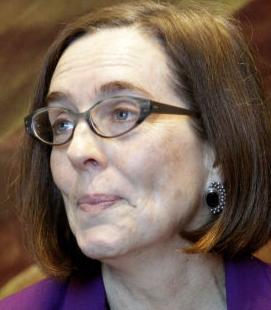
SALEM, Ore. (AP) — Willamette University President Stephen Thorsett introduced Oregon Gov. Kate Brown to a crowd of thousands last weekend as the school's 2016 commencement speaker.
As Brown approached the microphone, Thorsett, adorned in full academic regalia, bent down and positioned a small black wooden box behind the podium. Brown, 55 and short of stature, thanked him and stepped up.
Her speech had all the hallmarks of a typical commencement address: She told the 400-some graduates to find a path, help others, have ambition and work hard.
And then the governor made uncharacteristic, telling remarks about her personal life — details about being a family practice lawyer and public servant, underscored by the realities of living for years as a closeted bisexual.
Brown said that as a new lawyer in the 1980s, she felt terrified when going to work, afraid of losing her job if someone discovered that she was seeing a woman. (Brown has been married to her husband, Dan Little, for nearly 20 years and has two step-children.)
It was a rare moment when the governor spoke publicly about her sexuality.
"I wanted to share that because people don't always appear as they seem," she said during an interview this week at her personal office in the Capitol.
Though she feared losing her job in the '80s, Brown wouldn't be outed publicly until the mid-'90s when the Oregonian published a story about LGBT legislators.
The outing forced her to confront the truth with her parents, who flew from Minnesota to Oregon after the news broke. They had a difficult conversation, telling Brown it would be easier if she were just a lesbian.
She wrote in "Out and Elected in the USA," an online collection of essays by LGBT elected officials, that some of her gay friends called her "half-queer." Straight friends were convinced she couldn't make up her mind.
The most frightening part was coming out to fellow legislators.
At the time, Oregonians were presented with anti-gay ballot measures, though they failed.
Brown, then a member of the state Senate, served on a committee where all the other members were white, male and presumably straight.
"And they didn't have any experiences like mine," she said. "They didn't know what it felt like to be afraid to go to work."
Members of her Senate caucus told bisexual jokes. In a way, Brown found solace in the levity.
Bill Markham, an older, more experienced Republican lawmaker, joked with Brown about the Oregonian article, saying perhaps he now had a chance with her.
"I was really nervous about how my colleagues were going to relate to me," she said. Markham, who "used to flirt with everybody," she says, broke the ice with his comment, enabling them to connect.
Yet Brown had only figured out "who, or what" she was when in her 30s, she wrote. She didn't know the implications of being an openly bisexual legislator.
"There was no one else in the country ... So it was like, what does this mean? I was very upfront with it, but I hadn't put a label to it," she remembered.
It wasn't easy.
"Some days I feel like I have a foot in both worlds, yet never really belonging to either," she wrote in her essay.
Since becoming governor in 2015, the label of being the nation's first openly bisexual governor has followed Brown in the national press.
She sighed when asked if she resents the label.
It's more challenging for her family than for her, she said.
"I think my mother said to me, 'Do they have to say it every single time?'"
Brown said being out is important, and takes strength. She commended Willamette Bearcats football player Conner Mertens for coming out in 2014.
"People just don't get it," she said. "For him to do that was really courageous."
Shortly after being sworn in, Brown received a letter from a young bisexual person in Indiana. It stuck with her.
"They felt like my coming out gave them a reason to live, like there's other people out there like me," she said. "That's what I was able to say to my mom: This makes a huge difference to people."
- Updated
SHINE, Wash. — Sonar is being used to scan the bottom of Hood Canal in the search for a missing transportation worker and vehicle.
The Kitsap Sun reports the unidentified worker has been missing since Monday.
Transportation officials say the maintenance employee may have driven off the Hood Canal bridge.
The state's transportation department hired Global Diving and Salvage to search 400 feet deep using sonar that can scan larger areas at higher resolution.
Transportation department spokeswoman Claudia Bingham-Baker said a submersible rover will check hot spots Sunday.
- By CHRISTINE ARMARIO and ROBERT JABLON Associated Press
- Updated
LOS ANGELES — A massive space shuttle fuel tank squeezed through the streets of Los Angeles and loomed over vehicles on a busy freeway Saturday to join the retired orbiter Endeavour on display at the California Science Center.
The 33-ton, 154-foot-long external propellant tank began moving a few minutes after midnight from coastal Marina del Rey, where it arrived by barge Wednesday, to the California Science Center in downtown Los Angeles.
The orange-brown, sausage-shaped tank — the last of its kind — is traveling by truck at about 5 mph. By early morning, it had moved through suburban Inglewood. Crews trimmed a few trees and unbolted a stoplight pole and turned it so the arm wouldn't hit the towering tank.
Freeway drivers got a shock as the tank rolled by on a bridge over Interstate 405, an artery west of downtown that was busy even on Saturday morning.
The shuttle was escorted by police, a fire truck and a crew of city officials as it passed through south Los Angeles taco shops, car washes and strip malls. Many people stood with their cellphones, trying to capture the perfect shot — and a selfie.
"When you look at the people who are out here, it's little kids, it's older folks, it's white folks, it's black folks, it's Latino folks," said Shelly Arsneault, 49, of Whittier. It's everybody. It's cool. It's LA."
Children, a few wearing home-made space helmets, were enthralled.
Cindy Hernandez, 11, of Inglewood, said the tank was "amazing."
"It will be a memory for me," she said.
"It's this next generation of explorers. These kids are going to remember today their whole lives. And they're going to think about it when they choose their career paths. They're going to study harder in school. And it's going to make us happy," astronaut Mike Fincke, who flew on the Endeavour's final flight in 2011, told the Los Angeles Times.
"It really makes me feel that a lot of people appreciate what our space program is doing," said Sandy Magnus, another astronaut. "Days like this I think are days that bring us all together."
The tank will be displayed upright along with the shuttle and two solid-rocket boosters, as if ready for takeoff.
The journey was expected to take 13 to 18 hours to squeeze down 16½ miles of streets, avenues and boulevards to Exposition Park near downtown.
The trek drew smaller crowds than the journey of the 122-foot-long Endeavour. With a wingspan of 78 feet, the orbiter was similarly hauled 12 miles to the center from Los Angeles International Airport. Extensive preparations for Endeavour's trek included removing trees, street posts and other obstacles, but that journey still took about 17 hours longer than planned.
Although longer, the external tank is much narrower than the shuttle, with a diameter of 27.5 feet.
The tank was shipped to California by barge from a NASA facility in Louisiana. The tank traveled through the Panama Canal to the Pacific and arrived at Marina del Rey, a yacht harbor on the Los Angeles County coast where it was offloaded to await the weekend move.
The move Saturday began with a bit of fanfare. A New Orleans-style jazz band played "When the Saints Go Marching In," and some people waved handkerchiefs to wish the tank bon voyage.
Known as ET-94, it was NASA's last flight-qualified external tank, but it was never used before the shuttle program came to an end.
External tanks not only carried propellant for space shuttles' main engines, they were the backbone of the launch system. An orbiter and two solid rocket boosters would be attached to the tank for the fiery ascent into space.
Inside ET-94 are two internal tanks for millions of pounds of liquid oxygen and liquid hydrogen as well as other equipment.
The tank's surface is covered with a layer of foam to keep the propellants at the proper temperature, reduce the formation of ice and to provide protection from heat as it sped through the atmosphere.
External tanks used on shuttle missions would be destroyed, burning up as they fell back through the atmosphere after being discarded by the orbiter.
ET-94 was built for use by the shuttle Columbia, which disintegrated over Texas as it was returning from a mission. The investigation found that foam fell off that mission's external tank during launch and punched a hole into a wing, allowing hot gases of the fiery re-entry inside the structure. Investigators used many pieces of foam from ET-94 in tests to come to the conclusion.
- The Associated Press
- Updated
OAKLAND, Calif. — Bay Area Rapid Transit agreed to pay a San Francisco woman $1.35 million to settle a lawsuit alleging a transit officer broke bones in her face and left her bloody and unconscious.
BART says in a statement it settled the lawsuit earlier this month and accepted full responsibility for the injuries Megan Sheehan received after an officer slammed her face-first onto the floor, the East Bay Times reported Saturday.
Sheehan filed the lawsuit last year following her St. Patrick's Day arrest in 2014 at the Lake Merritt BART station in downtown Oakland.
BART police said at the time that Sheehan was drunk and argumentative with officers who found her on a bench inside the station. Officers arrested her on suspicion of public intoxication and resisting arrest.
Sheehan's complaint accused an officer of violently beating her. In a surveillance video of the incident, an officer can be seen grabbing her hand and pulling it around her back, followed by her being forced quickly to the ground and the sound of a loud thwack. Sheehan is then seen lying in a pool of her own blood, face down.
BART officials said in a statement the agency was committed to reform and ensuring such incidents don't happen in the future.
"Over the past six years, the BART Police Department has undergone tremendous organizational change and has worked tirelessly to reshape and reform its approach to training and policing to better meet the needs of the communities BART serves," the statement reads.
They say an internal investigation was put on hold when the lawsuit was filed, pending the outcome of the lawsuit. That investigation will now resume, and officials said "action that is deemed appropriate" would be taken at the conclusion of the investigation.
- By MARTHA BELLISLE Associated Press
- Updated
SEATTLE — Reba Golden hurt her back after falling two floors while building an addition to her house in Honduras, but when she returned to Seattle for a routine spinal surgery, she suffered blood clots, severe bleeding and died in 2007 on the operating table.
Joan Bryant's back had bothered her since a 1990 car accident, so in 2009, she sought help from a Seattle spinal surgeon, but she bled out on the operating table and could not be revived.
Like at least three spinal surgery patients before them, Golden and Bryant died after their doctor injected bone cement into their spine and some of the material leaked into their blood stream, causing clotting.
The patients were never told Norian bone cement wasn't approved by the Food and Drug Administration. Instead, Norian and parent company Synthes used surgeons in what one doctor called "human experimentation." Federal prosecutors say the aim was to skirt a long, costly regulatory process.
The Golden and Byrant families have filed lawsuits against Dr. Jens Chapman, the companies, the University of Washington, Harborview Medical Center and Washington state. The lawsuits claim Chapman knew the cement caused lethal clotting, and that the university and hospital knew or should've known the product had been prohibited for such use. The first trial is scheduled for June in Seattle.
The Golden lawsuit, filed by her daughter Cynthia Wilson, also accuses Chapman, Synthes President Hansjorg Wyss and the university of running a criminal enterprise under Washington's Criminal Profiteering Act.
Synthes and Norian, along with four top executives, were indicted in 2009 on charges of conducting unauthorized clinical trials despite warnings that the bone cement caused deadly blood clots. Norian agreed to pay a $22.5 million penalty, and Synthes paid a $669,800 fine, and the executives went to prison.
Tina Mankowski, a spokeswoman for Chapman, the university and the medical center, said they "vigorously deny any wrongdoing" and they'll let the legal process take its course. Jodie Wertheim, a spokeswoman for Synthes, which was bought by Johnson and Johnson, said they can't comment on pending litigation.
____
In 2000, spinal surgeons had few options if they wanted to use a cement-type product to treat vertebral compression fractures to reduce pain.
Synthes bought the California-based Norian Corporation, which had developed bone cements used in skull and arm-bone surgeries. Synthes planned to alter Norian's product so it could be used in spinal surgeries, but that meant a long FDA-approval process.
Synthes opted to take another route, according to court records.
Wyss directed a few sites to perform 60 to 80 procedures in spinal surgeries using the Norian bone cement and to publish clinical results. He recruited Chapman and other surgeons to test-market the product on patients, court records show.
Chapman and a colleague at UW conducted an experiment in 2002 using bone cement on pigs. The material caused clotting, killing the animals. The doctors also tested it on human blood in test tubes. Again, it caused clotting. Chapman reported his findings to Synthes.
A Synthes employee in its regulatory division warned company officials the FDA had said it couldn't use Norian bone cement in spinal surgeries without approval. A Synthes medical consultant warned company officials in 2002 that unauthorized clinical trials amounted to "human experimentation."
The company pushed forward with its plan to "test market" the product in spinal surgeries, court records show.
In 2003, a patient died on a Texas operating table after a spinal surgeon injected Synthes bone cement into her vertebrae. Another patient died seven months later in California, and another died four months after that.
By 2006, the FDA had cleared Synthes to market a bone cement called Norian CRS but said its label must state it's not to be used on the spine. Synthes sent a 2007 letter to surgeons announcing that restriction.
Chapman performed more using Norian after the letter was sent, according to court records. He also held the Hansjoerg Wyss endowed chair, which secured millions for the university.
___
When Golden fell at home in 2007, she suffered compression fractures in her spine. Months later, Wilson said her mother was feeling better, but she decided to go ahead with surgery.
Chapman scheduled the operation for August 2007. Records indicate he never told Golden that he planned to use bone cement or that the FDA specifically prohibited its use in spinal surgeries.
Chapman used the bone cement but had to stop the surgery when Golden's blood pressure dropped and she began to bleed out. Attempts to revive her failed.
On June 16, 2009, Norian and Synthes, along with four company officials, were indicted on federal charges in Pennsylvania for conducting illegal clinical trials.
Thirteen days after the indictments, Chapman started Joan Bryant's spine surgery using Norian cement.
Bryant suffered severe bleeding and almost died. Chapman stopped the surgery and tried again twice over the next few days using Norian cement, court records show. During the third operation, Bryant suffered bleeding and died.
In 2010, the companies pleaded guilty to conspiracy to impede the FDA and that they had shipped "adulterated and misbranded Norian XR."
- Updated
GLENDALE, Ariz. — A Glendale man is recovering after being stung by bees more than 200 times.
Glendale fire spokesman Mike Young says the man's neighbor called around 7:45 a.m. Saturday to report a bee attack at a home in the area of 61st Avenue and Ocotillo Road.
Young says the 56-year-old man had been weeding in his front yard when he was swarmed.
Firefighters, wearing proper gear, located him and got him indoors
Young says he was transported to the hospital in serious but stable condition.
The man's wife and a neighbor were each stung 20 times. But they declined treatment and hospital transport.
Young says firefighters could not locate a hive and advised the man's wife to call a beekeeper.
Residents have been advised to be on alert for bee activity.
- The Associated Press
- Updated
BOISE, Idaho — A woman accused of poisoning a fellow inmate's coffee has been arrested after a warrant was issued more than a year ago.
KTVB-TV reported that 41-year-old Rocio Contreras-Loya was charged with a felony after law enforcement officials said she put cleaning solution into an inmate's coffee in 2014 while in the Ada County Jail. Two women drank the coffee before realizing it was tainted.
Investigators say the cleaning solution is used to mop jail floors.
The women were able to return to their dorm after receiving medical treatment.
Contreras-Loya was released from jail after a warrant was issued in 2015. However, she was arrested Wednesday in Vale, Oregon and returned to Ada County Jail on a $10,000 bond.
A preliminary hearing was set for June 2.
- The Associated Press
- Updated
SAN FRANCISCO — A federal jury has found a San Jose man who traveled to Manila several times to have sex with an underage girl guilty of sex tourism.
A federal jury on Friday also convicted 56-year-old Michael Lindsay of obstruction charges.
Federal prosecutors say evidence showed that Lindsay frequently traveled from San Francisco to the Philippines capital to have sex with a 13-year-old girl.
They say the investigation began in 2012 when Homeland Security Investigations received a report that Lindsay arranged the meetings with the girl's mother and paid the woman for the sexual encounters.
Prosecutors say Lindsay tried to tamper with a witness and obstruct justice after finding out a federal grand jury had charged him.
He is currently in custody and is scheduled to be sentenced in August in San Francisco.
- Updated
TACOMA, Wash. — A court clerk was sentenced to about two years in prison for using court records to find underage girls to beat up and have sex with.
The News Tribune reports that James Porter was sentenced Friday. It ended his 20-year career as a Pierce County Superior Court deputy clerk.
Porter had previously pleaded guilty to commercial sexual abuse of a minor.
According to charging papers, Porter gave someone a ride home in June and later used court records to find the person's phone number. Months later, he contacted the person saying he was looking for a woman for sex and to assault. He said he knew the person had a history of prostitution.
He later asked for an underage girl. The person contacted the police.
- The Associated Press
- Updated
CEDAR CITY, Utah — Cedar City's police chief is departing.
The Spectrum of St. George reported that Police Chief Robert Allinson announced he is retiring next month.
Allinson made the news public Thursday during the police department's annual awards banquet.
He has been chief for nearly 19 years.
He started out as a dispatcher for the Layton Police Department.
Mayor Maile Wilson says the city will start planning a hiring process for a successor in the next few days.
Allinson says he wants to spend more time with his family.
His last day will be June 30.
- The Associated Press
- Updated
HELENA, Mont. — Montana Fish, Wildlife and Parks is destroying half a million hatchery trout because of disease concerns.
In a press release Friday, the department said that a temporary loss of power May 12 had affected control and monitoring of water levels behind the Rainbow Dam Reservoir. Officials have no way to confirm Missouri River water didn't enter an area of the adjacent Giant Springs Fish Hatchery where 450,000 rainbow and 50,000 brook trout were housed. The river is infected with a parasite that can kill young trout and possibly with other pathogens.
Trout from U.S. Fish and Wildlife Service and other state hatcheries will replace the Giant Springs trout, which are used to stock waters across Montana.
Once the fish are destroyed, Giant Springs hatchery areas will be disinfected.
- Las Vegas Sun
- Updated
LAS VEGAS — Roxanne Lang sinks into the backseat, munching on a breakfast of toast swaddled in a paper towel.
At 6:30 a.m., traffic is still light on Interstate 15 southbound out of Las Vegas. Up ahead, the town of Jean appears from behind a mountain, a small gray oasis on a brown landscape. It's usually around here that the chatter between Lang and the other teachers in this white Ford van trails off into silence as they settle in for the ride.
If they worked in Clark County, they'd probably be waking up right about now. But these teachers follow a different schedule. Every day they drive 180 miles — around three hours round trip across state lines — to teach in Baker, California.
Asked why, they answer in unison.
"Because we're all crazy," they say, laughing, as the van trundles down the highway.
Then again, maybe not. Every year, big-city school districts watch in horror as hundreds of teachers retire or quit the profession, leaving hundreds of classrooms without a qualified teacher. Right now, Las Vegas schools are short hundreds of teachers.
And if those who leave the profession could be described as victims of the shortage, these teachers are the refugees.
Helen Knight, Baker's middle school history teacher, discovered the school during a road trip to see family in Southern California. She remembers what it was like to teach in Orange County.
"I've had 32 kids in a class," she said, eyes on the road. "I loved teaching, but it was hard to zero in on the specific needs of the kids."
Lang, a speech pathologist, started working at the school in the early 1990s.
She, like the other eight teachers who comprise the Baker caravan, considered working at CCSD but quickly decided against it.
"Quite frankly, the pay scale was ridiculous," said Lang, who lives within walking distance of a middle school in Henderson. "I had all this experience, but they weren't willing to pay for it."
That hasn't changed much in the 25 years she's been commuting to Baker. The starting salary for teachers in the tiny desert town is $44,000. In Las Vegas, it's $34,000, though it will be $40,000 next year after a new contract takes effect.
At the same time teacher shortages are ravaging America's cities, however, rural schools have arguably been hit hardest. Teacher turnover is high, and many small towns are finding it hard to attract teachers.
"Rural schools today aren't the pastoral institutions of a simpler yesteryear that many Americans imagine," former education secretary Arne Duncan told a gathering of the American Association of School Administrators in 2010.
But things are different in Baker, population 700 and change.
The school stretches out on a sandy patch of high desert steppe on the northern edge of town. Its handful of old buildings, the sum of the Baker Valley Unified School District, sits amid groves of tall palms and oaks fattened by spring showers. Aside from an occasional private plane sputtering on final approach to a nearby airstrip, things are quiet here.
"It's the best-kept secret in the desert," said Ronda Tremblay, principal of the school and superintendent of Baker Unified.
It's a soft-spoken counterpoint to prototypical urban schools, with their chain-link fences and overcrowded classrooms. While many are attracted to Baker because of the pay, they stay because the work is satisfying, the way teaching should be but often isn't in large urban school districts.
"I don't think it's worth it when I have 30 kids who don't know me," said teacher Katherine Souratha, dishing up a bowl of homemade tortilla soup during lunch on Teacher Appreciation Day.
"At least here I get paid more and get free food," she says with a grin.
Class sizes are small, often unbelievably so. Alan Acosta, also from Vegas, teaches high school math. In one of his morning sessions, there are only three students.
"It's not just that you get to know the kids in your own classes, you get to know everyone," said Marco Rudolph, a part-time substitute at the school.
With the exception of the superintendent and a few teachers, almost all of the staff lives elsewhere, even the cafeteria lady.
Teachers drive in from a number of California towns, including Palmdale, Apple Valley, Hesperia, Barstow and Kelso. A second van of teachers arrives from Victorville, but the record for longest commute goes to Art Gonzalez, the second-grade teacher who drives in each day from San Dimas near Los Angeles.
The lack of housing and amenities like a grocery store and bank mean it's hard to get teachers to move to the town, forcing the school district to be creative. The Ford Transit vans used by the carpooling teachers are owned by the district, and teachers help offset their costs by paying $70 a month to use them.
"It's an expense you have to make to get teachers to come out here," said Bryan Verley, the school's business manager.
The journey to Baker takes the teachers past the Mojave Desert's sprawl of far-flung rest stops and gas stations, ramshackle buildings obscuring trailers and mobile homes from which students emerge every morning to catch school buses.
When the road smooths out, Lang takes off a pair of dark sunglasses and applies mascara.
They haven't always had it this good. Before the district gave them a van, Lang and Acosta drove an old Chevy Lumina. The air conditioner didn't work, so they kept a stash of spray-fan bottles on hand during summer.
"We had a wet T-shirt contest every day," Lang says.
"It was unbearable," Acosta whispers.
In Baker, a town known mostly for its world-famous towering thermometer and as a final pit stop before Nevada, three quarters of the residents are Hispanic and Latino.
They find work in the many gas stations, fast food joints and truck stops that line Baker Boulevard, the main drag which, along with the Mad Greek restaurant, doubles as the only hangout spot for the town's high schoolers.
"We just walk around Baker and eat," freshman Alex Munoz said.
If the small-town feel benefits anyone, it's the students. The school is 90 percent Hispanic, and many speak English as a second language.
"We get more one-on-one with teachers rather than having to wait in a long line of students," said junior Emelie Fisher, relaxing at a picnic table in the school's courtyard.
"It's pretty amazing that they come all this way just to teach us," she added.
When the bell rings, she gets up to join a handful of students heading quietly to class. There's no yelling or running. When teachers arrive, they're met with a warm smile and a hello.
The pay is a plus, but, ask any teachers here and they'll say the students themselves are the reason they keep coming back.
"This is a just really nice place to work," said Paul Bachman, a history teacher who commutes every day from Las Vegas in his own car. "I love these kids to death."
Cinco de Mayo is just another holiday in some schools. But here, it's a tradition for students to bring in pots of homemade pozole, a traditional Mexican soup, to share.
"Sometimes, it's about more than the money," Tremblay said.
- By DAVID ERICKSON Missoulian
- Updated
MISSOULA, Mont. — Two new businesses in Missoula will be offering sensory deprivation float tank therapy this summer, a service that is gaining in popularity across the country. Customers lay down in high-tech isolation tanks where they float on heated salt water in complete darkness and silence, which simulates an anti-gravity chamber free of mental stimulus.
For owners Matt Gangloff and his fiancee Savanna Scotson, Enlyten Lab on the Hip Strip at 521 S. Higgins, set to open later this summer, will be about helping people find peace. They say the distraction-free environment allows for relaxation and provides numerous health benefits.
Gangloff served two tours of combat duty in Iraq with the U.S. Army's 82nd Airborne Division, and was also sent to help cleanup efforts in New Orleans in the aftermath of Hurricane Katrina. And like many combat veterans, the 30-year-old UM graduate has been diagnosed with post-traumatic stress syndrome. He finally found a solution when he began travelling to a Whitefish business that offers float tank therapy.
"The reason I started floating was I'm a two-tour combat veteran and so when I came to college, I came to college as a 24-year-old with three years of combat under my belt," he said. "I made it through college but what I didn't realize was the impact that had on me and the stress and the issues that I was carrying around. And in searching for kind of relief from that, I tried everything there is. Medication, therapy, all the things they say you should do to overcome coming back from combat. And nothing worked."
Changing his diet and living a healthier life helped, but it wasn't totally doing it for him.
"But what was really the breakthrough for me was getting in a float-tank and finally getting the concept that there's no outside thing you can do," he told the Missoulian. "It's really about digging into the mind and letting the body heal itself. And floating did that for me."
Gangloff said float tank therapy is not a new concept, but it's gaining traction recently. Besides Whitefish, there is a business that offers it in Bozeman. Another float tank therapy business in Missoula, called Floatopia, will be opening at 327 Southwest Higgins around July.
Owner Stephen Likewise said they will probably have three or four different tanks to begin with.
"We'll have one that's sort of a traditional-style tank, and one or two are going to be big float rooms with big high ceilings, sort of like an enclosed cabin area with a float pool," Likewise said. "There is one that is going to be an open pool with no walls or ceilings so there won't be any issues with claustrophobia."
Likewise said he tried floating a few times and really enjoyed it.
"There's just a lot of different types of people with different problems and it can really help," he said. "And I think Missoula is a great place for a business like this."
Gangloff said most large cities in the U.S. have these types of spas.
"Float is the cool word for it, it's kind of the trendy industry term that's got a lot of sparkle, but floating is a term for real therapy that's been around since the 1950s," Gangloff said. "It's sensory deprivation or isolation tank therapy. But a modern tank is just a little bit different in that inside there is water that has Epson salt dissolved in it. So the solution is so salty that when you get into the tank you actually float on top of the water."
The water and the air is regulated to be the exact same temperature as your skin, 93.6 degrees, and there is no light inside.
"With the water being heated the way it is, you just have no inputs to the brain," he explained. "And what happens at that point is the mind kind of goes crazy for a second. It says, 'no more inputs? What do I do with myself? What do I do with my time?' Because we're constantly processing inputs. Right now as you're standing here we're processing hundreds of thousands of inputs. Your brain can handle that, no problem. The key is getting your brain to operate in an environment where there's no inputs."
Gangloff said the brain gets in a state where it says 'Ok, there is nothing to do, what do I want to do?' and the answer is often is 'I need to rest or I need to heal or I need to work something out that's been under the surface but I couldn't because I was busy doing my day job which is processing all these inputs.'
"And so what people get out of floating is a really powerful treatment for tons of mental issues, physical issues and even some issues of a higher order," he said. "And so it's kind of like deep realizations or religious experiences or mystical-type experiences."
Gangloff said they'll build two isolation rooms at first with tanks inside, but he hopes to eventually have five. For people that are claustrophobic, there will be a larger space available. The doors shut on top with just one pound of pressure, so customers can exit on their own at any time. There is also a call button inside to call Gangloff if they are feeling nervous. The cost has yet to be determined, but Gangloff said they hope to charge less than the industry average for a one-hour float of $61 per hour. There will be subscriptions and discounts for veterans and corporate wellness retreats. Each room will have a shower as well, and they will put up sunlamps in another part of the space for the wintertime.
- The Associated Press
- Updated
PORTLAND, Ore. — The parents of a newborn boy deprived of oxygen during a bungled water birth attempt have settled a lawsuit against a Portland hospital for $13 million.
The Oregonian/OregonLive reports the settlement with the Legacy Emanuel Medical Center is the largest in at least 10 years for a hospital birth malpractice case, court papers said.
The lawsuit says Amy Benton went to the hospital in December 2011, planning to give birth underwater. But documents say midwives missed a change in the baby's fetal heart rate because she was in water. By the time she was taken out and the baby was delivered, he had been deprived of oxygen and blood, attorneys said.
The lawsuit faults the hospital for failing to perform an immediate C-section.
The hospital declined comment to the newspaper.
- Fairbanks Daily News-Miner
- Updated
FAIRBANKS, Alaska — Fairbanks Memorial Hospital's senior culinary manager gets to be creative with the menu.
Ray Flores, 51, likes to make new recipes. Recently, he's been thinking about adapting a chicken Margherita pasta recipe he makes at home. To see if it works at the hospital, he'll make a small batch and see what the rest of the staff thinks, the Fairbanks Daily News-Miner reported.
His creativity has more bounds than conventional food service work. With a few modifications, hospital patients eat the same menus that hospital staff and visitors get at the café. Flores tries to focus on recipes that are tasty but not overly complex. His favorite hospital café food is the spinach bread, a focaccia bread with spinach, garlic and cheese.
"I've got the best test kitchen here. If I don't have something here, I can get it the next day," he said. "I want something that tastes good, that has a good appearance and is simple to make."
In mid-May, Flores was named interim senior manager of the hospital's main kitchen with the upcoming retirement of his former boss, Jane Walsh. He's been at the hospital for 19 years, working up to his current job from his start as a prep cook. The hospital also named him its 2015 employee of the year.
Fairbanks Memorial Hospital's kitchen serves the hospital's café, catering events, patients in the 152-bed hospital and as many as 90 residents at the Denali Center long-term care facility.
About 60 percent of the food goes to the café, which serves the 1,300 hospital employees as well as hospital visitors. Some people visit the hospital specifically for the food, Flores said. The café includes entrees, snacks and a large salad bar. The restaurant likely has the most expansive hours for a Fairbanks restaurant. It opens at 6 a.m. and closes at 2 a.m. 365 days per year.
Originally from California's Bay Area, Flores moved to Fairbanks when the Army brought him to Fort Wainwright. He worked as a cook at Gambardella's Pasta Bella for 12 years before starting at the hospital.
Flores oversees a staff of 60 people in his office behind the hospital café. He still spends most of his time doing food preparation and helping his cooks get ready for the busy meal times, he said.
To get the recipe approved for the hospital, Flores submits it to a hospital nutrition office coordinator to see if it meets recommended dietary allowance standards. The recipe's ingredients then get put into a database that will compare them to patient food allergies.
Many in-patient diners will drink their dinners as a smoothie. A set of industrial blenders and food processors chop up food for patients who aren't able to chew it themselves.
Cooks have more options for the recipe variations cooked for the café.
"We follow the recipe for the hospital and the Denali Center. In the café, we can season it up a little more. If we want to make it spicy, we can make it spicier. We can add a little more fat or salt," Flores said.
- The Herald Journal
- Updated
LOGAN, Utah — The wooden post in the front yard of the Duncan family's Boulevard home in Logan often gets mistaken for a mailbox. But take a closer look, and the neatly painted and designed box resembling a house is actually full of books.
Logan resident Jennifer Duncan, who is also associate dean at Utah State University's Special Collections and Archives, maintains the library of books outside her home, filled with material for all ages — from kids fiction ("Infestation: Something Huge is on the March" by Timothy Bradley) to autobiography ("The Measure of a Man" by actor Sydney Poitier).
"It's very little," Duncan laughed about her library.
The size of Duncan's library is not trivial, The Herald Journal reported. In fact, it represents something larger that is being called by some in Cache Valley a grassroots book movement.
That movement is Little Free Library, a Wisconsin-based nonprofit. It was founded by Todd Bol of Hudson, Wisconsin, who built a model of a one-room schoolhouse in his front yard, filled it with books and got a great response from the community.
He started building more and then teamed up with Rick Brooks at the University of Wisconsin-Madison.
The two men would go on to build a nonprofit that would capture the attention — and imagination — of people to build their own little libraries. By January 2016, the total number of little libraries reached over 36,000 worldwide, according to the Little Free Library website.
The website's "Frequently Asked Questions" page explains that a little library relies on the honor system. You can take a book and keep it, but you are encouraged to contribute to the little library in order to keep it stocked with quality reading material for rest of the neighborhood.
Duncan noted how the Little Free Library is a much different concept from the university library.
"This is integrated into the community, and a public library obviously does that, but this is a tiny, little neighborhood branch," Duncan said. "It's just great to have this little thing that constantly reminds people 'reading is great, books are good, take one.' We want you to enjoy them."
It is not clear how many little libraries are in Cache Valley, from a search on the website, but anecdotally, people say adding little libraries in Cache Valley is a trend.
"It's people-to-people," said Frances Titchener, of Logan, who was introduced to little libraries by Duncan. "The idea is that the books are in continuous circulation; someone takes a book from the library, and they put it back in a different one or contribute a book."
Titchener added, "When I was a child, nobody had to worry about you. The world used to be a lot simpler, and this feels like those days. That's what I like (about little libraries)."
Titchener said the little libraries concept is great because there's nothing between the person and the book, so to speak. No rules, no fees, no registration, as is the case with many public libraries.
"People can interact with books without interference," Titchener said. "I want people to experience reading books as a continuous, fluid activity, not spotted occasions. Books and reading should be a part of our life."
But little libraries should not replace brick and mortar libraries, Titchener added.
"I'm a huge fan of libraries," Titchener said. "Little libraries are not 'instead of' a library. It's like Kindle; it's not 'instead of' books; it's just a different way of looking at a book."
One of Cache Valley's little libraries is across the street from Hillcrest Elementary, maintained by Kate and Michael Twohig, who have kids who go to Hillcrest. They make sure the library is well stocked.
"I think we find it really fun," Michael, who is originally from Wisconsin and is familiar with the little library concept. "It's fun to watch people to take books, be happy, smile and laugh. It's fun to see what disappears and what comes back. It's all positive."
Little libraries is not just a box of books, Duncan, Twohig and Tichener noted. Some people have taken the concept and transformed their little libraries into something beautiful to look at.
The Duncan family moved from Center Street to Boulevard and it was hard to part ways with their former home. So when Duncan decided to have a little library in her front yard, her father-in-law made it look like a house, borrowing from elements of the old home. The blue shingles are the exact same and the yellow trim is from the Center Street home; the red is the same color as the steps on their Boulevard home.
But at the end of the day, it's not about the design of the libraries; it's that people are actually using them, Duncan said.
"We love it and we love coming out and seeing what's new," Duncan said. "It makes me happy to know I'm doing something in the community people appreciate — especially kids."
For more information about Little Free Libraries, and to find a little library near you, visit littlefreelibrary.org.
- The Associated Press
- Updated
OREGON CITY, Ore. — Oregon City police say they've arrested a cleaning woman after she was caught stealing prescription medication from a home.
KATU-TV reports that the 32-year-old Vancouver woman was charged with theft and possession of a controlled substance.
Amanda Morgan works for a company called The Cleaning Authority.
Oregon City Police Sgt. Patrick Lynch says Morgan was suspected of stealing medication from a home she cleaned. The homeowners believed Morgan was stealing hydrocodone a few pills at a time. They contacted the police and they set up a sting. They planted cameras in the home and caught Morgan in the act of stealing the drugs.
Morgan was arrested and booked into the Clackamas County Jail. Late Friday evening, Morgan was no longer listed as an inmate.
- By GORDON FRIEDMAN, Statesman Journal
SALEM, Ore. (AP) — Willamette University President Stephen Thorsett introduced Oregon Gov. Kate Brown to a crowd of thousands last weekend as the school's 2016 commencement speaker.
As Brown approached the microphone, Thorsett, adorned in full academic regalia, bent down and positioned a small black wooden box behind the podium. Brown, 55 and short of stature, thanked him and stepped up.
Her speech had all the hallmarks of a typical commencement address: She told the 400-some graduates to find a path, help others, have ambition and work hard.
And then the governor made uncharacteristic, telling remarks about her personal life — details about being a family practice lawyer and public servant, underscored by the realities of living for years as a closeted bisexual.
Brown said that as a new lawyer in the 1980s, she felt terrified when going to work, afraid of losing her job if someone discovered that she was seeing a woman. (Brown has been married to her husband, Dan Little, for nearly 20 years and has two step-children.)
It was a rare moment when the governor spoke publicly about her sexuality.
"I wanted to share that because people don't always appear as they seem," she said during an interview this week at her personal office in the Capitol.
Though she feared losing her job in the '80s, Brown wouldn't be outed publicly until the mid-'90s when the Oregonian published a story about LGBT legislators.
The outing forced her to confront the truth with her parents, who flew from Minnesota to Oregon after the news broke. They had a difficult conversation, telling Brown it would be easier if she were just a lesbian.
She wrote in "Out and Elected in the USA," an online collection of essays by LGBT elected officials, that some of her gay friends called her "half-queer." Straight friends were convinced she couldn't make up her mind.
The most frightening part was coming out to fellow legislators.
At the time, Oregonians were presented with anti-gay ballot measures, though they failed.
Brown, then a member of the state Senate, served on a committee where all the other members were white, male and presumably straight.
"And they didn't have any experiences like mine," she said. "They didn't know what it felt like to be afraid to go to work."
Members of her Senate caucus told bisexual jokes. In a way, Brown found solace in the levity.
Bill Markham, an older, more experienced Republican lawmaker, joked with Brown about the Oregonian article, saying perhaps he now had a chance with her.
"I was really nervous about how my colleagues were going to relate to me," she said. Markham, who "used to flirt with everybody," she says, broke the ice with his comment, enabling them to connect.
Yet Brown had only figured out "who, or what" she was when in her 30s, she wrote. She didn't know the implications of being an openly bisexual legislator.
"There was no one else in the country ... So it was like, what does this mean? I was very upfront with it, but I hadn't put a label to it," she remembered.
It wasn't easy.
"Some days I feel like I have a foot in both worlds, yet never really belonging to either," she wrote in her essay.
Since becoming governor in 2015, the label of being the nation's first openly bisexual governor has followed Brown in the national press.
She sighed when asked if she resents the label.
It's more challenging for her family than for her, she said.
"I think my mother said to me, 'Do they have to say it every single time?'"
Brown said being out is important, and takes strength. She commended Willamette Bearcats football player Conner Mertens for coming out in 2014.
"People just don't get it," she said. "For him to do that was really courageous."
Shortly after being sworn in, Brown received a letter from a young bisexual person in Indiana. It stuck with her.
"They felt like my coming out gave them a reason to live, like there's other people out there like me," she said. "That's what I was able to say to my mom: This makes a huge difference to people."
SHINE, Wash. — Sonar is being used to scan the bottom of Hood Canal in the search for a missing transportation worker and vehicle.
The Kitsap Sun reports the unidentified worker has been missing since Monday.
Transportation officials say the maintenance employee may have driven off the Hood Canal bridge.
The state's transportation department hired Global Diving and Salvage to search 400 feet deep using sonar that can scan larger areas at higher resolution.
Transportation department spokeswoman Claudia Bingham-Baker said a submersible rover will check hot spots Sunday.
- By CHRISTINE ARMARIO and ROBERT JABLON Associated Press
LOS ANGELES — A massive space shuttle fuel tank squeezed through the streets of Los Angeles and loomed over vehicles on a busy freeway Saturday to join the retired orbiter Endeavour on display at the California Science Center.
The 33-ton, 154-foot-long external propellant tank began moving a few minutes after midnight from coastal Marina del Rey, where it arrived by barge Wednesday, to the California Science Center in downtown Los Angeles.
The orange-brown, sausage-shaped tank — the last of its kind — is traveling by truck at about 5 mph. By early morning, it had moved through suburban Inglewood. Crews trimmed a few trees and unbolted a stoplight pole and turned it so the arm wouldn't hit the towering tank.
Freeway drivers got a shock as the tank rolled by on a bridge over Interstate 405, an artery west of downtown that was busy even on Saturday morning.
The shuttle was escorted by police, a fire truck and a crew of city officials as it passed through south Los Angeles taco shops, car washes and strip malls. Many people stood with their cellphones, trying to capture the perfect shot — and a selfie.
"When you look at the people who are out here, it's little kids, it's older folks, it's white folks, it's black folks, it's Latino folks," said Shelly Arsneault, 49, of Whittier. It's everybody. It's cool. It's LA."
Children, a few wearing home-made space helmets, were enthralled.
Cindy Hernandez, 11, of Inglewood, said the tank was "amazing."
"It will be a memory for me," she said.
"It's this next generation of explorers. These kids are going to remember today their whole lives. And they're going to think about it when they choose their career paths. They're going to study harder in school. And it's going to make us happy," astronaut Mike Fincke, who flew on the Endeavour's final flight in 2011, told the Los Angeles Times.
"It really makes me feel that a lot of people appreciate what our space program is doing," said Sandy Magnus, another astronaut. "Days like this I think are days that bring us all together."
The tank will be displayed upright along with the shuttle and two solid-rocket boosters, as if ready for takeoff.
The journey was expected to take 13 to 18 hours to squeeze down 16½ miles of streets, avenues and boulevards to Exposition Park near downtown.
The trek drew smaller crowds than the journey of the 122-foot-long Endeavour. With a wingspan of 78 feet, the orbiter was similarly hauled 12 miles to the center from Los Angeles International Airport. Extensive preparations for Endeavour's trek included removing trees, street posts and other obstacles, but that journey still took about 17 hours longer than planned.
Although longer, the external tank is much narrower than the shuttle, with a diameter of 27.5 feet.
The tank was shipped to California by barge from a NASA facility in Louisiana. The tank traveled through the Panama Canal to the Pacific and arrived at Marina del Rey, a yacht harbor on the Los Angeles County coast where it was offloaded to await the weekend move.
The move Saturday began with a bit of fanfare. A New Orleans-style jazz band played "When the Saints Go Marching In," and some people waved handkerchiefs to wish the tank bon voyage.
Known as ET-94, it was NASA's last flight-qualified external tank, but it was never used before the shuttle program came to an end.
External tanks not only carried propellant for space shuttles' main engines, they were the backbone of the launch system. An orbiter and two solid rocket boosters would be attached to the tank for the fiery ascent into space.
Inside ET-94 are two internal tanks for millions of pounds of liquid oxygen and liquid hydrogen as well as other equipment.
The tank's surface is covered with a layer of foam to keep the propellants at the proper temperature, reduce the formation of ice and to provide protection from heat as it sped through the atmosphere.
External tanks used on shuttle missions would be destroyed, burning up as they fell back through the atmosphere after being discarded by the orbiter.
ET-94 was built for use by the shuttle Columbia, which disintegrated over Texas as it was returning from a mission. The investigation found that foam fell off that mission's external tank during launch and punched a hole into a wing, allowing hot gases of the fiery re-entry inside the structure. Investigators used many pieces of foam from ET-94 in tests to come to the conclusion.
- The Associated Press
OAKLAND, Calif. — Bay Area Rapid Transit agreed to pay a San Francisco woman $1.35 million to settle a lawsuit alleging a transit officer broke bones in her face and left her bloody and unconscious.
BART says in a statement it settled the lawsuit earlier this month and accepted full responsibility for the injuries Megan Sheehan received after an officer slammed her face-first onto the floor, the East Bay Times reported Saturday.
Sheehan filed the lawsuit last year following her St. Patrick's Day arrest in 2014 at the Lake Merritt BART station in downtown Oakland.
BART police said at the time that Sheehan was drunk and argumentative with officers who found her on a bench inside the station. Officers arrested her on suspicion of public intoxication and resisting arrest.
Sheehan's complaint accused an officer of violently beating her. In a surveillance video of the incident, an officer can be seen grabbing her hand and pulling it around her back, followed by her being forced quickly to the ground and the sound of a loud thwack. Sheehan is then seen lying in a pool of her own blood, face down.
BART officials said in a statement the agency was committed to reform and ensuring such incidents don't happen in the future.
"Over the past six years, the BART Police Department has undergone tremendous organizational change and has worked tirelessly to reshape and reform its approach to training and policing to better meet the needs of the communities BART serves," the statement reads.
They say an internal investigation was put on hold when the lawsuit was filed, pending the outcome of the lawsuit. That investigation will now resume, and officials said "action that is deemed appropriate" would be taken at the conclusion of the investigation.
- By MARTHA BELLISLE Associated Press
SEATTLE — Reba Golden hurt her back after falling two floors while building an addition to her house in Honduras, but when she returned to Seattle for a routine spinal surgery, she suffered blood clots, severe bleeding and died in 2007 on the operating table.
Joan Bryant's back had bothered her since a 1990 car accident, so in 2009, she sought help from a Seattle spinal surgeon, but she bled out on the operating table and could not be revived.
Like at least three spinal surgery patients before them, Golden and Bryant died after their doctor injected bone cement into their spine and some of the material leaked into their blood stream, causing clotting.
The patients were never told Norian bone cement wasn't approved by the Food and Drug Administration. Instead, Norian and parent company Synthes used surgeons in what one doctor called "human experimentation." Federal prosecutors say the aim was to skirt a long, costly regulatory process.
The Golden and Byrant families have filed lawsuits against Dr. Jens Chapman, the companies, the University of Washington, Harborview Medical Center and Washington state. The lawsuits claim Chapman knew the cement caused lethal clotting, and that the university and hospital knew or should've known the product had been prohibited for such use. The first trial is scheduled for June in Seattle.
The Golden lawsuit, filed by her daughter Cynthia Wilson, also accuses Chapman, Synthes President Hansjorg Wyss and the university of running a criminal enterprise under Washington's Criminal Profiteering Act.
Synthes and Norian, along with four top executives, were indicted in 2009 on charges of conducting unauthorized clinical trials despite warnings that the bone cement caused deadly blood clots. Norian agreed to pay a $22.5 million penalty, and Synthes paid a $669,800 fine, and the executives went to prison.
Tina Mankowski, a spokeswoman for Chapman, the university and the medical center, said they "vigorously deny any wrongdoing" and they'll let the legal process take its course. Jodie Wertheim, a spokeswoman for Synthes, which was bought by Johnson and Johnson, said they can't comment on pending litigation.
____
In 2000, spinal surgeons had few options if they wanted to use a cement-type product to treat vertebral compression fractures to reduce pain.
Synthes bought the California-based Norian Corporation, which had developed bone cements used in skull and arm-bone surgeries. Synthes planned to alter Norian's product so it could be used in spinal surgeries, but that meant a long FDA-approval process.
Synthes opted to take another route, according to court records.
Wyss directed a few sites to perform 60 to 80 procedures in spinal surgeries using the Norian bone cement and to publish clinical results. He recruited Chapman and other surgeons to test-market the product on patients, court records show.
Chapman and a colleague at UW conducted an experiment in 2002 using bone cement on pigs. The material caused clotting, killing the animals. The doctors also tested it on human blood in test tubes. Again, it caused clotting. Chapman reported his findings to Synthes.
A Synthes employee in its regulatory division warned company officials the FDA had said it couldn't use Norian bone cement in spinal surgeries without approval. A Synthes medical consultant warned company officials in 2002 that unauthorized clinical trials amounted to "human experimentation."
The company pushed forward with its plan to "test market" the product in spinal surgeries, court records show.
In 2003, a patient died on a Texas operating table after a spinal surgeon injected Synthes bone cement into her vertebrae. Another patient died seven months later in California, and another died four months after that.
By 2006, the FDA had cleared Synthes to market a bone cement called Norian CRS but said its label must state it's not to be used on the spine. Synthes sent a 2007 letter to surgeons announcing that restriction.
Chapman performed more using Norian after the letter was sent, according to court records. He also held the Hansjoerg Wyss endowed chair, which secured millions for the university.
___
When Golden fell at home in 2007, she suffered compression fractures in her spine. Months later, Wilson said her mother was feeling better, but she decided to go ahead with surgery.
Chapman scheduled the operation for August 2007. Records indicate he never told Golden that he planned to use bone cement or that the FDA specifically prohibited its use in spinal surgeries.
Chapman used the bone cement but had to stop the surgery when Golden's blood pressure dropped and she began to bleed out. Attempts to revive her failed.
On June 16, 2009, Norian and Synthes, along with four company officials, were indicted on federal charges in Pennsylvania for conducting illegal clinical trials.
Thirteen days after the indictments, Chapman started Joan Bryant's spine surgery using Norian cement.
Bryant suffered severe bleeding and almost died. Chapman stopped the surgery and tried again twice over the next few days using Norian cement, court records show. During the third operation, Bryant suffered bleeding and died.
In 2010, the companies pleaded guilty to conspiracy to impede the FDA and that they had shipped "adulterated and misbranded Norian XR."
GLENDALE, Ariz. — A Glendale man is recovering after being stung by bees more than 200 times.
Glendale fire spokesman Mike Young says the man's neighbor called around 7:45 a.m. Saturday to report a bee attack at a home in the area of 61st Avenue and Ocotillo Road.
Young says the 56-year-old man had been weeding in his front yard when he was swarmed.
Firefighters, wearing proper gear, located him and got him indoors
Young says he was transported to the hospital in serious but stable condition.
The man's wife and a neighbor were each stung 20 times. But they declined treatment and hospital transport.
Young says firefighters could not locate a hive and advised the man's wife to call a beekeeper.
Residents have been advised to be on alert for bee activity.
- The Associated Press
BOISE, Idaho — A woman accused of poisoning a fellow inmate's coffee has been arrested after a warrant was issued more than a year ago.
KTVB-TV reported that 41-year-old Rocio Contreras-Loya was charged with a felony after law enforcement officials said she put cleaning solution into an inmate's coffee in 2014 while in the Ada County Jail. Two women drank the coffee before realizing it was tainted.
Investigators say the cleaning solution is used to mop jail floors.
The women were able to return to their dorm after receiving medical treatment.
Contreras-Loya was released from jail after a warrant was issued in 2015. However, she was arrested Wednesday in Vale, Oregon and returned to Ada County Jail on a $10,000 bond.
A preliminary hearing was set for June 2.
- The Associated Press
SAN FRANCISCO — A federal jury has found a San Jose man who traveled to Manila several times to have sex with an underage girl guilty of sex tourism.
A federal jury on Friday also convicted 56-year-old Michael Lindsay of obstruction charges.
Federal prosecutors say evidence showed that Lindsay frequently traveled from San Francisco to the Philippines capital to have sex with a 13-year-old girl.
They say the investigation began in 2012 when Homeland Security Investigations received a report that Lindsay arranged the meetings with the girl's mother and paid the woman for the sexual encounters.
Prosecutors say Lindsay tried to tamper with a witness and obstruct justice after finding out a federal grand jury had charged him.
He is currently in custody and is scheduled to be sentenced in August in San Francisco.
TACOMA, Wash. — A court clerk was sentenced to about two years in prison for using court records to find underage girls to beat up and have sex with.
The News Tribune reports that James Porter was sentenced Friday. It ended his 20-year career as a Pierce County Superior Court deputy clerk.
Porter had previously pleaded guilty to commercial sexual abuse of a minor.
According to charging papers, Porter gave someone a ride home in June and later used court records to find the person's phone number. Months later, he contacted the person saying he was looking for a woman for sex and to assault. He said he knew the person had a history of prostitution.
He later asked for an underage girl. The person contacted the police.
- The Associated Press
CEDAR CITY, Utah — Cedar City's police chief is departing.
The Spectrum of St. George reported that Police Chief Robert Allinson announced he is retiring next month.
Allinson made the news public Thursday during the police department's annual awards banquet.
He has been chief for nearly 19 years.
He started out as a dispatcher for the Layton Police Department.
Mayor Maile Wilson says the city will start planning a hiring process for a successor in the next few days.
Allinson says he wants to spend more time with his family.
His last day will be June 30.
- The Associated Press
HELENA, Mont. — Montana Fish, Wildlife and Parks is destroying half a million hatchery trout because of disease concerns.
In a press release Friday, the department said that a temporary loss of power May 12 had affected control and monitoring of water levels behind the Rainbow Dam Reservoir. Officials have no way to confirm Missouri River water didn't enter an area of the adjacent Giant Springs Fish Hatchery where 450,000 rainbow and 50,000 brook trout were housed. The river is infected with a parasite that can kill young trout and possibly with other pathogens.
Trout from U.S. Fish and Wildlife Service and other state hatcheries will replace the Giant Springs trout, which are used to stock waters across Montana.
Once the fish are destroyed, Giant Springs hatchery areas will be disinfected.
- Las Vegas Sun
LAS VEGAS — Roxanne Lang sinks into the backseat, munching on a breakfast of toast swaddled in a paper towel.
At 6:30 a.m., traffic is still light on Interstate 15 southbound out of Las Vegas. Up ahead, the town of Jean appears from behind a mountain, a small gray oasis on a brown landscape. It's usually around here that the chatter between Lang and the other teachers in this white Ford van trails off into silence as they settle in for the ride.
If they worked in Clark County, they'd probably be waking up right about now. But these teachers follow a different schedule. Every day they drive 180 miles — around three hours round trip across state lines — to teach in Baker, California.
Asked why, they answer in unison.
"Because we're all crazy," they say, laughing, as the van trundles down the highway.
Then again, maybe not. Every year, big-city school districts watch in horror as hundreds of teachers retire or quit the profession, leaving hundreds of classrooms without a qualified teacher. Right now, Las Vegas schools are short hundreds of teachers.
And if those who leave the profession could be described as victims of the shortage, these teachers are the refugees.
Helen Knight, Baker's middle school history teacher, discovered the school during a road trip to see family in Southern California. She remembers what it was like to teach in Orange County.
"I've had 32 kids in a class," she said, eyes on the road. "I loved teaching, but it was hard to zero in on the specific needs of the kids."
Lang, a speech pathologist, started working at the school in the early 1990s.
She, like the other eight teachers who comprise the Baker caravan, considered working at CCSD but quickly decided against it.
"Quite frankly, the pay scale was ridiculous," said Lang, who lives within walking distance of a middle school in Henderson. "I had all this experience, but they weren't willing to pay for it."
That hasn't changed much in the 25 years she's been commuting to Baker. The starting salary for teachers in the tiny desert town is $44,000. In Las Vegas, it's $34,000, though it will be $40,000 next year after a new contract takes effect.
At the same time teacher shortages are ravaging America's cities, however, rural schools have arguably been hit hardest. Teacher turnover is high, and many small towns are finding it hard to attract teachers.
"Rural schools today aren't the pastoral institutions of a simpler yesteryear that many Americans imagine," former education secretary Arne Duncan told a gathering of the American Association of School Administrators in 2010.
But things are different in Baker, population 700 and change.
The school stretches out on a sandy patch of high desert steppe on the northern edge of town. Its handful of old buildings, the sum of the Baker Valley Unified School District, sits amid groves of tall palms and oaks fattened by spring showers. Aside from an occasional private plane sputtering on final approach to a nearby airstrip, things are quiet here.
"It's the best-kept secret in the desert," said Ronda Tremblay, principal of the school and superintendent of Baker Unified.
It's a soft-spoken counterpoint to prototypical urban schools, with their chain-link fences and overcrowded classrooms. While many are attracted to Baker because of the pay, they stay because the work is satisfying, the way teaching should be but often isn't in large urban school districts.
"I don't think it's worth it when I have 30 kids who don't know me," said teacher Katherine Souratha, dishing up a bowl of homemade tortilla soup during lunch on Teacher Appreciation Day.
"At least here I get paid more and get free food," she says with a grin.
Class sizes are small, often unbelievably so. Alan Acosta, also from Vegas, teaches high school math. In one of his morning sessions, there are only three students.
"It's not just that you get to know the kids in your own classes, you get to know everyone," said Marco Rudolph, a part-time substitute at the school.
With the exception of the superintendent and a few teachers, almost all of the staff lives elsewhere, even the cafeteria lady.
Teachers drive in from a number of California towns, including Palmdale, Apple Valley, Hesperia, Barstow and Kelso. A second van of teachers arrives from Victorville, but the record for longest commute goes to Art Gonzalez, the second-grade teacher who drives in each day from San Dimas near Los Angeles.
The lack of housing and amenities like a grocery store and bank mean it's hard to get teachers to move to the town, forcing the school district to be creative. The Ford Transit vans used by the carpooling teachers are owned by the district, and teachers help offset their costs by paying $70 a month to use them.
"It's an expense you have to make to get teachers to come out here," said Bryan Verley, the school's business manager.
The journey to Baker takes the teachers past the Mojave Desert's sprawl of far-flung rest stops and gas stations, ramshackle buildings obscuring trailers and mobile homes from which students emerge every morning to catch school buses.
When the road smooths out, Lang takes off a pair of dark sunglasses and applies mascara.
They haven't always had it this good. Before the district gave them a van, Lang and Acosta drove an old Chevy Lumina. The air conditioner didn't work, so they kept a stash of spray-fan bottles on hand during summer.
"We had a wet T-shirt contest every day," Lang says.
"It was unbearable," Acosta whispers.
In Baker, a town known mostly for its world-famous towering thermometer and as a final pit stop before Nevada, three quarters of the residents are Hispanic and Latino.
They find work in the many gas stations, fast food joints and truck stops that line Baker Boulevard, the main drag which, along with the Mad Greek restaurant, doubles as the only hangout spot for the town's high schoolers.
"We just walk around Baker and eat," freshman Alex Munoz said.
If the small-town feel benefits anyone, it's the students. The school is 90 percent Hispanic, and many speak English as a second language.
"We get more one-on-one with teachers rather than having to wait in a long line of students," said junior Emelie Fisher, relaxing at a picnic table in the school's courtyard.
"It's pretty amazing that they come all this way just to teach us," she added.
When the bell rings, she gets up to join a handful of students heading quietly to class. There's no yelling or running. When teachers arrive, they're met with a warm smile and a hello.
The pay is a plus, but, ask any teachers here and they'll say the students themselves are the reason they keep coming back.
"This is a just really nice place to work," said Paul Bachman, a history teacher who commutes every day from Las Vegas in his own car. "I love these kids to death."
Cinco de Mayo is just another holiday in some schools. But here, it's a tradition for students to bring in pots of homemade pozole, a traditional Mexican soup, to share.
"Sometimes, it's about more than the money," Tremblay said.
- By DAVID ERICKSON Missoulian
MISSOULA, Mont. — Two new businesses in Missoula will be offering sensory deprivation float tank therapy this summer, a service that is gaining in popularity across the country. Customers lay down in high-tech isolation tanks where they float on heated salt water in complete darkness and silence, which simulates an anti-gravity chamber free of mental stimulus.
For owners Matt Gangloff and his fiancee Savanna Scotson, Enlyten Lab on the Hip Strip at 521 S. Higgins, set to open later this summer, will be about helping people find peace. They say the distraction-free environment allows for relaxation and provides numerous health benefits.
Gangloff served two tours of combat duty in Iraq with the U.S. Army's 82nd Airborne Division, and was also sent to help cleanup efforts in New Orleans in the aftermath of Hurricane Katrina. And like many combat veterans, the 30-year-old UM graduate has been diagnosed with post-traumatic stress syndrome. He finally found a solution when he began travelling to a Whitefish business that offers float tank therapy.
"The reason I started floating was I'm a two-tour combat veteran and so when I came to college, I came to college as a 24-year-old with three years of combat under my belt," he said. "I made it through college but what I didn't realize was the impact that had on me and the stress and the issues that I was carrying around. And in searching for kind of relief from that, I tried everything there is. Medication, therapy, all the things they say you should do to overcome coming back from combat. And nothing worked."
Changing his diet and living a healthier life helped, but it wasn't totally doing it for him.
"But what was really the breakthrough for me was getting in a float-tank and finally getting the concept that there's no outside thing you can do," he told the Missoulian. "It's really about digging into the mind and letting the body heal itself. And floating did that for me."
Gangloff said float tank therapy is not a new concept, but it's gaining traction recently. Besides Whitefish, there is a business that offers it in Bozeman. Another float tank therapy business in Missoula, called Floatopia, will be opening at 327 Southwest Higgins around July.
Owner Stephen Likewise said they will probably have three or four different tanks to begin with.
"We'll have one that's sort of a traditional-style tank, and one or two are going to be big float rooms with big high ceilings, sort of like an enclosed cabin area with a float pool," Likewise said. "There is one that is going to be an open pool with no walls or ceilings so there won't be any issues with claustrophobia."
Likewise said he tried floating a few times and really enjoyed it.
"There's just a lot of different types of people with different problems and it can really help," he said. "And I think Missoula is a great place for a business like this."
Gangloff said most large cities in the U.S. have these types of spas.
"Float is the cool word for it, it's kind of the trendy industry term that's got a lot of sparkle, but floating is a term for real therapy that's been around since the 1950s," Gangloff said. "It's sensory deprivation or isolation tank therapy. But a modern tank is just a little bit different in that inside there is water that has Epson salt dissolved in it. So the solution is so salty that when you get into the tank you actually float on top of the water."
The water and the air is regulated to be the exact same temperature as your skin, 93.6 degrees, and there is no light inside.
"With the water being heated the way it is, you just have no inputs to the brain," he explained. "And what happens at that point is the mind kind of goes crazy for a second. It says, 'no more inputs? What do I do with myself? What do I do with my time?' Because we're constantly processing inputs. Right now as you're standing here we're processing hundreds of thousands of inputs. Your brain can handle that, no problem. The key is getting your brain to operate in an environment where there's no inputs."
Gangloff said the brain gets in a state where it says 'Ok, there is nothing to do, what do I want to do?' and the answer is often is 'I need to rest or I need to heal or I need to work something out that's been under the surface but I couldn't because I was busy doing my day job which is processing all these inputs.'
"And so what people get out of floating is a really powerful treatment for tons of mental issues, physical issues and even some issues of a higher order," he said. "And so it's kind of like deep realizations or religious experiences or mystical-type experiences."
Gangloff said they'll build two isolation rooms at first with tanks inside, but he hopes to eventually have five. For people that are claustrophobic, there will be a larger space available. The doors shut on top with just one pound of pressure, so customers can exit on their own at any time. There is also a call button inside to call Gangloff if they are feeling nervous. The cost has yet to be determined, but Gangloff said they hope to charge less than the industry average for a one-hour float of $61 per hour. There will be subscriptions and discounts for veterans and corporate wellness retreats. Each room will have a shower as well, and they will put up sunlamps in another part of the space for the wintertime.
- The Associated Press
PORTLAND, Ore. — The parents of a newborn boy deprived of oxygen during a bungled water birth attempt have settled a lawsuit against a Portland hospital for $13 million.
The Oregonian/OregonLive reports the settlement with the Legacy Emanuel Medical Center is the largest in at least 10 years for a hospital birth malpractice case, court papers said.
The lawsuit says Amy Benton went to the hospital in December 2011, planning to give birth underwater. But documents say midwives missed a change in the baby's fetal heart rate because she was in water. By the time she was taken out and the baby was delivered, he had been deprived of oxygen and blood, attorneys said.
The lawsuit faults the hospital for failing to perform an immediate C-section.
The hospital declined comment to the newspaper.
- Fairbanks Daily News-Miner
FAIRBANKS, Alaska — Fairbanks Memorial Hospital's senior culinary manager gets to be creative with the menu.
Ray Flores, 51, likes to make new recipes. Recently, he's been thinking about adapting a chicken Margherita pasta recipe he makes at home. To see if it works at the hospital, he'll make a small batch and see what the rest of the staff thinks, the Fairbanks Daily News-Miner reported.
His creativity has more bounds than conventional food service work. With a few modifications, hospital patients eat the same menus that hospital staff and visitors get at the café. Flores tries to focus on recipes that are tasty but not overly complex. His favorite hospital café food is the spinach bread, a focaccia bread with spinach, garlic and cheese.
"I've got the best test kitchen here. If I don't have something here, I can get it the next day," he said. "I want something that tastes good, that has a good appearance and is simple to make."
In mid-May, Flores was named interim senior manager of the hospital's main kitchen with the upcoming retirement of his former boss, Jane Walsh. He's been at the hospital for 19 years, working up to his current job from his start as a prep cook. The hospital also named him its 2015 employee of the year.
Fairbanks Memorial Hospital's kitchen serves the hospital's café, catering events, patients in the 152-bed hospital and as many as 90 residents at the Denali Center long-term care facility.
About 60 percent of the food goes to the café, which serves the 1,300 hospital employees as well as hospital visitors. Some people visit the hospital specifically for the food, Flores said. The café includes entrees, snacks and a large salad bar. The restaurant likely has the most expansive hours for a Fairbanks restaurant. It opens at 6 a.m. and closes at 2 a.m. 365 days per year.
Originally from California's Bay Area, Flores moved to Fairbanks when the Army brought him to Fort Wainwright. He worked as a cook at Gambardella's Pasta Bella for 12 years before starting at the hospital.
Flores oversees a staff of 60 people in his office behind the hospital café. He still spends most of his time doing food preparation and helping his cooks get ready for the busy meal times, he said.
To get the recipe approved for the hospital, Flores submits it to a hospital nutrition office coordinator to see if it meets recommended dietary allowance standards. The recipe's ingredients then get put into a database that will compare them to patient food allergies.
Many in-patient diners will drink their dinners as a smoothie. A set of industrial blenders and food processors chop up food for patients who aren't able to chew it themselves.
Cooks have more options for the recipe variations cooked for the café.
"We follow the recipe for the hospital and the Denali Center. In the café, we can season it up a little more. If we want to make it spicy, we can make it spicier. We can add a little more fat or salt," Flores said.
- The Herald Journal
LOGAN, Utah — The wooden post in the front yard of the Duncan family's Boulevard home in Logan often gets mistaken for a mailbox. But take a closer look, and the neatly painted and designed box resembling a house is actually full of books.
Logan resident Jennifer Duncan, who is also associate dean at Utah State University's Special Collections and Archives, maintains the library of books outside her home, filled with material for all ages — from kids fiction ("Infestation: Something Huge is on the March" by Timothy Bradley) to autobiography ("The Measure of a Man" by actor Sydney Poitier).
"It's very little," Duncan laughed about her library.
The size of Duncan's library is not trivial, The Herald Journal reported. In fact, it represents something larger that is being called by some in Cache Valley a grassroots book movement.
That movement is Little Free Library, a Wisconsin-based nonprofit. It was founded by Todd Bol of Hudson, Wisconsin, who built a model of a one-room schoolhouse in his front yard, filled it with books and got a great response from the community.
He started building more and then teamed up with Rick Brooks at the University of Wisconsin-Madison.
The two men would go on to build a nonprofit that would capture the attention — and imagination — of people to build their own little libraries. By January 2016, the total number of little libraries reached over 36,000 worldwide, according to the Little Free Library website.
The website's "Frequently Asked Questions" page explains that a little library relies on the honor system. You can take a book and keep it, but you are encouraged to contribute to the little library in order to keep it stocked with quality reading material for rest of the neighborhood.
Duncan noted how the Little Free Library is a much different concept from the university library.
"This is integrated into the community, and a public library obviously does that, but this is a tiny, little neighborhood branch," Duncan said. "It's just great to have this little thing that constantly reminds people 'reading is great, books are good, take one.' We want you to enjoy them."
It is not clear how many little libraries are in Cache Valley, from a search on the website, but anecdotally, people say adding little libraries in Cache Valley is a trend.
"It's people-to-people," said Frances Titchener, of Logan, who was introduced to little libraries by Duncan. "The idea is that the books are in continuous circulation; someone takes a book from the library, and they put it back in a different one or contribute a book."
Titchener added, "When I was a child, nobody had to worry about you. The world used to be a lot simpler, and this feels like those days. That's what I like (about little libraries)."
Titchener said the little libraries concept is great because there's nothing between the person and the book, so to speak. No rules, no fees, no registration, as is the case with many public libraries.
"People can interact with books without interference," Titchener said. "I want people to experience reading books as a continuous, fluid activity, not spotted occasions. Books and reading should be a part of our life."
But little libraries should not replace brick and mortar libraries, Titchener added.
"I'm a huge fan of libraries," Titchener said. "Little libraries are not 'instead of' a library. It's like Kindle; it's not 'instead of' books; it's just a different way of looking at a book."
One of Cache Valley's little libraries is across the street from Hillcrest Elementary, maintained by Kate and Michael Twohig, who have kids who go to Hillcrest. They make sure the library is well stocked.
"I think we find it really fun," Michael, who is originally from Wisconsin and is familiar with the little library concept. "It's fun to watch people to take books, be happy, smile and laugh. It's fun to see what disappears and what comes back. It's all positive."
Little libraries is not just a box of books, Duncan, Twohig and Tichener noted. Some people have taken the concept and transformed their little libraries into something beautiful to look at.
The Duncan family moved from Center Street to Boulevard and it was hard to part ways with their former home. So when Duncan decided to have a little library in her front yard, her father-in-law made it look like a house, borrowing from elements of the old home. The blue shingles are the exact same and the yellow trim is from the Center Street home; the red is the same color as the steps on their Boulevard home.
But at the end of the day, it's not about the design of the libraries; it's that people are actually using them, Duncan said.
"We love it and we love coming out and seeing what's new," Duncan said. "It makes me happy to know I'm doing something in the community people appreciate — especially kids."
For more information about Little Free Libraries, and to find a little library near you, visit littlefreelibrary.org.
- The Associated Press
OREGON CITY, Ore. — Oregon City police say they've arrested a cleaning woman after she was caught stealing prescription medication from a home.
KATU-TV reports that the 32-year-old Vancouver woman was charged with theft and possession of a controlled substance.
Amanda Morgan works for a company called The Cleaning Authority.
Oregon City Police Sgt. Patrick Lynch says Morgan was suspected of stealing medication from a home she cleaned. The homeowners believed Morgan was stealing hydrocodone a few pills at a time. They contacted the police and they set up a sting. They planted cameras in the home and caught Morgan in the act of stealing the drugs.
Morgan was arrested and booked into the Clackamas County Jail. Late Friday evening, Morgan was no longer listed as an inmate.
Most Popular
-
Barnes & Noble to open new store in Tucson
-
 As water lifeline evaporates, Arizona faces a cultural change over water use
 -
Cool-headed Arizona Wildcats defy history, beat Purdue 79-64 to reach Final Four
-
Tucson middle school teacher, assistant coach arrested on sexual exploitation charges
-
Thousands take part in 'No Kings' protests in Tucson

