


Patricia Possert can't help herself: She just has to boast. "I keep running into jazz lovers from Phoenix at our concerts, and they say, 'Why don't we have music like this back home?' " the head of the Tucson Jazz Society said in a recent interview.
"I tell them, 'I guess you'll just have to move to Tucson, because this is where the action is.' "
Indeed, it is.
And next year marks the 30th year that the action has been here courtesy of the TJS.
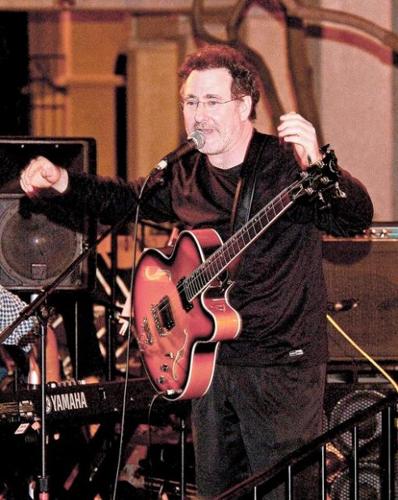
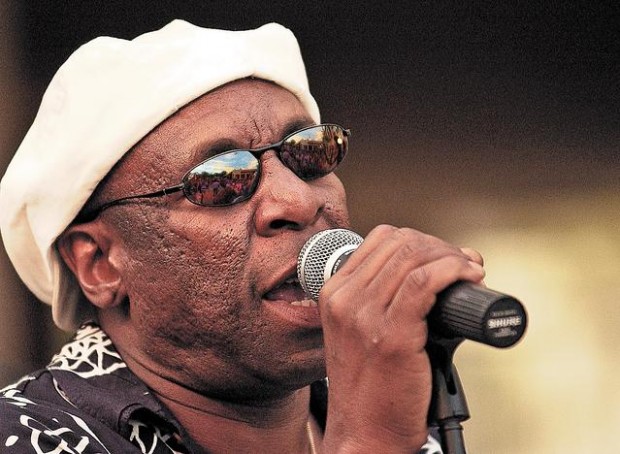
Those three decades will be celebrated with a New Year's Eve party that will be loaded with sound courtesy of bassist Brian Bromberg, R&B's George Howard and Latin jazz's Flaco Diaz, among others.
The TJS has plenty to celebrate. It's currently one of the largest in the country, with a membership of nearly 2,300, a number much larger than the typical jazz society, according to the Smithsonian Institution's Directory of U.S. Jazz Societies. Even the New Jersey Jazz Society, which represents that populous state, numbers only 850 members.
People are also reading…
Even at 2,300, the TJS isn't at its high, which was nearly 2,500 when its first director, Yvonne Ervin, left in 1998 after leading the society for nine years.
Still, it's double what it was when Possert picked up the reins in July 2005. The society, clearly, is back on its way up after suffering some crippling years and dwindling membership.
But jazz lovers, it seems, don't give up.
When the Tucson Jazz Society first started in 1977, it had modest aims, said Tucson jazz musician and original TJS member Jeff Haskell.
The thought back then, he said, was to "organize community support around the idea that jazz is America's classical music, and to let people hear Tucson jazz musicians. We wanted to be as inclusive as possible, to get people to hear all kinds of different jazz."
Membership fluctuated back then, and the organization's income was unpredictable.
"That affected our ambition to have a wide variety of jazz — when times were tough, you had to reach for the money," recalled Haskell. "That meant we often had to aim our activities at groups that would guarantee a gate, mostly an older crowd that liked Dixie and swing."
Things began to turn around when Ervin came on board in 1989.
A seasoned jazz sax player, Ervin discovered the weekly TJS jam sessions at a Tucson hotel shortly after she moved here in 1981. She began to volunteer for the society soon after that.
"Before long I was running the sound for the jam sessions and working on the newsletter," said Ervin in a phone interview from Center City, Minn., where she is the interim director of development at the Hazelden Foundation.
"Then I started to work on writing grants and organizing concerts. Meanwhile, I had a day job as the marketing director for the Tucson Symphony (Orchestra), and after a few years the moonlighting was wearing me out. One day I read that you needed to make your living doing something you loved, and that clicked. I went to the TJS board and said I couldn't volunteer anymore, but I'd become their full-time director for $10,000 a year. They said I had to be crazy — that was a pay cut of $17,000. I said I'd make sure they could double my salary in a year, so they said go for it!"
Membership then was 350.
Ervin decided that to increase membership and revenue, jam sessions needed to give way to concerts.
"We could raise money with the gate," she said. "We even had people pushing memberships right there at the concerts."
Concerts increased, attendance soared, Jazzwerx was launched, and Jazz Sundae — a free all-day jazz fest at Reid Park — became a major event, as did "Primavera: Celebration of Women in the Arts."
A concert effort that brought national attention to the group was a 1993 memorial to the great bassist Charlie Mingus.
"That was really something," Haskell recalled. "Mingus was born in Nogales, and after his death someone found a bunch of unperformed music he had written in a suitcase. Yvonne said, 'Let's perform it.' We decided to run the concert in both Nogales, Arizona, and Nogales, Mexico, and it took nearly two years to set it up. But it turned out to be a huge jazz event. The New York press was there; it put Tucson on the jazz-world map."
Ervin watched the Tucson jazz scene, and TJS membership, explode.
And then she burned out.
"I was tired," she said. "I wasn't really enjoying the music anymore. I had become a producer."
She left for New York, and, as the steam went out of TJS' activities, membership dropped to 1,100. Some much-loved events, such as Jazz Sundae, were abandoned.
"Yvonne's time was the golden years of the whole TJS history up till she left," Haskell said. "She showed that the society needed a strong director, and we didn't have another for more than five years. Fortunately, with Patricia Possert, we finally have one again."
When Possert, who moved to Tucson 25 years ago from New York, took over the TJS helm in 2005, she brought with her a hefty marketing résumé. Her model for pumping up the jazz society has its roots in sports marketing — she had worked with Jay Zucker at the Tucson Sidewinders before joining the society.
Zucker approached baseball as though it were family entertainment.
"So why not do that with jazz in Tucson?" Possert said.
The challenge, then and now, is to "get people to see that jazz isn't just for some narrow group of aficionados," she said. Jazz is broad, and the TJS' sponsored events should reflect that, she added.
That's done with such activities as TJS' education component, Jazzwerx, an audition-based performance program for students in middle and high schools, and a flurry of concerts, such as a Jazz and Blues Festival in Tubac; a Swing Dance Festival at St. Philip's Plaza featuring big-band sounds; and, for traditional jazz lovers, an appearance earlier this year by New Orleans jazz greats the Dirty Dozen Brass Band, which attracted more than 1,000.
And Possert, who sees growth as a never-ending job, plans more.
"We'll definitely be bringing back Jazz Sundaes, as well as keeping up favorites like Some Like It Hot," she said. "But we'll be doing plenty of new things, too. I want to see membership hit at least 3,000 next year."
Time to party
Bromberg 'coming home' again
Tucson offers a much more varied jazz scene now than the one that Tucson Jazz Society New Year's Eve headliner Brian Bromberg left behind in 1979.
That's when a chance meeting with Marc Johnson, the bassist for pianist Bill Evans, led to an out-of-the-blue phone call to the 19-year-old Tucsonan from jazz legend Stan Getz.
"This was one of those incredible situations where one phone call literally changes your life," said Bromberg in a phone interview from his recording studio in Los Angeles.
"I had started out playing drums in Tucson clubs when I was 12, and I had to take over for my brother in the middle of a gig when he hurt his foot. Later on I was playing bass, and a lot of the places I played, like the Jazz Showcase and the old Doubletree, I was so young I had to go outside during the breaks while the rest of the musicians were having drinks. So suddenly I get this call, and it's from Stan Getz? The next thing I know we're playing a one-night gig in France, on the Riviera, and they're actually cutting a record of the session. We flew to France for one night!"
Bromberg laughed, remembering it now. That life-changing call took him to Los Angeles before long, and as he started getting more work — as a studio musician, a performer, a composer, arranger and producer, he finally settled there. But for him, "coming back to Tucson is always coming home."


