

In "Water," Canadian-Indian filmmaker Deepa Mehta illuminates a sad aspect of society in India: widows cast out by their families. The film is powerful and unsettling when Mehta's desire to entertain doesn't get in the way.
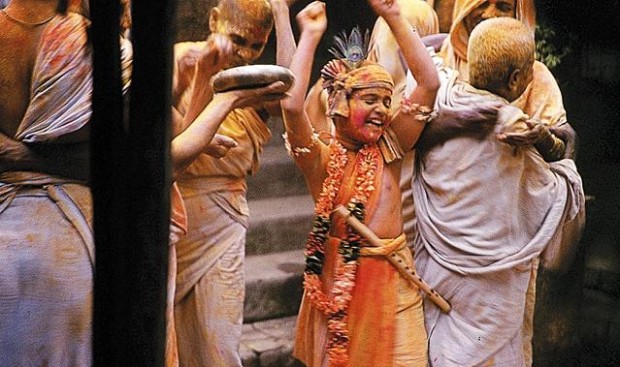
It's 1938, and 8-year-old Chuyia (newcomer Sarala), who doesn't recall getting married or seem to know her recently departed husband, has been sent to live in a "widow house." Hindu law, as interpreted by locals, confines widows to these ashrams. Shorn of their hair and outfitted in plain white saris, they are forbidden from marrying again and must live out their days praying and begging for money.
"Water" shows how easily and happily the oppressed become oppressors. At first, only the local priest refers to Chuyia's age in a way that reflects the tragedy of her confinement. To the older widows greeting the child in the courtyard of the widow house, her youth means only that it will take longer for her to adjust to the house's ways. Madhumati (Manorma), the house's Mama Morton figure, sees this buoyant kid and sets out to squash her spirit.
People are also reading…
Sarala isn't an especially gifted actress, but she is a believable kid, and that's enough to deliver the message that Chuyia doesn't belong in this dreary place. So there's a bit of relief when an old, dying widow takes a shine to the girl, and even more relief when Chuyia finds two younger women who have yet to become hardened. The first is the highly devout Shakuntala (Seema Biswas), who tries to keep Chuyia out of Madhumati's way.
Chuyia's second mentor, Kalyani, is less believable because the actress playing her, former model Lisa Ray, is so stunning. Seeing the most gorgeous woman on the continent of Asia amid a crowd of wrinkled, graying women with teeth missing can't help but be distracting.
Ray does a fine job in portraying Kalyani, who has kept her hair and her humanity despite being sent to the widow house as a girl and then prostituted out by Madhumati. But just as we're adjusting to the incongruity of Ray in this setting, she meets a man played by the equally beautiful John Abraham, and things get unreal again.
"Water" transforms into a romance marked by poetry, flute music and cinematographer Giles Nuttgens' alluring shots of a shimmering, moonlit river. One sequence isn't quite "Singin' in the Rain," but it does show the lovebirds smiling to themselves and looking moony during a rainstorm. Who needs an umbrella when you've got forbidden love?
These scenes feed off the optimism infused into "Water" by its setting in the late 1930s, during the Indian nationalist movement.
As well as being a politically romantic period, it was a time when marriages of children to older men were prevalent. But setting the story in the past still seems like a bit of a cheat, given that Indian women still reside in widow houses. Why not tell a story about them?
But those thoughts ease as Mehta slowly unveils the film's emotional center. As "Water" reaches its third act, Biswas, as the devout Shakuntala, emerges as the film's true star.
Biswas lends great poignancy to a woman whose faith and constant prayers have not diminished her worldly desires. Lovely in an earthier way than Ray, Biswas shows, in a heartbreaking scene in which her character is reminded of her age, that Shakuntala can see her vitality slipping away.
review
Water
HHH
Rated: PG-13 for mature thematic material involving sexual situations and for brief drug use
Cast: Lisa Ray, Seema Biswas, Kulbhushan Kharbanda, Waheeda Rehman
Writer/director: Deepa Mehta
Family call: It's a little too mature for kids.
Running time: 114 minutes
Et cetera: In Hindi, with English subtitles.
Opens Friday at: El Con


