No surprise here:
It was a woman who launched the discovery of the structure of DNA, and men who got all the credit.
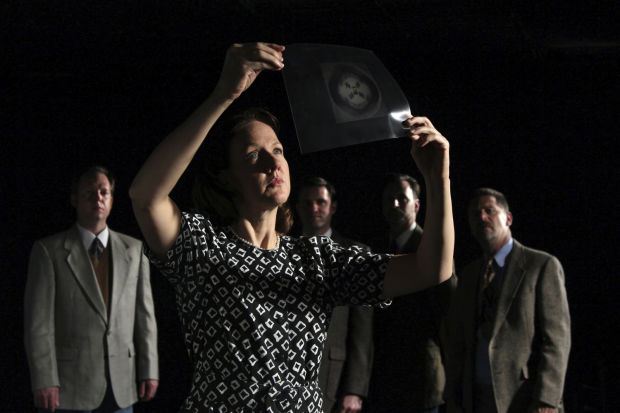
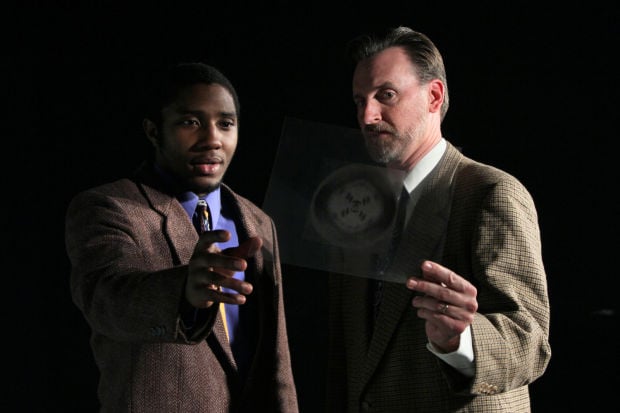
Live Theatre Workshop’s “Photograph 51” is the story of that woman, Rosalind Franklin. In the early 1950s, her X-ray image of DNA’s double helix form — called Photograph 51 — was used, without her permission, in the research by three men who eventually won the Nobel Prize for discovery of DNA. Her role was largely ignored. They got all the glory; she got uterine cancer and died before the prize was won.
Lori Hunt is a wonder in the role of the strident, inflexible Franklin. We see her wrestling to win some sense of equality and respect. But we also see a softer, more humane side of the character in Anna Ziegler’s fictionalized version of a true tale. Hunt kept us riveted.
People are also reading…
In the play, Franklin is surrounded by brilliant buffoons and gentle friends. James Watson (Nick Trice), Francis Crick (Steve McKee) and Maurice Watson (Brian Wees) were the villains — the scientists who snagged Franklin’s photo without her knowledge and eventually won the Nobel. Trice’s portrayal of Watson was funny but over-the-top and packed with tics — he seemed more like Dracula’s insane sidekick Renfield than a Nobel prize-winning scientist. McKee came across as a guy with questionable ethics, and Wees’ Watkins was conflicted about his feelings for Franklin and his role in the discovery. The cast is nicely filled out by Matt Brown and Matthew Copley as young scientists who worked with and supported Franklin.
This Sabian Trout-directed production moves swiftly, has plenty of humor, and about as much heartbreak. Still, there was something missing. It lacked tension — and this is a tension-filled story about the race to discover DNA, about men and their lack of faith in women’s intelligence, about ethics, loneliness, power.
The tone of the play also seemed scrambled, as though Trout wasn’t quite sure if she should make it a comedy, a suspense piece, a feminist statement.
Still, LTW’s “Photograph 51” is absorbing theater. And it gives Rosalind Franklin her due. At last.