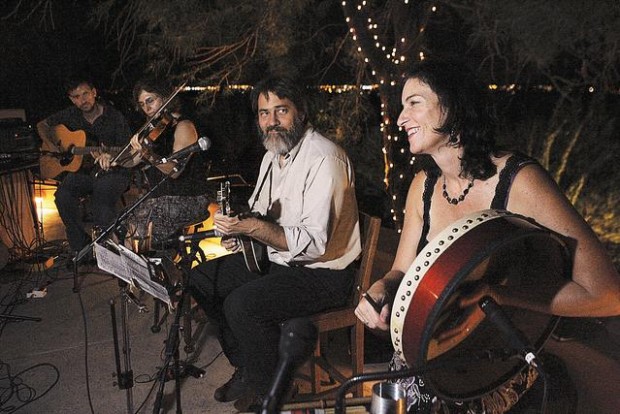
Members of the traditional Irish band Round the House sit on stools and chairs under the sprawling branches of a mesquite tree on the J Bar patio at the Westin La Paloma Resort & Spa.
"It's always nice to be here," declares vocalist and bodhran player Claire Zucker to tables of seemingly well-to-do patrons sipping red wine and nibbling on Oaxacan lamb barbacoa and calamari.
The quartet proceeds to maneuver through hearty reels, jigs and waltzes, the bushy-bearded Dave Firestine plucking and strumming his mandolin as the last remnants of daylight disappear over the horizon.
The group holds the crowd's attention for nearly three hours. When Zucker asks, "How many people out there have never seen us before?" only one table of diners out of 10 raises their hands.
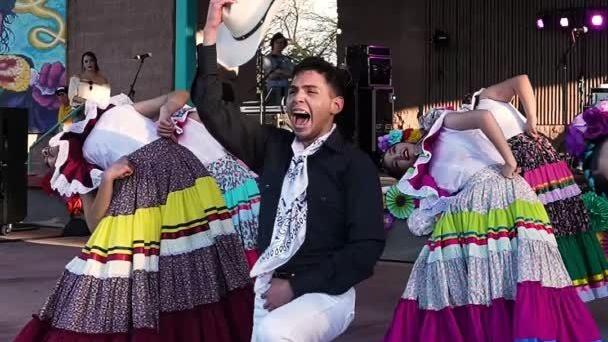
From the upscale vibe of J Bar to Downtown clubs and East Side restaurants, Tucson's world-music community — musicians and their supporters drawn to traditional rhythms and instrumentation as well as contemporary sounds from abroad — has thrived as the city's population has grown.
People are also reading…
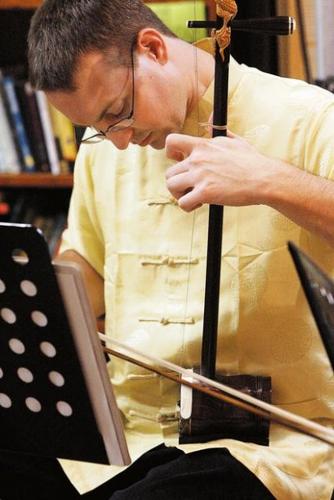
While local bands, whether they are singing in Spanish or performing on erhus, keep regular gigs at restaurants and coffeehouses, acts like the Global Drum Project, a collective of percussionists led by Grateful Dead drummer Mickey Hart and tabla player Zakir Hussain, are playing for thousands of fans at much larger venues.
In 2004, the University of Arizona hosted the 49th annual Meeting of the Society for Ethnomusicology.
Casino del Sol's AVA has thrown several pop concerts geared toward Tucson's Vietnamese community, and each year, countless Tucsonans are exposed to many of the city's local cultural acts through the Family Arts Festival in January and Tucson Meet Yourself in October.
"It is not just a vibrant scene but a meaningful one," said Janet Sturman, a UA associate professor of ethnomusicology. "It is not only the big packaged programs that come through here to perform. We have smaller groups in town performing music that they have integrated into their lives."
University ties
One of the driving forces behind the cultural awareness is the university itself, Sturman said.
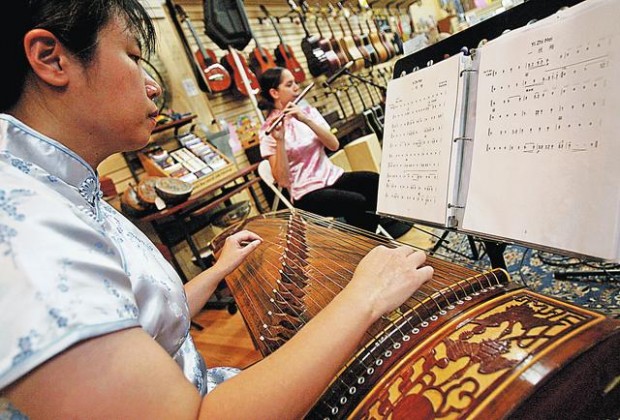
Aside from the UA's high-profile School of Music, the university as a whole brings in students from around the world to study. More than 130 countries are represented, according to Kirk Simmons, executive director of the university's International Affairs department. The school has produced such groups as the World Music Gang, the UA Steel Bands and the Summer Thunder Chinese Music Ensemble and regularly invites local musicians to perform. On Oct. 14, Tucson's Japanese drum group Odaiko Sonora, Brazilian jazz ensemble Makako and American Indian flutist R. Carlos Nakai will perform at the University of Arizona Poetry Center's Housewarming Festival from noon to 5 p.m.
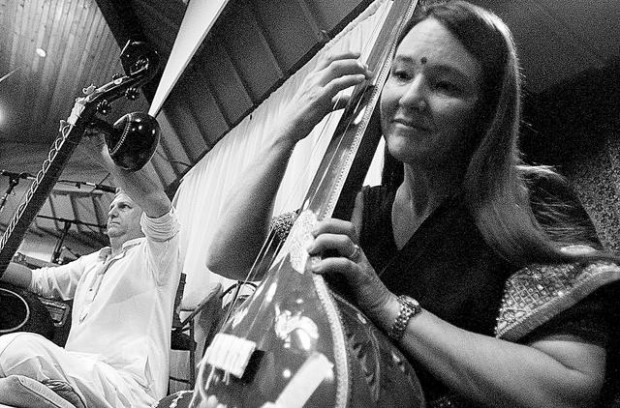
Matthew Finstrom, owner of a bamboo nursery and leader of the Indian music group Sruti and the Indonesian gamelan ensemble Fine Stream Gamelan said he has looked to UA students to perform with him for years.
"When they come here, they usually don't know that there is a resource for this music," Finstrom said.
Finstrom, 54, and his wife, Holly, started Sruti more than 23 years ago. His gamelan group, a percussion-based ensemble for which he built most of the instruments himself, just celebrated its 19th birthday.
He added: "Most are delighted to have a place where they can play their music and share."
Then there's UApresents, the university's official arts purveyor that over the years has exposed Tucsonans to the likes of the Chieftains, guitarist Habib Koité and the late, great Cuban crooner Ibrahim Ferrer.
UApresents has put on 28 globally influenced events over the last three seasons and has 13 shows scheduled for this season, including Angelique Kidjo and Anoushka Shankar (daughter of famed sitarist Ravi Shankar), both performing in March.
UApresents executive director Natalie Bohnet said world music is one of four art forms — the others being classical music, jazz and dance — that the organization looks for to make a season.
She said UApresents seeks a variety of artists who will expose the Tucson community to new experiences. And, as a native Australian, Bohnet said she knows how good it feels for expatriates living in Tucson to see someone perform from home.
"One thing about Tucson is whatever country we bring the show in from, there is always a community in town who comes to see it," she said. "Last year, at one of our African shows, we had people calling out in Swahili. It was just awesome."
KXCI connection
Community radio station KXCI (91.3-FM) might also be considered a major player in the Tucson world-music game.
During its nearly 25 years on the air, the station has featured scores of world-music programs and currently has nine programs showcasing everything from Hawaiian slack-key guitar to reggae rhythms.
Matt Moon, a KXCI volunteer and DJ who hosts "Global Rhythm Radio," remembers listening to the station when he first moved to town 16 years ago.
"I originally came to Tucson because of its cycling culture," said Moon, who worked for a time with El Tour de Tucson. "But I really discovered what was out there in the world through the station."
Today, Moon runs one of the most popular shows on KXCI. For three hours every Thursday, he is the man behind the mic, spinning CDs by artists from points around the globe. Moon says he has a significant Tucson following and, thanks to KXCI's online streaming, gets calls from places as far away as New Zealand and Thailand.
Moon said one of his favorite activities is throwing together songs that demonstrate the musical similarities found in different cultures.
"I'll find rhythms in a song from the Middle East and then something similar in a song from the South Pacific," he said. "We all come from the same place. Playing these songs back-to-back makes people see the connections.
"Without KXCI, people wouldn't have the exposure they do to world music. I don't think the concerts in town would be as well-supported. Why would they see an artist they had never heard before, unless they heard them on a radio station like ours first?"
Moon said he would eventually like to see some sort of world-music festival, featuring international acts, in Tucson like the ¡Globalquerque! festival that happened last week in Albuquerque.
For now, though, he said, Tucson is on the right track.
"Some of the most incredible concerts I have attended have been in Tucson," he said. "I have friends in Phoenix who come down to Tucson for shows. Geographically, Tucson has always been kind of a crossroads between Mexico and the U.S.
"I think a lot of people who end up here have come here because it is kind of an outpost. It is very open-minded and eclectic."
Grass-roots community
The final piece of the puzzle that makes Tucson's world-music community shine is the combination of the city's local promoters and the musicians themselves.
Thanks to people such as Jonathan Holden, the brains behind the popular Rhythm & Roots concert series, and Don Gest of In Concert!, Tucson is never short of live acts from France, Cuba, the United Kingdom and beyond.
Pat Garrett gave up his job as a furniture-store salesman in the late '90s to start up Real Good Music, a booking agency that has brought a number of professional Celtic acts through town, including the Old Blind Dogs and Gráda.
Once in charge of a one-band operation, Garrett now arranges national tours for 12 groups, having just added Scotland's Tannahill Weavers to his roster.
Garrett's wife, Maria, quit her day job as a nurse at St. Joseph's Hospital three years ago to assist with the business. The Garretts' 13-year-old daughter helps them run the CD tables and booths at conferences and concerts.
Garrett often routes concerts through Tucson because it is usually "the only chance I get to see them."
"Tucson on paper doesn't look like a town with a big Celtic following, but we do pretty well here," Pat said. "I get a lot of gratitude from fans of these events. There would be a whole field of music missed if you didn't have these grass-roots presenters and agents to get things into the area."
Holden said he has worked hard to include the real-deal artists from other countries in his 13 years running Rhythm & Roots, a process he admits can be difficult at times.
As a smaller promoter, Holden is always keeping an eye out for artists traveling through the area. If they aren't en route through Arizona, chances are they won't be playing his shows. Another problem, he said, is the difficulty artists from other countries have had getting visas to tour the United States since 9/11, particularly artists from places such as Cuba and the Middle East.
"It is really our cultural loss that these people aren't traveling here more," Holden said. "The scene is a less robust scene because of it."
Holden said there are a number of artists who have immigrated to the United States over the years who are actively touring this country. He added that there is also a significant presence of American-born artists living in the United States who have successfully taken up these styles of music.
Locally, artists like the gypsy-influenced Molehill Orkestrah and kalimba player Mark Holdaway have found healthy audiences in Tucson to watch what they do.
Singer/songwriter Marianne Dissard couldn't believe the turnout when she performed her own brand of original material and vintage covers sung entirely in her native French in the kitschy confines of The Hut a month ago.
"Somehow the French connection in Tucson, wherever they are, got word of our show," Dissard said. "About 15 Francophiles showed up. People who had probably never ever been at The Hut before, let alone Plush or O'Malleys. The booker for the show was saying, 'Wow, what's going on.' "
Dissard said support has been that way since she began performing in Tucson a little more than two years ago. Together with fellow French expat Naïm Amor and Django Reinhardt enthusiast Matt Mitchell, Dissard performs regular gigs at Plush, the French bistro Le-Delice and the Mediterranean restaurant Raz on East Grant Road.
"We are making our little spot," she said.
World music shows on KXCI
In a world dominated by what's buzzing on the Top 40, you won't find a more diverse musical selection on the radio in Tucson than the eclectic mix played on KXCI (91.3-FM). The 25-year-old community-run radio station features blues, country, folk and a healthy menu of world-music programming:
"Mele O Hawai'i" — 4-5 a.m. Wednesdays — Wake up early, really early, for a taste of traditional Hawaiian chants, ukulele and slack-key guitar tunes.
"Latin Groove Wednesdays" — 6 p.m.-midnight Wednesdays — Three back-to-back programs lay out six hours of Latin jazz, Afro-Cuban, Brazilian tunes, rancheras and Latin folk.
"Global Rhythm Radio" — 6-9 p.m. Thursdays — DJ Matt Moon can kick out the world jams like nobody's business. Moon always has interesting traditional tunes from around the world to share and plenty of background knowledge to go with it.
"Acoustic Alternative" — 8-10 a.m. Saturdays — KXCI's contribution to the Celtic community, "Acoustic Alternative" is hosted every other week by In Concert! promoter and local musician Don Gest.
"Tabasco Road" — 6-8 p.m. Sundays — The Rev. Jeremiah Peabody divides his show in half, with the first hour featuring nothing but rural Cajun melodies and the next: fast and furious zydeco.