

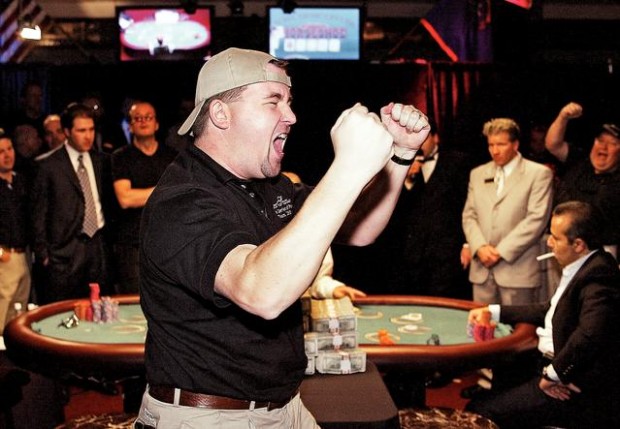
Chris Moneymaker was a mild-mannered accountant in Tennessee when he spent $40 to enter an Internet poker tournament. Before he was done, he'd won $2.5 million in the 2003 World Series of Poker (the first tourney he'd ever played in a casino) — giving the hundreds of thousands who watched on ESPN something to shoot for.
"I think anyone who comes in this room thinks, yeah, that could be me," said 40-year-old Fran Lieberman, who sat waiting for a tournament to begin in the poker room at Casino del Sol last month. "Who wouldn't?"
Even five years after the start of what is commonly referred to as the "poker boom," the Moneymaker Effect continues to draw new waves of players to poker tables at local casinos, corner bars, living rooms and online.
"It's probably more popular now than ever," says Rick Chaurette, poker room director at Casino del Sol since 2003, who sees no end to the increased interest. "We've taught a whole new generation about poker, and a percentage of them are locked in for life."
People are also reading…
The game that has sucked in so many is Texas hold'em. With its relatively simple rules and a format that makes it easy to show — and analyze — on TV, hold'em has become part of the national lexicon.
"It's the American dream," says Ned Shabou, a 49-year-old Tucson-based graphics designer turned poker pro.
"Anybody can win. You watch golf (on TV) and you know you cannot play against Tiger Woods. But you can play against these pros, so, of course, you think you can beat them as well. You can enter the World Series and win $8 million," he said.
Moneymaker gained entry into the $10,000 buy-in main event of the 2003 World Series of Poker by winning that initial Internet poker tournament.
While the prospect of fame and fortune might encourage some to try the game, many players say they stick around because poker is fun to learn and to play.
"Poker, fundamentally, is a social game," said Alex Porter, 24, a University of Arizona student who has played in the World Series of Poker and on the World Poker Tour. "The social aspect is really what drove me into it," said Porter, who is also a regular at a weekly home game that costs $11 to play.
Casino action
Before it began to pull in television ratings rivaling — and often besting — professional hockey and World Cup soccer — poker was offered around the clock at local casinos and usually had a handful of people playing at any given time.
Today the poker rooms at Casino del Sol and Desert Diamond Casino have expanded to accommodate increased interest. And in addition to cash games of varying price ranges, tournaments have become a regular staple. Between the two casinos, at least 15 tournaments are held weekly, with entry fees ranging from $15 to $135 and prize pools sometimes topping $10,000.
"I consider it more of a sport than I do a gamble," says Fred Trentadue, 61, an electrician who has played poker for three years and plays in nearly every local tournament. "I'm a competitive person, and this is a good way to compete. It's not a physical game as much as it is a mental game."
The intensity is even more subdued at Casino del Sol's weekday 10 a.m. tournaments, which draw about 40 or 50 players — including many retirees — who pony up $15 for a fun game and maybe a little extra cash for their troubles.
"It's more social than anything else," says 61-year-old Wayne Hunnicutt, a former Marine who says he's played poker since "Dolly Parton wore a training bra. It's just a time to laugh and joke around. You don't get serious at all."
Hunnicutt says he plays five days a week and cashes in about two or three tournaments each month. "You've got a lot of retirees in this town," he said. "This is what us old folks do because we can't compete in baseball or softball."
Pub leagues
Pool tables, dartboards and shuffleboard bowling have always been a staple at bars.
Now poker is, too.
"We get new players on a daily basis," says Keith Clement, who helps run tournaments for The Poker Pub, a Kansas-based entertainment company. "We even give lessons."
The Poker Pub operates 18 tournament circuits in six states, with more than 90 weekly events at 26 locations in the Tucson sector alone.
Clicks Billiards, 3325 N. First Ave., is one of the most popular local stops, offering tourneys every Friday and Saturday night.
"With a 2-year-old (girl) at home, it's just nice to get out of the house," Tim Bauer, 35, an occasional Clicks tournament participant.
Pub poker clientele ranges from the absolute beginner, Clement said, to those with some experience who don't want to worry about losing money.
All pub tournaments are free. Instead of cash, players compete for points, which can be redeemed for prizes after they accumulate a certain number.
"I think it's a lot better that we don't have to pay for it," said Amanda Voorhees, 23, a bartender at Clicks who started playing the pub tournaments a few months ago. "Free is good for me."
Voorhees' friend, 29-year-old Erin Sipperly, said the chance to have a few drinks and smoke on the outside patio while playing trumps any desire to take down the tournament.
"I'm practicing," explains John Breier, 28, who on a recent night at Clicks was the only one in the field of 64 players wearing the ballcap-sunglasses-and-earphones attire that has become synonymous with poker on TV.
A cook who has played for nine years, Breier said he uses pub games to build up experience for what he hopes will someday be a foray into the big time.
"I'm getting ready to go to Las Vegas," Breier said. "I've played enough, I figure I have a pretty good chance to win. I've seen how they all play on TV."
Home games
All those cars parked in front of your neighbor's house — not to mention yours — may not signal a wild party.
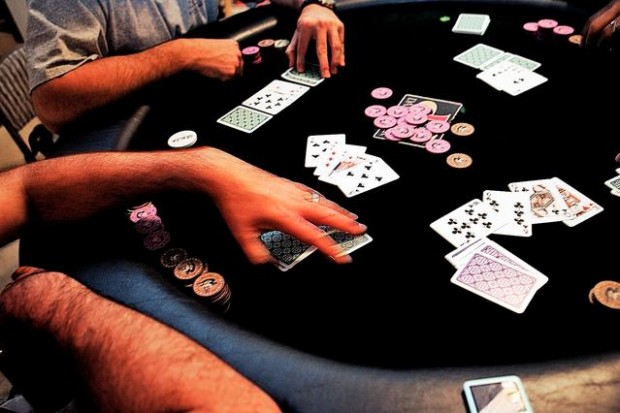
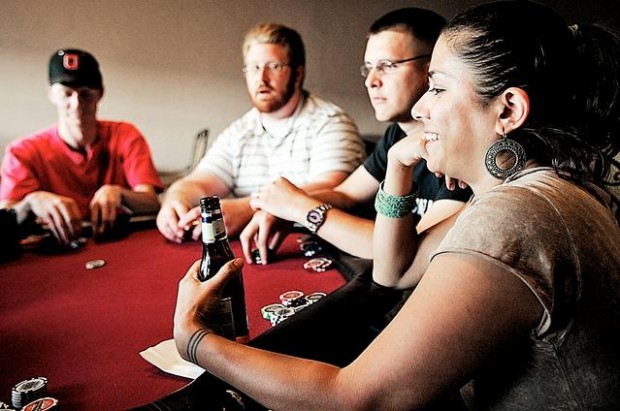
Home-based poker games are everywhere. No longer just a couple of drinking buddies playing for nickels and dimes, living rooms and dens across Tucson are regularly transformed into tournament pits on weeknights and weekends.
Most involve very little money, and the players deal cards to each other. Some send people on to Las Vegas to represent the gang back home at major tournaments.
All involve banter, bluffing and trash-talking.
One of the most well-organized home games is a monthly event put on by the Tucson Poker Club, a group with its own Web site. It's gained enough notice that online poker site Full Tilt Poker has reserved a weekly spot on its private tournament schedule for the club to hold Web-based games.
The Saturday night Dano Poker game is nowhere near as well-publicized, but certainly as meticulously planned.
Created by 38-year-old IBM software engineer Dan "Dano" Garrison in December 2003, the game draws anywhere from 10 to 25 people to Garrison's Foothills home each week. Players sit at tables bearing the Dano Poker logo and bet with custom-made Dano Poker chips.
The tournament clock counts down on a laptop that uses a program Garrison designed, while the prize payouts are displayed on a dry erase board set over the fireplace. It includes magnetized placards with each player's name that are rearranged as the night goes along to show the order of finish.
All this for $11, $16 if you want pizza during the dinner break.
"The low buy-in contributes to the friendly atmosphere," Garrison said. "I don't want to ever get it to the point where people are uncomfortable losing their buy-in."
Garrison said his tournaments usually have a mix of players who regularly play in bigger money events at the casinos, as well as people who probably play only at his house.
"I think having the home game with a social aspect is a draw," says Debby McArthur, 35, who got invited to a Dano Poker game shortly after moving to Tucson last year and now plays nearly every week. "There is definitely a fun, friendly aspect, but there is also an adrenaline rush when you have something good in your hand."
Want more poker?
Online: The Star's Brian J. Pedersen writes about the local poker scene in his blog, Poker Is My Mistress. Check it out at go.azstarnet.com/poker.
In Accent: Read professional poker player Daniel Negreanu's weekly column on most Tuesdays.


