Skip to main contentSkip to main content
Register for more free articles.
Log in Sign up
Back to homepage
Subscriber Login
Keep reading with a digital access subscription.
Subscribe now
You are the owner of this collection.
Edit Collection
You have permission to edit this collection.
Edit
Arizona Daily Star
87°
  • Sign in
  • Subscribe Now
  • Manage account
  • Logout
    • Manage account
    • e-Newspaper
    • Logout
  • News
    • Sign up for newsletters
    • Local
    • Arizona
    • Business
    • Crime
    • Nation & World
    • Markets & Stocks
    • SaddleBrooke
    • Politics
    • Archives
    • News Tip
  • Arizona Daily Star
    • E-edition
    • E-edition-Tutorial
    • Archives
    • Special Sections
    • Merchandise
    • Circulars
    • Public Notices
    • Readers' Choice Awards
    • Buyer's Edge
  • Obituaries
    • Share Your Story
    • Recent Obituaries
    • Find an Obituary
  • Opinion
    • Submit a Letter
    • Submit guest opinion
    • Letters to the Editor
    • Opinion & Editorials
    • National Columnists
  • Sports
    • Arizona Wildcats
    • Greg Hansen
    • High Schools
    • Roadrunners
  • Lifestyles
    • Events Calendar
    • Arts & Theatre
    • Food & Cooking
    • Movies & TV
    • Movie Listings
    • Music
    • Comics
    • Games
    • Columns
    • Play
    • Home & Gardening
    • Health
    • Get Healthy
    • Parenting
    • Fashion
    • People
    • Pets
    • Travel
    • Faith
    • Retro Tucson
    • History
    • Travel
    • Outdoors & Rec
    • Community Pages
  • Brand Ave. Studios
  • Join the community
    • News tip
    • Share video
  • Buy & Sell
    • Place an Ad
    • Shop Local
    • Jobs
    • Homes
    • Freedom RV AZ
    • Marketplace
    • I Love A Deal
  • Shopping
  • Customer Service
    • Manage My Account
    • Newsletter Sign-Up
    • Subscribe
    • Contact us
  • Mobile Apps
  • Weather: Live Radar
  • Facebook
  • Twitter
  • Bluesky
  • YouTube
  • Pinterest
  • Instagram
© 2026 Lee Enterprises
Terms of Service | Privacy Policy
Arizona Daily Star
News+
Read Today's E-edition
Arizona Daily Star
News+
  • Log In
  • $1 for 3 months
    Subscribe Now
    • Manage account
    • e-Newspaper
    • Logout
  • E-edition
  • News
  • Obituaries
  • Opinion
  • Wildcats
  • Lifestyles
  • Newsletters
  • Comics & Puzzles
  • Buyer's Edge
  • Jobs
  • Freedom RV AZ
  • 87° Sunny
Share This
  • Facebook
  • Twitter
  • Bluesky
  • WhatsApp
  • SMS
  • Email

Improving Pima County's justice system

  • Caitlin Schmidt
  • Jul 5, 2022
  • Jul 5, 2022 Updated Jul 27, 2022

Tucson groups join forces to support sex assault survivors, promote awareness

With in-person outreach and events still not an option, several community partners have teamed up for a monthlong campaign of support and education for survivors of sexual assault across Pima County.

As an increased number of students return to campus and in-person learning and many bars and restaurants reopen amid lifting pandemic restrictions, the timing of April’s Sexual Assault Awareness Month is especially important, said Stephanie Noriega, interim director of the University of Arizona’s Survivor Advocacy Program.

But as the pandemic creeps towards an end, Noriega and partner organizations had to get creative to get the message out, on campus and beyond.

“Looking at where we were at, we couldn’t do tabling on the mall or anything like that,” Noriega said. “A lot of national organizations are already pulling together toolkits to do social media campaigns and awareness activities and engagement, so it seemed feasible to really just take what worked and alter it.”

Noriega and her colleague in the advocacy program, Brenda Anderson Wadley, worked together with the UA’s Consortium on Gender-Based Violence to put together a toolkit that was applicable to UA community and beyond, and the end result is a literal calendar full of virtual events in April, posted to the survivor advocacy website. Many are happening on social media and some are as simple as posting a statistic, sharing a relevant account or explaining the term “consent” as it relates to sexual violence.

But there are also virtual trainings and panels in conjunction with the Southern Arizona Center Against Sexual Assault (SACASA,) Take Back the Night Tucson, and other local agencies and community groups.

These are especially important as campus reentry progresses, as the survivor advocacy program hasn’t been able to do outreach to the extent they’d like during the past six months.

The program is wrapping up its third academic year, and Noriega said that by spring 2020, as their second year came to a close, they’d really gotten into a good stride when it came to providing survivor services, as well as student, advisor and faculty outreach. Then the pandemic hit.

“Since the university closed down last March, we just did a pivot and slowed our pace down, knowing we knew we were in it for the long haul,” Noriega said. “We have made top priority to not disrupt our availability to students.”

Noriega said they “never skipped a beat,” transitioning to virtual office hours and Zoom appointments, and staying in close contact with referring partners on campus.

New York Gov. Andrew Cuomo is refusing to detail how his office is protecting two current aides who claim that he sexually harassed or assaulted them in the past year.

Training and presentations have been scant, as Noriega and others have had to prioritize their time and not take on too much.

“Anecdotally, it still felt like people were still coming. It still felt like we were still seeing folks,” Noriega said. “Oftentimes, it was people who did go back home. But we had folks engaged regardless of where they were at.”

Noriega said she found herself googling state coalitions and resources in other cities on a regular basis. She called the caseload this past year a “mixed bag,” saying she and the program’s other advocate heard from students that began to process abuse that had happened more than a year prior, and spoke to others that were experiencing domestic abuse and intimate partner violence, as activity on campus ground to a halt.

“We’re still 100% here and ready to support (survivors,) despite COVID or being away from campus,” Noriega said. “We don’t ever want folks to feel hesitant to reach out. We always put the needs of survivors and students at the center.”

When it comes to this year’s alternative awareness campaign, Noriega said it came down to having their hands in several pots, but being careful to not take everything on by themselves.

“Where is the work happening and where can we link up so it can be a collective effort and it doesn’t fall on anyone, has kind of been my approach,” Noriega said.

In the end, they partnered with the consortium and other local agencies to plan events, many that have a focus on the campus community. Others have a larger reach, like April 28th’s Denim Day, an international effort to end victim-blaming, in which community members are encouraged to wear denim or a teal shirt in solidarity with survivors. Several Pima County groups are participating in the effort, and UA students are encouraged to use the hashtag, #UADenimDay and tag campus partners in their photos, Noriega said.

“I feel really proud and happy that there’s been so much collaboration and that it really does feel like a citywide effort,” Noriega said. “Sometimes I know we can get really busy and get in our silos, but this time around, it was almost like we’re all still surviving the pandemic, we’re service providers, we’re overworked. So there was this very natural sentiment that we had to do something, so let’s almost like combine our powers.”

“It’s so much better for survivors”

Officials with SACASA were still more than happy to partner up with the UA’s campus groups, Take Back the Night Tucson and county and city agencies to get the word out about the campaign. Due to the pandemic, SACASA has been unable to hold its annual “Dine Out for Safety” campaign the past two years.

And while initial numbers suggest that sexual assault might have gone down in Pima County amid the pandemic, it’s still important to get spread awareness to the problem, said SACASA’s Kristine Welter-Hall.

Advocates responding to hospitals at the request of survivors decreased 13% and medical forensic exam requests decreased 29% from July through December 2020, when compared to the same time the previous year, according to Welter-Hall.

Still, SACASA’s crisis advocates responded to hospitals 419 times in 2020, and medical forensic exams were provided in 50% of those situations, demonstrating a continued need for services and outreach, even amidst the pandemic, Welter-Hall said.

SACASA closed its office to walk-ins at the beginning and peak of the pandemic and switched to conducting their non-hospital based advocacy on the phone or via Zoom.

“At the beginning when things were pretty heightened, we’re able to work with TMC to have a tablet in the ER and do some initial Zoom talking with survivors to work through with them what their rights are, listen, support, and let them know the next steps,” Welter-Hall said. “If they decided they wanted a medical forensic exam, advocates would present to hospital and be there in-person to support them.”

That didn’t last long.

“Our advocates asked if they could just get back on site,” Welter-Hall said. “It’s so much better for survivors.”

The advocates got their wish, and everything has been business as usual — with the addition of PPE and social distancing — for a while now.

Welter-Hall thinks the drop in services requested is due to a variety of factors, including less acquaintance rapes in early months, with fewer people going out. She also said that they’d heard from police at the peak of Pima County’s caseload that some people did not want to go to the hospital.

They also saw a 55% to 45% drop in survivors who received medical forensic exams during that July through December time period, which could be due to people wanting to spend as little time in the hospital as possible, and not go through a lengthy exam.

“We did our best to educate folks and assure them that we were taking all COVID precautions,” Welter-Hall said.

While services provided changed over the past year, community partners’ commitment to SACASA’s Sexual Assault Response Team did not. Representatives from law enforcement, attorneys, youth groups, the UA, military, consulate and more all met several times a month .

Welter-Hall said that SACASA is especially mindful that April can be an especially triggering month for survivors, with the enhanced public focus on sexual assault awareness and services. In addition to advocates’ usual 24/7 availability, SACASA is expanding its therapy groups for survivors from two to four this month.

“We’re here all the time to listen and provide immediate coping skills with any triggers and trauma, and connect with ongoing services at SACASA and services within the community that may be beneficial to healing,” Welter-Hall said. “Our advocates provide ongoing advocacy, whether the assault occurred in childhood or just occurred, and we’re also here to support loved ones and family members of sexual assault.”

In addition to SACASA and the UA groups, a handful of other agencies are participating in a social media campaign, using the hashtag #TucSAAM. Throughout the month, social media accounts from the Pima County Attorney’s Office, Tucson Police Department, Pima County Sheriff’s Department and Southern Arizona Children’s Advocacy Center have been sharing statistics, links to services and other related content on their various channels.

“Silence allows sexual violence to grow”

The county attorney’s victim services division took a major role in the planning of this month’s activities, thanks in part to funding from the Bureau of Justice Assistance Sexual Assault Kit Initiative grant. The grant is meant to address untested sexual assault kits in law enforcement custody and help victims obtain a resolution.

The SAKI grant also allots funding for advocacy and education, part of which has been used for a PSA to alert survivors of the person to talk to — Victim Advocate Colleen Phelan — if they have questions about their rape kits.

The PSA is launching soon, and will provide survivors with Phelan’s direct phone number, so they’ll know in advance who they’re talking to. That’s important, Phelan said, because “this is personal.”

COVID has dampened the office’s ability to do outreach in these types of cases to the extent they’d like, so the PSA was a way to reach a larger audience. The grant gave the office the push they needed to pull together a whole month of outreach to reach that same larger audience.

“Sexual Assault Awareness Month has never been quite as comprehensive as Domestic Violence Awareness Month,” Phelan said. “There’s been less comfort in general with sharing quite the same way.”

Representatives from victim services met with people from other groups to talk about making this year’s event a bigger deal, pulling in agencies along the way to ensure that they were addressing current issues and raising awareness of how to prevent sexual violence, Phelan said.

“We always need have conversations about consent,” Phelan said. “Silence allows sexual violence to grow. So the more we talk about it and the more the conversation grows, the more we can start tackling why we live in a rape tolerant culture.”

The planning for this year’s events was done with the focus of making 2022 even bigger and getting even more people involved, Phelan said, adding that it makes sense to pull together all of the groups who work together to assist survivors.

“We’re creating that path to healing. There’s not one thing, there’s a whole variety of options. That makes much more fruitful experience for survivors,” Phelan said.

With the circumstances of the pandemic, it may have been harder for survivors to seek services, Phelan said.

“Dealing with a sexual assault can be a luxury in some ways sometimes,” Phelan said. “If you’re just trying to put food on the table, that can’t be compromised by going to therapy, say. That’s something some people just don’t have the bandwidth for right now.”

Phelan said that with so many people in survival mode, she believes there will be a rush for services when the world returns to a more normal state. That’s one of the reason outreach and advocacy are so important: So survivors will know where to turn to when they’re ready for support.

Photos: Growing up female, across the globe

Growing Up Female Photo Gallery

Experts say girls in their first decade are better positioned for success than their mothers and grandmothers were, thanks to advances in health care and nutrition, and wider access to education. But they say more must be done to keep adolescent and teenage girls in school, and to protect them from violence, unintended pregnancies and forced marriage, which remains common in much of the developing world.

PHOTO: In this Sept. 29, 2015, file photo, Luana poses for photos on her roller skates at her home in Merlo, Argentina. Luana says that when one of the girls asked her why she had a penis, a friend jumped in. "She's transsexual," the child explained, nonchalantly. That level of comfort is no doubt in part because Luana herself appears so at ease. In 2013, she became the youngest person to take advantage of a progressive Argentine law that allows people to identify their own gender for legal purposes. (AP Photo/Natacha Pisarenko, File)

Natacha Pisarenko
Growing Up Female Photo Gallery

"Poverty, violence, and cultural traditions oppress millions of girls in every part of the world," said Stephanie Sinclair, a visual journalist who founded "Too Young To Wed," which campaigns to protect girls' rights and end child marriage, while offering services to survivors. "It is still a global struggle to have girls valued for more than their bodies — for just their sexuality, fertility and labor."

PHOTO: - In this Oct. 11, 2013, file photo, a Pakistani girl lines up among boys for their morning assembly where they sing the national anthem at a school in Islamabad, Pakistan. (AP Photo/Anja Niedringhaus, File)

Anja Niedringhaus
Growing Up Female Photo Gallery

The U.N. children's agency says 12 million girls under the age of 18 will marry this year, and 21 million between the aged of 15 and 19 will get pregnant.

PHOTOS: In this April 7, 2013, file photo, an Afghan girl tries to peer through the holes of her burqa as she plays with other children in the old town of Kabul, Afghanistan. (AP Photo/Anja Niedringhaus, File)

Anja Niedringhaus
Growing Up Female Photo Gallery

"Every girl should have the right to decide for herself, if, when and whom to marry," Sinclair said. "To be allowed to be children and teens, with access to gender specific health care and all levels of education; and free to determine the course of their own lives."

PHOTO: In this Wednesday, Nov. 15, 2012 file photo, a young girl in her colorful dress reaches out to greet a Pakistani policeman securing the road outside Kainat Riaz's home in Mingora, Swat Valley, Pakistan. ( AP Photo/Anja Niedringhaus, File)

Anja Niedringhaus
Growing Up Female Photo Gallery

The decision to award this year's Nobel Peace Prize to Nadia Murad, 25, who was among thousands of women and girls kidnapped and enslaved by the Islamic State group in 2014, highlighted a particularly vicious form of sexual assault.

PHOTO: In this photo taken in 2016, Baby Seibureh, 17, and Claude Seibureh, 48, of Freetown, were married during the Ebola crisis. Because of her small stature, Baby needed a cesarean section to safely give birth to their son, Joseph. While child marriage is a critical issue in both crisis and stable contexts, child marriage is rising at alarming rates in humanitarian settings. (Stephanie Sinclair/Too Young to Wed via AP)

HONS
Growing Up Female Photo Gallery

But the #MeToo campaign has shown that less violent forms of sexual abuse and misconduct are all too common, affecting women at all income levels and across multiple industries. Even in wealthy countries, women face persistent pay gaps and other forms of discrimination.

PHOTO: In this Saturday, Jan. 2, 2016, file photo, Bedouin children run after a pick up truck in Abu Galoum, South Sinai, Egypt. (AP Photo/Nariman El-Mofty, File)

Nariman El-Mofty
Growing Up Female Photo Gallery

How you can help:

Donate to Too Young to Wed here: http://tooyoungtowed.org/

Follow all of the photographers featured in this gallery: https://twitter.com/APMiddleEast/lists/women-of-ap-photography

Follow Maya Alleruzzo on Twitter: https://twitter.com/mayaalleruzzo

And on Instagram: https://www.instagram.com/mayaalleruzzo/

PHOTO: In this June 27, 2018, file photo, from left, Ranjeda, 9, Rumana, 10, Minajan, 10 and Wisma Bi Bi, 12, smile at each other while waiting in their classroom in Chakmarkul refugee camp, Bangladesh. Amid the misery and mud of Bangladesh's refugee camps, Rohingya girls have found small moments of joy by adorning themselves with flowery headbands and elaborately-drawn makeup. (AP Photo/Wong Maye-E, File)

Wong Maye-E
Growing Up Female Photo Gallery

FILE - In this Feb. 9, 2018 file photo, Hagar Yahia holds her daughter Awsaf, a thin 5-year-old who is getting no more than 800 calories a day from bread and tea, half the normal amount for a girl her age, in Abyan, Yemen. Yahia, a mother of eight breaks down in tears talking about her family's deprivation. Late last year, as fighting closed in on Hayis, they fled more than 200 miles, eventually ending up in the village of Red Star on the Arabian Sea coast in the south. Ever since, they've struggled to find enough food. (AP Photo/Nariman El-Mofty, FILE)

Nariman El-Mofty
Growing Up Female Photo Gallery

FILE - In this Feb. 15, 2018, file photo, ttudents gather to grieve during a vigil at Pine Trails Park for the victims of a shooting at Marjory Stoneman Douglas High School, in Parkland, Fla..(AP Photo/Brynn Anderson, File)

Brynn Anderson
Growing Up Female Photo Gallery

FILE - In this July 21, 2011, file photo, Vanity Mendez, 11, left, Isaiah Rivera, 6, center, and Jonathan Medina, 11, cool off at an open fire hydrant in the East Village neighborhood of Manhattan. (AP Photo/Mary Altaffer, File)

Mary Altaffer
Growing Up Female Photo Gallery

FILE - In this Nov. 2, 2016, file photo, Luis Varela, 17, left, Gabby Reynolds, 18, and Mariah Perry, 15, all of Birmingham, Ala., enjoy the festivities and music during a Day of the Dead celebration, in Birmingham, Ala. (AP Photo/Brynn Anderson, File)

Brynn Anderson
Growing Up Female Photo Gallery

In this Wednesday, June 27, 2018, photo, Ansa Khan and her sister's combs hang on the mud wall of her house in Mardan, Pakistan. (AP Photo/Saba Rehman)

Saba Rehman
Growing Up Female Photo Gallery

FILE - In this Nov. 8, 2012, file photo, girls turning 15 pose in their gowns for photos inside a pink limousine before their debutante ball, organized by the Peacemaker Police Unit program in the Mangueira favela, or shantytown, in Rio de Janeiro, Brazil. The debutante ball marks girls' transition from childhood to adulthood and is common in Brazil and other Latin American countries. (AP Photo/Silvia Izquierdo, File)

Silvia Izquierdo
Growing Up Female Photo Gallery

FILE - In this March 14, 2018, file photo, after a rally in front of the White House, students march up Pennsylvania Avenue toward Capitol Hill in Washington. Students walked out of school to protest gun violence in the biggest demonstration yet of the student activism that has emerged in response to last month's massacre of 17 people at Florida's Marjory Stoneman Douglas High School. (AP Photo/Carolyn Kaster, File)

Carolyn Kaster
Growing Up Female Photo Gallery

FILE - In this Nov. 12, 2013, file photo, a young girl who is a member of the RAF cadets walks between gravestones at Tyne Cot World War One cemetery in Zonnebeke, Belgium. Tyne Cot is now the largest Commonwealth war cemetery in the world in terms of burials. There are 11,956 Commonwealth servicemen of the First World War buried or commemorated in the cemetery, 8,369 of those burials are unidentified. Other special memorials commemorate 20 casualties whose graves were destroyed by shell fire and there are 4 German burials, 3 being unidentified. (AP Photo/Virginia Mayo)

Virginia Mayo
Growing Up Female Photo Gallery

FILE - In this Feb. 12, 2018, file photo, a girl pulls water from a well in the home of Ahmed al-Kawkabani, leader of the southern resistance unit in Hodeida, in al-Khoukha, Yemen. (AP Photo/Nariman El-Mofty, File)

Nariman El-Mofty
Growing Up Female Photo Gallery

ILE - In this May 6, 2016, file photo, Hannah Shraim, 17, left, fixes a scarf around Lana Algamil, 5, after the little girl asked Hannah if she could try one on before evening prayers at the Shraim family home in Germantown, Md. (AP Photo/Jacquelyn Martin, File)

Jacquelyn Martin
Growing Up Female Photo Gallery

FILE - In this Aug. 15, 2018, file photo, Morgan Hurd practices on the balance beam during a training session at the U.S. Gymnastics Championship. (AP Photo/Elise Amendola, File)

Elise Amendola
Growing Up Female Photo Gallery

In this Aug. 27, 2012 photo, Janet Jotham braids the hair of her daughter Lucia Jotham, 8, during a visit to see her two children living at the Kabanga Protectorate Center in Kabanga, Tanzania. (AP Photo/Jacquelyn Martin)

Jacquelyn Martin
Growing Up Female Photo Gallery

FILE - In this March 14, 2018, file photo, students rally in front of the White House in Washington. Students walked out of school to protest gun violence in the biggest demonstration yet of the student activism that has emerged in response to last month's massacre of 17 people at Florida's Marjory Stoneman Douglas High School. (AP Photo/Carolyn Kaster, Filr)

Carolyn Kaster
Growing Up Female Photo Gallery

FILE - In this Feb. 25, 2006, file photo, Nysa Loudon, 11, swings in the neighborhood park ravaged by Hurricane Katrina near her home in Gentilly area of New Orleans, La., 2006. She wears her angel wings for the Krewe of Druex Mardi Gras parade that will march through Gentilly. Keeping a tradition alive, the krewe gathered for the 34th year in a row to parade through the hurricane ravaged neighborhood. (AP Photo/Carolyn Kaster, File)

CAROLYN KASTER
Growing Up Female Photo Gallery

FILE - In this Dec. 14, 2015, file photo, a young clown rides in the back of a car following a procession to the Basilica of Our Lady of Guadalupe in Mexico City. Hundreds belonging to various clown associations made their annual pilgrimage to the Basilica to pay their respects to the Virgin of Guadalupe, Mexico's patron saint. (AP Photo/Rebecca Blackwell)

Rebecca Blackwell
Growing Up Female Photo Gallery

FILE - In this June 24, 2015, file photo, schoolgirls walk through the rocky yard of Bethesda Evangelical School during a break in class, in Canaan, Haiti. (AP Photo/Rebecca Blackwell, File)

Rebecca Blackwell
Growing Up Female Photo Gallery

FILE - In this May 13, 2016, file photo, Samantha Bischoff, left, compliments Hannah Shraim on her prom dress during Northwest High School's senior prom at the Fillmore Theater in Silver Spring, Md. Senior class president and an observant Muslim, Shraim prays five times a day and hopes to become an advocate for Muslims in the United States. (AP Photo/Jacquelyn Martin, File)

Jacquelyn Martin
Growing Up Female Photo Gallery

FILE - In this Sunday, Nov. 19, 2017, file photo, Rohingya Muslim girls carry water pots in Kutupalong refugee camp in Bangladesh. (AP Photo/Wong Maye-E, File)

Wong Maye-E

Tucson police use new, evidence-based methods to tackle rising homicide rate

More arguments in Tucson are leading to shootings, and police are responding to the trend by deploying several new, evidence-based strategies to help stop the violence before it happens.

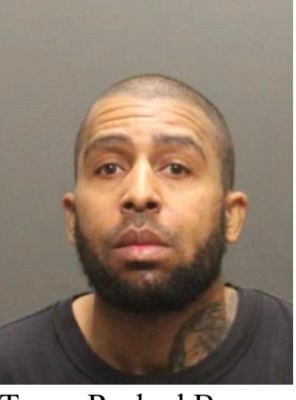
About 5:30 p.m. on March 30, Torey Rashad Brown got into an argument with his roommate, Devon Dee Lewis, in the central Tucson home the men shared. Few details have been made public in the case, but shortly after the pair began arguing, Brown called 911 to report Lewis had been shot. Lewis died at a hospital, and Brown, 42, was arrested on suspicion of second-degree murder. He’s being held in the Pima County jail on a $500,000 bond.

Lewis’ death was the 15th homicide investigated by Tucson police in 2021, and the sixth that involved a verbal or physical fight. It’s also the ninth this year to involve the use of a firearm, according to data provided by the Tucson Police Department.

In the weeks following Lewis’ fatal shooting, Tucson recorded its 17th homicide on April 8, when 28-year-old Omar Hernandez-Altamirano was shot to death during a late-night confrontation in front of a south side smoke shop. The suspected shooter, 30-year-old Honorio Juan Nieblas, has been charged with first-degree murder. Hernandez-Altamirano’s death was the 11th involving firearms and eighth stemming from a fight.

This combination of fights and firearms is part of the reason Tucson saw a 36% increase in homicides from 2019 to 2020. Last year’s 68 homicides was the highest number in a decade, according to TPD’s annual homicide report. In 2019, TPD investigated 50 homicides, a reduction of nine from 2018.

Of the cases investigated in 2020, nearly 20% involved fights, which were the most frequent motives for homicide. Fights as a motive also saw a substantial increase from 2019, when it was only a factor in seven cases.

More concerning to TPD officials than 2020’s increase is that 2021 is off to an even deadlier start, with three fewer homicides reported during the first three months of 2020 than the same period in 2021. Since October, there have been 41 homicides and during that same period, there have been more than 150 non-fatal shootings involving more than 230 victims.

Faced with data like this, TPD officials say their goal, in the simplest of terms, is to stop people from shooting each other.

“We’re trying to push for a more comprehensive approach to dealing with homicide than just throwing a bunch of cops at the problem,” said TPD Chief Chris Magnus.

A nationwide trend

The rise in homicides isn’t unique to Tucson, but part of a national trend, experts say.

Criminology and criminal justice professor Richard Rosenfeld of the University of Missouri St. Louis conducted a study of homicides in 34 major cities with populations of 250,000 or more. While home burglaries, larcenies and drug offenses all decreased across the U.S., 29 of the cities in Rosenfeld’s study saw increases in homicides, and most in the double-digit percentages. In Arizona, Phoenix saw a 46% increase in homicides, and Chandler’s homicide cases spiked 133%, according to Rosenfeld’s research.

Most cities saw a major rise at the start of the pandemic, which was already expected, given the seasonal changes and their affect on homicide trends. But in June 2020, everything changed.

“The salient event was the killing of George Floyd and widespread protests against police violence,” Rosenfeld said during a March 4 virtual presentation for the John Jay College and Harry Frank Guggenheim ‘”Crime In America” symposium.

Nationwide, homicides began to increase in June, although Tucson saw its largest jump at the end of the year, with 10 homicides in November, followed by seven in December.

“I do think the pandemic is involved, in part, in the rise we’ve seen in serious violence because of its impact not only on the general population, increasing stress and strain, but also its impact on policing,” Rosenfeld said. “When police officers are short-staffed because officers are out on quarantine or when they’re subject to social distancing requirements, that limits the kind of proactive policing that can help to prevent crime.”

In addition, many officers were taken off their normal neighborhood patrols to address protests, which reduced the number of boots on the ground to help keep violent crime in check, Rosenfeld said.

Even before the pandemic, TPD was struggling with staffing, as attrition and low base pay have whittled away at the number of officers available to patrol the streets. As of Jan. 12, there were 813 sworn officers in TPD’s ranks. That same date in 2020, there were 853 sworn officers

Rosenfeld said urgent action is needed to disrupt the cycle, including police reform that involves redirecting troubled populations to other agencies, and that police departments need to implement and expand evidence-based strategies to combat the problem.

“We have to, even amid the continuing pandemic and restrictions its imposed upon policing, redouble efforts at so-called pro-active policing or hot spots policing. That is the single most effective policing strategy to reduce crime,” Rosenfeld said. “Perhaps the second-most effective strategy the research is now showing, is this so-called focused deterrence strategy, which calls on the police and other criminal justice actors and social service agencies to focus their attention on those relatively small number of individuals who are disproportionately likely to become the next violent offender, or for that matter, the next victim.”

Rosenfeld said that communities also need to focus on restoring social service interventions and that police need to make their core mission addressing serious violence and property crime.

Tucson Police, Knight's Inn

Since October, there have been 41 homicides here. During that same period there have been more than 150 nonfatal shootings involving more than 230 victims in Tucson.

Rebecca Sasnett / Arizona Daily Star
A holistic approach

The two strategies Rosenfeld touted as being most effective are already being used in Tucson, in addition to a handful of other evidence-based initiatives.

“We’re trying to be sophisticated with the scarce resources we’ve got and take all that data that we can and identify essentially hot people that might commit crimes, hot spots and problematic behaviors,” said Captain James Wakefield, who oversees TPD’s criminal investigations division.

The department uses data from homicide, non-fatal shootings, and the national ballistics database, among others, to try to identify locations where there is a high-frequency of violent crimes. Once they have identified those hot spots, the idea is to get patrol officers into the area with more frequency. They’re also working with community members and social service agencies to get into neighborhoods and identify the problems.

One of the places on which TPD is focusing its efforts is the Knights Inn, on South Craycroft Road near East 22nd Street. In the past five years, the motel has been the site of five homicides and 29 non-fatal shootings. In 2020, police have been called to the inn 130 times, and this year, there have already been 25 calls for service to there.

As a result, the inn is now an active project in TPD’s COMPSTAT 360 program, which takes a holistic look at crime reduction.

“There’s obviously a problem there, so we’ve been digging to get to the underlying cause of the problem or the location itself,” Wakefield said.

That means looking beyond crime and also evaluating the environmental factors of the location, including lighting and street design, and getting the appropriate agencies involved in areas like taxes, licensing and code enforcement.

“We’ve involved other city agencies in looking at this, we’ve looked at ‘How do we go after this hotel and force them to take on some greater accountability?’” Magnus said. “We’ve looked at how to potentially involve the neighborhood in this and raise awareness on this issue.”

TPD Assistant Chief Kevin Hall said part of the process also involves talking to nearby businesses, as well as neighbors, to gauge the impact of the hotel’s hot spot status on surrounding residents who have a legitimate investment in resolving the “chronic, systemic problem.”

Tucson Police Department (copy)

Kevin Hall, assistant police chief, left, talks about the department’s drug deflection program as Chris Magnus, police chief, stands by during a news conference at the headquarters at 270 S. Stone Ave. on Nov. 2, 2018.

Mamta Popat / Arizona Daily Star 2018

“I’ve been here 29 years, and I started in that sector,” Hall said. “It was just as bad in the early 90s as it is now.”

If the Knights Inn project is successful, TPD’s goal is to sustain and replicate its effect in other hot-spot areas around town.

Focusing on youth

Rosenfeld’s second-most effective strategy, focused deterrence, is also underway in Tucson, especially when it comes to young offenders.

In recent years, Tucson has seen an increase in violent crimes committed by teenage offenders, who are not affiliated with traditional gangs who base their allegiances on territories.

Tucson’s “hybrid gangs” don’t exhibit any loyalty to a specific group but are still committing violence, either alone or with other teens.

In early March, 32-year-old Travon Lewis Lavender was shot and killed during a confrontation between two groups of juveniles, the latest in an ongoing dispute between the boys.

Lavender’s girlfriend — the mother of one of the involved youths — was also assaulted during the March 8 east-side incident, which happened as a result of a fight that had happened earlier in the day. Shortly before 8:30 p.m., one of the groups arrived at the apartment complex looking to confront the other group, and located the mother of one of the boys. They began assaulting the mother, and her boyfriend, Lavender, who was shot during the confrontation. The case is still ongoing, but no arrests have been made.

“If we can help facilitate getting them that deterrent and getting them removed from the other social group that’s involved in that, we feel like we should have some greater degree of effect in disrupting … the social contagion of violence, of removing them from that contagious atmosphere,” said Assistant Chief John Strader.

TPD is taking a phase-in approach when it comes to working with local agencies to assist in their focused deterrence efforts, but that approach has started at the youth level, Strader said.

“We’ve partnered with several community organizations to start with those juvenile groups that are not the gun-toters, but are gun-toting associates, and are more susceptible for this intervention and outreach,” Strader said.

TPD is currently working with Higher Ground, Goodwill Metro Youth Program, Boys to Men Tucson I Am You 360 and others to help deflect and deter would-be youth offenders. The idea is that eventually, the department will have a “rolodex of community partners” they can call on to help out, Strader said.

The effort to bring in outside groups to assist in deflection, deterrence and other alternatives to arrest is similar to Magnus’ work to reduce violent crime in Richmond, California, when he was the city’s police chief.

Richmond, which is across the bay from San Francisco and north of Oakland, had one of the nation’s highest crime rates before Magnus’ arrival as chief in 2006. By 2013, Richmond reported its lowest homicide rate in 33 years, which, at the time, Magnus credited to multi-pronged efforts by the department and community.

He is hoping an updated version of that multi-pronged approach will find success in Tucson.

People and places

One of the final — but perhaps most important — tools in TPD’s arsenal is its newly implemented Place Network Investigations.

PNIs are happening in six other U.S. cities and are based on empirically founded research and data surrounding gun violence. It’s a type of place-based investigation, which means that the vast majority of violence occurs in a very small number of places within any given jurisdiction.

In Tucson, 60% of last year’s shootings occurred in 4% of the city’s geographic area.

“It is pretty much well-grounded throughout criminology that this occurs,” said Hall, the assistant police chief. “They find the same thing with offenders. Basically, you have a very small percentage of offenders who are responsible for the vast amount of gun violence that occurs out there.”

Torey Rashad Brown

Torey Rashad Brown

Tucson Police Department

When police combine the two — geography and offenders — they can predict to some degree where gun violence will occur, as happened when PNIs were used in Cincinnati and Las Vegas, Hall said.

“Much like human beings, who form these relationships and networks, those same types of networks occur at crime places. When people are in these places and involved in crimes, they network to other places,” Hall said. “PNI takes into account those networked places and not only addresses the place where the crime is occurring, it’s addressing all the other places that are feeding into that location.”

That’s where the sustainability kicks in, Hall said.

Traditionally, police will find a troubled location, do a lot of work to clean it up and then eventually move on to address the next problem area. Because PNI is a three-year initiative, police will have the time to break down the networks and remove the surrounding locations.

“What we’re finding with this particular initiative is that if we take away the surrounding locations, the sustainability is built in,” Hall said. “Because they don’t come back, because we took out the whole network, as opposed to just one component of the network.”

Magnus said that it doesn’t stop there. Because socioeconomic and other factors contribute to the creation of these networks and places, police need the community’s help.

“The community has to be an equal partner with an equal voice about what happens in their neighborhoods and how to fix these problems,” Hall said. “That’s why so many agencies haven’t done as well as they’d like. It’s so hard to build those collaborative relationships, and as police officers, sometimes we have a hard time listening to community members talk about their own neighborhood and what their neighborhood feels.”

Involving the community and bringing in others who can help in other capacities is just as important as the research-based strategies TPD is deploying, Hall said.

“We do need to be able to listen to people who have those lived experiences, who maybe were involved in gun violence, who maybe did a little prison time or something,” Hall said. “We need to bring them into the conversation.”

Magnus is familiar with this approach. The effort to curb violence in Richmond relied heavily on people with lived experiences going into the neighborhoods and engaging community members. Magnus is hoping the same will be effective here.

“It didn’t so much involve the Police Department as it involved the kind of effort (Hall) is talking about,” Magnus said, adding that it started with recognizing the trauma at the root of many of these issues. “We don’t have to feel sorry for people to acknowledge that there are things that can still be done to help them change their lives and, frankly, stop being shooters.”

Magnus said he saw firsthand in Richmond the importance of different types of outreach.

“They have to see a path forward that starts with somebody who cares about them,” Magnus said. “And that somebody isn’t going to be the police. It’s just not. We can do a lot of things, but we’re not going to have relevance to that population in terms of addressing trauma.”

The one bright spot to the situation is that the clearance rate in these increasing homicides has remained high. In 2020, TPD cleared 72% of its homicide cases, and the clearance rate for this year is 80% to date.

TPD homicides

University of Missouri St. Louis criminology and criminal justice professor Richard Rosenfeld discussed 2020’s nationwide homicide increase during a March 4 virtual presentation for the John Jay College and Harry Frank Guggenheim “Crime In America” symposium.

John Jay College of Criminal Justice

Wakefield said the vast majority of community members trust police officers and are willing to talk to investigators if it means helping to solve a crime, which speaks to the force’s high solve rate.

“We’re solving these crimes, and one of the reasons we’re solving them is people are so networked,” Magnus said. “But that doesn’t really prevent the next crime.”

That all points to the importance of disrupting the full network, rather than simply removing a single person from the equation, Strader said.

“We’re laser-focused on disrupting the cycle of violence,” Strader said.

The flip side to disrupting this cycle is ensuring that police are careful to not abuse their power or catch anyone up in the system who is not an actual threat.

“That’s one thing that’s built into our hot-spot program. When our officers are moving through those geographic areas, it’s important to us to tell them to not cause harm to those community members,” Wakefield said, giving the example of a person sitting at a bus stop at 7 a.m., clearly on his way to work, who has a 10-year-old warrant for drinking in public. “It’s not advantageous for us to serve that warrant. It’s going to cause harm in his life. That’s not the intent of the program; it’s not zero-tolerance.”

Magnus said the idea is to target problem people and situations rather than just cast a wide net.

“We have to do things differently, and that cannot be just placed on the police,” Magnus said. “If we are truly a community that believes in the sanctity of life, we better get on this in a substantive way because this is a contagion, and it will continue to spread in a way that has a much more significant impact on the rest of the community if we don’t deal with it.”

There's a detective at the door; she wants to say 'sorry'

It starts with an apology.

On Aug. 22, 2017, Tucson police detectives re-interviewed the survivor of a 2002 sexual assault, apologizing first, then listening as the woman recounted details of the attack she endured as an 18-year-old.

The woman told them that on Sept. 1, 2002, Ramon Pena, then 19, held her down on a bed in an apartment and sexually assaulted her, court documents show.

The woman managed to escape from Pena and was taken to the apartment’s security office by a Samaritan. Officers searched the area, but Pena was gone. The woman was taken to a nearby hospital and underwent a sexual assault exam, which revealed physical injuries.

Detectives later located Pena in Laredo, Texas, and he told them he was getting ready to leave for the military. He told police the sex was consensual, and during a confrontation call a few days later denied hearing the woman tell him “no” and offered other excuses for his behavior.

“To detectives, it appeared the two agreed the entire episode was a misunderstanding,” court documents say of the 2002 call, and a few days later, the woman called to say she didn’t want to press charges. The case was closed.

Fast-forward to 2017, when the woman’s sexual assault kit was finally processed under a federal grant, causing the case to be reopened.

While all the recordings made during the initial investigation had been destroyed, detectives re-interviewed the woman, who pointed out several inaccuracies in the previous detective’s report as well as new details.

She told police that she spoke to Pena in Spanish and the original detectives in English, but “there was no way anyone could misunderstand” that she had made it clear she did not consent to having sex with Pena.

Detectives called Pena, who was living in Chicago after leaving the military on an “other than honorable” discharge. In the years since his separation, he’d also racked up two felony and three misdemeanor convictions, one for a violent and sexually motivated act, court documents show.

When detectives called Pena in December 2017, he claimed the woman was “fine” with having sex and said, “I thought we ended up with her saying she was lying? I know I didn’t do anything wrong.”

Detectives told him they were preparing a warrant for his arrest and in November 2018 — more than 16 years after the woman first told her story to police — Pena was booked into the Pima County jail on a single charge of sexual assault.

Pena fought the charge for years, until his June 2020 trial was put on hold because of the pandemic. In August, he pleaded guilty to aggravated assault on an incapacitated victim and was sentenced to probation.

The woman said she’s had persistent symptoms that include depression, loss of sleep, anxiety and fear, according to a victim impact statement filed in court.

She also said that as so much time had passed since the assault, she did not know “that she would ever see justice.”

This woman was one of some 130 sexual assault survivors who have now gotten answers from Tucson police about their cases, even though it often has taken years, under a federal grant that funds testing of backlogged sexual assault kits.

In September of 2019, Pima County was awarded $2 million as part of the Bureau of Justice Affairs National Sexual Assault Kit Initiative, or SAKI, grant. The funds came on the heels of a $1 million grant in 2015, that helped the Tucson Police Department tackle its backlog of nearly 2,000 sexual assault kits.

When TPD finished testing the 1,900 kits, the end result was 915 DNA profiles that generated 464 hits, which means the identity of a potential suspect is revealed. One of those suspects was Nathan Loebe, who was sentenced to 274 years in prison in 2019 after he was convicted of 12 counts of sexual assault, five counts of kidnapping, three counts of stalking and one count of attempted sexual assault. Several women were victimized by Loebe between 2003 and 2015, but their cases went unsolved until law enforcement was able to build a case using DNA evidence obtained from kits tested under the DANY grant.

The grant also allowed for the hiring of two victim advocates at the Pima County Attorney’s Office to assist police with victim notification and support.

The 2019 SAKI grant, which has allowed TPD to continue its work on these cold cases, are a bit more involved, with funding supporting teams that test unsubmitted kits; collect and test DNA from offenders; produce protocols and procedures to improve collaboration among police, labs, prosecutors and victim support providers; create resources to assist survivors during the investigation and prosecution process; and enhance victim notification protocols and services.

The money is shared by the County Attorney’s Office, TPD and the Sheriff’s Department. It funds the salaries of four detectives, two sergeants, two prosecutors and four advocates.

The team meets regularly to review cases, and the results of the collaboration have been eye-opening on both sides, according to victim advocate Colleen Phelan.

“Law enforcement has seen how helpful advocates can be in the process,” said Phelan, who added that advocates help facilitate conversations between victims and detectives.

TPD Cold Case Sexual Assault unit detectives Mary Pekas and Dallas Wilson agree, saying that these days, when they notify victims of activity in the case, “we pretty much lead with an apology.”

The initial apology for showing up at their door is followed by more apologies — either that it took so long for police to contact the victim, or even for how that victim was treated when he or she first reported the assault. Detectives say these apologies are often better received with an advocate on hand to help the victim process his or her feelings and offer options for support.

‘Fixing what we should have done’

At the start of 2020, project participants hunkered down for a SAKI boot camp, spending the week building protocols and figuring out the best way to make notifications in these delicate situations.The group quickly decided that in-person notifications were important, Phelan said.

Other notifications “didn’t allow a survivor a chance to ask questions or see us,” Phelan said. “When you’ve been failed by the system, you are not going to so easily trust a voice at the end of the phone.”

Notifications had to happen in person and lead with the appropriate apology for each situation.

“The apology for me is one of most important pieces of notification,” Phelan said. “For years, survivors have rightfully felt ignored and minimized by the system, through law enforcement or the county attorney. The criminal justice system has not served survivors.”

The grants have focused on people trying to do better and figure out where the system failures happened years ago, and “fixing what we should have done,” Phelan said.

In February 2020, the group got started making in-person notifications, and a month later the coronavirus arrived in Tucson.

“That’s been the biggest challenge so far for us: How do we prioritize community safety?” Phelan said. “The already-delayed notifications and the difficulty of doing a notification with face masks — it’s hard to convey that you’re being empathetic and personal when a victim only sees your eyes.”

They also didn’t want to re-traumatize people by bringing up a case that many had thought over and done, and then exposing them to the coronavirus in the process.

“So we halted until everyone was vaccinated,” Phelan said.

But the clock on the grant’s three-year timeline didn’t stop with COVID-19. The team started working on the cases that had hits on potential suspects, and reviewing cases every two weeks so that detectives could start to move forward.

“(The results are) only one small piece of what goes into the cases,” Phelan said.

After a potential suspect is identified through a test, detectives have to pull the original case report, some of which dated as far back as 1989, along with any evidence that could still be on file.

Because public safety was still the priority during the pandemic, the team continued making notifications in cases involving serial offenders. And despite the pandemic, the County Attorney’s Office still filed charges in a handful of serial offender cases, which meant the office was dealing with multiple victims, and conducting in-person interviews in as safe a manner as possible.

“We worked with each of the survivors to make sure they were as comfortable as possible,” Phelan said of the process, which included notifications in the victims’ homes and interviews in safer spaces.

To date, TPD has identified more than 30 suspects with DNA hits from more than one kit, and it has handled more than 140 cases involving a suspect who had either multiple DNA hits or was named as a suspect in another sexual assault case, according to data provided by the department.

Pekas said data collection has improved under the SAKI grant, with the addition of two more detectives — herself included — to the unit. When Wilson was working on his own under an earlier grant, he tackled the most urgent cases first, including Loebe, whose case took a significant amount of time.

After Loebe’s case was over, Wilson went to work going through cases with more than one DNA hit and identifying potential suspects. Then the newer SAKI grant kicked in, which led to more advancements, more detectives and more survivor notifications.

Crimes committed by ‘opportunists’

The grants have changed the way Tucson’s criminal-justice system treats sexual assaults in a number of ways. Police and prosecutors have learned the value of testing all sexual assault kits, even in cases where a suspect had been identified by the victim.

Previously, law enforcement refrained from testing those kits, believing that they wouldn’t lead to new information. They’ve since learned that it allows them to link cases and identify serial offenders.

They’ve also learned sexual offenders don’t fall into specific buckets.

“For years, there’s been a misconception that people who commit these offenses are two types of people: Stranger rapists or acquaintance rapists, and they don’t cross over,” Phelan said. “Testing these kits has shown us that’s false. Perpetrators of these types of crimes are opportunists. They will sexually assault people they know and people they don’t know. Their MO is vulnerable people.”

Wilson said detectives on his team learned a lot from reading old reports from the 1980s and even in the early 2010s. With developments in the neurobiology of trauma, police are approaching victims differently with the understanding that the brain responds to trauma in a variety of ways.

“(There was) lot of old, traditional victim-blaming and basically writing victims off,” Wilson said. “We’re trying to do better this time around. They do deserve an apology.”

Pekas said that reviewing those old cases has also forced them to take a hard look at the future and try to build their cases with the understanding that even if they can’t be closed now, developments in DNA and other types of technology might allow detectives to solve them in the future.

“While we can’t predict what’s going to happen next, I can at least predict that somebody might need me in collecting as much evidence as possible, whether that’s testimonial or forensic or physical evidence, so that in the future as they have other opportunities to identify people or get better evidence in these cases, that I’ve done the best I could to facilitate that,” Pekas said.

Phelan said that working on a team helps the group keep one another on track with all the new findings and revelations.

“It’s easy to fall back into old patterns of thinking,” Phelan said. “We need to have team approach to keep us focused on that we’re still learning and still improving”

Under SAKI, TPD has closed nearly 250 cold case sexual assaults through a variety of methods. In some cases, the suspect has been arrested or his case was previously adjudicated. In others, the victim or suspect has died, or the victim has declined to reopen the case.

The team is also notifying all survivors, regardless of if the statute of limitations has passed or if the suspect is deceased. Situations like that, along with an offender already being in custody for another crime, drive which cases Wilson and Pekas prioritize for notification.

“Even though people express differently, there’s a level of devastation that we feel from them,” Pekas said. “But then to a degree, there’s also some hope and gratitude for getting an answer.”

Wilson said that every survivor is appreciative of getting information and of the compassion detectives and advocates are trying to show, even if they weren’t happy with the way law enforcement treated them before.

“It kind of feels like a healing moment,” Pekas said. “I guess the most universal concept is this idea of being believed and being respected and valued and treated with dignity.”

Having advocates on board for notifications has been so helpful that it will shape police dealings with victims in the future and has changed how TPD does notifications in other types of crimes, Pekas said.

“It kind of felt like we worked in silos,” she said. “We knew about these resources but we didn’t understand them.”

Right to testing and notification

A variety of task forces are now in place to tackle aspects of sexual assault, ensuring the backlog doesn’t return, protocols, training, addressing disparities in the Spanish-speaking and LGBTQ+ communities, and overall community engagement.

As part of that last portion, the County Attorney’s Office is preparing a series of public-service videos, with topics including how to obtain a sexual assault kit.

Phelan said that when they first started making notifications, survivors often said that because police hadn’t contacted them after reporting an assault, they believed they’d done something wrong or that nothing had happened with the case.

“There are lots of reasons cases didn’t get investigated the way they are now, but these victims have rights to testing and notification. A basic right is to know the status of their case,” Phelan said “It won’t always be the news that we can prosecute, but it will be one step closer to closure on the case.”

Phelan added that the process isn’t always fair, but that the goal is to always be as honest as possible and prepare victims for the next step. Most people actually don’t want to discuss their case with advocates, but rather how it’s affected their lives and how they’re managing the process.

“The goal is to create an opportunity to have someone in that victim’s life who can say, ‘I have no personal investment in the next steps. My investment is that your voice is heard,’” Phelan said.

It’s important that Pima County’s team reaches out to survivors in its cases so they know what to expect going forward, Phelan said.

“We want people to know that we’re all choosing to do this. We genuinely want to help, we genuinely want to listen and to hear,” Phelan said. “We will not always have the outcome people deserve or be able to provide an explanation for everything that happened, but people deserve to have answers”

Southern Arizona cops are learning to take people in crisis to get help, instead of to jail

The 911 call references a distraught woman standing on a freeway overpass, and Tucson police Officer Joshua Camacho's instinct is to approach slowly and speak softly.

"Hi there, I'm Officer Camacho. What's your name?"

The young woman identifies herself as Melissa. Camacho comments that she seems upset, and asks what's going on.

Melissa says she's lost her job, worries she'll be kicked out of her home, and her boyfriend — the only person she knows in town — has left her.

"Well, Melissa, I'm afraid of heights," Camacho says. "Is it OK if we talk over here away from the edge, just so I can feel more comfortable?"

Melissa looks him in the eyes before shrugging in agreement, then walks with Camacho and his partner, Kenneth Riddle, until they are several feet away.

The officers ask Melissa if she has a friend or family member they can call. Maybe a case manager? Next, Riddle asks if she's heard of the Crisis Response Center.

She hasn't, but she makes it clear she doesn't want to go anywhere. She asks if there's anyone else she can talk to.

Star solutions logo

Solutions journalism is rigorous reporting on responses to social problems. It intends to rebalance the news and focus not just on problems, but on potential solutions to those problems.

When the officers mention the Crisis Mobile Team — trained social workers who would come talk to her — the look in Melissa's eyes shows they've found a solution.

"Scenario over," she says, smiling at the first responders and evaluators gathered in the Southern Arizona Law Enforcement Training Center's administration building.

Camacho and Riddle are two of 57 first responders who graduated July 30 from Southern Arizona Crisis Intervention Team training, a five-day program that trains police, corrections officers, firefighters and dispatchers to safely de-escalate situations and get people help for mental health, substance use and other issues, instead of taking them to jail. Thanks to the coronavirus, last month's training was the first in 18 months.

Tools for the belt

The training has been taking place in Tucson since the early 2000s, but has gained traction and national attention since it was taken over in 2008 by Kate Vesely, Pima County's director of justice services.

She was joined several years later by Tucson Police Sgt. Jason Winsky, who heads up the department's Mental Health Support Team. In the years since, several co-facilitators from other agencies have signed on to assist.

The first four days of training were made up of speakers and sessions focusing on mental health and substance use disorders, and various populations, including youths in crisis, older adults, people experiencing homelessness, veterans with PTSD and people with autism and developmental disabilities.

On the final day, attendees ran through 10 different role-play scenarios to test out their new skills, which facilitators told them at the start of training were simply "extra things to put on that tool belt."

Scenarios included people experiencing various mental health crises such as a veteran having a PTSD flashback, suicidal subjects including "Melissa," a drunk woman refusing to get down from the bar, a confused older adult and a pawn shop customer who was just mad — facilitators called that one the curveball.

After a week of learning about crises for which officers were trained to offer resources, a scenario involving a person who was just plain mad and didn't need any additional intervention felt too easy for most.

Attendees were also taught to use family and friends as a source of information whenever possible. But in one scenario involving a woman who was having a mental health crisis, the presence of her brother — who had information that his sister was on court-ordered treatment — only made the woman more upset.

When the program began, officers viewed being sent to CIT as a sentence for bad behavior, Vesely said.

About 12 years ago, the program switched to voluntary enrollment to ensure the best possible people trained to handle crises were working in the field.

"Ever since then, it's been a total game-changer," Vesely said. "We've seen the culture change, we have seen so much change just among the hearts and minds of the people that participate in this class."

These days, there are rarely cancellations and there is often a waitlist for the training that's typically offered three times a year. Since its inception in Pima County, more than 1,500 people have graduated from the course.

With representatives from TPD, Pima County Sheriff's Department, University of Arizona PD, Pima Community College PD, Sahuarita PD, Marana PD, Oro Valley PD, Tucson Fire and Casa Grande PD in attendance, Southern Arizona was widely represented during the first post-pandemic training.

And not all of the attendees were officers or deputies: Several corrections officers and dispatchers were also on hand to learn a set of skills that are in increasing demand amidst public outcry over law enforcement's use of force and about police accountability.

Camacho, a six-year veteran of TPD and a SWAT team member, said members are encouraged to take the course, and he thought it would be valuable training for his patrol division at Operations Division South.

He said he's responded to many 911 calls where he's had to de-escalate a person in mental health crisis. He thought CIT's scenario-based training was realistic and would help prepare officers for real-world situations.

"I think humanizing the badge, being personable, and finding something that we can relate to with someone in crisis is important in de-escalating situations," Camacho said. "The biggest takeaway for me was learning about the various number of resources that were available to the public that I am now able to offer to community members I come in contact with."

Crisis Intervention Training role-play day

Tucson police Officer Melody McLaughlin, left, Officer Aaron Mora of the Casa Grande Police Department and Officer Melanie Sultan of the UA Police Department, speak with Dolores Padilla, role player and behavioral health crisis mobile team technician, during a mental health scenario at Southern Arizona Law Enforcement Training Center.

Rebecca Sasnett, Arizona Daily Star

During a session about legal issues, Winsky talked about potential inclusions in the pending George Floyd Act, including the end of qualified immunity, which protects police from being individually sued for their actions unless they violated a "clearly established" statutory or constitutional right.

When Winsky asked for a show of hands as to who was familiar with the term "qualified immunity," almost every hand in the room shot into the air. He said later that this response was a change from previous classes, where very few people were familiar with the term, indicating a shift in the landscape.

"I don’t know in the last 10 years that I’ve ever seen a class that came in this dialed in to what’s going on in the world around them and so hungry for information and tools to have better outcomes for persons in crisis," Winsky said. "They’re actively seeking the training out because they know the world has changed. They know they’re seeing more mental health issues, more substance abuse issues and more people experiencing psychosis out on the street. They want the tools to be able to respond to those people in a thoughtful and caring way."

This class had more knowledge of mental health, legal issues and situations in which use of force can be prevented than previous classes, Winsky said, allowing facilitators to move on to more advanced parts of the training faster.

"Younger officers and deputies out there are educated and engaged in a way I’ve never seen before," Winsky said. "They're coming in with a lot more cultural knowledge about mental health issues."

Understanding through experience

Speakers and presenters included clinicians and experts, and throughout the week, attendees learned about services in Pima County to assist various populations, like the Crisis Mobile Team and the Crisis Response Center, a 24/7 open-admission facility where officers can take people — voluntarily or involuntarily — for a mental health evaluation.

They learned how to recognize substance use disorders and various types of mental health conditions, and also heard stories from people with experience.

The Southern Arizona Crisis Intervention Team trainings are aimed at teaching Tucson-area first responders how get people in crises necessary help instead of taking them to jail. 

To read the full story, click here. 

Jesse Tellez

Danny Howe told of his journey from "county time to county dime," and how he channeled his experiences in the justice system to a career. Howe is a workforce development specialist at Pima County One-Stop System and the owner and director of The Earnest House, a group of transitional houses for people reentering society.

"Being able to help someone who can never repay me has been my driving force for the last 10 years," said Howe, who told the group how he went from selling drugs to selling people, as his job at Pima County allows him to connect people with the best job to suit their skill set.

John McGrath, a social worker with the Veterans Affairs, came to talk to attendees about veterans and PTSD, including the science behind it and how to handle someone experiencing that type of crisis.

He also shared his own story with the trainees, who went from late-afternoon fidgety to riveted in a matter of minutes.

In 2013, McGrath — a newly promoted sergeant with UAPD — was deployed to Afghanistan with the Army Air National Guard. One night, the rocket fire was particularly bad, and McGrath became convinced he was going to die. While he survived the night and the rest of his deployment, he developed PTSD.

McGrath said he started engaging in risky behavior — a common response to a traumatic incident. When he came back to the U.S., he started drinking to be able to sleep through the night, and then drinking to get through the day. Less than a month after his return, his supervisors started pressuring him to come back to work, and when he went to the VA for help, it was denied. He was told it was because he was still active-duty.

In February 2014, McGrath made headlines after he crashed his patrol car into a traffic sign and then a cement wall on the Interstate 10 frontage road near Speedway. He said he didn't remember the week leading up to the incident, but he quickly realized the life he knew was over.

"Being a cop was everything to me," he said.

Soon, McGrath found himself alone with a loaded gun in his mouth. He said the only thing that stopped him from pulling the trigger was the thought of his father cleaning up after his gruesome death. He got help and went back to school, and now works to help others avoid the kind of crisis he went through.

He gave attendees his personal phone number, saying he'd be there to help each take the first steps to get help, should they ever need it.

Crisis Intervention Training role-play day

Tucson police Officer Jesse Land, right, talks with Jeff VanNorman, TPD detective and role player, during a suicidal scenario at Southern Arizona Law Enforcement Training Center.

Rebecca Sasnett, Arizona Daily Star

"Respect and dignity"

TPD Sgt. Darrell Hussman, who works in the Mental Health Support Team unit, ran through basic and advanced de-escalation techniques, telling attendees to try to relate to what the person in crisis is going through.

"Treat them with that respect and dignity that they need," Hussman reminded the group. "These are people. I know for me personally, in my experience a lot of times, I'll put them in a category, like 'crazy.' As I started getting with the MHST unit, I realized these people are struggling. These people, at times, are hurting."

Hussman told attendees it's OK for them to address the issue at hand and not shy around it. If a person is hearing voices, it's OK to ask them what the voices are telling them to do. Telling the person "that must be scary" can make a big difference in forming a connection, Hussman said.

When dealing with PTSD and flashbacks, it's important to orient the person to the day, time and place. And no matter how frustrating it might be, he said,  always answer informational questions, no matter how rudely a person asks.

He also spoke about recognizing post-traumatic stress — different from PTSD — and what to do about it, sharing his own experience with depression.

"We do so much for everyone on the outside, there's so much we don't do internally," Hussman said, saying officers tend to work on keeping up the facade that they're fine, versus the foundation that actually keeps them grounded and fine.

Vesely told the story of a police lieutenant in New York who died by suicide after a widely-publicized incident involving a man in mental crisis who fell to his death after being shot with a stun gun.

As he told the story, a corrections officer got out of her seat, crying quietly as she slipped out the door in the back of the room.

She walked past two co-facilitators who are on their departments' mental health unit teams, Pima Sheriff's Sgt. Erin Gibson and Oro Valley police Officer Sonja Hudson. They exchanged glances and motioned to follow the woman outside.

A while later, muffled laughter could be heard from outside, and soon after, the three filed back into the room. While they missed most of the session, Gibson and Hudson did exactly what the instructors advised attendees to do: Look out for one another, and if something doesn't seem right, ask.

"What people remember is how you make them feel," Vesely told the group.

"These are the conversations"

Seven-year TPD veteran Antwoine Robinson, a lead patrol officer at Operations Division South, was all-in on the training from the first morning. He had questions for nearly every speaker and was one of the most active participants.

"Crisis intervention is always the way I thought law enforcement should go," said Robinson, who has always wanted to be a hostage negotiator. "We're responding to people at their worst times. It's never a good time when someone calls 911."

Robinson said that while he and his fellow officers are well-trained in safety tactics to protect themselves and the community, there haven't been a lot of conversations about how to connect people in crisis with actual resources.

"Nationwide, we haven't come up with a system yet to approach the little in-between things, the mental health issues that are going on across the nation," Robinson said. "So if law enforcement is going to be the key to getting people into crisis intervention and to some type of behavior health specialist to be evaluated, so be it. If we can get them resources prior to them even getting to the justice system, then let's do it."

He said he was most surprised by the sessions that included feedback from family members of people who have gone through crisis. When officers respond to a call about a person in crisis, they don't typically address the needs of the family member who made the call, he said.

"Our expectation is when we provide the resources for mental health ... we kind of put the burden on the rest of the family to ensure that this person is seeking the right resources," Robinson said. "But we never offer resources for the family members. That was something big that kind of stood in my mind this past week."
 
Robinson said there are regular discussions in TPD about how to handle crisis situations, both before and after, and that "Monday morning quarterbacking" has become a regular part of the work.

"A lot of times, we'll take completely justified videos ... but then we'll dissect it even more than that, and we'll go into how can we have not put ourselves in this situation to justify using that type of force in the first place, because that's what we want to do in every situation," Robinson said.

"CIT is more comprehensive, more intuitive and something for me and the other individuals in the class to take back to our squad and our division, but these are the conversations that we're already having in a lot of these briefings and when we're on scene."

Vesely, whose father is a retired police officer, said it seems that Southern Arizona is at a pivot point.

She said everyone involved knows they can't arrest their way out of the problem anymore, and the idea is to get officers to want to take the opportunity to help a person get treatment or support instead of taking them to jail.

That means it's important to make sure a system is in place that makes resources readily available in a crisis, no matter what time of day.

"We're looking at problem solving as the future," she said.

Tucson agencies work to support Spanish-speaking victims of gender-based violence

Leer en español

On Monday, the promotoras dance.

The women of varying ages gather in a brick-cobbled courtyard, some of them wearing street clothes and others donning colorful, flowing skirts. Led by a member of the group who works as a Zumba instructor, the women twirl and turn in unison, toes pointed, as they learn folklórico.

And more importantly, they heal.

All of the women are survivors of domestic violence who have gone through the YWCA of Southern Arizona's Promotoras Rompiendo Cadenas (Community Educators Breaking through Barriers) program.

Hispanic women are at higher risk for gender-based violence due to a variety of cultural and institutional factors. One in three Latina women report having experienced physical violence by an intimate partner in their lifetime, according to the National Latino Network for Healthy Families and Communities. 

Centers for Disease Control research has shown that one in 12 Latinas experienced such violence in the past 12 months.

And 63.1% of Hispanic women who identified being victimized in their lifetime reported having experienced more than one victimization, according to a Sexual Assault Among Latinas Study conducted by the Office of Justice Programs.

The promotoras program is one of many efforts within the community to engage and support Spanish-speaking survivors of domestic violence and sexual assault in services, whether that be seeking justice or receiving the tools they need to continue healing.

'We know that knowledge is power'

These efforts have increased substantially in recent years, thanks to some federal grant funding.

In 2019, Pima County was awarded $2 million as part of the Bureau of Justice Affairs National Sexual Assault Kit Initiative (SAKI) grant, to inventory and test cold case sexual assault kits. A portion of the funds were earmarked to address the disparity in response for people in underserved communities, including Spanish speakers and people who identify as LGBTQ+.

Three of the four Pima County Attorney's Office victim advocates assigned to the SAKI team are Spanish speakers. They work closely with Tucson Police Department detective Steven Acevedo in the adult sexual assault unit to notify victims of any updates in their cases as a result of the testing.

Acevedo's position is the result of a 2018 grant from the Department of Justice Office on Violence against Women to increase bilingual competency among investigators, sexual assault nurse examiners and community service organizations. The $747,000 grant also funded a bilingual police detective in the domestic violence unit, Ely Badilla.

The bilingual advocates and detectives work closely with the promotoras program, the Southern Arizona Center Against Sexual Assault and the Consulate of Mexico to assist Spanish-speaking victims, regardless of their citizenship.

Advocates Andrea Enciso, Ileana Lizarraga and Maricela Savalas were with the County Attorney's Office for years before being assigned to the SAKI team, and they say the collaboration efforts began years before the grant.

The biggest challenge has been helping victims get past the "gap of trust" in law enforcement, said Enciso, the team's lead advocate.

The Spanish-speaking community's trust in law enforcement was lacking for various reasons, the largest one being Tucson's history with immigration enforcement. But TPD has put in the work to rebuild itself and its relationship with Spanish speakers in recent years, Lizarraga said.

"I think law enforcement has done an amazing job in building that connection and that trust … with survivors in our community," Lizarraga said. "And they've been doing that simply by being present within our community."

Advocates aim to get involved with victims as early as possible, in order to explain the process and the confidentiality that comes with their roles. Even if the victim doesn't want to move forward with prosecution, advocates can help eliminate some of the fear as that person navigates their way through the recovery process, Lizarraga said.  

They can also explain the process for obtaining an order of protection, as well as how to do safety planning for the future, Enciso said. "We know that knowledge is power."

The advocates are familiar with the various struggles a victim might face and can help describe and translate any forms that are not available in Spanish, which unfortunately is most, Savalas said.

They are prepared to assist with immigration issues and applying for U visas, which are earmarked for victims of certain crimes who can assist in investigation or prosecution. They are also well-versed in landlord/tenant issues and divorce.

But even with bilingual assistance, there are still barriers, Enciso said. The wait time for a U visa is substantial, and because only a certain amount are allotted each year, there's a backlog.

"They just don't know what this legal system looks like. I can't imagine what that might feel like in the moment of trusting the process and trusting that advocate and detective," Lizarraga said. "If they're from Mexico, it looks very different, so it can be hard to know who to talk to and where to go."

Advocates also have to explain to many victims the differences between the criminal justice system here versus in that person's home country. In many countries, the system centers around the idea of guilty until proven innocent, opposite of the Unites States' system.

And if a victim has had a bad experience with law enforcement in another country, he or she is less likely to seek help here.

"It helps when you have partners," Enciso said. "It's a lot easier if someone knows that this person will really advocate for them. We want to empower folks to access the resources they have but also be mindful that we may be throwing them into a system that they definitely have no clue how to navigate, so we might have to hold their hand a little bit longer."

Lizarraga said that while many victims do not want to prosecute, the law enforcement notification in sexual assault cold cases is a key component to a victim's path toward healing. For victims whose sexual assault kits were part of a backlog in testing, the apology they get from law enforcement for the initial handling of the case is an important first step, as is letting them know that resources and support are still available.

"That apology from law enforcement is such a huge and powerful thing," she said.

PCAO, victim advocates

Andrea Enciso, left, Ileana Lizarraga, center, and Maricela Savalas, victim advocates with the Pima County Attorney’s Office, with Tucson Police Sgt. Steve Acevedo. A portion of PCAO’s multiyear Sexual Assault Kit Initiative grant has been earmarked to address disparities in underserved and underreporting communities, including the Spanish-speaking and LGBTQ+ communities.

Mamta Popat, Arizona Daily Star

If the victim wants to prosecute after the notification, a detective will conduct a second interview, and the case will be re-opened.

Because the advocates are assigned part time to SAKI, they also work a mixed caseload, which for some means new sexual assault cases, in addition to the cold cases they work on under the grant.

For the active cases, initial contact with the victim is key for developing rapport. The team aims for victims to meet and work with each advocate, so that he or she will feel comfortable with whoever is available.

Savalas said the outreach efforts have greatly benefited from increased collaboration with TPD and getting involved earlier in cases.

"You can say the words, but if your intentions behind it don't match, it's not going to be a successful program or connection with the community," Enciso said. "It's more than being bilingual, it's being bicultural and being willing to learn."

'A real commitment has to be made'

Detective Acevedo, who grew up on Tucson's west side and has been with TPD since 2005, said the department recognized several years ago that it had a  gap in its ability to respond to and investigate cases involving Spanish speakers while using a victim-centered approach.

When Acevedo moved into his current position in January 2019, he said he was given a little creative license in terms of what his job would entail. The learning curve was steep at first, as he tried to quickly absorb information about the laws involving sex offenses, and about investigating with a victim-centered approach and cultural competency about the Hispanic community.

His first case involved a woman whose employer was extorting her for sex, but she was reluctant to go to police.

He said her reticence was due in part to local law enforcement's history with issues including SB1070, a state law that required local police to check the immigration status of anyone they stopped if they suspected that person might be in the country illegally.

She was also concerned about the Arizona Department of Public Safety's border strike force, which led to fears of deportation, and the political rhetoric about the border wall, he said.

The result of Tucson police keeping up with the mandates in laws such as SB1070 was substantial damage to their relationship with the Hispanic community, Acevedo said.

By contrast, the YWCA, the Mexican consulate and other community groups had already established themselves as trusted providers, and were receiving reports from domestic violence victims. Improving police communication with those groups has been instrumental.

Star solutions logo

Solutions journalism is rigorous reporting on responses to social problems. It intends to rebalance the news and focus not just on problems, but on potential solutions to those problems.

So have TPD's efforts to assure victims that immigration status is not an issue when you are the victim of a crime, Acevedo said.

TPD has a policy in its general orders, in place for years, to not ask crime victims about their immigration status. 

Acevedo is also focusing on three initiatives.

He is hoping to establish a relationship with the Consulate of El Salvador in Tucson, as he already works with the Mexican and Guatemalan consulates.

He also hopes to connect with Clinica del Alma Health Center, at El Pueblo Center on the city's south side. Survivors receive care at Clinica del Alma, then are referred to a hospital, but Acevedo hopes to create protocols to allow police and advocates to meet them at that clinic.

The third initiative is to improve strategic communications in Spanish on social media and other venues, to get the word out about services for survivors.

"A real commitment has to be made to sustain this," Acevedo said of the grant-funded efforts. "First, because it's the right thing to do. Second, the demographics are changing, and thirdly, if it doesn't have that posterity or that continuation, then years later, we're reinventing this."

'We have the experiences of the life'

Imelda Esquer started the YWCA's promotoras program in 2016, after experiencing a domestic violence situation years earlier. Esquer said she went to a social service agency seeking help, and received a good referral to a center that helped victims like her.

Years later, while working toward her degree at Pima Community College, Esquer decided she wanted to create a program for underserved Latinas experiencing gender-based violence. She brought her idea to then-director Alma Jaramillo, who said "yes" right away and gave her clear goals.

While getting the program ready to launch, Esquer happened to run into a woman she met years prior in a support group at Tucson's Emerge Center Against Domestic Violence. The women had never spoken in the past but recognized each other instantly.

"We started working together, and we are like best friends since then. We have the same goal: to give something to the community," Esquer said. "We are not experts. I don't have the academic titles. That makes us unique, because we have the experiences of the life."

The program's yearlong Spanish-language training is for women who want to become advocates for other women who may be experiencing gender violence.

The program recognizes that people behave differently in response to traumatic experiences and that treating survivors with kindness and respect, and giving them choices, is key in their recovery. It has seen hundreds of women come through it in its five years, many of them undocumented.

Esquer said the promotoras are the experts when it comes to their needs as survivors and as Latinas.

One of the biggest needs right now, she said, is some type of counseling for undocumented women. Esquer experienced this herself, having been undocumented for years, and said that was the No. 1 reason she stayed with her abuser.

"That's why I understand these women," Esquer said. "Because it's very easy to provide solutions when you haven't been there. I respect those women, and the struggle that they face is very, very real. Nobody wants to be there."

Years later, Esquer still gets emotional when speaking about what she endured.

She said undocumented women experience two types of violence when they become the victim of a gender-based attack. There's the personal violence of the attack, which is followed by the institutional violence of encountering barriers in the system, she said.

With no access to housing, transportation, counseling and other types of support, an undocumented woman faces a closed door to services, Esquer said.

Earlier this year, she asked the promotoras how they heal, outside of counseling or therapy. Answers included gardening, hiking, cooking and dancing, and Esquer made those activities happen for them.

The folklórico group will perform in December at the YWCA's 75th anniversary celebration.

The creative outlet these activities provide gives something back to survivors that was taken from them by their abusers. After coming from a situation where there was always another person asserting violent control, "it's important for these women to have their own voices," Esquer said.

'So much more that we could do'

Although the pandemic's overall effect on gender-based violence is unclear, calls to one of Tucson's sexual assault crisis lines have remained steady throughout.

The Southern Arizona Center Against Sexual Assault received 1,034 first-time or anonymous calls to its bilingual crisis line during the 2020 fiscal year — October 2019 through September 2020.

For 2021's fiscal year, the most recent data shows 704 calls were placed between October 2020 and June 2021.

SACASA does not track the callers' languages, but supervisor Katlyn Monje said it regularly works with Spanish-speaking victims via in-person crisis response and calls to the crisis line.

The agency's services are available to all survivors and secondary survivors, who include their friends, family members and partners, regardless of their immigration status.

Earlier this year, SACASA launched a weekly Spanish language support group that has built momentum. The group is for people seeking to regain control over themselves and their surroundings by developing coping skills, Monje said.

The pandemic has posed obvious challenges to in-person services, especially group sessions, which are now held virtually. SACASA's office, at 1600 N. Country Club Road, is open for walk-in services, including medical forensic exams.

Unlike other agencies, SACASA has Spanish versions of all the documents and paperwork given out to survivors, including its comprehensive handbook that covers resources and how to report sexual assault.

SACASA's advocates will meet victims at the hospital, police station or wherever they choose and will accompany survivors as they make a report to law enforcement or attend court hearings.

"Our advocates will respond pretty much anywhere in Pima County, so wherever is most comfortable for the survivor or closest to them," Monje said. "Whatever that looks like, we'll respond and try to get out to the survivor versus making them find their way to us."

And SACASA advocates' communication with survivors is confidential, which is also the case with County Attorney's Office advocates.

"I want to thank SACASA for all the support it has given me to overcome aspects of my personal life through therapies and support groups. That has truly changed my perspective on life," one survivor said, speaking in Spanish.  "God bless all the staff who work there, for all the attention, care and follow-up."

The Star does not typically name survivors of sexual assault or domestic violence.

SACASA tries to recruit as many Spanish-speakers as possible as sexual assault forensic examiners and advocates, and has a handful of each on staff, meaning it doesn't often have to rely on professional translation services. But Monje said it's a struggle to find fluent Spanish speakers who are available after hours.

Community partners, including the Mexican consulate, will assist SACASA with translation services for Spanish-speaking victims and make staff available any time of day or night, she said.

"We're very grateful to have what we have, but still, it's not enough," Monje said. "There's so much more that we could do, should do and need to keep working toward."

Caitlin Schmidt

Caitlin Schmidt

Related to this collection

Most Popular

Photos: Wildflowers blooming in Tucson

Photos: Wildflowers blooming in Tucson

As the days grow longer and the temperature warms up, wildflowers are beginning to bloom along city roads and out on hiking trails.

Photos: Meru and Penzi's birthday bash at Reid Park Zoo

Photos: Meru and Penzi's birthday bash at Reid Park Zoo

Zoo guests spent Saturday morning celebrating Meru and Penzi at their shared birthday party inside Reid Park Zoo.

Photos: AEW makes its Tucson debut with Collision

Photos: AEW makes its Tucson debut with Collision

All Elite Wrestling's Collision made it's first appearance in Tucson, Ariz., March 7, 2026, with a televised slate of professional wrestling.

Photos: Arizona uses a big first inning to cruise by Fresno State 6-0, NCAA baseball

Photos: Arizona uses a big first inning to cruise by Fresno State 6-0, NCAA baseball

The Wildcats notched four runs in the first to get a shutout and open their series with a 6-0 win, March 6, 2026, Tucson, Ariz.

19 political cartoons target the war in Iran

19 political cartoons target the war in Iran

The nation's top cartoonists react to the U.S. and Israel's war with Iran. 

Photos: Arizona softball opens Big 12 play with a 13-1 run-rule win over BYU

Photos: Arizona softball opens Big 12 play with a 13-1 run-rule win over BYU

The Wildcats answered a lone Cougar run in the first with 11 of their own in the bottom half of the inning, then tacked on two in the second t…

Arizona Daily Star
  • Facebook
  • Twitter
  • Bluesky
  • YouTube
  • Instagram
  • Arizona Daily Star Store
  • This is Tucson
  • Saddlebag Notes
  • Tucson Festival of Books

Sites & Partners

  • E-edition
  • Classifieds
  • Events calendar
  • Careers @ Lee Enterprises
  • Careers @ Gannett
  • Online Features
  • Sponsored Blogs
  • Get Healthy

Services

  • Advertise with us
  • Register
  • Contact us
  • RSS feeds
  • Newsletters
  • Photo reprints
  • Subscriber services
  • Subscription FAQ
  • Licensing
  • Shopping
© Copyright 2026 Arizona Daily Star, PO Box 26887 Tucson, AZ 85726-6887
Terms of Use | Privacy Policy | Advertising Terms of Use | Do Not Sell My Info | Cookie Preferences
Powered by BLOX Content Management System from bloxdigital.com.
  • Notifications
  • Settings
You don't have any notifications.

Get up-to-the-minute news sent straight to your device.

Topics

News Alerts

Breaking News