Menudo is the meal you enjoy with your family on New Year’s Eve, reminiscing on all the fun the past 365 days had to offer.
And it’s there for you the next morning, too, acting as the perfect cure for last night’s shenanigans.
For Isaac Matias, a bowl of menudo was waiting for him every Sunday at his mother’s house. Sunday was his mother Teresa Matias' day off, giving her the chance to cook for her family. Menudo happened to be a staple at this weekly brunch, as she served her family bowls of the delicious, rich soup.
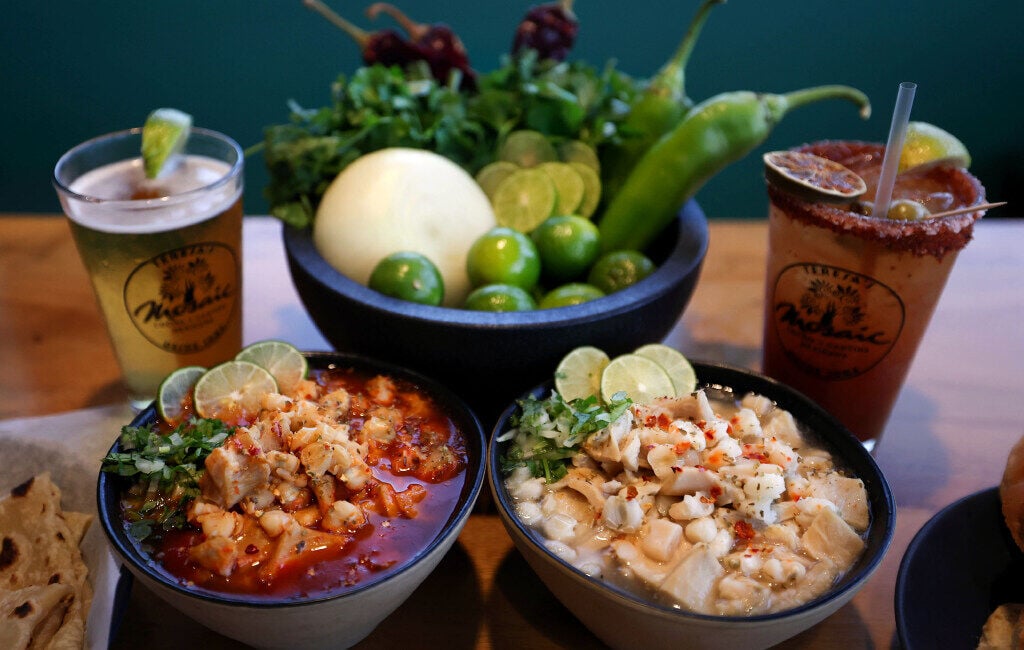
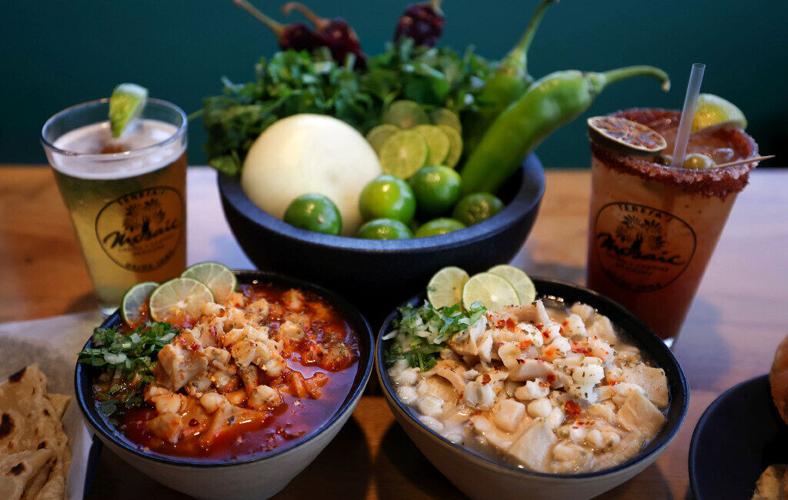
Guests can choose from red or white menudo at Teresa’s Mosaic Cafe, 2456 N. Silver Mosaic Drive. Menudo is served with pan birote and the customer's choice of handmade flour or corn tortillas. A small bowl of menudo costs $8.50, a large bowl $14.
That same bowl of menudo can be found at Teresa’s Mosaic Cafe at 2456 N. Silver Mosaic Dr., just off West Ironwood Hill Road west of Silverbell Road.
Teresa Matias first started making menudo in 1985, slowly figuring out what worked and what didn’t. Soon, she was making gallons of the soup, with many people complimenting her skills.
People are also reading…

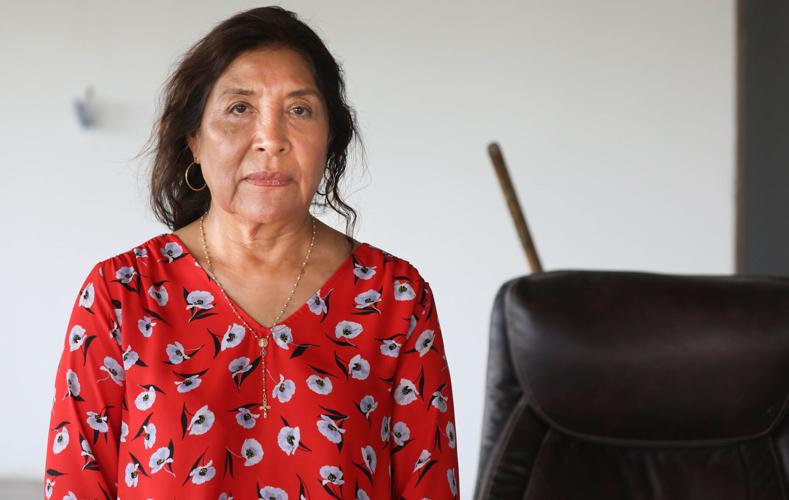
Teresa Matias at Teresa’s Mosaic Cafe says the secret to her menudo is that she takes her time.
When she opened Teresa's Mosaic, she decided to add menudo to the menu thanks to all the positive feedback she got.
Her secret? Taking it slow. Matias makes sure she is using the freshest ingredients, taking her time to thoroughly clean the tripe, resulting in a cozy, savory bowl.
At the restaurant, she makes four to five giant pots of menudo a week. The weekends seem to be the most popular days for the comforting soup.

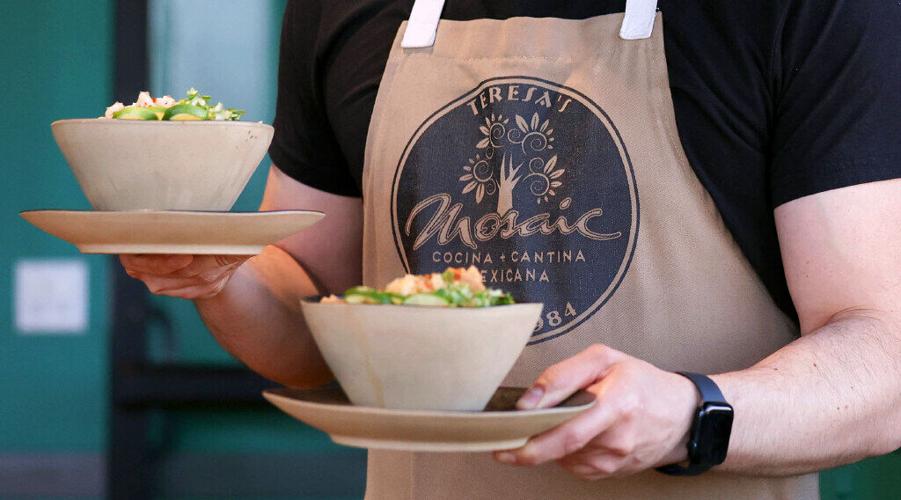
A waiter serves two bowls of menudo during lunchtime at Teresa’s Mosaic Cafe.
Even if you’ve never had it before, once you see the families enjoying a bowl with each other, you’ll be tempted to order your own.
“On the weekends we go through quite a bit of menudo, you’ll even see young children enjoying it," Isaac Matias said. “It’ll start to pique your interest. Then you’re asking if you can try a small bowl. Just seeing other people enjoying it makes others want to join in on the fun.”
Once you have a bowl of red menudo placed in front of you, along with cilantro, a perfectly toasted slice of bread and a warm, homemade flour tortilla, you’ll find yourself coming back every Sunday for a taste.
Red or white?
Over in Barrio Hollywood, they are also cooking up something special.
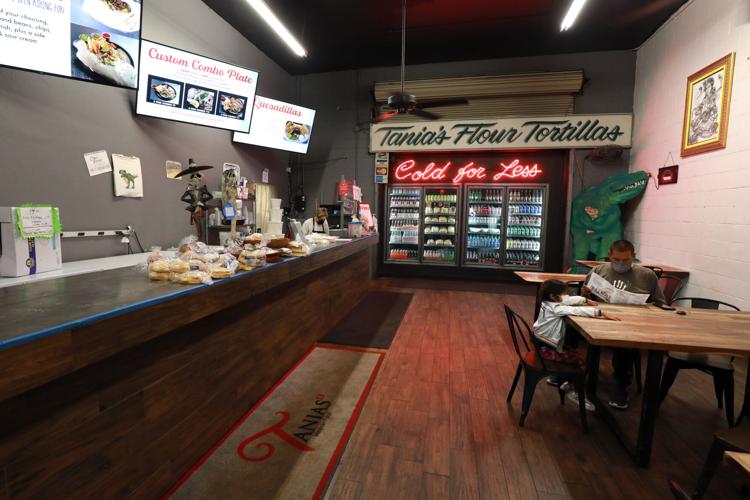
The back of Tania’s 33 is like if what lurked behind the Wizard of Oz’s green curtain was actually amazing. Past the plastic flaps that separate the front and back of house, behind the horseshoe-shaped grill, steam table and fry bay that produce most of the items on their prodigious menu, you’ll find a narrow hallway lined with stock pot stoves.
You may never have seen burners like these before: rather than the smaller, waist-height gas stoves you may associate with commercial kitchens, these are made of cast iron and hover low to the ground, so that the 80-quart pots are at arm’s reach.

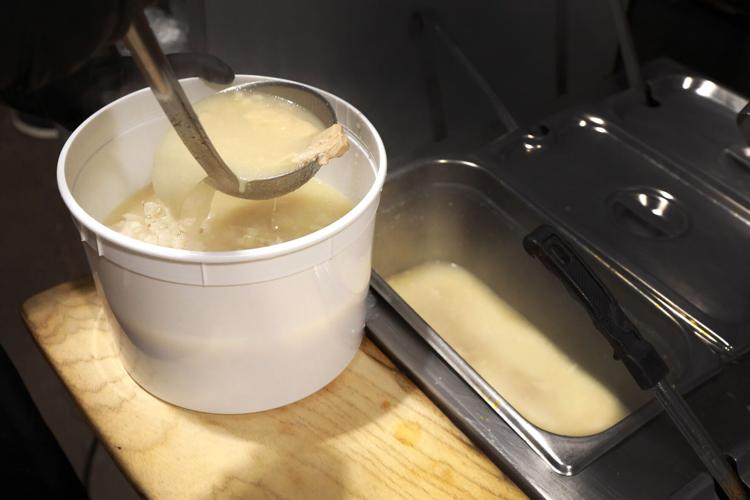
A gallon of menudo gets poured for a to-go order at Tanias 33, 614 N. Grande Ave.
This hallway is the domain of Rudy Lira III, whose grandmother founded Tania’s in the 1970s. He grew up watching his parents cook for their community and now runs their bulk foods program, responsible for the wide array of soups and stews at the west-side institution. Tania’s has been slinging menudo at 614 N. Grande Ave. for nearly four decades.
On a Thursday morning, four of the eight burners are cooking menudo. Rudy got to work at 5 a.m., as he does every day, so customers can order the soup fresh when the restaurant opens at 7 a.m. “We’re chasing our own tails,” he said. “As soon as one pot gets low, we have to start another one.”

Tania's 33 has been slinging menudo for nearly four decades.
One of the 80-quart pots is full of birria and covered in armfuls of spices waiting to be stirred. Another is full of barbacoa. The crowning pot, perhaps the largest one in the kitchen, is the 200-quart they use to cook the hominy that goes into their menudo and that is ground into masa for their tamales.
“The recipe for menudo is quite simple,” said Rudy Jr., Rudy III’s father and co-owner of Tania’s. “You can’t really change it that much, except refusing to cut corners. We don’t add any water to our menudo to make the broth last longer. Our menudo is three-quarters meat and hominy, one-quarter broth.” In other words, they don’t skimp on the good stuff.

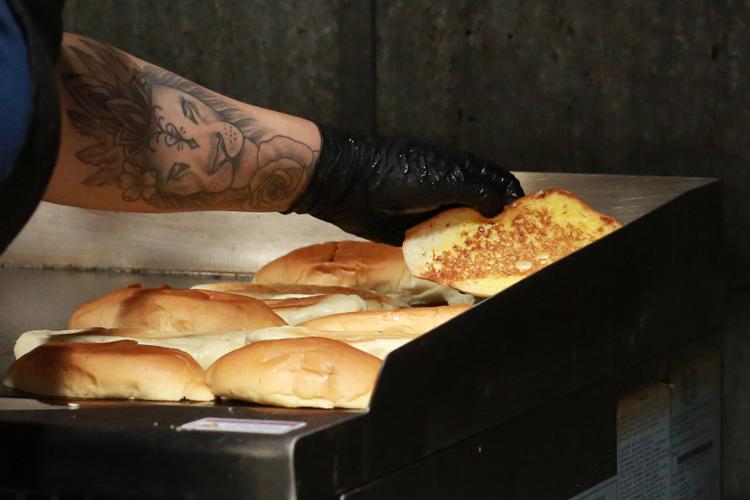
Toasting the bread for the menudo at Tania's 33.
What can make menudo polarizing is the tripe, the stomach lining of a cow. People who love tripe like the gelatinous texture, its whisper of funkiness. People who don’t love tripe probably dislike it for the same reasons. It’s a mild, nutritious cut of meat, which takes on the flavors of its fellow ingredients, whether in menudo or other dishes like phở or andouille.
While there are technically four types of tripe — one for each chamber of the cow’s stomach — to my relatively untrained eye, Tania’s menudo seems to mainly use rumen, or blanket tripe, from the first stomach of the cow. One side of the rumen might have sea-kelp beds of papillae, which allow the cow’s stomach more surface area to absorb nutrients. One or both sides might be smooth.
Red and white menudo are each more popular in different regions. “Here, our orders for white menudo outnumber red 10:1,” Rudy Jr. said. “But in New Mexico, people might never have even heard of white menudo before.”
He explained that white menudo, which is pretty much only tripe, garlic and hominy, is culturally specific to the Sonoran region. “But some people think it should be all meat and no hominy,” he said.
Rudy III prefers red for the spice. “There’s a little more room for personal flair with red menudo than white. Each person has their own unique blend of spices,” he said.
While the recipes for menudo might be relatively simple, what makes it a special occasion food is the time involved. The four-hour minimum to concentrate the flavors and get the tripe to the right texture means many restaurants only serve menudo on the weekends. Tania’s prides themselves on making it every day of the week.
“In the food service industry, you do the work for others as much as yourself,” said Rudy III.
The top stories from Sunday's Home+Life section in the Arizona Daily Star.
Jamie Donnelly is the food writer for #ThisIsTucson. Contact her via e-mail at jdonnelly@tucson.com

Jamie Donnelly
Reporter