Climate change is often viewed as an issue that's too big for individual action to matter but when personal choices add up, the impact can be significant.
The Associated Press looked at four everyday behaviors then posed the question: What if just one in 10 Americans who eat beef, drive gasoline cars, heat their homes with natural gas or buy new clothes changed those habits?
AP gathered data from federal agencies and other sources on each habit, then calculated how much emissions would be reduced if one out of every 10 users made a switch. The answer is tens — in some cases hundreds — of billions of pounds of carbon pollution avoided each year.

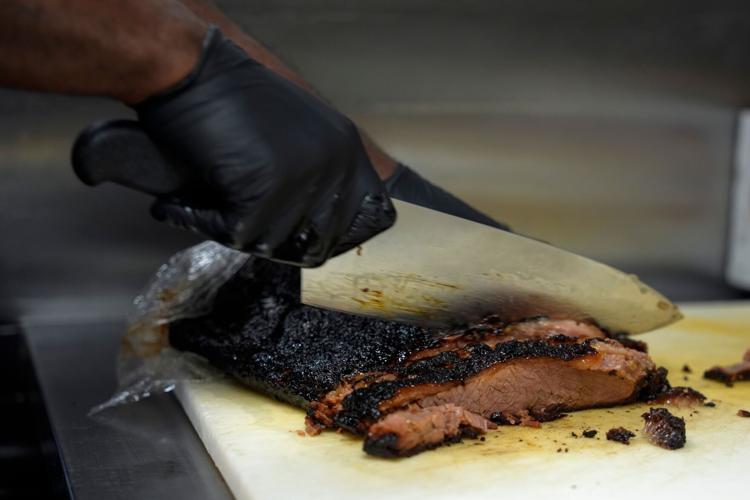
Swapping beef for chicken once a week can lower your carbon footprint.
Swap beef for chicken
Beef is one of the most carbon-intensive foods in the global food system because cattle emit methane and require vast amounts of land and feed, creating large amounts of pollution. Producing beef generates greenhouse gas emissions several times higher than chicken.
People are also reading…
The recommended serving size of meat in the U.S. is 3 ounces, according to the American Heart Association. Swapping one serving of beef that size for chicken once a week would cut about 10 pounds of carbon dioxide. Over 52 weeks in a year, that would equal a reduction of about 525 pounds of carbon dioxide per person per year.
About 74% of Americans eat beef at least once a week, according to a 2023 survey by The Associated Press-NORC Center for Public Affairs Research. If one out of every 10 of them — or about 25 million people — swapped just one beef meal a week for chicken, emissions would fall by about 13 billion pounds of carbon dioxide each year. That change is comparable to the annual emissions from almost 1.3 million gasoline cars.
"Beef is a commonly consumed item that has one of the largest carbon footprints per pound," said Dave Gustafson, project director at Agriculture & Food Systems Institute. "It is probably one of the largest individual choices that people make with regard to what they eat that has a direct impact on personal carbon footprint."

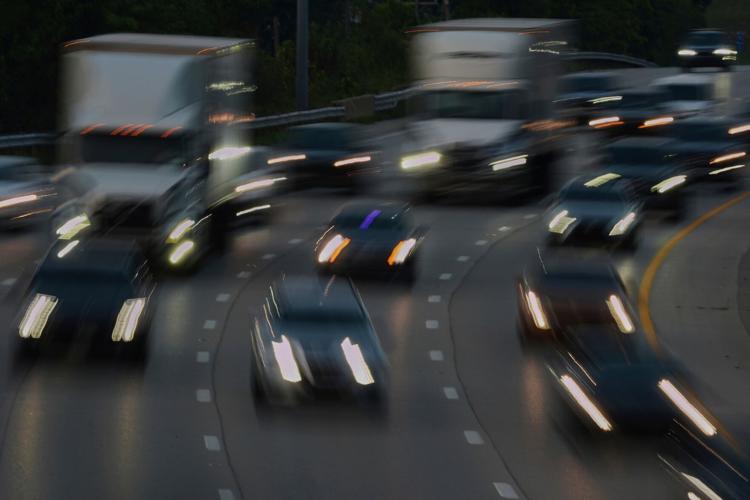
The average gas-powered car emits 14 ounces of carbon dioxide per mile, compared with about 3.9 ounces per mile for an electric vehicle.
Drive away from gas
According to the Environmental Protection Agency, transportation is one of the largest sources of direct greenhouse gas emissions in the U.S., and personal vehicles account for a major share. Transportation accounts for 28% of total U.S. greenhouse gas emissions by economic sector.
The EPA says the average U.S. motorist drives 11,500 miles per year. The average gas-powered car emits 14 ounces of carbon dioxide per mile, compared with about 3.9 ounces of carbon dioxide per mile for an electric vehicle. Driving an electric vehicle instead of a gas car cuts about 7,400 pounds of carbon dioxide per person annually, even after accounting for emissions from electricity generation.
If 1 in 10 licensed U.S. drivers — or 23.77 million people — made that switch, the emissions savings would add up to about 175 billion pounds of carbon dioxide every year, nearly 1.25% of total U.S. greenhouse gas emissions.
"If a large percentage of people changed a little bit of their travel, then all of a sudden the benefits are huge," said Dillon Fitch-Polse, a professional researcher and co-director of Bicycling Plus Research Collaborative at the University of California, Davis.
Heat differently
About 60 million U.S. households rely on utility natural gas furnaces, according to the U.S Census Bureau's American Community Survey.
Replacing a gas furnace with an electric heat pump, which moves heat instead of generating it through combustion, cuts about 1,830 pounds of carbon dioxide per household per year.
If one in 10 households that heat their homes with natural gas switched to electric heat pumps, the result would be about 11 billion pounds of carbon dioxide avoided annually, comparable to taking 1 million cars off the road.
"People's homes are kind of like little fossil fuel power plants that people operate, and they just don't realize that's what they're doing," said Leah Stokes, associate professor of environment politics at the University of California, Santa Barbara.

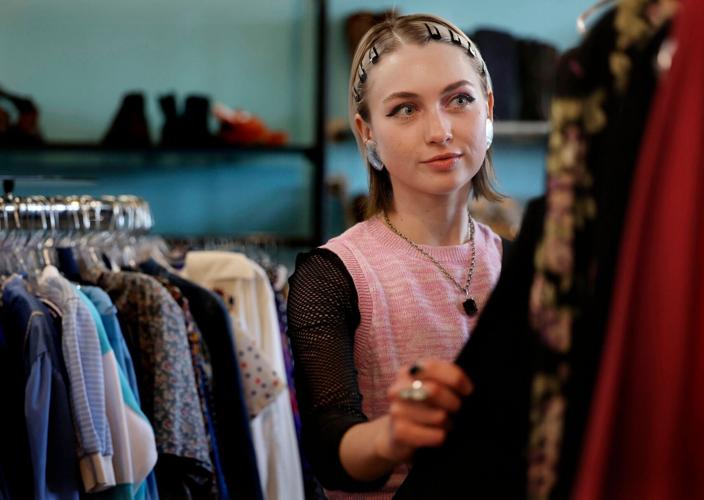
Miranda Lewin shops for clothes at Pib's Exchange, which sells vintage clothing, in Salt Lake City, Utah. Purchasing clothes secondhand avoids carbon emissions related to manufacturing and transporting new items.
Buy secondhand
Apparel has a significant carbon footprint.
A life cycle assessment by Levi Strauss & Co. estimates that producing a single pair of Levi's 501 jeans can emit more than 44 pounds of carbon dioxide, including manufacturing, packaging, transportation and retail.
If 34.2 million people — the equivalent of 1 in 10 Americans — bought a pair of secondhand jeans this year instead of new ones, it would avoid about 1.5 billion pounds of carbon dioxide, equivalent to the emissions of about 150,000 gasoline cars.
None of these actions alone can solve climate change, but the numbers show how quickly emissions add up or come down when millions of people move in the same direction.
Photos capture destruction, heartache and resilience as climate change advanced in 2025

Joe Chyuwei, right, Addison Black, front center, James Black, front left, and back row from left, Helen Chyuwei, Jameson Black, Grace Chyuwei and Grayson Black watch the sunset in the heat at Zabriskie Point, Aug. 3, 2025, in Death Valley National Park, Calif. (AP Photo/John Locher, File)

The head of a dead fish lies in the almost dry Aume River, Aug. 14, 2025, in Saint-Fraigne, France. (AP Photo/Yohan Bonnet, File)

Local farmer Turkan Ozkan, 64, cries next to one of her animals killed during a fire Aug. 12, 2025, in Guzelyeli, Turkey. (AP Photo/Khalil Hamra, File)

Members of the Mura Indigenous community maneuver a boat Feb. 17, 2025, in the Lago do Soares village in Autazes, Amazonas state, Brazil. (AP Photo/Edmar Barros, File)

Afeli Bernice Adzo leans against the remains of her father's room as she looks at the ocean that destroyed her family home March 5, 2025, in Avegadzi, Ghana. (AP Photo/Misper Apawu, File)

Scientists and veterinarians capture a pink river dolphin in the Amazon River to perform health checks Sept. 7, 2025, in Puerto Narino, Colombia. (AP Photo/Fernando Vergara, File)

Wanona Harp rescues a cat stranded on her neighbor's porch flooded by the Kentucky River, April 8, 2025, in Lockport, Ky. (AP Photo/Carolyn Kaster, File)

Mamadou Gueye, a 39-year-old farmer who lost his left hand after a fight with a herder over cattle in May 2022, guards his fields of peanuts Oct. 12, 2025, in Ross Bethio, Senegal. (AP Photo/Andrea Ferro)

An environmental agent of the Chico Mendes Institute takes photos of turtle hatchlings Nov. 17, 2025, at the Abufari Biological Reserve in Tapaua, Brazil. (AP Photo/Edmar Barros, File)

Luciane Mengual, 22, an Indigenous woman from the Wayuu community, poses with her baby at home Feb. 4, 2025, in the Villa del Sur neighborhood, on the outskirts of Riohacha, Colombia. (AP Photo/Ivan Valencia, File)

A Sudanese farmer carries his livestock after his farm was destroyed by floods Oct. 1, 2025, in Wad Ramli village, Sudan. (AP Photo/Marwan Ali, File)

Members of the Gadaba Indigenous communities gather tendu leaves to sell April 16, 2025, in Hatipakna village, India. (AP Photo/Rafiq Maqbool, File)

Cows stand in floodwaters at a farm July 25, 2025, in Buenos Aires province, Argentina. (AP Photo/Natacha Pisarenko, File)

An Indigenous group attends the opening ceremony of the People's Summit offsite from the COP30 U.N. Climate Summit, Nov. 12, 2025, in Belem, Brazil. (AP Photo/Fernando Llano, File)

Schuyler Clogston, left, makes shadows puppets with Agnes Suárez after setting up a sheet and light to attract moths for observation Oct. 7, 2025, in Charleston, S.C. (AP Photo/Joshua A. Bickel, File)

Cassandra Garduño cleans a canal in her chinampa, an island farm built by the Aztecs thousands of years ago May 8, 2025, in San Gregorio Atlapulco, a borough of Mexico City. (AP Photo/Felix Marquez, File)

Members of the Navajo Scouts firefighter crew kick up dust as they clear debris from a landslide across a road on a hillside as they battle the Eaton Fire, Jan. 17, 2025, in Altadena, Calif. (AP Photo/John Locher, File)

Fisherman Sunil Kumar, bottom, spreads a fishing net to help remove the weeds floating on Doddajala Lake, Aug. 23, 2025, on the outskirts of Bengaluru, India. (AP Photo/Aijaz Rahi, File)

Young Indigenous guards play on the walls of an old military defense barrier made of sandbags, remnants of the military occupation in the area July, 19, 2025, in the Lopez Adentro reserve in Caloto, Colombia. (AP Photo/Nadège Mazars, File)

Women open freshly cooked oysters Aug. 6, 2025, in Tsokomey, Ghana. (AP Photo/Misper Apawu, File)

Firefighters work from a deck as the Palisades Fire burns a beachfront property Jan. 8, 2025, in Malibu, Calif. (AP Photo/Etienne Laurent, File)

A Navy officer helps a woman cross a flooded street Oct. 12, 2025, in Poza Rica, Veracruz state, Mexico. (AP Photo/Felix Marquez, File)

Relatives of Rosiclaire Lenchise mourn during a funeral of victims killed by a landslide triggered by Hurricane Melissa, Nov. 15, 2025, in Petit Goave, Haiti. (AP Photo/Odelyn Joseph, File)

Arturo Huidobro, center, and a worker prepare to remove dead pigs from a farm following heavy rainfall Oct. 11, 2025, in Poza Rica, Mexico. (AP Photo/Felix Marquez, File)

Tanzin Dolma milks a yak as her husband, Punchuk Namdol, collects dung in the background on an early morning July 8, 2025, in Maan village, Ladakh, India. (AP Photo/Dar Yasin, File)

Baby ostriches huddle after being moved into a barn following recent flooding July 9, 2025, at a farm in Bend, Texas. (AP Photo/Joshua A. Bickel, File)

Members of the Lion Intervention Brigade conduct a patrol Jan. 14, 2025, at Niokolo Koba National Park, Senegal. (AP Photo/Annika Hammerschlag, File)

Judy Bertuso, left, feeds her husband Apollo inside a tent at an evacuation center as Typhoon Fung-wong enters the country Nov. 9, 2025, in Quezon city, Philippines. (AP Photo/Aaron Favila, File)

Olsjen Mucobega, 32, uses his motorcycle to evacuate a sheep from a wildfire Aug. 13, 2025, in Patras, Greece. (AP Photo/Thanassis Stavrakis, File)

A man rides his bicycle through an inundated street during the aftermath of Hurricane Melissa, Oct. 30, 2025, in Black River, Jamaica. (AP Photo/Matias Delacroix, File)

Ari Rivera, rear, and Anderson Hao hold each other in front of their destroyed home Jan. 9, 2025, in Altadena, Calif. (AP Photo/John Locher, File)

Gentoo penguins nest at Neko Harbour in Antarctica, Saturday, Nov. 22, 2025. (AP Photo/Mark Baker)

A pod of orcas swim in the Drake Passage en route to Antarctica, Friday, Nov. 21, 2025. (AP Photo/Mark Baker)

Passengers walk inside the volcano at Deception Island in Antarctica, Wednesday, Nov. 26, 2025. (AP Photo/Mark Baker)

Gentoo penguins walk at Neko Harbour in Antarctica, Saturday, Nov. 22, 2025. (AP Photo/Mark Baker)

Gentoo penguins nest at Neko Harbour in Antarctica, Saturday, Nov. 22, 2025. (AP Photo/Mark Baker)

A member of the ship's crew looks at an iceberg near Yalour Islands in Antarctica, Monday, Nov. 24, 2025. (AP Photo/Mark Baker)

A crew member looks for whales at Yalour Islands in Antarctica, Monday, Nov. 24, 2025. (AP Photo/Mark Baker)

The sun sets near a iceberg in Antarctica, Friday, Nov. 21, 2025. (AP Photo/Mark Baker)

Passengers watch as a ship sails through the Lemaire Channel in Antarctica, Monday, Nov. 24, 2025. (AP Photo/Mark Baker)

Adelie penguins stand on a block of floating ice at Yalour Islands in Antarctica, Monday, Nov. 24, 2025. (AP Photo/Mark Baker)

A elephant seal reacts at Walker Island in Antarctica, Wednesday, Nov. 26, 2025. (AP Photo/Mark Baker)

Gentoo penguins nest at Walker Island in Antarctica, Wednesday, Nov. 26, 2025. (AP Photo/Mark Baker)

Gentoo penguins prepare to enter the water at Walker Island in Antarctica, Wednesday, Nov. 26, 2025. (AP Photo/Mark Baker)

An ice covered rock formation is reflected in the waters at Pleneau Island in Antarctica, Monday, Nov. 24, 2025. (AP Photo/Mark Baker)

A Pintado petrel flys over the Drakes Passage on the way to Antarctica, Thursday, Nov. 20, 2025. (AP Photo/Mark Baker)

Sea ice covers the ocean at Yalour Islands in Antarctica, Monday, Nov. 24, 2025. (AP Photo/Mark Baker)