
Tucson was a town of 33,000 souls the day Cele Peterson greeted her first customer. Close to 75 years later in a town almost a million people larger, she's still at it.
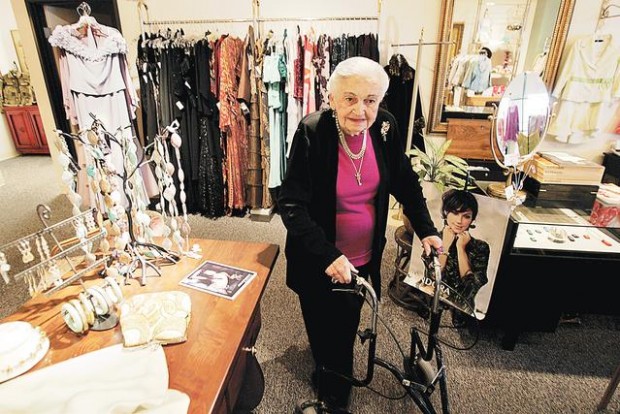
Dressed all in black, save for a turquoise top, she sits behind an ornate desk at the front of her Midtown store.
Everyone who comes in the store swivels her way. They know she will be there.
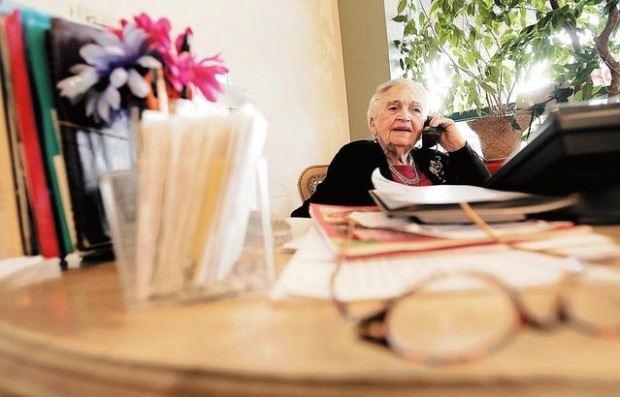
"Hello, hello," she responds to their greetings. Little matter that she sees only a blur of shapeless forms.
Irony is there if you want to find it. The woman who brought so much visual grace and beauty to Tucson is now blinded by macular degeneration. Has been for some time.
And yet, here she is, as always, working in the store that still carries her name.
"I never worked a day in my life," she says. "It's enjoyment, a challenge."
People are also reading…
The Great Depression, World War II, a fire that injured 16 of her employees — Peterson weathered it all, operating a succession of stores across Tucson, including her landmark store Downtown on East Pennington Street.
"We pioneered the street," says Peterson. "There were three little houses there and Reilly Funeral Home."
In time, it became known as "Fashionable Pennington Street." No need to ask the major contributor to that moniker.
She was the last to leave Downtown — after Levy's, after Steinfeld's, after Myerson's, after, yea, verily, even Jácome's.
Her Downtown shop, says Peterson, "was the prettiest store in the Southwest. There was nothing else like it in Arizona."
So well-known was its proprietor that more than once she'd get a letter simply addressed to: "Cele Peterson, Arizona."
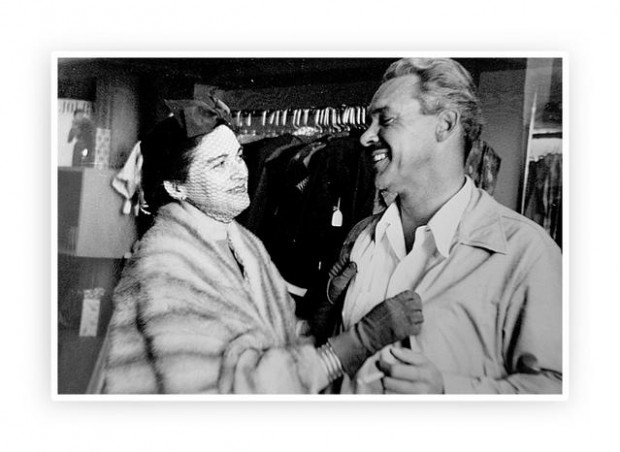
Lady Astor shopped at Cele Peterson's. So did Debbie Reynolds and Elizabeth Taylor, together — before Liz stole Debbie's husband, that is.
Even Gen. John J. Pershing stopped by for a chat.
"He came into the shop with his sister, May," says Peterson. "He sat and talked to me while his sister tried on things."
Once more, history had intertwined with her life — a life that began early in the 20th century. Exactly when, she won't say.
Reared in Bisbee, she watched from its hills as the Mexican Revolution unfolded.
"We would play hooky from school and climb the mountain and watch what was going on. We saw the pitched tents and, way off in the distance, a puff of smoke."
She watched as striking workers in the copper mines were shuttled into cattle boxcars and deported.
And she saw the Chinese herded into Bisbee jails. None, she says, "was allowed to let the sun go down on his back in Bisbee. I don't know why."
After a year at the University of Arizona, Peterson enrolled at Sullins College in Bristol, Va., earning a degree in political science.
She also studied at George Washington University, where she would meet her future husband, Tom Peterson.
Hankering to work on Capitol Hill, Peterson went to see Sen. Carl Hayden. "He asked me what I could do, and I said I did not know."
So the Arizona senator sent her to the manuscript division of the Library of Congress, where she wound up translating Spanish manuscripts.
In the summer of '31, she was sent to Mexico City to work in the archives. It was in Mexico where she met a couple of women from Tucson.
"They wanted me to come up and open up a shop in Tucson," says Peterson. "I thought it sounded like fun."
When she told her friends in Washington what she had planned, they bet her it wouldn't last a year. "They lost that bet. Here I am 75 years later."
In October of '31, she opened her first store on Stone Avenue, between Congress and Pennington streets. "My folks helped me get started. It was a very tiny shop."
Business was good. So good that within a year, she moved the Co-Ed Shop, as it was then called, to larger digs at the southeast corner of Stone Avenue and Pennington Street.
It was during that time, 1934, that she married Tom, in Bisbee. "He took over the finances of the store," says Peterson, who continued to do the buying and merchandising.
When her five-year lease was up, Peterson moved to a little house on Pennington Street, even though her request for a $5,000 loan had been denied.
"It was in the middle of the Depression. We just had to make it unique."
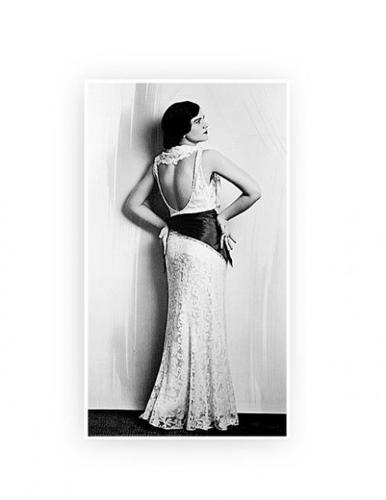
And so she did, stocking the store over the years with everything from $600 ball gowns — equivalent to $6,000 today — to Station Wagon Togs, Peterson's own line of clothing made from denim and corduroy.
Winter visitors, customers from Mexico, the wives of Fortunate 500 executives — all flocked to the store, which now bore her name.
"The most clothes I sold in my entire career, and it still holds today, was 52 dresses to one woman," says Peterson. "She was from New York City."
It was after the war when Peterson noticed a change in fashion. "It was a different attitude, much more casual. During the war, a lot of women wore pants."
Asked then whether slacks would stay in style, she answered, "Not a chance."
Says Peterson today: "I ate those words."
In 1956, she was working on moving into a larger location next door when a workman's torch caught her existing store on fire. Sixteen employees suffered smoke inhalation, she says.
Until her new store could be completed, she moved temporarily into a spot near East Broadway and South Country Club Road.
While the Downtown store remained her flagship for the next quarter-century, she ventured out to the burbs, including El Con Mall, Casas Adobes Shopping Center and Foothills Mall.
In the early '80s, she closed the Downtown store for good. El Con Mall and Downtown parking problems did it in, she maintains.
"There were a couple of police who loved to give tickets," she says. "We had park-and-shop, but you were not supposed to give a ticket without a purchase. We gave them, anyway."
Today, she holds forth from her lone store at the Crossroads Festival shopping center, at East Grant and North Swan roads.
One of her five children, daughter Quinta Peterson, runs the store. Helping out are several longtime employees.
"I have three employees who have been with me 30 years," says Peterson, who lost her husband in 1989.
Up until recently, Peterson for decades hosted a local five-minute radio show five days a week called "Star of the Day."
"That gave me connections to the world," she says. Those connections also led to her involvement with many worthy community causes, including the founding of Casa de los Niños.
When Casa founder Sister Kathleen Clark came to Peterson with her idea of starting a refuge for abused children, Peterson offered her a building she owned on East Speedway at North Fourth Avenue. In 1973, it became the first Casa de los Niños.
Looking back on a lifetime of achievement, Peterson says, "Nobody does it alone. I had the most wonderful people helping me."
Not to mention all those loyal customers.
"I just had a customer come in who told me I sold her her wedding dress 50 years ago," says Peterson. "Now she's coming in to buy a dress for her 50th anniversary."
75 years of 'enjoyment'