Follow these tips on how to avoid remote learning burnout. Buzz60’s Chloe Hurst has the answer!
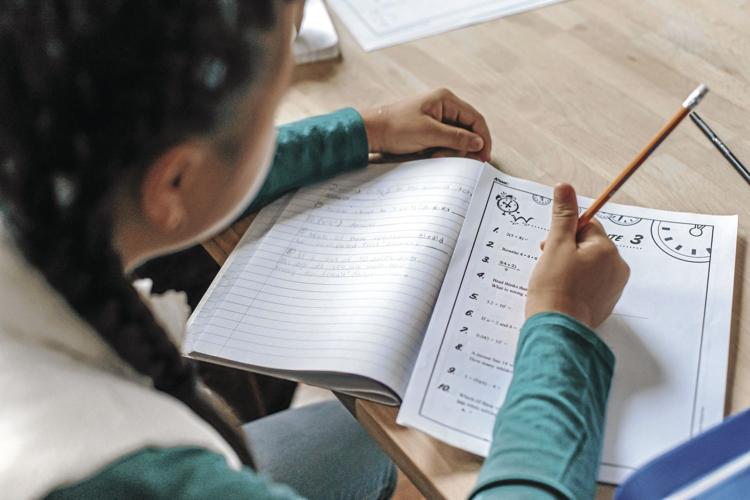
Homework is one of the most important parts of school. It gives children a chance to review and understand classroom lessons, as well as learn organization, responsibility and self-discipline. It also encourages creativity.
For parents, homework can be a window into their child’s education — and one of the best ways for parents to support that education.
Here are four suggestions to help make homework less stressful for your child — and for you, too.
Let your child know you think homework is important
Make homework time a priority. It shouldn’t be less important than sports, music lessons or play dates. If something has to be missed, it should never be homework.
Create a space for homework that is conducive to learning: well-lit, well-supplied and with enough room to spread out.
People are also reading…

Work with your child’s temperament
Determine your child’s energy rhythms. Do they need a break after school, or do they lose steam if they don’t get work done right away?
Know your child’s attention span, too. Some kids need to take breaks in order to get their work done.
If your child is easily distracted by activity around them, a quiet separate homework spot is best. If they find their own distractions, supervised at the kitchen table is better.
Talk to the teacher
Keep in regular contact with the teacher about your child’s progress and work habits. Make sure you understand both the teacher’s and the school’s homework policies, and let the teacher know if your child had trouble with a particular assignment. Don’t complain about the teacher or assignment in front of your child. If you have a concern, talk to the teacher directly.
If allowed, volunteer in the classroom. Not only can this help the teacher, but it helps you understand your child’s educational experience and gives the homework some context.
If things aren’t getting better, even with regular communication with the teacher, give your pediatrician a call.

Supervise and support, but no more than that
Be available while your child is doing homework, but don’t hover. If they do have questions, try to help them get to the answer without supplying it yourself.
If your child has a larger project due, such as a written report or a diorama, help them think about the project’s timeline. Check in regularly on their progress.
Look over the homework when they’re finished to make sure it’s complete, and give praise for a good job. It’s another way of showing how you value their effort — and their education.
Claire McCarthy is an assistant professor in pediatrics at Harvard Medical School and an attending physician at Boston Children’s Hospital.
Tips to manage virtual learning
Here are tips from experts to ensure children get the most out of school even though they’re at home.
Focus on schoolwork
Put nonlearning devices away

Both adults and children may feel the urge to pick up a device just because it’s around. “Our devices are addictive and designed to be that way,” said Dr. Megan DeFrates, a clinical associate of pediatrics at the University of Chicago Comer Children’s Hospital. “They’re designed in a way that we get a little dopamine boost, a little hit when we get a like or a notification.”
DeFrates said families should have phones “out of sight and out of mind.” Allison Johnsen, a manager of program development at Northwestern Medicine’s Central DuPage Hospital, agrees. She said parents can place phones in, say, a basket in the kitchen, outside of the room kids are learning in.
She also notes that distractions can come from having multiple tabs open on a computer.
“Yeah it’s a big temptation, and the brain gets used to that stimulation. So if we’re providing it, we want it even more,” Johnsen said. “So it’s like weaning yourself off the multiscreen, multitasking, looking at your phone all the time behavior.”
Doodle or listen to music

Johnsen said staring at a screen for long periods of time can be hard. It’s natural for kids’ minds to wander, even during in-person schooling. “We are normally stimulated in person, by all kinds of nonverbal cueing.
“Like looking around the room and noticing what people are doing. That might be distracting, but it does provide input. And so our brains love it,” Johnsen said.
Doodling, notetaking or having one headphone in for music can help students feel engaged but not passive. Johnsen said the extra stimulation may even help kids focus more.
Check in on your kid and make sure they take breaks

Johnsen recommends random, periodic check-ins to make sure kids are paying attention.
If possible, parents can also have kids in the same room where they work, making sure everyone stays on task.
“Checking in on them is a key on that, and then if they’re unfocused, redirecting or asking them to mute and ask what they need,” Johnsen said.
DeFrates said stepping away from all screens is also helpful. In her home, she has a corner of the room dedicated to Legos for when her kids are free. “You kind of have to have things prepared ahead of time so that kids are able to have these nonscreen activities,” DeFrates said.
Because kids are sitting in chairs for so long, Johnsen also recommends getting physical activity in.
“If you sit there too long, without some physical activity, you’re going to start zoning out. Usually, kids are walking between classrooms and socializing between classes,” Johnsen said.
A run around the house may keep kids awake and engaged.
Look at how they spend downtime

Outside of school, kids can still spend lots of time on their devices. For parents concerned about how often their kids are using electronic devices, DeFrates said online school probably won’t lead to technology addiction, as with video games or social media.
“It’s a different kind of screen usage. It’s interactive. It’s unfortunately, a necessary part of being in school right now, but this too shall pass,” DeFrates said.
Still, Johnsen said to make sure kids know when to turn off their devices for the day.
“If kids are really having a hard time putting the screens away, video gaming, then parents need to intervene hard,” Johnsen said. “If it goes into bedtime and they just can’t put it down, then that might be a time to reach out for help.”