
Here comes a tall guy in a blue shirt.
Yeah, and he has a small brown dog with him.
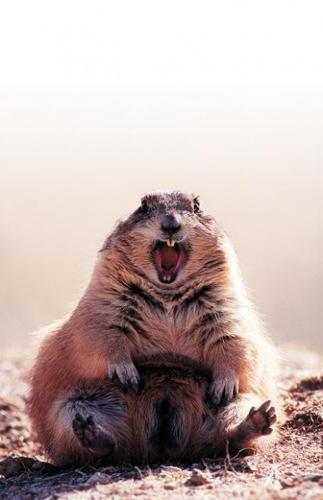
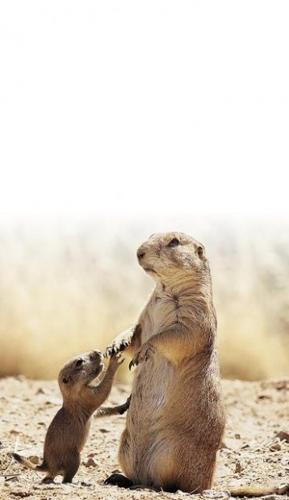
That could be a conversation between two people on a street corner. But an Arizona research scientist says such communication also is typical of critters quite unlike us: prairie dogs.
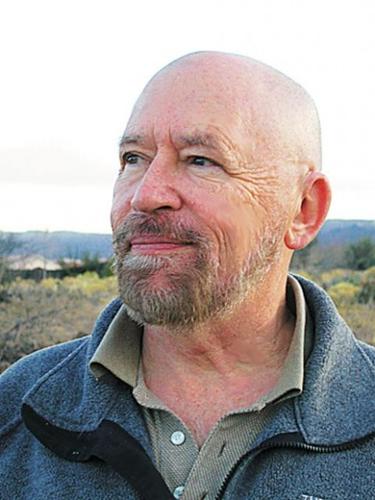
"Prairie dogs have a language. They talk, and they sometimes talk about us," says Con Slobodchikoff, a professor of biology at Northern Arizona University in Flagstaff.
"Prairie dogs have alarm calls for different species of predators," Slobodchikoff says. "We have identified different calls for humans, domestic dogs, red-tailed hawks, coyotes, cats, badgers, weasels and eagles.
"Within these calls, they can describe the physical features of the predator. They can describe the size and shape of an individual human and the color of clothes that he or she is wearing. They can describe the coat color and the size and shape of a domestic dog. . . . Our studies are showing that prairie dogs have the most sophisticated natural animal language that has been decoded to date."
People are also reading…
Slobodchikoff began studying the social behavior of prairie dogs about 20 years ago. He gradually recognized signs that the foot-long, 2-pound rodents, which live in colonies, appeared to have a shared language.
He'll present his findings in a book to be published this year by Harvard University Press. The working title is "Prairie Dogs: Communication and Community in an Animal Society."
Slobodchikoff conducted most of his research on the Gunnison's prairie dog species in the vicinity of Flagstaff.
Prairie dogs, considered pests by many ranchers and farmers, were extirpated by poisoning decades ago in the Tucson area. Three prairie dogs of the black-tailed species are on exhibit at the Arizona-Sonora Desert Museum west of Tucson.
Using sensitive directional microphones, Slobodchikoff recorded prairie dog "barking" — which he describes as a sort of "bird-chirping sound."
"It's a very short-duration chirp, about a tenth of a second, but it's analogous to a sentence or a paragraph," he says. "If we dissect the chirp into a bunch of different time slices, each slice has some specific information such as who the predator is — a coyote, a dog or a human — and something about the size, shape and color."
Slobodchikoff tested and confirmed his initial findings by setting up experiments in which he had human subjects wear shirts of different colors: blue, green, yellow and gray.
"We found that prairie dogs could apparently incorporate shirt colors into their calls" and further note the size and shape of the person wearing a particular color, he says. "We found this out by having a couple of our human subjects trade shirts."
After the shirt switch, prairie dogs would change their descriptive calls to identify, for instance, "a tall human in a gray shirt," Slobodchikoff says. "It's amazing!"
Shawnee Riplog-Peterson, curator of mammalogy and ornithology at the Desert Museum, says she "most definitely" observes signs of vocal communication among the prairie dogs there.
"They'll do alarm barks, yips and calls," Riplog-Peterson says. "The alarm barks vary in intensity and frequency . . . and we hear a territorial kind of chitter-chatter call.
"Some of our prairie dogs become a little complacent because there really aren't predators here," she notes.
Riplog-Peterson says Slobodchikoff's studies could bring some new respect for rodents.
"People don't give rodents very much credit, but his research could really change the way people think about rodents," she says.
Slobodchikoff says his field recordings have revealed that prairie dogs have calls for animals such as cows, elk and antelope as well as predators.
One surprising finding, he notes, is that prairie dogs apparently can coin new words for objects or animals they've never seen before.
"In a lab, we showed some prairie dogs the same human wearing the same clothes, and we showed them the same dog," Slobodchikoff says. "Not surprisingly, all of them had words for human and dog. But then we showed them a European ferret and a great-horned owl, which they hadn't seen. It turned out that they each came up with pretty much the same word for owl and the same word for ferret."
In another experiment, researchers showed prairie dogs a silhouette of a coyote, a silhouette of a skunk and an oval about the size of a coyote.
"They had a consistent sound for the coyote and another for the skunk," Slobodchikoff says. "They also all consistently had the same sound for the black oval, which they'd never seen before."
The little critters even seem to have dialects that vary from colony to colony.
"Over a broad region — say from the town of Seligman to Taos, New Mexico, the pronunciation for 'human' changes somewhat," Slobodchikoff says. "It's still recognizable. But it's sort of like somebody saying 'dog' in Texas as compared to someone saying 'dog' in Vermont."
If prairie dogs have a language, it stands to reason that other animal species might communicate verbally, too.
"If we're showing that a rodent, of all things, has a language, the implications for animals in general are tremendous," Slobodchikoff says. "I'm guessing that a lot of other species might be good candidates. Birds, for example, have a repetitive song that announces their territory and another song that is extremely variable. We assume it's just meaningless noise, but it might be more than that."
If the animals can talk about us, can we talk to the animals — and be understood?
Says Slobodchikoff: "If we can crack the grammar of their code, and use a computer to see what they're saying, then maybe we could say something with a computer that would be meaningful to a prairie dog."
Museum chatter
● The Arizona-Sonora Desert Museum west of Tucson is home to three black-tailed prairie dogs. That's a different species from Gunnison's prairie dogs studied by researcher Con Slobodchikoff of Northern Arizona University — but the animals exhibit similar vocal behavior.
● Shawnee Riplog-Peterson, curator of mammalogy and ornithology at the museum, says your chances of seeing — and hearing — prairie dogs are best on warm, sunny days.
● Getting there: To reach the museum, go west on Speedway, which becomes Gates Pass Road. Follow the road over the pass to Kinney Road. Then go right, northwest, to the museum at 2021 N. Kinney Road.
● Hours: 8:30 a.m.- 5 p.m. daily
● Admission: $12 for visitors 13 or older; $4 for youths 6-12. Kids 5 or younger get in free.
● Information: 883-2702