Skip to main contentSkip to main content
Register for more free articles.
Log in Sign up
Back to homepage
Subscriber Login
Keep reading with a digital access subscription.
Subscribe now
You are the owner of this collection.
Edit Collection
You have permission to edit this collection.
Edit
Arizona Daily Star
65°
  • Sign in
  • Subscribe Now
  • Manage account
  • Logout
    • Manage account
    • e-Newspaper
    • Logout
  • News
    • Sign up for newsletters
    • Local
    • Arizona
    • Business
    • Crime
    • Nation & World
    • Markets & Stocks
    • SaddleBrooke
    • Politics
    • Archives
    • News Tip
  • Arizona Daily Star
    • E-edition
    • E-edition-Tutorial
    • Archives
    • Special Sections
    • Merchandise
    • Circulars
    • Readers' Choice Awards
    • Buyer's Edge
  • Obituaries
    • Share Your Story
    • Recent Obituaries
    • Find an Obituary
  • Opinion
    • Submit a Letter
    • Submit guest opinion
    • Letters to the Editor
    • Opinion & Editorials
    • National Columnists
  • Sports
    • Arizona Wildcats
    • Greg Hansen
    • High Schools
    • Roadrunners
  • Lifestyles
    • Events Calendar
    • Arts & Theatre
    • Food & Cooking
    • Movies & TV
    • Movie Listings
    • Music
    • Comics
    • Games
    • Columns
    • Play
    • Home & Gardening
    • Health
    • Get Healthy
    • Parenting
    • Fashion
    • People
    • Pets
    • Travel
    • Faith
    • Retro Tucson
    • History
    • Travel
    • Outdoors & Rec
    • Community Pages
  • Brand Ave. Studios
  • Join the community
    • News tip
    • Share video
  • Buy & Sell
    • Place an Ad
    • Shop Local
    • Jobs
    • Homes
    • Marketplace
    • I Love A Deal
  • Shopping
  • Customer Service
    • Manage My Account
    • Newsletter Sign-Up
    • Subscribe
    • Contact us
  • Mobile Apps
  • Weather: Live Radar
  • Facebook
  • Twitter
  • Bluesky
  • YouTube
  • Pinterest
  • Instagram
© 2026 Lee Enterprises
Terms of Service | Privacy Policy
Arizona Daily Star
News+
Read Today's E-edition
Arizona Daily Star
News+
  • Log In
  • $1 for 3 months
    Subscribe Now
    • Manage account
    • e-Newspaper
    • Logout
  • E-edition
  • News
  • Obituaries
  • Opinion
  • Wildcats
  • Lifestyles
  • Newsletters
  • Comics & Puzzles
  • Buyer's Edge
  • Jobs
  • 65° Fair
Share This
  • Facebook
  • Twitter
  • Bluesky
  • WhatsApp
  • SMS
  • Email

Top 5 most popular stories from Tucson Garden Guide

  • Dominika Heusinkveld
  • Jun 14, 2021
  • Jun 14, 2021 Updated Jun 28, 2021

The most popular stories from the Tucson Garden Guide newsletter — from selecting desert-friendly greenery, to pruning trees and shrubs and choosing mulch — these have been your favorite stories so far.

Selecting plants for your Tucson garden

Fall is coming, and with it comes the best season for planting in your Tucson garden. This is a great time to evaluate your garden space and decide what you want to plant — whether it’s trees, shrubs, perennials, or annual wildflowers.

If you love browsing at nurseries, you probably have a hard time resisting some of the display plants. They’re lush, have gorgeous flowers or leaves, or beautiful structure. You want to take them all home — and if you're like me, you frequently do! But will they do well in your yard?

Selecting the appropriate plant for your needs involves a bit of thought. Particularly for plants such as trees and shrubs, which can live for a long time and can be expensive, it’s important to choose the right plant for the right place. Here are the things to consider before you make your purchase.

1. What function do you want this plant to serve? Do you want it to provide shade? Color? Habitat? Food? Privacy?

2. How much maintenance are you prepared to do? Non-native plants, or those that are not adapted to our heat and sun will need much more fussing and are much less likely to survive. They will need more water, shade, and possibly soil amendments and fertilizer. Tropical plants will need to be brought inside for the winter. Some fruit trees and bulbs require a certain number of chill hours to bloom or produce fruit, which will not be possible in our warm climate.

3. Where will you put it and how much space do you have? It’s easy to forget that the tiny 2-gallon plant you brought home will turn into a 30-foot tall tree or a 6-foot wide shrub. Consider the final size of the plant, but keep in mind that the tag on the plant may set unrealistic expectations. Plants grow differently in different climates — so in Tucson a plant may grow either larger or smaller than usual. The best thing to do is to ask a local nursery grower how large a given plan grows in our area.

Also consider whether this plant will need maintenance. Put plants that need more attention closer to your living space, so it’s easy to walk around and water, pick the fruit, or deadhead the flowers. Lower maintenance plants (such as native trees and shrubs) can be planted farther from your house. Remember, though that even natives will require extra watering for the first year or two until they become established.

In addition, you want to avoid putting plants in places that may cause a hazard. If it’s near a walkway, don’t get a plant with spiky leaves (like yuccas) or lots of thorns (like many native plants or bougainvillea). Don’t plant trees where they are likely to grow into power lines or where their roots can get into your septic system or plumbing. Finally, you probably don’t want plants that create a lot of litter near a flat roof or a swimming pool or other water feature. If someone in your household is allergic to bee stings, don’t put flowering plants near your outdoor use areas — in fact, you may want to avoid them altogether.

4. Consider your microclimate. Where do you get sun and shade in the different seasons of the year? Are you planting against a wall or near other vegetation? In an urban environment, the narrow spaces between houses and buildings can act like canyons, with one side permanently shady and cooler and the other hot and sunny, depending on your building’s orientation. The south and west facing walls tend to be the hottest, and will absorb and reflect heat. The north-facing area is the coolest, but at our latitude will still get considerable sun in the summer months.

You will also need to consider your neighbor’s plantings. Do they have a huge tree that shades half your yard all afternoon? Do they have mostly concrete or other hardscaping that will reflect the sun’s heat into your yard?

If you are near a wash or other low-lying area you will have cool air flowing into your yard. Cold air is denser than hot air, so it flows like water — down from the mountains along valleys and canyons. Expect to have winter temperatures several degrees cooler than in the city if you live near a wash.

5. If you have a Homeowner’s Association in your neighborhood, you will need to check with them to see if they have a list of approved plants as well as any rules about where you can plant them. Usually the rules apply to front yards.

Once you’ve considered these questions, check out various local resources to help you choose the appropriate plant for your needs. One great resource for low-water-use plants that do well in our climate is Plants for the Arizona Desert. It’s a searchable website with plant pictures maintained by the Arizona Municipal Water Users Association. It includes information on where to plant, growth rate, color and bloom period of flowers (if any) and includes both native and drought-tolerant non-native species.

Another is the Flower Planting Guide for the Arizona Low Desert which includes a chart illustrating individual plants’ needs for water, sunlight, blooming times, and other information. This useful guide from the University of Arizona’s Extension program has more information on plant selection for our desert climate.

Plants are living things, not just decoration, and thus require care and the appropriate conditions to thrive. If you choose well, your garden will reward you with years of enjoyment.

Be prepared, though — inevitably some of your plants won’t make it. Don’t take it personally, and definitely don’t give up! Try to figure out what went wrong and learn from it — gardening is a process, with a lot of trial and error. Many long-time gardeners advise keeping a notebook or diary so that you can refer to your notes and learn from your experiences.

A useful local resource for expert information about plant problems is the Pima County Master Gardener Plant Clinic, which during COVID-19 is via email. Just fill out their form with your question and a Master Gardener from our area will do their best to answer.

Pruning basics in the desert

Pruning can help keep your shrubs and trees looking good and increase the production of flowers and fruit if done properly. However, poor pruning techniques can irreversibly damage your plants. Here are some tips and further resources on how to do it right.

Why prune?

First, you need to have a good reason to prune. The general rule for determining this is to apply the four Ds: dead, diseased, damaged, or dangerous. Don’t prune just to shape a plant into a meatball or a square. In fact, most shrubs do very poorly with topiary-style shearing, a very specific type of pruning used to make plants take on a uniform shape. If a limb is dead, diseased, damaged, or crossing another branch (which will cause damage due to rubbing), it needs pruning. Frost-damaged plants should only be pruned after the chance of frost has passed (around March 15 here in Tucson). Branches that pose a hazard — falling or snagging — also should be pruned off.

If you like the formal look, make sure you choose the correct type of plant. Many shrubs that do well here (like Texas rangers and oleanders) do not respond well to shearing, which ignores the natural structure of a plant and forces growth at the outside edges. Plants that can be sheared regularly and formally include Japanese boxwood (Buxus microphylla japonica), waxleaf privet (Ligustrum japonicum), xylosma (Xylosma congestum), and myrtle (Myrtus communis). One native shrub that can be sheared or left to grow naturally is jojoba (Simmondsia chinensis). For more privacy shrub ideas, check out "Pruning Shrubs in the Low and Mid-Elevation Deserts in Arizona" from the University of Arizona’s Extension office.

When to prune

Deciduous trees and shrubs should be pruned when they are dormant. For other plants, it depends on when they flower. For instance, you do not want to prune spring-flowering shrubs in the winter, because that’s when they form their flower buds, and you will be left with very few flowers for that season. Prune these shrubs after they bloom.

On the other hand, shrubs that bloom in the summer, like oleanders and Texas rangers, can be pruned in early spring; in fact, you may end up with more flowers if you do. The above-mentioned handout on "Pruning Shrubs in the Low and Mid-Elevation Deserts in Arizona" from the University of Arizona’s Extension office has a great table that lists common ornamental shrubs and when to prune them.

How to prune

If you would like to thin out your shrub or tree, you can do this effectively by pruning out branches all the way to their point of origin from the ground or the main trunk. This helps open up the shrub or tree and get more light and circulation inside the plant, which can help reduce disease, branch rubbing, and other problems. The general rule for this method is to remove one-third or less of the shrub per growing season so as not to stress the plant too much. You may need to plan out your thinning over several seasons if your shrub or tree is particularly dense and ungainly.

Pruning tree limbs requires some knowledge and finesse. I recommend against pruning a branch that is thicker than about 3 inches, or one that is hard to reach with your tools yourself — get an arborist to help you. You will need to make three cuts to trim a tree limb, with the first being on the underside of the limb to prevent bark from peeling off and causing damage to your tree. You will also need to space the cut correctly so that the tree can heal itself after the cut. For detailed information, read “Pruning Deciduous Shade Trees” from the University of Arizona Extension office.

If you have a shrub that has been poorly pruned in the past, you can try to salvage it with rejuvenation pruning. This is where you prune all of its branches down to a few inches high. With luck, the shrub will grow back in a more natural form. In the meantime, you will have bare sticks poking out of the ground, so be prepared for that look until your shrub grows back. Keep the shrub well-watered and give it compost to help it recover. Gardeners in other climates sometimes recommend using this technique every season or two for keeping shrubs that are too large for their space a more manageable size. In our harsh climate, this is going to kill your shrub. If it’s too big for the space, move it or replace it with something more appropriate.

Other pruning tips

Avoid pruning plants that don’t need it — if the plant is too large for the space, consider moving it or getting rid of it. Remember the “right plant, right place”  concept, and plan ahead for the mature size of the plant when you’re buying it.

Avoid pruning citrus. You may have seen some formally pruned citrus trees — they’re trimmed into lollipop-shaped small trees with white-painted trunks. This isn’t healthy for the tree and is more work for you. The lower branches shield the trunk from the sun, necessitating painting of the trunk, and you need to keep pruning to keep that formal shape. Citrus do best with very minimal pruning, following the four Ds rule. For more information, check out “Pruning Citrus” from the University of Arizona’s Extension office.

Use bypass pruners rather than anvil pruners. Bypass pruners make a clean cut, while anvil pruners tend to crush the limb, which slows healing and causes unnecessary damage.

Make sure you keep your pruners sharp and well-oiled and clean them after each use with hot soapy water or dilute bleach to avoid spreading disease in your garden. At least once a year, give them a proper cleaning and sharpening.

You can use your cast-off pruned plant material for mulch. Just chop it up into small twigs with your shears, or consider investing in a small yard mulcher, like this one for $125. Then drop your free mulch under your plants. Do not mulch and reuse any vegetation that you think might be diseased or that has lots of pests on it.

I highly recommend the Pima County Master Gardener online lectures on pruning. They have them every other month or so. You can check their online schedule and sign up.

Which trees and shrubs to plant for a lush green desert yard

Your Tucson yard can have that lush green look you see in gardens in other climates if you choose your plants carefully — there are many drought-tolerant plants (even some natives) that will give you rich green foliage and tropical-looking colorful flowers. 

Keep in mind that you will need to water these plants more often and also note that the hardiness temperatures generally indicate the temperature at which damage occurs to the foliage. It is rare for the plants listed below to die completely (to the roots) in our climate if they are healthy and well-mulched and watered. If some branches and foliage are damaged, they can be pruned back in the spring and generally recover quickly.

Lush trees for Tucson gardens

Anacacho orchid tree (Bauhinia lunarioides): This beautiful tree is native to the Chihuahuan desert and has lovely large white orchid-like flowers. It’s hardy to 15 Fahrenheit and can grow in full or partial sun (which in my experience usually means that harsh afternoon sun should be avoided). Do not plant where it will be subjected to reflected heat. It grows at a moderate rate to a small tree (about 8 feet high) and is shrubby in form.

Desert willow (copy)

A desert willow will attract wildlife and birds will love it for nesting. The flowers are tropical-looking and come in a variety of colors.

A.E. ARAIZA/ARIZONA DAILY STAR 2010

Desert willow (Chilopsis linearis):  This fast grower is native, and can take our full sun and even reflected heat. The leaves are a lush green, and it has gorgeous orchid-like flowers in a variety of colors from white to pink to purple (depending on the cultivar). It’s hardy down to 0 Fahrenheit, and birds and hummingbirds love it.

Feather bush (Lysiloma watsonii):  This lovely small tree grows to 15 feet in height. It’s native to our desert and has beautiful lush green tiny leaves that give it a feathery appearance. Its flowers are cream-colored puffy balls that bloom in late spring. It’s only hardy to 25 Fahrenheit, so make sure you put it in a warm spot in your yard.

Texas ebony (Ebenopsis ebano): This Texas native is a slow grower and has thorns, but it has beautiful lush dark green leaves and creamy yellow flowers. It’s hardy to 20 F and can take full sun.

Mexican Bird of Paradise (Erythrostemon mexicanus): This beautiful little tree can be considered a shrub; it has deep green oval leaves and warm yellow flowers that grow in clusters. It’s hardy to 15 F and does well in the sun, although in my experience it likes partial shade better. It gives lovely filtered shade thanks to its small leaves.

Silk floss tree (Ceiba speciosa): This tropical tree is native to Brazil and Argentina. As such, it requires more water than the other trees mentioned, but its unique, thorned trunk and spectacular fall flower show make it worthwhile. The flowers are similar to hibiscus, pink in color, and are 5 inches in diameter. The tree is hardy to 26 F and will tolerate drought and full sun, but will look better when watered regularly. It will need to be protected from frost when it’s small, and should be planted in a warmer area of your yard. It grows to 20-30 feet, so be sure you have lots of room for it! These can be hard to find, but Plants for the Southwest has them.

Pomegranate

When Spanish Jesuits arrived in the late 1600s, they brought with them a variety of fruits, vegetables, grains and herbs. This pomegranate tree,  at Mission Garden is a clone of an original variety grown during the time of Father Kino. 

Andi Berlin / Arizona Daily Star

Pomegranate (Punica granatum): This mediterranean plant not only has glossy dark green leaves and unusual orange flowers, it also produces edible fruit. It’s hardy to 10 F but needs a bit more water than our natives to keep it from looking scraggly. It is deciduous, and loses all its leaves in the winter.

Lush shrubs for Tucson gardens

Arizona yellow bells (Tecoma stans): Bright yellow trumpet flowers and rich green foliage make this native a great addition to your yard. Hummingbirds love the flowers. It’s a little frost sensitive (hardy to 25 F) but will grow back if damaged. It’s a fast grower and likes full sun. There is also a variety called Orange Bells which is less cold-hardy.

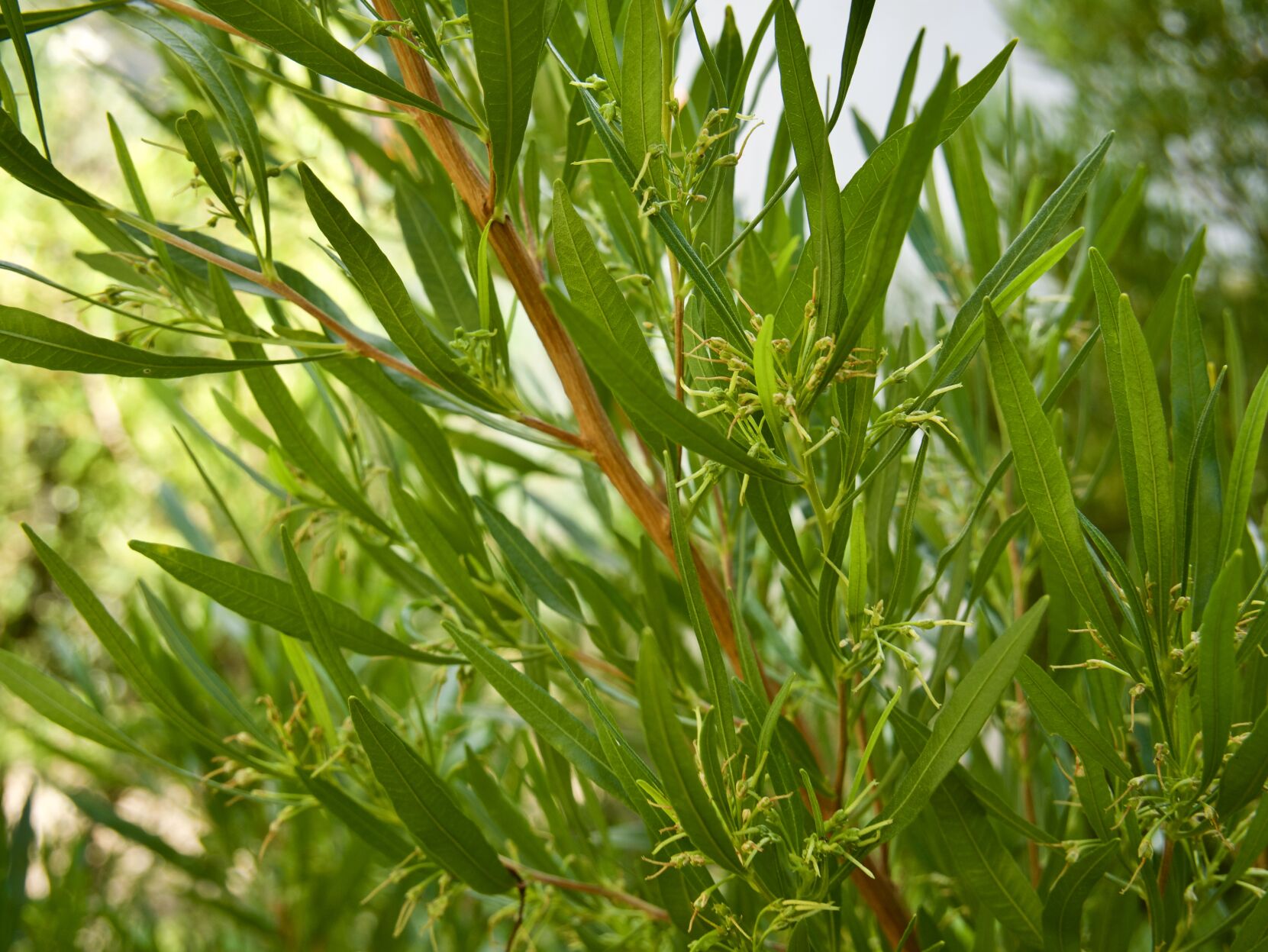
Hopseed bush

The hopseed bush is native and does very well as a lush green screening shrub.

Dominika Heusinkveld

Hopseed bush (Dodonaea viscosa): This native fast-growing bright green shrub is a great choice for an informal privacy hedge. It has a fresh green color, and female shrubs have pretty light green seed pods. Birds love these. It can handle full sun and is hardy to 15 F.

Mexican petunia

The Mexican petunia has deep violet flowers and rich green foliage. It tends to do best in partial shade.

Dominika Heusinkveld

Mexican petunia (Ruellia brittoniana; Ruellia simplex):  This small shrub has dark purple flowers and medium-green leaves. It’s native to Mexico and the Southwest U.S. It’s hardy to about 28 F and will need a warm spot. It will need regular watering to look its best, particularly in summer. You can find white and pink varieties in addition to the deep purple.

Guayacan (Guaiacum coulteri): This 5-foot shrub grows very slowly, but has striking violet flowers and deep green leaves. It’s hardy to 25 F and does best in partial sun.

San Marcos hibiscus (Gossypium harknessii): Believe it or not, this is a native plant. It has light yellow flowers with red accents, and deep green leaves. It’s hardy to 25 F and doesn’t mind full sun. It can be hard to find, but Spadefoot Nursery has them from time to time, and can obtain them if requested.

Texas mountain laurel (Dermatophyllum secundiflorum): This Chihuahuan desert native is hardy to 5 F and has beautiful rounded dark green leaves. It is known for its clusters of violet, fruity-smelling flowers. It is a very slow grower, so tends to be expensive if bought in a larger size. Eventually it grows into an 8 foot shrub.

Texas olive (Cordia boissieri): This Texas and Mexico native doesn’t have the dark, lush green foliage (it’s grayish-green), but I included it because of its beautiful and plentiful white orchid-like flowers. It’s hardy to 20 F. It will require patience, as it’s a very slow grower.

Plumbago

Plumbago does well in shade or partial shade in Tucson and is fairly drought-tolerant. It can be supported by a trellis and provide a lovely privacy feature.

Dominika Heusinkveld

Cape Plumbago (Plumbago auriculata): This plant gets a bad rap for using too much water, but if planted in the shade and mulched it’s just as drought-tolerant as many of our natives. It has deep green foliage and attractive clusters of small tubular blue-violet flowers. There are also white varieties. I have it growing in shade on the eastern side of my house and I don’t water it any more frequently than the desert willow tree next to it. It needs a fair bit of room, as it tends to sprawl, but this can be an advantage if you want to attach it to a trellis for privacy.

Bougainvilleas

Bougainvilleas come in many colors and can grow well in containers.

Dominika Heusinkveld

Bougainvillea (Bougainvillea spectabilis): Despite its large thorns, this Brazil native is a good choice for a lush garden due to its gorgeous colors and lush dark green foliage. The color actually comes from the bracts; the flowers are tiny, white and unassuming. It gives you vivid tropical colors and is safe to plant in dry, sunny exposures. There are many Bougainvillea varieties to choose from. Certain smaller varieties do well in containers. Colors run the gamut: white, yellow, apricot, hot pink, and purple. They can sprawl, but you can purchase smaller varieties. Larger varieties can be trained on a trellis and provide a backsplash of color to your garden wall. A dwarf variety called "Miss Alice" is thornless and can be grown as a groundcover of sorts. Bougainvilleas are happiest when allowed to dry out between watering, so be careful not to overwater them.

Choosing the right mulch for your Tucson garden

Mulch, the covering you put over the soil in your garden, has many advantages in our hot desert climate — it protects the soil from being swept away by wind and rain, reduces water runoff,  cools soil and roots down, and keeps moisture in the soil by reducing water evaporation. If applied 2-4 inches thick, it can also reduce weeds. Some common types of mulch include bark chips, straw, gravel, shredded paper, and even sawdust.  

Mulch falls into two categories: organic and inorganic. Organic mulch is anything that has been alive before — bark, wood shavings, leaf litter, straw, pecan shells, or paper. Inorganic mulch is essentially rock, usually in the form of some type of gravel; crushed rocks or decomposed granite are the most common.

Artificial materials, such as plastic and landscape fabric, are also available. Plastic mulches are used in agriculture to heat up soil and lengthen the growing season. Plastic and fabric are not recommended in our climate, as they break down quickly in our sunlight and do not offer any advantages to our plants.

In Tucson, many people choose gravel to cover the soil in their gardens. However, gravel doesn’t keep soil cool and moist in our hot climate as well as organic mulches do — in fact, it tends to reflect heat back up into your yard and onto your plants. Another advantage of organic mulches is they decompose and enrich the soil underneath with nutrients. Some may think this is a disadvantage, since organic mulches need to be replaced more frequently, but gravel mulch also needs replacing because it tends to get pressed down into the soil. Organic mulches are friendlier to wildlife, particularly ground-burrowing solitary bees. However, even with gravel mulch you can still have a pollinator-friendly yard by leaving some spots of bare ground for them.

Various factors can help you decide which mulch to choose. If you live in a fire-prone area, it’s best not to use organic mulches near your house; gravel is the better choice in that instance. If you’re concerned about cost and environmental impact, consider using a mulch that is readily available in our area. Some people obtain pecan shells from the pecan orchards surrounding Tucson, or from Acme Sand & Gravel.

To get mulch for free, you can contact local tree-trimming companies to see if they have spare wood chips you can use. Romeo Tree Service and Finest Tree Service both have a form you can fill out to get free wood chip mulch delivered to you.

If you have trees on your property, you can use small branches you've trimmed off as a loose mulch around larger plants. Shredded paper can also be used as mulch, but will need to be weighed down with a heavier mulch to keep it from blowing away. Another way to make your own mulch is to use a wood chipper. You can rent these at heavy equipment rental companies such as Sunbelt Rental or Ahern for about $500 per day. You can also sign up at Tucson Toolbox and rent a wood chipper for free.

Whichever mulch you choose, get the most out of it by applying it to a depth of a few inches — at least 2 inches for inorganic mulch and 3-4 inches for organic mulch. Keep the mulch about 6 to 8 inches away from the main trunks of your trees and bushes to avoid damage and rot to the bark. Check your mulch depth every few months and replace as needed.

The costs of mulches vary, but in general it is cheaper to buy it in bulk than by the bag. Most mulches are sold in bulk by the cubic yard, which covers about 100 square feet to a depth of three inches. To figure out how many cubic yards you need, multiply the number of square feet you need to cover by the depth in inches (usually 3). Then divide that number by 324 to get the number of cubic yards you need. You can also use this handy mulch calculator.

Pros and cons of organic mulches: shredded bark, sawdust, pecan shells, shredded paper, wood chips

  • Pros
    • Put nutrients into the soil as they degrade
    • Wildlife friendly
    • Keep soil cooler
    • Reduce reflected heat
  • Cons
    • Need to be replaced more frequently
    • Not a good choice near the house in fire-prone areas
  • Cost: Average of $30-50 per cubic yard unless you are purchasing something unique, like cedar. If you are using your own yard waste, it's free!

Pros and cons of inorganic mulches: gravel, decomposed granite, pebbles

  • Pros
    • Last longer
    • Neat, tidy look
    • Safer for fire-prone areas
  • Cons
    • Heavy for DIY gardeners
    • Reflect heat back into your yard
    • More expensive
    • Not friendly to ground-burrowing bees
  • Cost: average of $150 per cubic yard; about $30-60 per ton

Most nurseries and home improvement stores carry mulches in bags. For less expensive and more environmentally-friendly mulch, purchase in bulk from local sources like Tank's Green Stuff for organic mulch or Arizona Trucking & Materials for gravel.

For more information on mulch choices, you can read about "Using Mulch in the Landscape" from the University of Arizona Cooperative Extension.

Seven aromatic plants for your Tucson garden

Gardeners tend to focus on a garden’s appearance, but a well-rounded yard can please all the senses. One of the joys of plants is their wonderful scents, which range from sweet to spicy to pungent.

A good way to get some scents into your garden is to plant herbs such as thyme, basil, rosemary, and mint. Below are some of my favorite scented plants which do well in our climate, including some natives.

Creosote (Larrea tridentata): This native shrub is responsible for that heavenly “wet desert” smell when we get rain. It’s a little sharp, somewhat spicy, and soothing. It also provides great habitat for various native insects including bees; can handle reflected sun and heat; and won’t require any watering once it’s established. The trick with getting them to establish in your yard is to plant it as soon as possible (they don’t like being in containers) and not to overwater them. Water deeply a couple of times in the week or two after planting, then switch to weekly watering for a couple of weeks, and then water once a month until you see it grow. After that, leave it alone!

Desert lavender (Condea/Hyptis emoryi): Another shrub native to our desert, this plant has a medium growth rate and beautiful lavender-colored flowers during warm weather. The foliage has a pleasant light herbal scent which is more intense when it gets wet. It’s also a great habitat plant for birds and insects.

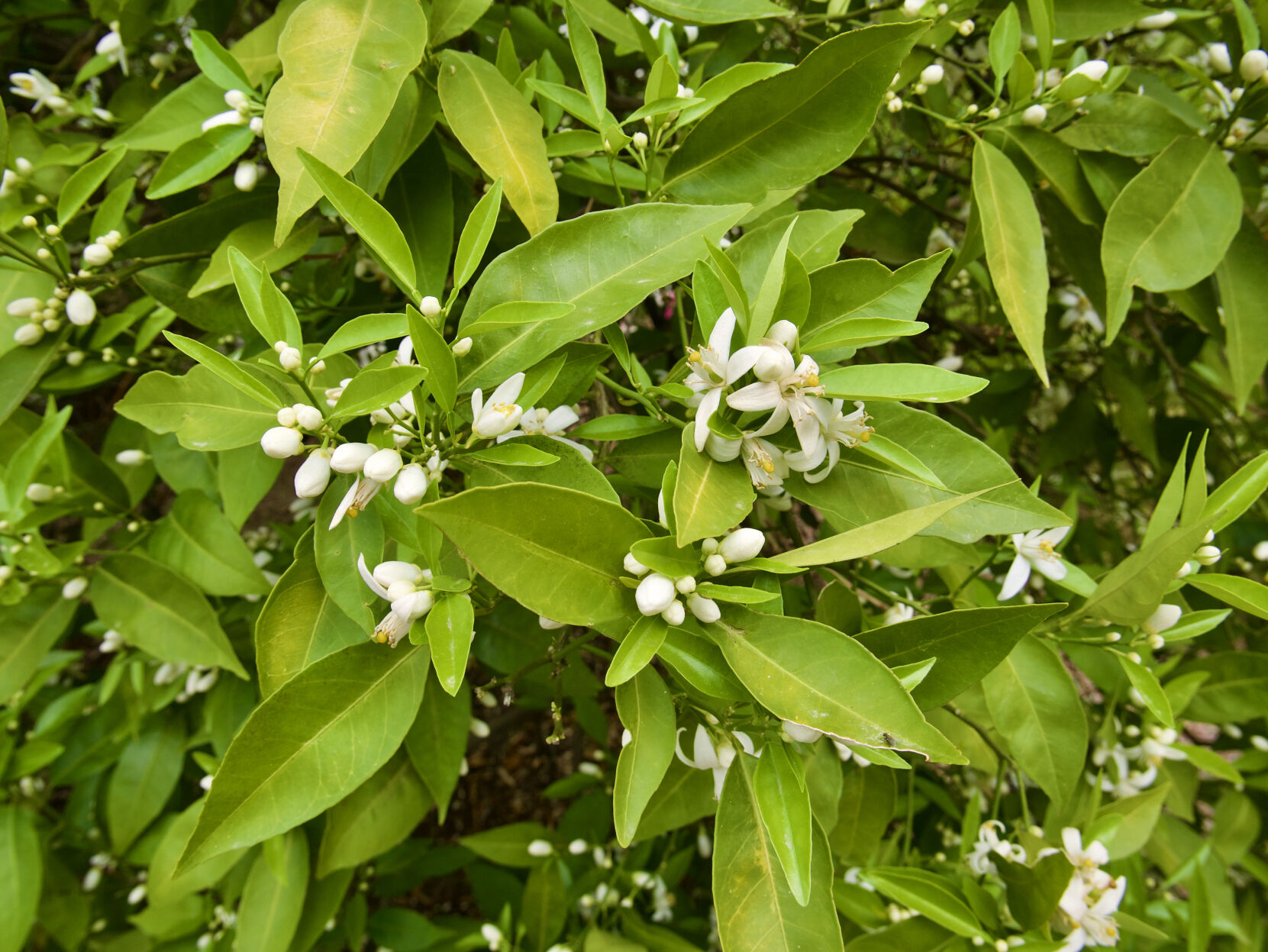
Citrus flowers in bloom

This orange gives off a sweet, refreshing fragrance when blooming. Citrus grow well in Tucson given the right conditions.

Dominika Heusinkveld

Citrus (Citrus spp.): If you’ve walked outside in Tucson during mid-spring, you know the heady, lush smell of citrus trees in bloom. Any of the varieties will have a great scent, and usually flower in March for a couple of weeks. For information on choosing the right citrus for you, check out this helpful guide from Civano Nursery.

Chocolate flower (Berlandiera lyrata): This native is a short, perennial flower with a daisy-like appearance. As the name suggests, it smells like chocolate. It does require some supplemental irrigation during the hot months, but will flower during most of the warm season. It is a good plant for attracting pollinators.

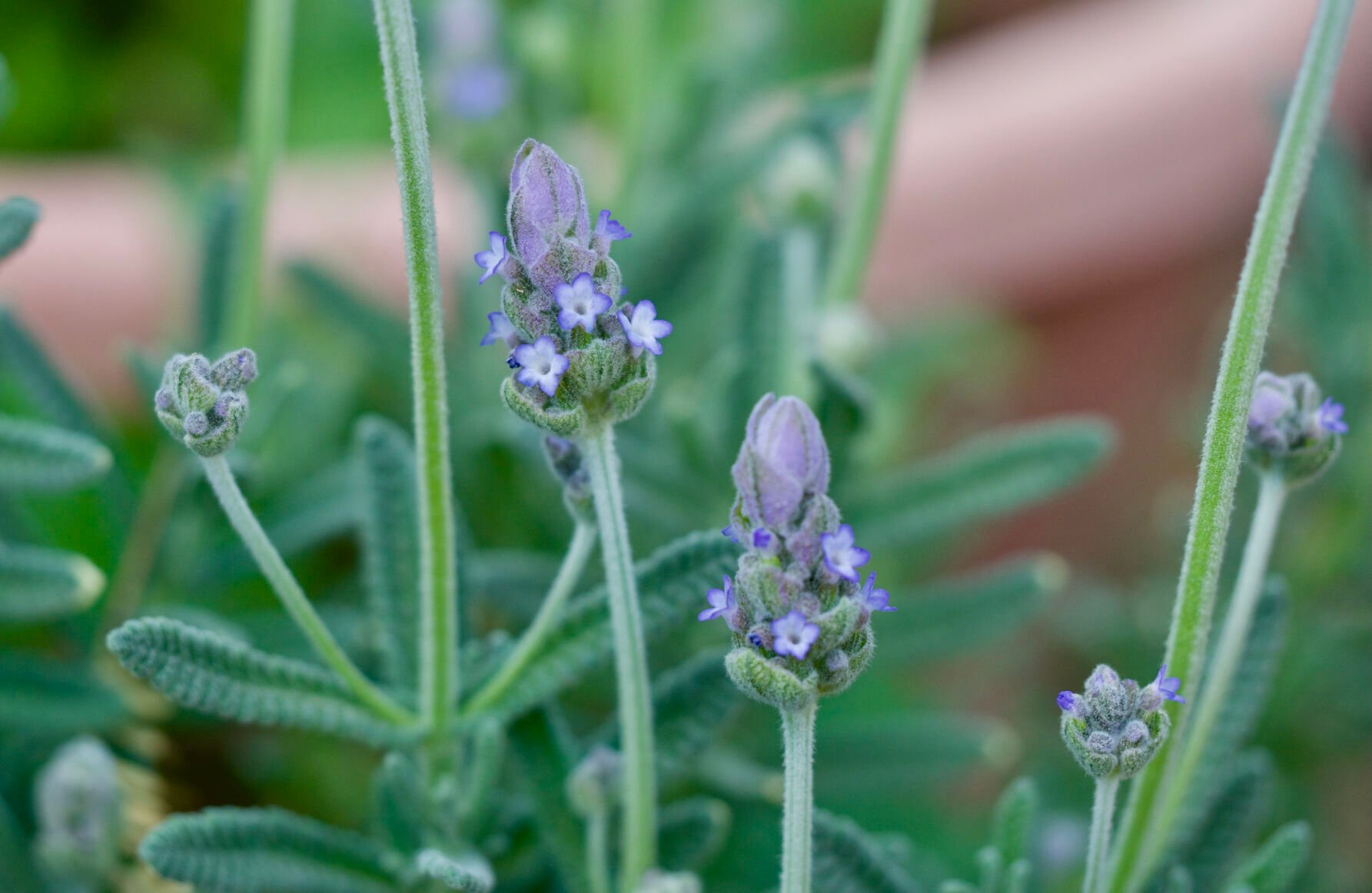
Lavender flowers

Lavender originated in the Mediterranean region and is well-adapted to our climate. It has a spicy, rich fragrance.

Dominika Heusinkveld

Lavender (Lavandula spp.): Lavender originated in the Mediterranean region, so it’s fairly well-suited to our climate. It’s natural habitat is sunny, rocky, well-drained soil. It can also be grown in containers, although I have found that it likes some afternoon shade if it’s not planted in the soil. Harvest the flowering stems regularly to keep the new ones coming. It will bloom through most of the spring and into summer if watered.

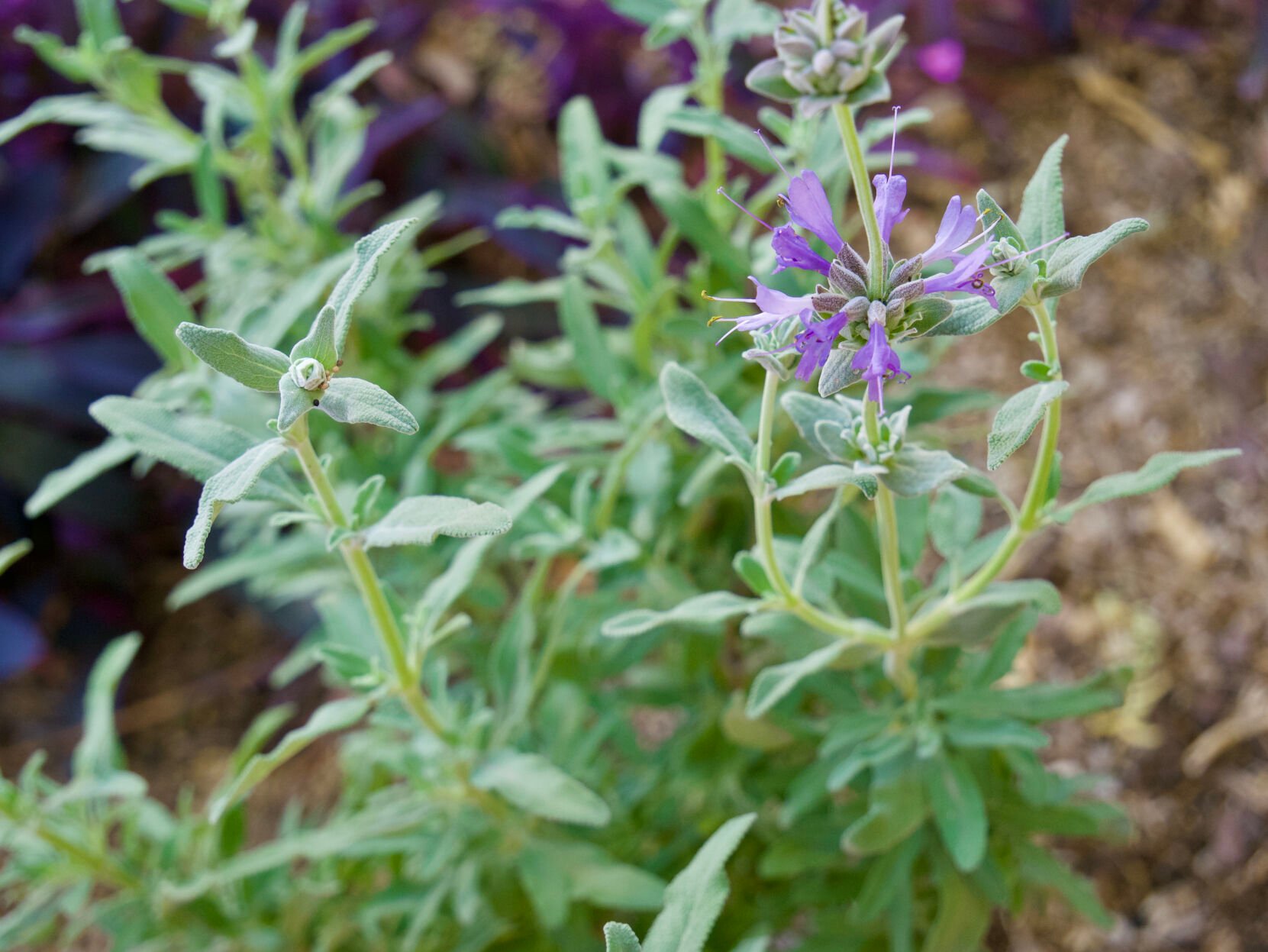
Cleveland sage with purple flower

Cleveland sage is a near-native to Tucson. It is very aromatic and its leaves can be used in cooking.

Dominika Heusinkveld

Cleveland sage (Salvia clevelandii): Despite its name, this is a near-native shrub from southern California and Mexico. The foliage has a wonderful herbal scent, and it can be used for cooking. It’s a nice habitat plant for birds and pollinators, and has beautiful purple flowers. It can grow quite large, so make sure you give it space. It can also be grown in large containers.

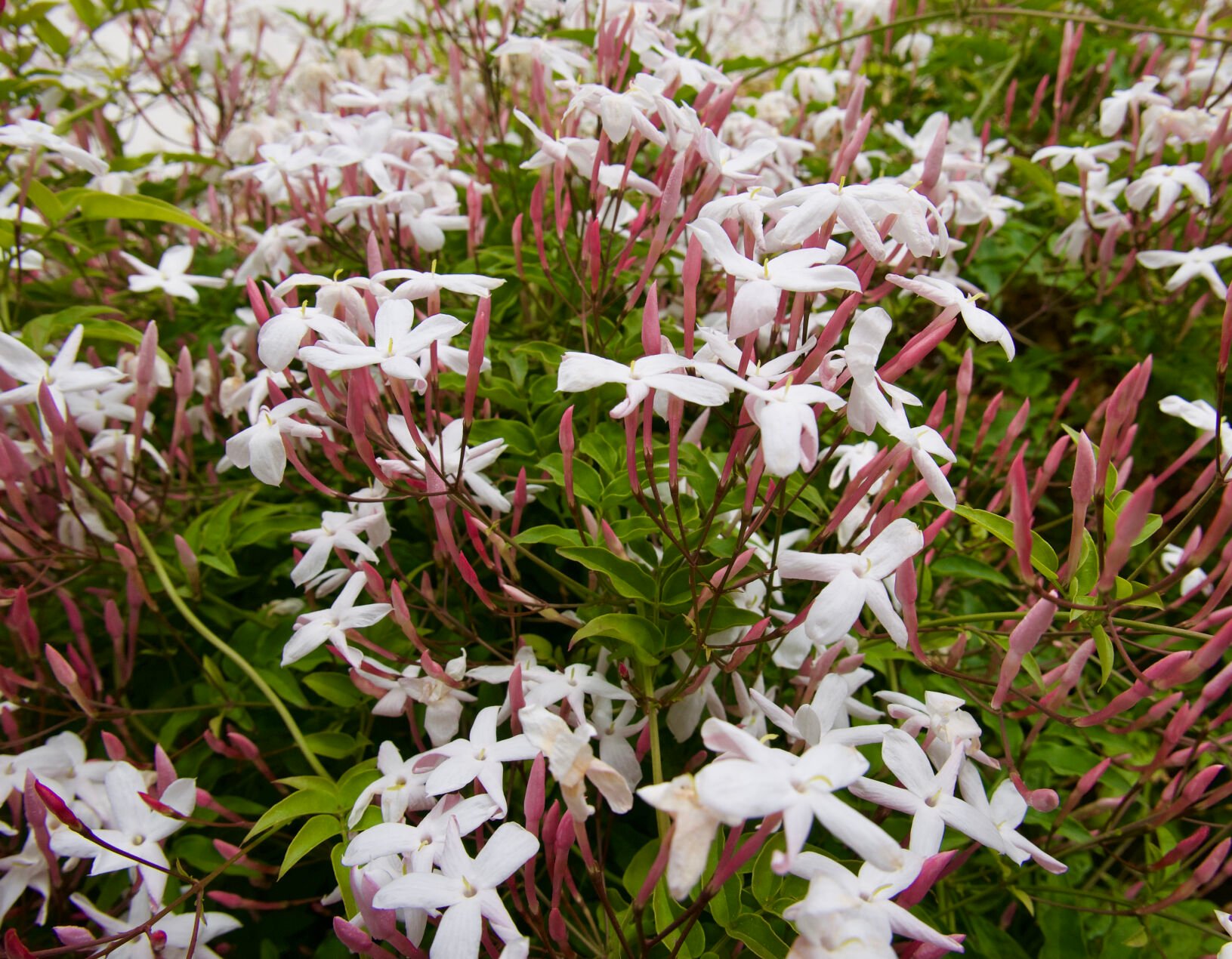
Pink jasmine in bloom

Pink jasmine grows well in Tucson in part shade. It has a heady, sweet aroma.

Dominika Heusinkveld

Jasmine: This is a favorite with many people. You can find star jasmine (Trachelospermum jasminoides) or pink jasmine (Jasminum polyanthum)  easily in local nurseries. There are a number of other varieties, as well. In Tucson, jasmines grow best in part shade and need a fair amount of supplemental water (two deep waterings per week once established). It tends to flower in March for a couple of weeks. It’s a versatile plant, since it can be trellised as a vine, planted in containers, or left to grow in a large clump.

Dominika Heusinkveld

Dominika Heusinkveld

Related to this collection

Arizona Daily Star
  • Facebook
  • Twitter
  • Bluesky
  • YouTube
  • Instagram
  • Arizona Daily Star Store
  • This is Tucson
  • Saddlebag Notes
  • Tucson Festival of Books

Sites & Partners

  • E-edition
  • Classifieds
  • Events calendar
  • Careers @ Lee Enterprises
  • Careers @ Gannett
  • Online Features
  • Sponsored Blogs
  • Get Healthy

Services

  • Advertise with us
  • Register
  • Contact us
  • RSS feeds
  • Newsletters
  • Photo reprints
  • Subscriber services
  • Subscription FAQ
  • Licensing
  • Shopping
© Copyright 2026 Arizona Daily Star, PO Box 26887 Tucson, AZ 85726-6887
Terms of Use | Privacy Policy | Advertising Terms of Use | Do Not Sell My Info | Cookie Preferences
Powered by BLOX Content Management System from bloxdigital.com.
  • Notifications
  • Settings
You don't have any notifications.

Get up-to-the-minute news sent straight to your device.

Topics

News Alerts

Breaking News