

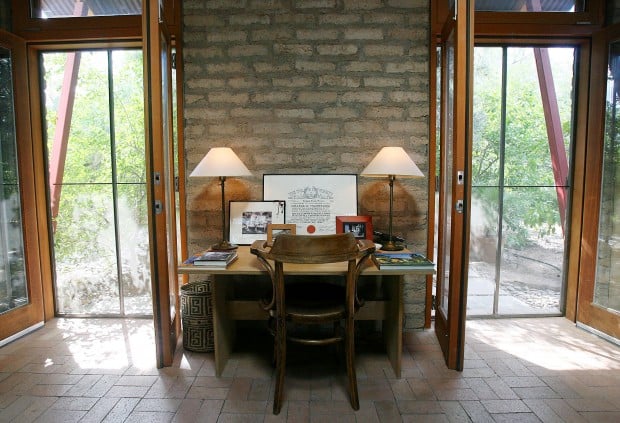
There's a surprise lurking in the backyard of architect John Messina. Behind his traditional 1920s bungalow is a mod-industrial delight of slanted steel and glass, cement and galvanized metal, plywood and exposed brick.
The structure takes up almost as much room as the main house, and is home to Messina and wife Tania's new master bedroom and bath.
And it's one big experiment, says the architect, who will show off his work during this week's Architecture Week tour (see box). His will be one of the notable contemporary spaces.
Messina likes things "clean, simple and not too fussy." So he decided to combine his modern aesthetic with his knowledge of traditional Southwestern architecture.
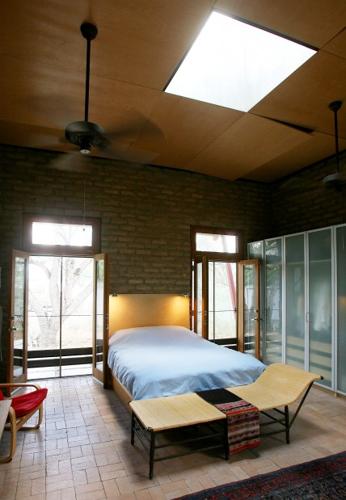
The structure was built of adobe, the brick inside left exposed, and the flooring is brick pavers. The furnishings are unfussy, too: an IKEA wardrobe system and several pieces of furniture Messina made of plywood.
People are also reading…
Plywood is a favorite material of his. He used it on the bedroom ceiling, where he erected 12 plywood panels. Some of them are flush with the ceiling, others jut out for artistic effect.
A 4-foot-high skylight lets light in but, thanks to double-paned glass and the installation of a couple of bathroom fans next to the window, it doesn't let in much heat.
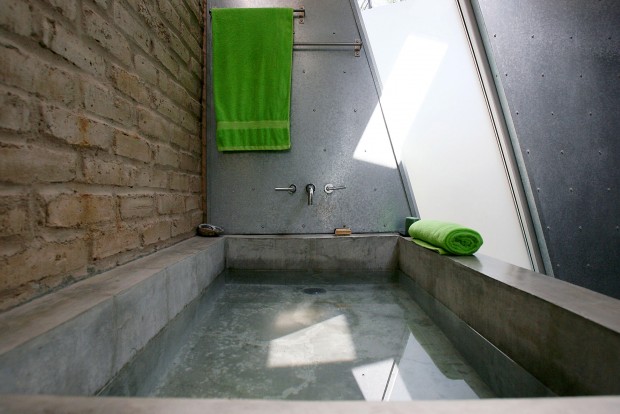
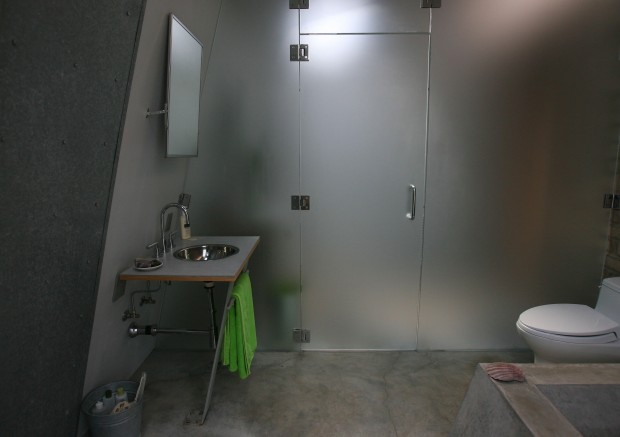
"There are things in here I would never do for a client," quips Messina. That's because not everything went smoothly. His attempt at an all-concrete bathroom, from floor to walls to molded bathtub, was not straightforward; cracks appeared in the floor and on the edge of the bath.
Other touches are genius in their simplicity. To avoid encroaching on their next-door neighbor, Messina had the bathroom wall that abuts the property line sloped inward. And on an adjacent wall beside the shower, he had a floor-to-ceiling glass window slanted in the same direction (the bottom half is sandblasted so nobody can see in).
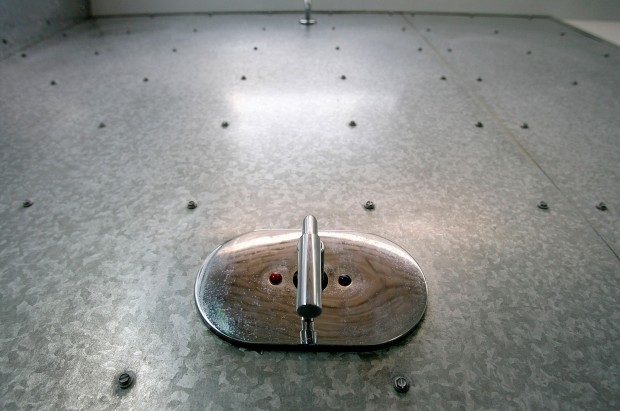
He considered tiling the huge expanse of walk-in shower that's next to the concrete tub - but only briefly. Instead, he put up sheets of galvanized metal, which cost around $50 in material.
When the structure was built, minus the bathroom, John used it as his office. But now that it's a fully functional master bedroom and bath, Tania isn't inclined to leave it. She says she feels the temperature difference. "You come in here and it must be at least 10 degrees' natural difference," says the holistic-health writer and former bookstore owner.
That is achieved through the 15-inch-thick adobe walls, overhangs out front and back, and clever use of French doors. Four sets of doors were installed - two on the east wall of the bedroom, two at the same spot on the west side. By opening and shutting the pairs that are diagonally opposite each other, the couple can create a breeze through the bedroom.
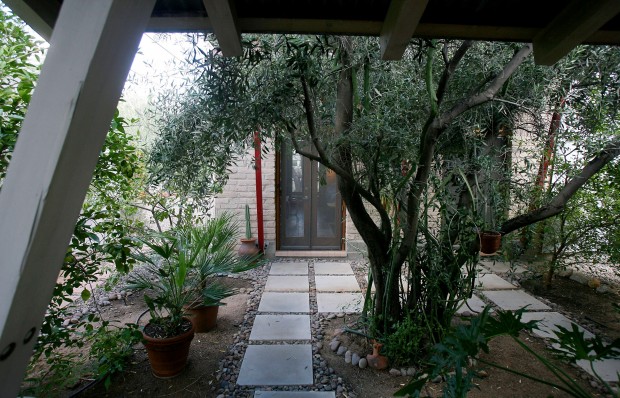
But why build a master bedroom that sits a small walk from your main house? John wanted it detached so he could create a leafy courtyard between the main house and the new one - a lesson learned from his studies of Spanish and Mexican architecture, he says.
And with citrus, an olive tree and potted plants lining their path from one building to the other, they're more than happy to take that little walk many times a day.
Resources
• Lighting by Illuminations, 325-3031, 3527 E. Fort Lowell Road or www.illuminationstucson.com
• John Messina is author of the book “Alamos, Sonora: Architecture and Urbanism in the Dry Tropics,” available through amazon.com
Read today's ¡Vamos! for a look at the history of midcentury modern buildings in Tucson and glimpse at the Top 50.
Contact Gillian Drummond at gcdrummond@aol.com or visit her blog at www.gilliandrummond.net