

Many of the thousands of homes built during Tucson's 1970s and '80s housing booms are becoming dated. Relatively low ceilings, functional spaces walled off and separated by doors, and bedrooms strung off narrow, dark corridors were par for the period.
The low ceilings, in particular, often make it hard to easily meet modern owners' remodeling goals of a more open, modern look. Also, the period's trend toward smaller lots, sometimes combined with stifling restrictions by homeowners associations, can make it hard to expand.
Although they had a relatively luxurious, medium-size slump-block home in an upscale gated community off North Pontatoc Road, Willie Joffroy Jr. and Margarita Joffroy wanted a more open feeling, a little more space - and what they had radically reconfigured.
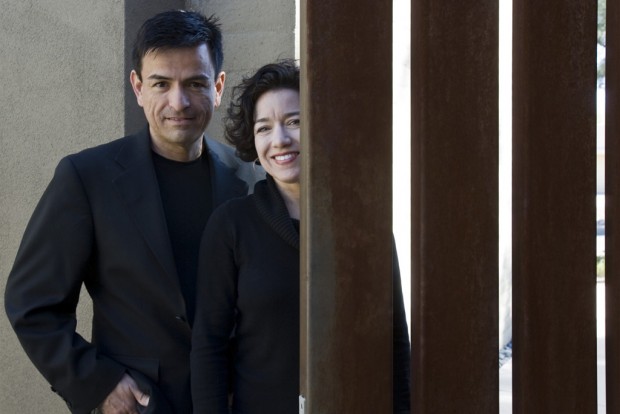
Architect Teresa Rosano and designer Luis Ibarra said they couldn't do anything radical with the front of the house, due to HOA architectural restrictions.
People are also reading…
"It's in an HOA community, 1970s slump block. We were expected to minimally transform the outside," Rosano said.
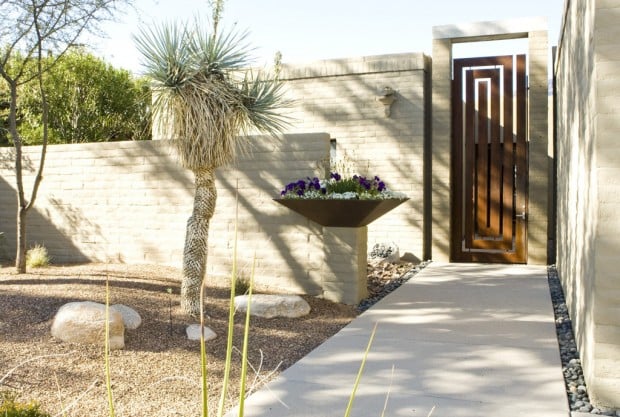
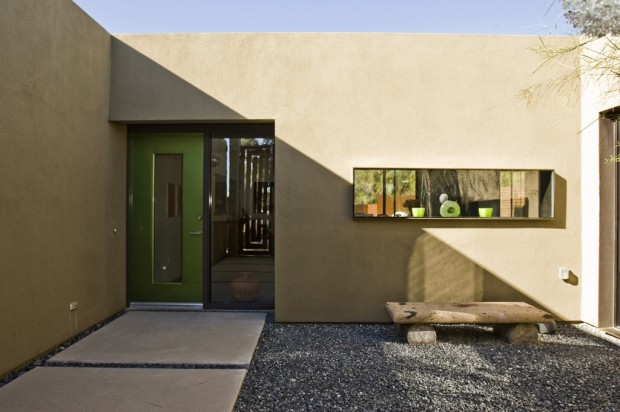
But they did push out one wall, on the southwest corner, to create added space for a small bedroom, in the process forming a front-entrance courtyard between the existing garage wing and the new bedroom's front wall. The courtyard, behind a masonry front wall with a new gate, formed a grand entrance.
Following the rules
It was a prolonged battle, Willie Joffroy and Ibarra said of getting the design through the HOA's architectural committee. Even getting their proposed new front gate approved was a struggle.
"I loved it," Joffroy says of the tall, vertical, slatted-steel gate in the house's front garden masonry wall. "It added scale. And when we presented it to the architectural committee of the HOA, they rejected it."
Rosano said the committee at first even rejected a slight change in color to the front of the house.
"It was on their (the HOA's approved) color chart, but nobody had ever used it," Rosano said of the pale gray they chose. While the HOA committee members insisted it was intended only as a trim color option, Ibarra says that wasn't spelled out and they eventually came to an agreement allowing its use.
Ultimately, even with their victories, the changes to the front of the house were subtle; the home does not stick out dramatically from the otherwise nearly identical, closely spaced houses on the community's main street.
Inner transformation
The changes in the rest of the house were not nearly as subtle as those visible out front and were exempt from HOA review.
"The interior and the backyard is completely transformed," Rosano said. "The gate which we changed, a big portal with the interesting gate, is the first clue" to the new open design for this house. "You go inside and it's opened up to a view they didn't realize they had before.
"We really didn't add that much square footage. But just arranging things and opening up the space really transformed it."
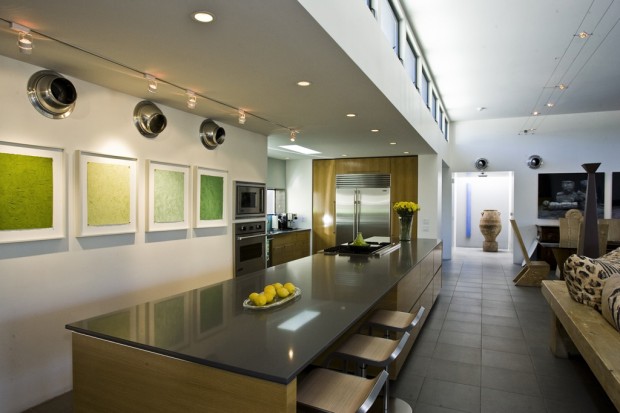
The greatest asset they had to work with, Joffroy, Rosano and Ibarra said, was that the house already had 12-foot ceilings, unlike so many Tucson houses built during that period. But much of the openness of the remodeled home comes from outside the enlarged great room that makes up most of the rear of the house.
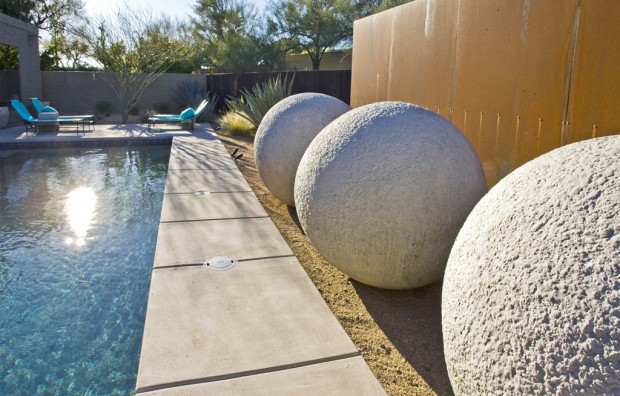
The dramatic mountain view outside the rear wall of the old living room had been obscured by low windows and a patio roof that bluntly cut off that view. Taller windows and a raised patio roof opened up a dramatic view of the nearby Catalinas behind the back of the house.
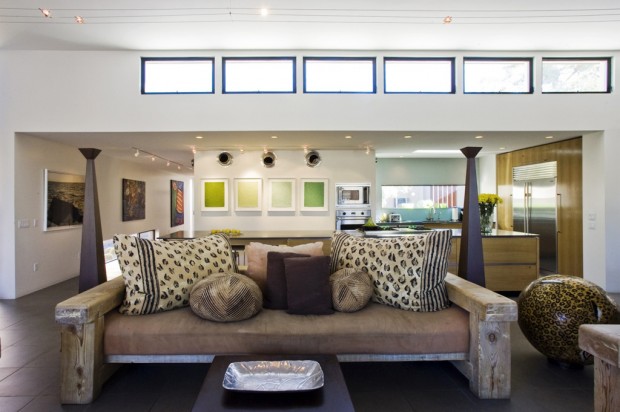
The larger great room, a combined living and dining room adjacent to an open kitchen, was created by enclosing the outside garden area that had been on the rear, northeast corner of the house.
Along with the new bedroom, the expansions added almost 1,000 square feet to the original 1,900-square-foot house.
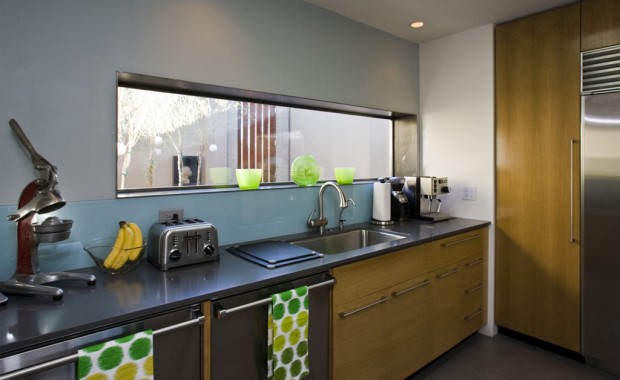
The kitchen was moved just a few feet, but the effect was dramatic. It had been in a separate room, between the front of the house and the old living room.
Part of the old kitchen space was left enclosed and is now used as a small office.
A view for residents
One of Willie Joffroy's favorite parts of the design is the garage entrance to the house, a high, wide - nearly 8 feet - and bright hallway that passes by the office and into the great room.
"What's brilliant is, these days 90 percent of the homes, whether $1 million or whatever price, you enter the house through the garage and then the laundry room. Why shouldn't you get the same beautiful view of your house as your guests?" Joffroy asks.
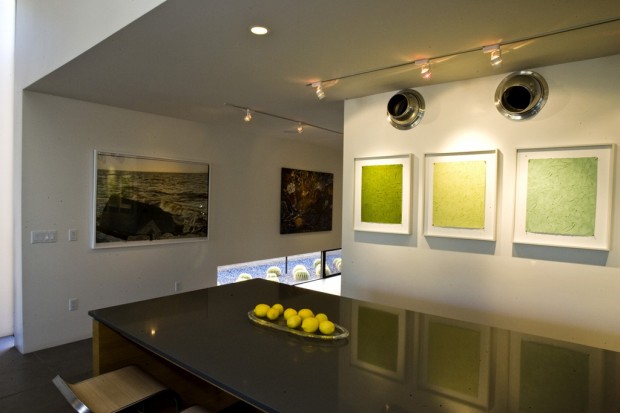
Except for exterior access, bedrooms and bathrooms, the house is without doors, airy and open. With the high ceilings, white and glass walls, neutral-gray 18-inch-square Italian tile throughout, the effect is of a much larger space.
The bedrooms are not particularly large, but they are dramatic looking. The master has a large window looking out the rear of the house. Bold, modern art provides color.
In the new front bedroom, designer Ibarra put his material skills to use building a wood-and-metal platform for the bed and fabricating an internally lit slab headboard of frosted white acrylic. The soft glow works as a reading light.
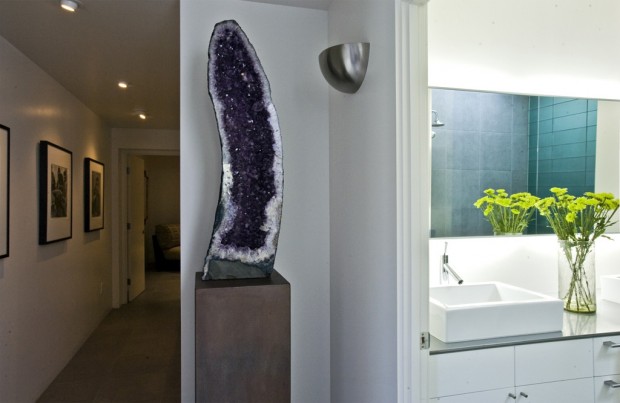
Art reigns throughout the house - modern paintings, large black-and-white photographs, a chest-high urn near the front door. Something beautiful is always in view. With the high ceilings, neutral floors, white walls and open floor plan, the effect is of living in a very comfortable art gallery.
"For me it's always a pleasure to walk into my house," says Joffroy.
Dealing with HOAs can be a headache, so observe 3 rules
Despite concerns when their preliminary plans were flagged at the front wall by an HOA architectural review committee, Willie Joffroy Jr. said things turned out well.
His suggestions on how to succeed when remodeling in an HOA-controlled neighborhood:
Use professionals when planning
"I think having an architect is a big plus, because you present a professional set of plans. In the case of working with Luis (designer Luis Ibarra) and Teresa (architect Teresa Rosano), you have a set of architects with a good reputation.
Be willing to negotiate
"Where there were differences, as in any good negotiations, you have to leave something on the table - both sides leave something on the table without breaking rules. We were able to resolve our differences based on a good design (the gate); also there was some flexibility on their part on the exterior color. Those (were) really the only major issues.
Know the rules
"Understand the CCRs (covenants, conditions and restrictions), and where there are questions about them, that they're asked up front. Don't design without showing preliminary plans. Don't present final plans. If people just follow the rules and if they have a question about the rule or are asking for a variance, that they're up front. We only had two issues (the color and the gate). We were able to qualify why the gate we were going to design would fit. It's the only gate of its type (in the neighborhood), so you could say it's different from the rest of the homes. But it did not take away from the general aesthetic when the community was built.
"I think when people get in trouble it's when they ask for forgiveness. They don't present preliminary plans. We never got close to" (legal action). "I think we were able to attain that happy ending because we dealt with professionals and the community wasn't negatively impacted."
Except for exterior access, bedrooms and bathrooms, the house is without doors, airy and open. With the high ceilings, white and glass walls, neutral-gray 18-inch-square Italian tile throughout, the effect is of a much larger space.
Dan Sorenson is a Tucson-based freelance writer. Contact him at d.sorenson@cox.net