

When it comes to front-load washing machines, bigger may be much more than you'll ever need.
The newest, largest front-loaders approach 4.4 to 4.7 cubic feet in capacity, known as colossal or ultra capacities, says Tami Catalano, who handles inside sales for Tucson's Westar Kitchen & Bath.
"To me, 4 cubic feet is more than enough capacity," she says, since most people create smaller piles of clothes for separate cleaning specifications.
It was size that finally lured consumers to front-loaders, which had long been used in Europe. They became popular in the United States in the late 1990s with the introduction of the Maytag Neptune.
"The pitch was how many towels I can wash at one time," Catalano says, "and, by the way, you'll use less energy and less water."
Maytag ended up settling a class-action lawsuit over problems with the Neptune, but the concept had staying power with consumers.
People are also reading…
Now, both Westar and Christie's Appliance Co. report that sales of front-loaders by far outpace traditional top-load washing machines.
A front-load washer has more capacity than a traditional top-load washer because its washing basket doesn't have a space-taking agitator found in the top-loader.
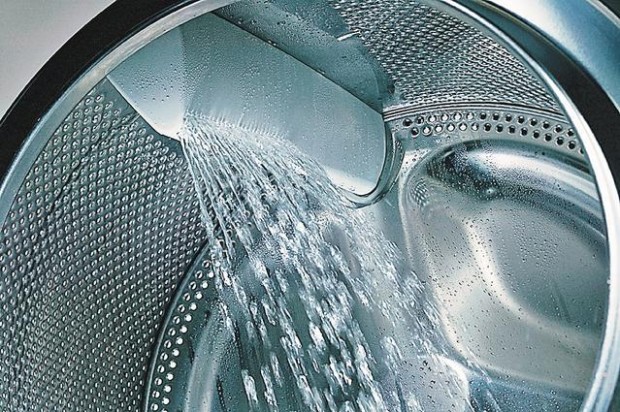
A traditional top-loader essentially gives the clothes a bath by filling the basket and "sloshing clothes through the water," says Catalano. A front-loader "is more like a shower," she adds, as water is forced through the clothing.
The front-loader's higher spin cycles also wick off more water, which reduces drying time.
While a traditional top-loader uses 40 to 45 gallons of water per load, a front-loader will use 18 to 26 gallons, says Ron Goss, manager of the Northwest Side Christie's Appliance. It also uses less electricity.
The basket can accommodate big, bulky items such as king-size comforters and pillows. The machines also can better handle delicate items such as washable wools and clothing that calls for hand-washing, says Catalano.
• The cycle on a front-loader takes longer than on a traditional top-loader, says Christie's Appliance salesman Bud Rudolph.
• To avoid a musty smell inside the washer, it's best to keep the door slightly open as the last load of the day runs through the dryer, Catalano advises. Keeping the door open may be an issue for families with children, she says.
• Shortly after a cycle starts, the door will lock so no other items can be added.
• Front-loaders rinse clothes so well that there is little lingering scent from the detergent, says Catalano.
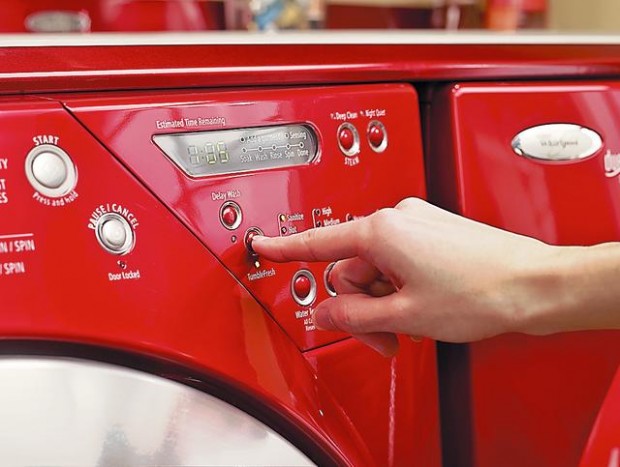
• Pre-set wash and rinse cycles allow less flexibility, she says, but some washers include an override capability to allow users to customize settings.
Front-load washers range in price from about $600 to about $1,700, says Goss. Lowest-price front-loaders have the smallest wash baskets and the fewest pre-set wash cycles.
(All costs are manufacturer's suggested retail price.)
A 3.5-cubic-foot Frigidaire with five cycles costs $650. A GE 4-cubic-foot with 26 cycles costs $900.
Washers with a steam feature, which is used to remove allergens and tackle soiled items, cost more than those with the same-size basket sans steam. For instance, the GE Profile 4.2-cubic-foot with steam costs $1,400; without steam, $1,300.
The same model of washer may also cost more if it is in a color other than white.
new top-loaders
New high-efficiency top-loaders' capacity and low-water use are similar to front-loaders'.
Westar's Tami Catalano, who calls these machines "hybrids," says they do not have agitators in the wash baskets, allowing more space for clothing than the same basket size in a traditional top-loader.
They also use less water — about 25 gallons for a full load — than traditional top-loaders, says Ron Goss at Christie's Appliance.
A midrange price is about $800, says Catalano.
Consumers may opt for top-loaders if they can't lean down to use a front-loader, are concerned about keeping a front-loader door open or don't have enough room for a front-load door to swing out.