

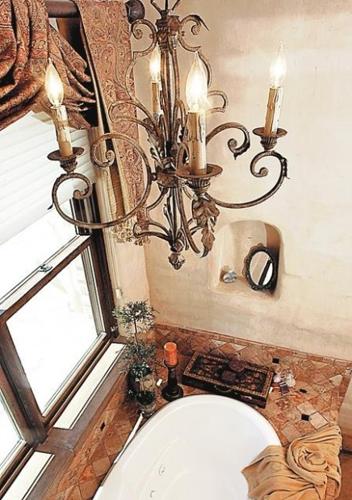
At the height of the 1980s love affair with Southwestern interior design, homeowners from coast to coast painted their walls white, bought Kokopelli and howling-coyote figurines and liberally sprinkled peach, teal, mauve and other pastel-colored accessories around.
As tastes moved on, the design trend faded, save for true-blue fans and in regional areas like, well, the Southwest.
Mass production of popular style elements did it in. "It was a little more contrived," Dara Davis, owner of Sunset Interiors & Design Studio, says of the times. "I guess we saw a lot of the Santa Fe furniture style."
Now Southwest design is back in a more sophisticated way, incorporating many influences and returning to the roots of its strongest elements.
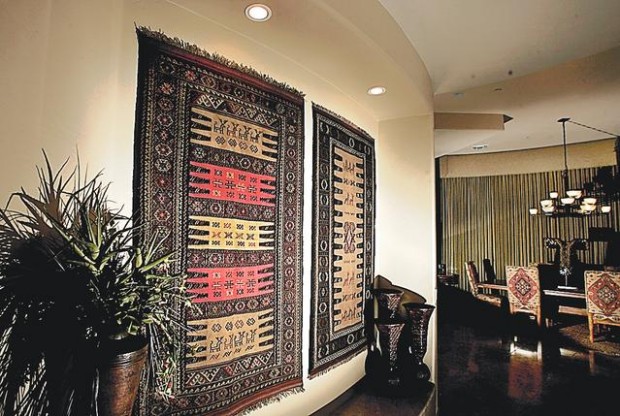
"I tell people not to look at Southwest design as a specific trend or style or icon, but a regional influence to your interiors," says Shelly Weiss, owner of Shelly Weiss Interior Design. That includes the rustic feel of ranch, the bright colors and hand-painted tiles of Mexico, the geometric shapes of American Indian or the ornateness of Spanish colonial.
People are also reading…
The watch words for new Southwestern decor are clean, natural, earthy, modern and international. They manifest themselves in these ways:
"Think of your spice cabinet," says Gary Capwell, a designer at Sunset Interiors & Design Studio. Nutmeg, cinnamon, curry and red chile bring warmth to a room. Red, black, gray and brown coupled with white, cream and tan add an American Indian feel.
Earth tones and native floral colors drawn from the local landscape also define the new style, says Weiss.
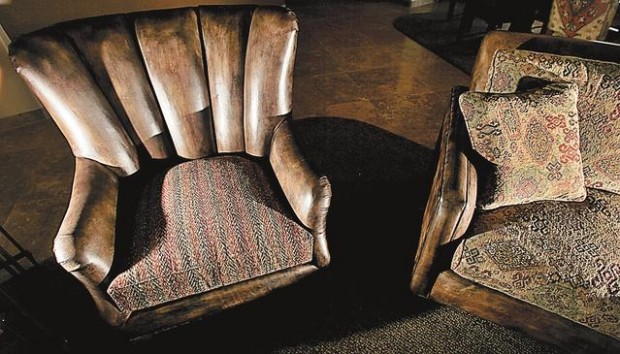
Strong geometric designs remain popular, but they're inspired by tribal expression everywhere: North American nations, Peru, Guatemala, Scandinavia, the Middle East and the Orient. More important, says Davis, "instead of using big, bold patterns, there's a use of textures" to convey the right feel.
Weiss says hand-painted tiles provide a regional look to any flat, solid surface.
Natural elements—alder and mesquite wood, stone and slate, to name a few—combine with tile, glass and metal for a modern, organic look. Weiss combined Western alder cabinets with a backsplash of metallic and amber-glass tile for a rich, contemporary feel in an Oro Valley kitchen.
She says that in general, the rough-hewn pine look has been replaced by ornate carvings found in Morocco and India.
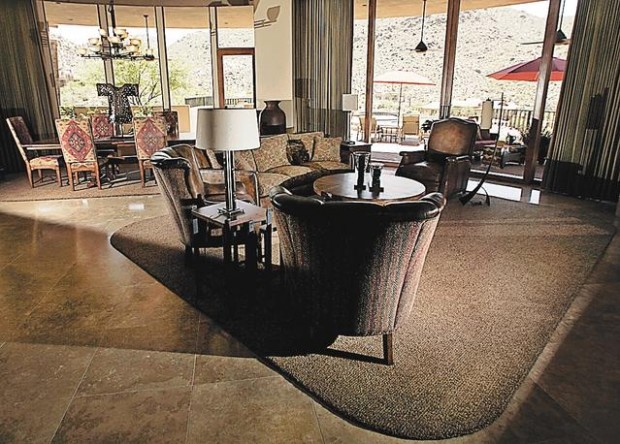
Different textures and style mix it up for today's Southwest look. That old ranch standby, the leather couch, is retooled by combining leather with finer fabric, wood and metal. Capwell says an easy updated combination is a mesquite tabletop on a metal base.
Legs and arms on furniture have shrunk to a more contemporary, minimalist silhouette, says Davis.
Accessories become more textural: throw pillows made of Navajo rug scraps, window covers made of woven woods, sheers in woven patterns.
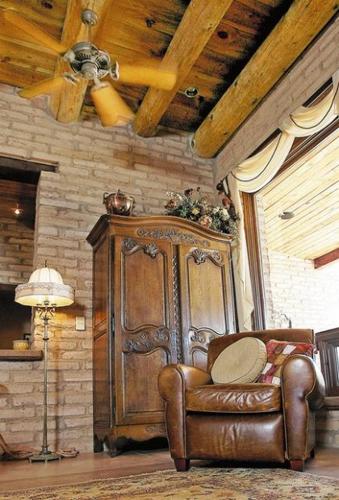
This more-flexible style allows decorators to incorporate Southwest sensibility to any kind of design. Weiss worked with Oro Valley homeowner Diane Snedden to combine her French provincial antiques with the Tucson look Snedden loves.
Inspired by the Spanish colonial style, Weiss added carved kitchen cabinet doors, used antique copper and added woven sheers instead of silk. In essence, Weiss surrounded the refined antique furniture "with rustic vintage accessories," she says.
Davis points out that Eastern Americans heading to the frontier in the 19th century did the same thing. "Everybody brought their finest furniture from the East," she says, and combined it with local goods. "Now we're seeing a kind of resurgence.
"Our … look right now is a bit of New York loft meets the West."
Kokopelli's destiny
Love your Kokopelli? You can keep it and update your Southwestern decor around it with these ideas from interior designers Gary Capwell, Dara Davis and Shelly Weiss:
• Add an area rug with modern geometric designs in browns or neutrals.
• Paint the walls in hues that are slightly brighter than pastels. Think along the lines of aqua-blue, tangerine, charcoal blue or mauve with a deeper purple tone.
• Replace vertical blinds with woven wood shades.