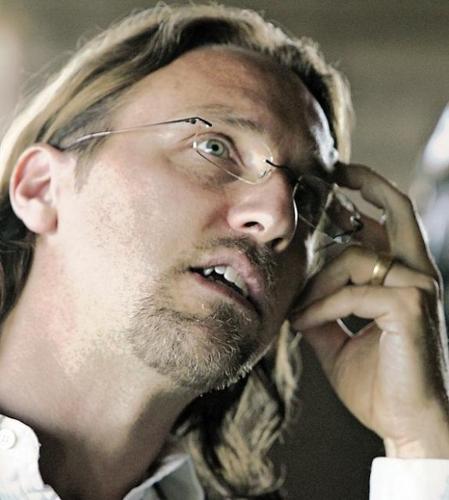
Once upon a bygone era, singer Olivia Newton-John urged us to "get physical." Times change. Today, in a compelling new book, Tucson author Jonathan Ellerby heralds this message for modern times: Get spiritual.
"If you seek health, peace of mind and a balanced approach to life, you absolutely need a regular spiritual practice," says Ellerby, author of "Return to the Sacred: Ancient Pathways to Spiritual Awakening" (Hay House, $24.95).
The book explores a dozen "roads to spiritual awakening." The 12 pathways range from ceremony and ritual to prayer, meditation, sacred movement,
sacred study and the guru-guided path.
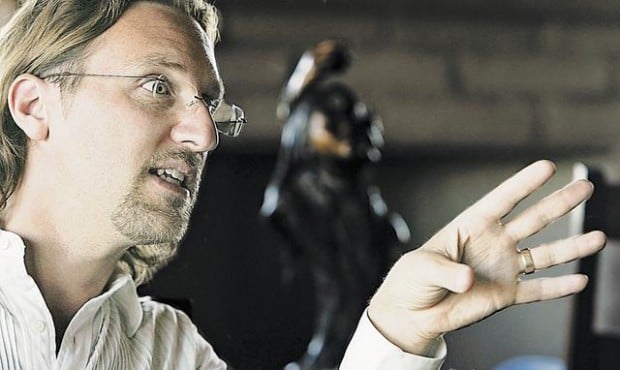
Ellerby, a teacher and consultant with a doctoral degree in comparative religion and an ordination as an interfaith minister, is the spiritual-program director for the Canyon Ranch health resort in Tucson.
People are also reading…
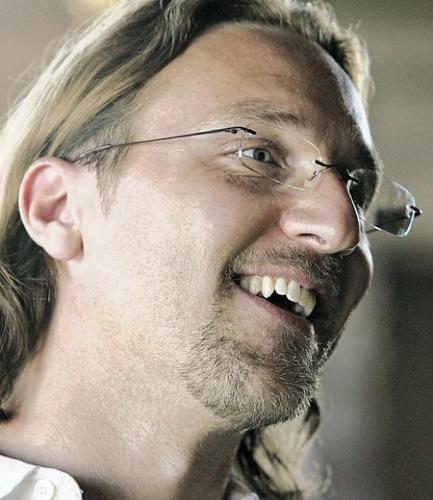
A vibrant yet soft-spoken man of 36, Ellerby is acutely aware that the mere mention of spirituality can raise all manner of red flags — ranging from "whoa, he's really out there" to "I don't need somebody giving me a religious pitch."
"I know that labeling it a spiritual practice can be off-putting to some people," he says. "But I'm really not telling anybody to do anything other than something that feeds yourself and brings you a sense of calm on a regular basis."
Read on to learn what, exactly, Ellerby means by spirituality, how he has pursued it in his own life, and why he believes the rest of us should make time for it in ours.
The meaning of spirituality
Ellerby, in his book and in an in-depth interview, emphasizes that spirituality is a "personal process" — and that anyone's definition of the term is likely to evolve over time.
Still, a working definition can be helpful.
Ellerby notes in the book that you might think of spirituality as "your relationship to whatever you consider to be most sacred."
Another way to describe it, he says in an interview, is "a person's deepest sense of meaning, identity and connection."
He refines that definition in this way: "Spirituality is all about how we answer three simple questions. Who am I? What's important? What relationships matter?"
Ellerby's personal journey
Ellerby's fascination with the realm of spirituality is no passing fancy. He says his own spiritual journey began when he was about 10 years old — a time when he started to become aware of "an extraordinary presence in my life and the world around me."
"Frequently," he writes, "I'd encounter a way of seeing the world that felt magical and transforming — it was a way of listening to the spirit of things, of feeling the connection of all things."
By his teen years, Ellerby had "a sincere belief that there is such a thing as God and such a thing as a spiritual world — and I wanted to experience it directly. It was an urgent thing from the time I was 13 or 14. . . . I think we're all born with passion, aptitude and gifts. For me, it just happened to be spirituality."
Ellerby, who was born and raised in Canada, says he attended synagogue with his family as a youngster but was inspired to move beyond formal religion.
"Still, in the Jewish tradition, great emphasis is placed on inquiry and study," he says. "Because of that, I didn't feel I needed to separate from my heritage."
Ellerby's inquiry and study took him on far-flung adventures between his high school and college years, and later in life.
He trekked, camped, meditated and fasted in the Sierra Nevada of California, the canyon lands of the Southwest and wild lands in New Mexico and South Dakota. Later he would spend time — often in the company of spiritual teachers — in Africa, India, Mexico and other locales.
"For me, it has been very helpful to travel to places very different from where I come from, with only the simplest of belongings," Ellerby says. "I've found that the essence of religious life around the world really is about living with an intentional connection to something that is greater — and to live well and with compassion as a result."
His educational path included undergraduate studies in Arizona and Canada, graduate work in Canada and advanced study at the Graduate Theological Foundation in Indiana on his way to receiving his doctorate and ordination as an interfaith minister.
The combination of Ellerby's formal studies and worldwide spiritual quest has led him to a personal spirituality that combines parts of the many traditions presented in his book.
It's complex, but also simple in a way: "Once you identify an activity that puts you at peace and puts your life in perspective, do it," he says. "If it's hiking in Sabino Canyon or painting, then do those things. Find a way to nourish your soul and do it on a regular basis."
Family and work
Ellerby and his wife, Monica, who is an herbalist and teacher of yoga and meditation, are parents of a 15-month-old son named Narayan.
Earlier in his career, Ellerby worked as a healer, teacher and consultant with hospitals, corporations, prisons and community groups. He describes his current work as the spiritual-program director at Canyon Ranch as providing "workshops, lectures, private services and special events that help people use spiritual tools and teachings to create greater health and well-being. It's a full-time job. My writing is on the side."
Ellerby is at work on a new book to be called "Inspiration Deficit Disorder: The No-Pill Prescription to End High Stress, Low Energy and Bad Habits."
•Tranquility• Serenity • Faith • Meditation • Mindfulness •
Pathways to spirituality
The 12 pathways in Ellerby's book fall into four categories. They include:
Body-centered practices
• Ceremony and ritual
• Sacred movement
• Sacred sound and music
Mind-centered practices
• Prayer
• Meditation
• Sacred study
Heart-centered practices
• Devotion
• Sacred service
• Guru-guided path
Soul-centered practices
• Ascetic practices
• The death practice
• The life path
"Once you identify an activity that puts you at peace and puts your life in perspective, do it. . . . Find a way to nourish your soul and do it on a regular basis."
Jonathan Ellerby