

Like shoes, like cars and like human bodies, towns sometimes wear out and wither away.
These deserted, dilapidated communities, commonly known as ghost towns, may be municipal failures — but they can be fascinating sites to visit.
A driving route known as the Ghost Town Trail will take you to three Southern Arizona communities where the heyday is long gone but colorful legacies remain.
Travel the trail and you'll see a cemetery with weathered headstones, crumbling adobe ruins and mining artifacts — and perhaps meet a few of the people giving new life to one of the towns. Turn to the cover story inside this section and come along for the ride. — Doug Kreutz
GLEESON — The general store is shut. Not just for the day. Not just for a week. It's closed down, locked up and sealed tight. Possibly forever.
People are also reading…
That's because the heyday of Gleeson is history — and what was once a thriving mining town is now a popular stop on a driving route known as the Ghost Town Trail.
The route, covering about 30 miles of paved and unpaved roads northeast of Tombstone, will take you to three towns in various states of ghosthood.
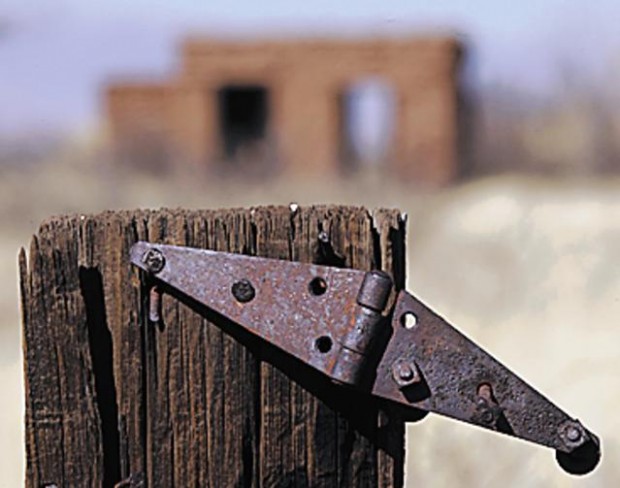
Gleeson has a cemetery with a mix of old and more-recent headstones, the old general store and saloon, adobe ruins and other structures.
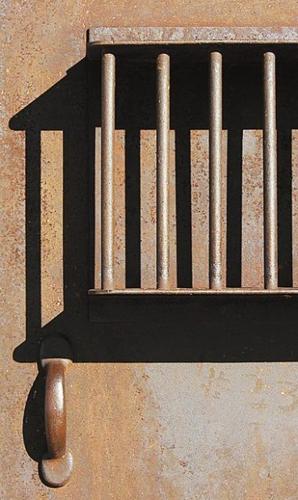
Courtland, about five miles to the northeast, includes several time-worn buildings and a quite-well-preserved structure that apparently was a jail — with bars still sealing some of its windows.
North of Courtland is Pearce — with a cluster of buildings, about a dozen residents in the immediate area, and a shop called Old Pearce Pottery.
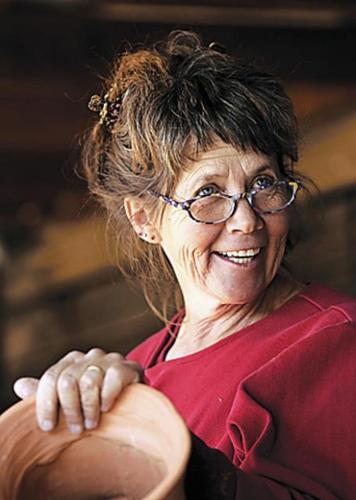
"This place is just full of history!" declares Patricia Burris, a potter who owns the shop and lives in Pearce. "You can see the history of mining all along the Ghost Town Trail" in the form of excavations, tailings and old mining equipment.
"And just look at this setting," Burris adds. "It's an incredible, beautiful setting — and it's real."
Glance around these pages for photos and information about sights to see along the trail.
Gleeson Cemetery
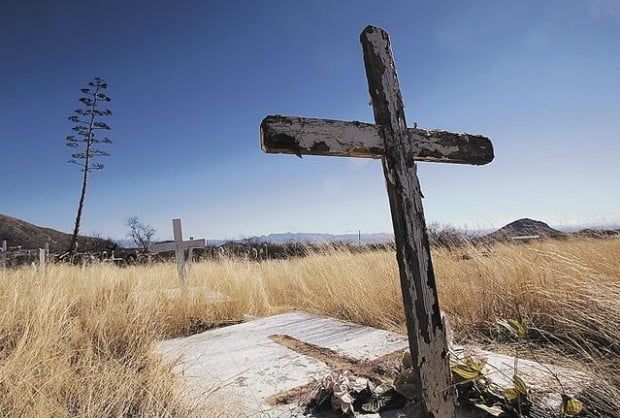
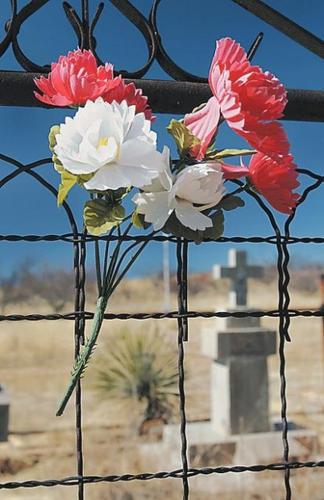
Gravestones — some of them ornate, many plain and simple — stand amid tall tufts of brown grass in a cemetery on the outskirts of Gleeson.
Luz Lopez Flores, born in 1886, arrived here for her final rest in 1941, according to her grave marker.
The headstone of Tomaso Musso offers this information: "Born in Italy July 17, 1875. Died March 10, 1917. Rest in Peace."
Another stone, with two horseshoes and a collection of coins placed nearby, includes a little message from the grave's occupant: "Yee Wee. Born in China. I see you tomorrow. Feb. 20, 1968."
Elsewhere in the cemetery, set against the backdrop of distant snow-capped mountains, are graves marked only with small piles of stones.
This is a place for a quiet, respectful stroll, a connection with people who found their way to Gleeson long ago.
Gleeson
The good times rolled in Gleeson — named for a miner in the area — when mining flourished in the late 1800s and early 1900s.
Historical accounts say the population reached 500 but declined with a drop in the price of copper. The town gradually withered away, and the post office was closed around 1940.
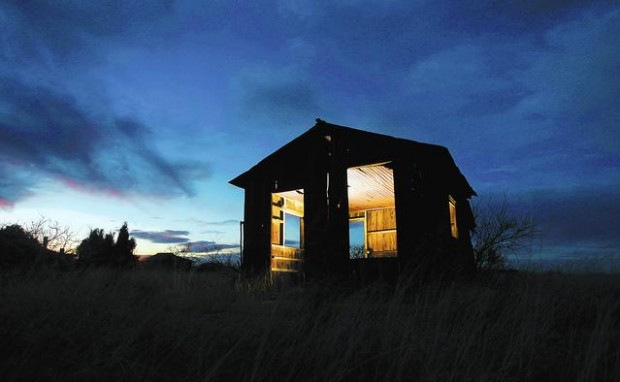
Today, the general store and other buildings along the main driving route are deserted. The adobe ruins of a hospital, the foundations of a school and what appears to have been a jail are worth a look.
But bear in mind these precautions, which also apply to other sites along the Ghost Town Trail: Unstable ruins can be dangerous, and mine shafts in the area can be deadly.
A number of people have moved into the Gleeson area in recent years — and it's extremely important to stay off private property and heed "No Trespassing" signs.
Courtland
Like many other Arizona mining towns, Courtland was a bustling community in the early 1900s, with up to 2,000 residents.
Several books — including "Arizona Ghost Towns and Mining Camps: A Travel Guide to History" by Philip Varney — note that Courtland in its heyday had a post office, newspaper, pool hall, ice cream parlor and assorted other businesses and services.
But it was the same old story: When the mining industry went south, the population dwindled and the town slowly wasted away.
Visitors today are often impressed by how thoroughly most of the buildings in the area have gone to ruin — but also by the still-sturdy appearance of the amazingly durable town jail.
Perhaps there is a sort of resurrection in Courtland's future. Signs of mining exploration are visible on slopes near the old town site.
Pearce
One resident of this town along the Ghost Town Trail claims it offers not only a rich history and well-preserved buildings, but something else: ghosts.
"Many of the buildings are haunted, including the old store over there across the street," says Patricia Burris, owner of the Old Pearce Pottery shop.
Really? Ghosts?
"Oh yes, you can sense them," Burris maintains. She says one ghost, for example, likes to punch buttons on machines — "and you can smell his tobacco."
Whether or not you believe in such specters, you'll find that Pearce is a fine haunt for history buffs.
A sign outside the Soto Brothers and Renaud general store notes that it was built in 1893. The adobe structure with a metal facade dominates the town's main street, but it's not open to the public on a daily basis.
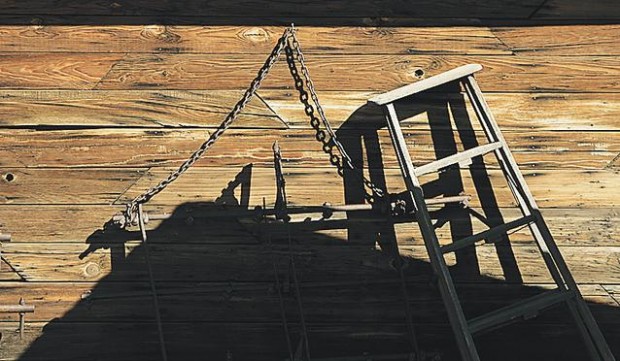
Down the block in one direction from the store is the well-preserved town jail. In the other direction, an outdoor historical display features old vehicles and equipment.
Burris says about a dozen people dwell in Pearce, with about a dozen more living in the near vicinity.
"The economic base was gold" when the town had its mining boom in the 1890s, Burris says.
"Now," adds the pottery maker, "it's a nice place to do what I do — peaceful and quiet."
One visitor's view
Peggy Fiandaca, a resident of the Phoenix area, says she's impressed with the history along the Ghost Town Trail — but she's especially drawn by the dirt.
"The soils are very good — just right for growing grapes," says Fiandaca, who plans to begin planting vines in April for wine production in the area. She expects to live along the trail part time once a winery is in operation.
Fiandaca says the promise of good grapes is but one benefit of life here.
"It's just such a beautiful area," she says.
Did you know . . .
Gold, silver, copper and lead were among the main substances sought by miners in the Gleeson-Courtland-Pearce area in the late 1800s and early 1900s.
But before that mining era, American Indians prized the area for its turquoise deposits.
One of the early mining camps in the area was named Turquoise in recognition of those deposits — and the name still appears on some maps today.
"Now, it's a nice place to do what I do — peaceful and quiet."
Patricia Burris
Pearce resident
For a video tour of the Ghost Town Trail in Southeastern Arizona, go to: go.azstarnet.com/ghosttowntrail
If you go
To reach the Ghost Town Trail from Tucson, take Interstate 10 east to Benson and then follow Arizona 80 southeast to Tombstone. Near the southeastern end of Tombstone, take a signed left-hand turnoff for the Gleeson Road.
Once on the route, watch for a turnoff for the continuing Gleeson Road on the right. You're now on the Ghost Town Trail. Follow the road about 14 miles to the Gleeson Cemetery and nearby town site.
To reach Courtland, continue on the road and don't turn onto the signed Courtland Road when you reach it. Follow the signs toward Pearce, which will lead to the Courtland area — with ruins on both sides of the road at one point, and the jail structure a little farther up the way.
Continue north for about 10 more miles to reach Pearce. Once you've finished prowling around Pearce, you could return the way you came or proceed northwest on U.S. 191 to a connection with I-10. The entire route is suitable for passenger cars.
Be aware that you'll pass private land and buildings along the way. Comply with posted signs and don't attempt to enter buildings that are locked or identified as no-trespassing areas. Ghost-town etiquette calls for enjoying the sights without causing damage or removing artifacts.