If the Wi-Fi in your home has slowed down or drops out periodically, try these helpful tips to solve the problem.
It doesn’t matter what internet speeds you’re paying for at home — you’re going to need a good Wi-Fi network with plenty of range if you want to put those speeds to work in whatever room you want. Too often, a single router won’t quite cut it on its own, leading to dead zones where you can’t connect.
This is where a Wi-Fi range extender can come in handy. A range extender, or booster, is a compact, plug-in device that uses built-in Wi-Fi radios and antennas to pair wirelessly with your router. Plug one in near the edge of your router’s wireless range and pair it with the network, and it’ll start rebroadcasting the signal farther out into your home.
The models featured here are a cinch to set up, will work no matter what brand of router you’re using, and in most cases, easy to assign the same SSID and password as your router. These three models topped CNET’s testing as some of the best Wi-Fi extenders we’ve found, and are less expensive than upgrading to a full-fledged mesh router with its own range-extending satellite devices.
People are also reading…
Best extender overall
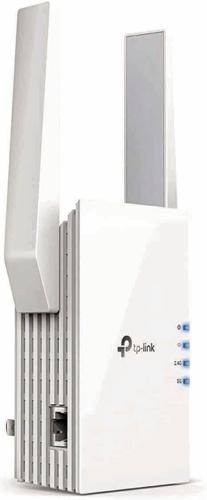
TP-Link RE605X $100

TP-Link makes some of the most popular picks in the range extender category, with a fairly wide variety of options to choose from at various price points. If you’re buying one in 2022, you should put the TP-Link RE605X right at the top of your list. With a highly capable AX1800 design, full support for the latest Wi-Fi 6 speeds and features, adjustable antennas and a helpful, easy-to-use control app with strong reviews on both Android and iOS, it’s about as well-rounded as can be.
The performance is particularly sharp, too. In our tests at the CNET Smart Home, an RE605X in the basement was able to extend the router’s signal from upstairs just fine, giving upload and download speeds a significant boost in every room. Throughout the entire 5,800-square-foot-home, among all the extenders we tested, the RE605X delivered the fastest average upload speeds to both Wi-Fi 5 and Wi-Fi 6 devices and the fastest average download speeds to Wi-Fi 6 devices.
A solid second choice
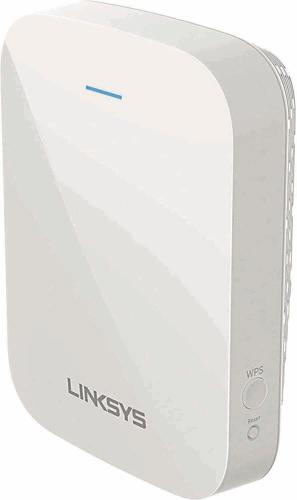
Linksys RE7310 $120

TP-Link takes the top spot in 2022, but the Linksys RE7310 is very close behind it, and would be almost equally as good on most home networks. In the CNET Smart Home, where we have a fiber internet plan with uploads and downloads of up to 150Mbps, the RE7310 returned average Wi-Fi 6 downloads throughout the entire multistory house of 132Mbps. That’s only 4Mbps behind that top pick from TP-Link. As for the uploads, Linksys finished with an average whole-home speed to our Wi-Fi 6 test device of 124Mbps. That’s only 2Mbps behind TP-Link.
The only thing keeping us from saying that the two finished in a virtual tie is that the RE7310 was slightly less impressive with earlier-gen Wi-Fi 5 devices, particularly with respect to upload speeds. Still, the performance was solid across the board, and strong enough to handle video calls in the Smart Home’s basement dead zones, something we would have struggled with using just the single router we ran our tests on. It’s a bit bulky-looking, but the RE7310 is the best Linksys range extender we’ve tested yet, and it’s an especially great pick if you can catch it on sale.
Best balance of performance and value
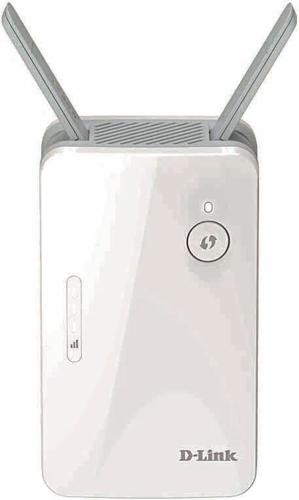
D-Link EaglePro AI $65

It was never the speed leader in our tests, but it was never too far behind — and at $65, the D-Link EaglePro AI costs a lot less than the other top picks listed. That’s a good deal, especially on a Wi-Fi 6 model that boasts a newly designed control app on Android and iOS, plus adjustable antennas and a design that automatically syncs up with your router to put out a single, unified network as soon as you set the thing up.
Speed-wise, the EaglePro AI brought up the rear in our tests, but it was still able to return average download speeds of 114Mbps for Wi-Fi 6 devices and 112Mbps for Wi-Fi 5 devices across every room we tested it in, which is terrific for a multistory home with a 150Mbps fiber plan. Uploads were lower, including a somewhat concerning single-digit average of just 8Mbps to Wi-Fi 5 devices in the home’s most difficult dead zone, but we can forgive that given that the 5,800-square-foot Smart Home is a lot bigger than this AX1500 extender was designed to cover. If your home is any smaller than that then the EaglePro AI should do just fine, and it’ll save you some cash, too.
___

Cities with the most digitally connected seniors
Cities With the Most Digitally-Connected Seniors

Photo Credit: Rasstock / Shutterstock
One of the most prominent and likely enduring changes brought about by the COVID-19 pandemic has been the rapid shift towards new technologies that facilitate remote communication, entertainment, learning, and work. While older Americans generally have lower rates of technology adoption than their younger counterparts—for example, 78% of 65-and-over households have internet access compared to 89% of households overall—they are more digitally connected today than ever before.
Technology has enabled seniors to endure some of the most trying aspects of the COVID-19 pandemic, by allowing them to stay in touch with others during isolation and providing them with access to critical services such as grocery delivery and telehealth visits. A recent AARP report found that technology spending among older adults nearly tripled during the pandemic, and smartphones were one of the top three tech purchases for that demographic. AARP also reported that significantly more seniors texted, used video chat, and emailed during the pandemic than they did before.
While 78% of seniors have some form of internet access, just less than 60% have high-speed internet subscriptions, and 67% each have a computer and smartphone, according to the most recent Census Bureau statistics. These numbers vary widely by location and socioeconomic status. For example, research points to a strong rural-metropolitan digital divide among older Americans. Likewise, extensive research points to low rates of technology adoption in less-educated and low-income senior households.
Less than 70_ of senior households have high speed internet

To find the locations with the most digitally-connected seniors, researchers at HotDog.com analyzed data from the U.S. Census Bureau and created a composite score based on the following factors:
- Percentage of 65+ households with high-speed internet
- Percentage of 65+ households with a computer or laptop
- Percentage of 65+ households with a smartphone
At the regional level, seniors living on the coasts and in the Mountain West tend to be more digitally connected than those living in the South and Midwest. Utah ranks highest among all states, where 65% of senior households have access to high-speed internet, 80% have a computer or laptop, and 76% have a smartphone. Nationally, 59% of senior households have access to high-speed internet, and 67% each have computers and smartphones. On the opposite end of the spectrum, West Virginia’s 65-and-over population ranks last among all states when it comes to digital connectivity. Just 53% of senior households in West Virginia have high-speed internet, 56% have computers, and 53% have smartphones.
Residents 65 on the coasts tend to be more digitally connected

Similar trends hold true at the local level, with many metropolitan areas in California, Colorado, Utah, and Florida topping the list. In general, more affluent cities with strong economies report the highest rates of technology use among the 65-and-over population. Here are the U.S. metros with the most digitally-connected seniors.
Small _ midsize metros with the most digitally connected seniors

15. Atlanta-Sandy Springs-Alpharetta, GA

Photo Credit: ESB Professional / Shutterstock
- Composite score: 78.5
- Percentage of 65+ households with high-speed internet: 65.6%
- Percentage of 65+ households with a computer or laptop: 72.5%
- Percentage of 65+ households with a smartphone: 75.4%
14. Jacksonville, FL

Photo Credit: CHARLES MORRA / Shutterstock
- Composite score: 78.9
- Percentage of 65+ households with high-speed internet: 64.2%
- Percentage of 65+ households with a computer or laptop: 74.1%
- Percentage of 65+ households with a smartphone: 75.8%
13. Dallas-Fort Worth-Arlington, TX

Photo Credit: CK Foto / Shutterstock
- Composite score: 79.9
- Percentage of 65+ households with high-speed internet: 64.3%
- Percentage of 65+ households with a computer or laptop: 73.3%
- Percentage of 65+ households with a smartphone: 77.5%
12. Portland-Vancouver-Hillsboro, OR-WA

Photo Credit: Sean Pavone / Shutterstock
- Composite score: 81.5
- Percentage of 65+ households with high-speed internet: 66.8%
- Percentage of 65+ households with a computer or laptop: 77.4%
- Percentage of 65+ households with a smartphone: 73.3%
11. Seattle-Tacoma-Bellevue, WA

Photo Credit: Checubus / Shutterstock
- Composite score: 82.6
- Percentage of 65+ households with high-speed internet: 70.4%
- Percentage of 65+ households with a computer or laptop: 75.7%
- Percentage of 65+ households with a smartphone: 72.5%
10. Orlando-Kissimmee-Sanford, FL

Photo Credit: Sean Pavone / Shutterstock
- Composite score: 83.4
- Percentage of 65+ households with high-speed internet: 68.3%
- Percentage of 65+ households with a computer or laptop: 72.6%
- Percentage of 65+ households with a smartphone: 76.5%
9. San Diego-Chula Vista-Carlsbad, CA

Photo Credit: Dancestrokes / Shutterstock
- Composite score: 84.4
- Percentage of 65+ households with high-speed internet: 68.5%
- Percentage of 65+ households with a computer or laptop: 75.3%
- Percentage of 65+ households with a smartphone: 75.4%
8. Denver-Aurora-Lakewood, CO

Photo Credit: Sean Pavone / Shutterstock
- Composite score: 85.2
- Percentage of 65+ households with high-speed internet: 69.2%
- Percentage of 65+ households with a computer or laptop: 78.6%
- Percentage of 65+ households with a smartphone: 72.9%
7. Salt Lake City, UT

Photo Credit: Sean Pavone / Shutterstock
- Composite score: 85.6
- Percentage of 65+ households with high-speed internet: 65.9%
- Percentage of 65+ households with a computer or laptop: 77.4%
- Percentage of 65+ households with a smartphone: 76.8%
6. Sacramento-Roseville-Folsom, CA

Photo Credit: Andrew Zarivny / Shutterstock
- Composite score: 86.5
- Percentage of 65+ households with high-speed internet: 66.6%
- Percentage of 65+ households with a computer or laptop: 78.2%
- Percentage of 65+ households with a smartphone: 75.8%
5. San Francisco-Oakland-Berkeley, CA

Photo Credit: yhelfman / Shutterstock
- Composite score: 86.7
- Percentage of 65+ households with high-speed internet: 69.8%
- Percentage of 65+ households with a computer or laptop: 74.5%
- Percentage of 65+ households with a smartphone: 76.2%
4. Phoenix-Mesa-Chandler, AZ

Photo Credit: Gregory E. Clifford / Shutterstock
- Composite score: 87.0
- Percentage of 65+ households with high-speed internet: 66.5%
- Percentage of 65+ households with a computer or laptop: 78.0%
- Percentage of 65+ households with a smartphone: 77.1%
3. San Jose-Sunnyvale-Santa Clara, CA

Photo Credit: Uladzik Kryhin / Shutterstock
- Composite score: 88.2
- Percentage of 65+ households with high-speed internet: 71.5%
- Percentage of 65+ households with a computer or laptop: 76.0%
- Percentage of 65+ households with a smartphone: 75.6%
2. Washington-Arlington-Alexandria, DC-VA-MD-WV

Photo Credit: f11photo / Shutterstock
- Composite score: 90.9
- Percentage of 65+ households with high-speed internet: 71.4%
- Percentage of 65+ households with a computer or laptop: 78.9%
- Percentage of 65+ households with a smartphone: 75.6%
1. Austin-Round Rock-Georgetown, TX

Photo Credit: Sean Pavone / Shutterstock
- Composite score: 93.2
- Percentage of 65+ households with high-speed internet: 68.7%
- Percentage of 65+ households with a computer or laptop: 79.6%
- Percentage of 65+ households with a smartphone: 79.1%