

Skip to main contentSkip to main content
Register for more free articles.
Log in Sign up
Back to homepage
Subscriber Login
Keep reading with a digital access subscription.
Subscribe now
You have permission to edit this collection.
Edit
Arizona Daily Star
67°
  • Sign in
  • Subscribe Now
  • Manage account
  • Logout
    • Manage account
    • e-Newspaper
    • Logout
  • News
    • Sign up for newsletters
    • Local
    • Arizona
    • Business
    • Crime
    • Nation & World
    • Markets & Stocks
    • SaddleBrooke
    • Politics
    • Archives
    • News Tip
  • Arizona Daily Star
    • E-edition
    • E-edition-Tutorial
    • Archives
    • Special Sections
    • Merchandise
    • Circulars
    • Readers' Choice Awards
    • Buyer's Edge
  • Obituaries
    • Share Your Story
    • Recent Obituaries
    • Find an Obituary
  • Opinion
    • Submit a Letter
    • Submit guest opinion
    • Letters to the Editor
    • Opinion & Editorials
    • National Columnists
  • Sports
    • Arizona Wildcats
    • Greg Hansen
    • High Schools
    • Roadrunners
  • Lifestyles
    • Events Calendar
    • Arts & Theatre
    • Food & Cooking
    • Movies & TV
    • Movie Listings
    • Music
    • Comics
    • Games
    • Columns
    • Play
    • Home & Gardening
    • Health
    • Get Healthy
    • Parenting
    • Fashion
    • People
    • Pets
    • Travel
    • Faith
    • Retro Tucson
    • History
    • Travel
    • Outdoors & Rec
    • Community Pages
  • Brand Ave. Studios
  • Join the community
    • News tip
    • Share video
  • Buy & Sell
    • Place an Ad
    • Shop Local
    • Jobs
    • Homes
    • Marketplace
    • I Love A Deal
  • Shopping
  • Customer Service
    • Manage My Account
    • Newsletter Sign-Up
    • Subscribe
    • Contact us
  • Mobile Apps
  • Weather: Live Radar
  • Facebook
  • Twitter
  • Bluesky
  • YouTube
  • Pinterest
  • Instagram
© 2026 Lee Enterprises
Terms of Service | Privacy Policy
Arizona Daily Star
News+
Read Today's E-edition
Arizona Daily Star
News+
  • Log In
  • $1 for 3 months
    Subscribe Now
    • Manage account
    • e-Newspaper
    • Logout
  • E-edition
  • News
  • Obituaries
  • Opinion
  • Wildcats
  • Lifestyles
  • Newsletters
  • Comics & Puzzles
  • Buyer's Edge
  • Jobs
  • 67° Sunny
Share This
  • Facebook
  • Twitter
  • Bluesky
  • WhatsApp
  • SMS
  • Email
Photos: The notable characters who saw Arizona into statehood
Share this
  • Facebook
  • Twitter
  • Bluesky
  • WhatsApp
  • SMS
  • Email
  • Print
Featured

Photos: The notable characters who saw Arizona into statehood

  • Arizona Daily Star
  • Feb 14, 2022
  • Feb 14, 2022 Updated Feb 14, 2022

Learn more about the leaders, citizens and rogues who made Arizona what it was by statehood on Feb. 14, 1912.

Gallery originally published in 2011.

Mary 'Mamie' Bernard Aguirre: Headed two UA departments; her diary told of Old West
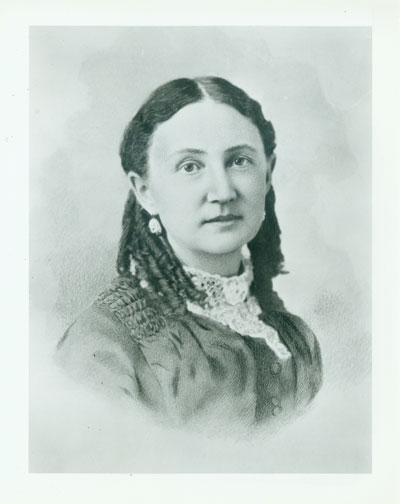
Mary 'Mamie' Bernard Aguirre: Headed two UA departments; her diary told of Old West
Mary spoke no Spanish and her husband, Epifanio, spoke no English when they met in Missouri. He held freighting contracts along the Santa Fe Trail and brought Mamie west in 1863. She kept a detailed diary of their journey. Epifanio and three others were killed by Indians near Sasabe in 1870, and Mamie returned to family in Missouri. She moved back to Arizona in 1875, teaching at Tres Alamos on the San Pedro River — which she had to leave because of the threat of Indian raids — and then at a girls school in Tucson. In 1895, she became head of the Spanish language and English history departments at the UA. Her amazing story is the subject of books. Courtesy of The University of Arizona Library Special Collections (Arizona and Southwestern Biographical File/People-Folder 1: A-Ag)

Ralph Cameron: He charged $1 toll to use Grand Canyon trail
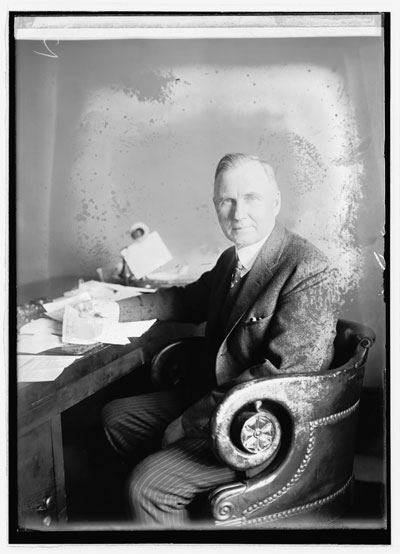
Ralph Cameron: He charged $1 toll to use Grand Canyon trail
Cameron claimed ownership of the Bright Angel Trail through mining claims he staked throughout the canyon in the late 1800s. By 1903, he was charging a $1 toll to users of what he called the Cameron Trail. The U.S. Supreme Court ruled against his mining claims in 1920, but Cameron, a Republican, was elected to the U.S. Senate that year and continued his fight with the government. The tolls finally stopped in 1928. Courtesy of Library of Congress Prints and Photographs Division

Gen. George Crook: Apache fighter he believed Indians belonged on reservations
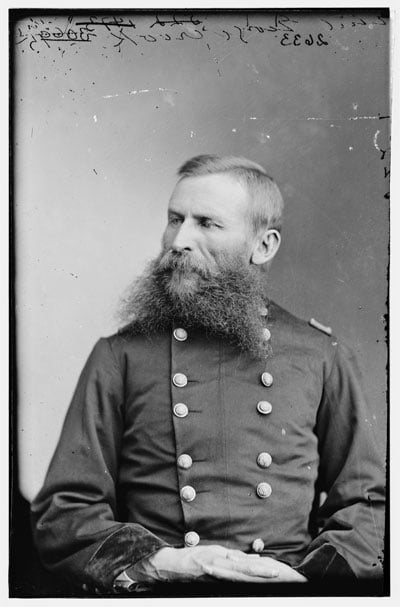
Gen. George Crook: Apache fighter he believed Indians belonged on reservations
George Crook twice pacified Arizona’s Indian rebels and in 1886 had accepted Geronimo’s second surrender when betrayed by a bootlegger. Crook took command of Army forces in Arizona in 1871 after the Camp Grant massacre. He studied posts from the Mogollon Rim to Sonora, recruited Indian scouts, and drilled constantly to create a fast, mobile cavalry. After Cochise and more than 4,000 others moved to reservations, Crook attacked the holdouts, often at night and by ambush. His troops destroyed hostile camps, crops and foods. Finally, 2,300 remaining renegades capitulated. By 1875, 4,000 Apaches had been crowded into the San Carlos reservation against Crook’s advice, and the general was sent to the Dakotas. Crook resumed command in Arizona in 1882. By May, he was in the Sonoran high sierra, capturing 285. Geronimo and a few others held out until January 1884. At San Carlos, the Apaches got short rations from conniving agents and were poor farmers, unable to raise enough food. Geronimo and others escaped to Mexico until surrendering in March 1886. Just short of the border, the Apaches met Bob Tribolet, reportedly an agent of some Tucson merchants with Army contracts and little interest in peace. He sold them whiskey and said the Army planned to shoot them as soon as they crossed into Arizona. The rebels fled, Crook resigned and Gen. Nelson A. Miles took over the nearly 5,000 troops in Arizona until Geronimo’s final surrender in September 1886. Courtesy of Library of Congress Prints and Photographs Division

Fred Harvey: He wasn’t an Arizonan, but he left a big mark on tourism here
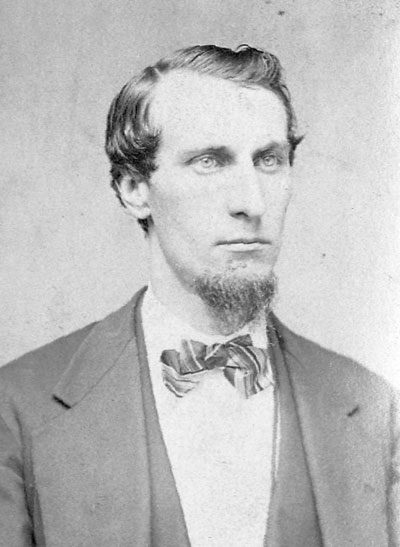
Fred Harvey: He wasn’t an Arizonan, but he left a big mark on tourism here
Harvey died in 1901, four years before his Fred Harvey Co. opened the El Tovar Hotel at the Grand Canyon. He understood, though, that the canyon could become one of America’s leading tourist attractions and was instrumental in persuading the Atchison, Topeka & Santa Fe Railway Co. to build a spur line from Williams to the canyon. It was finished in 1901, opening the way for thousands of visitors. Associated Press photo

Charles Trumbull Hayden: Early trader, probate judge and founder of Tempe
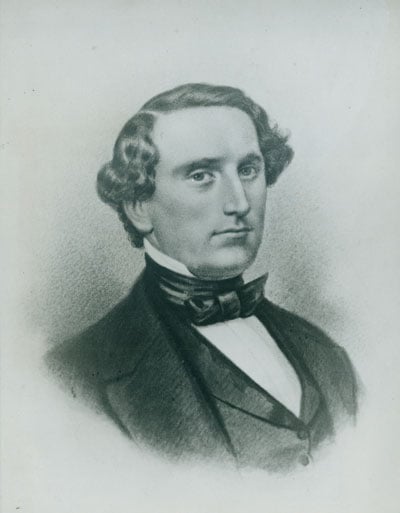
Charles Trumbull Hayden: Early trader, probate judge and founder of Tempe
As early as 1848, Hayden left Independence, Mo., with wagons full of goods he planned to sell in New Mexico. He soon operated shops in Santa Fe, south of Tubac and in Tucson. The governor appointed him Tucson’s first probate judge in 1864, and he heard a grand total of one criminal case in his first year. He explained to a friend that Mexicans and Americans on the frontier “settled their own disputes without the aid of courts.” His success grew, aided by contracts with the Army, and his wagons hauled provisions all over the Southwest. His travels took him to the Salt River Valley, where he spotted the opportunity to build a water-powered flour mill. By 1870 he’d claimed the ground for what became Hayden’s Ferry, the place we call Tempe. His son, Carl, served Arizona in the U.S. Senate from 1927 to 1969. Courtesy of The University of Arizona Library Special Collections (Arizona, Southwestern and Miscellaneous Photograph Collection/People-Folder 51: Has-Hayd)

Henry Clay Hooker: Selling turkeys helped his business, ranches
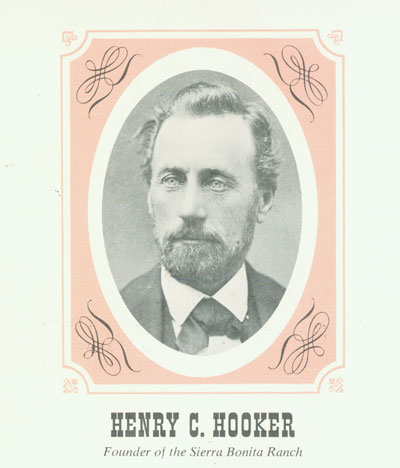
Henry Clay Hooker: Selling turkeys helped his business, ranches
A fire at Hooker’s Placerville, Calif., hardware store nearly wiped him out in 1866. He got the idea to recover by buying 500 turkeys for $1.50 each and driving them across the mountains to Carson City, Nev. It worked. Hooker sold them for $5 each, then took the money and came to Arizona to supply beef to Army posts and Indian agencies. He chanced upon the Sulphur Springs Valley in 1872 while in pursuit of cattle that had stampeded during the night. There, near Willcox, he created the Sierra Bonita Ranch, which became a huge success and a beautiful stopping-off point for travelers. At his peak, he ran as many as 20,000 cattle on several ranches. Hooker died in 1907 and many years later was inducted into the National Cowboy Hall of Fame. Courtesy of The University of Arizona Library Special Collections (Arizona and Southwestern Biographical File/Hooker, Henry Clay, 1828-1907)

John Lorenzo Hubbell: Most famous of the Indian traders, family operated 30-plus trading posts
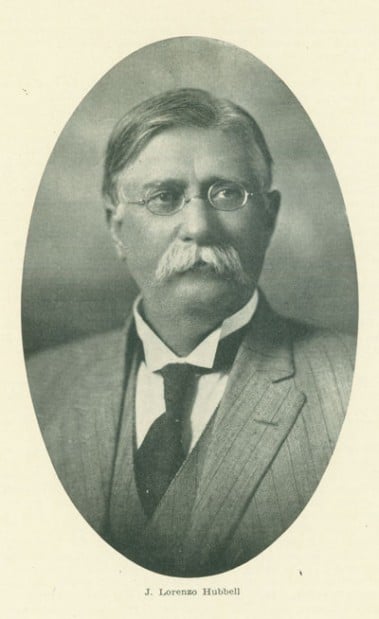
John Lorenzo Hubbell: Most famous of the Indian traders, family operated 30-plus trading posts
He was born near Albuquerque in 1853 and took off by himself for Utah in 1870. He found employment as a clerk at a trading post but didn’t last there long. Over the next five years, he traveled around the region, meeting many Indians. He opened his own trading post near Ganado in 1876. It provided food and provisions to Navajo neighbors, and gave them the opening to sell their rugs and other art to buyers across the country. Hubbell and his family eventually operated 30-plus trading posts. The National Park Service brought the Ganado post in 1967. Courtesy of The University of Arizona Library Special Collections (Arizona and Southwestern Biographical File/Hubbell, John Lorenzo, 1853-1930)

Samuel Hughes: He came in search of health
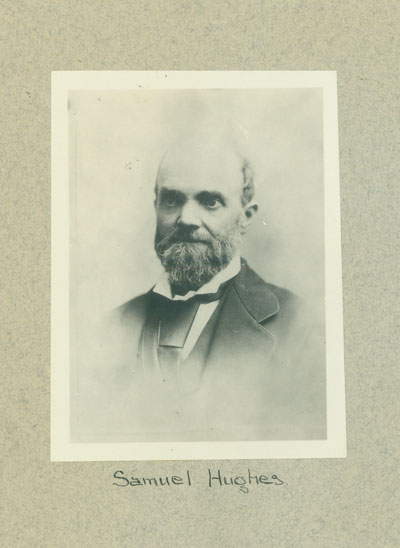
Samuel Hughes: He came in search of health
Lung problems brought Hughes to Tucson in 1858, but he soon had a “spoon in every soup.” The older brother of Louis Hughes, he was a butcher and Army contractor, then branched out to real estate, lending, ranching and mining. He supplied carbines and ammunition for the Camp Grant massacre. He also donated $500 to help build what became San Agustin Cathedral, and aided in construction of St. Joseph’s Academy, the Congregational Church and the first public schools. One in TUSD is named for him. Courtesy of The University of Arizona Library Special Collections (Arizona, Southwestern and Miscellaneous Photograph Collection/Folder 60: Hug-Hz)

Louis J.F. Jaeger: Survived arrow in neck; ran Colorado River ferry
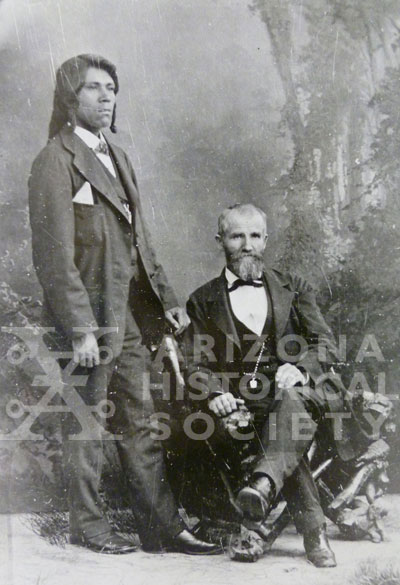
Louis J.F. Jaeger: Survived arrow in neck; ran Colorado River ferry
Jaeger survived an unwelcoming party of 200 Yumas in June 1850 and then an arrow deep in his neck half a year later to establish the dominant ferry operation across the Colorado River. It was very profitable. In one six-month stretch alone he carried 3,367 people and 19,590 animals, at $1 to $2 a head. The charge was even more for wagons. Jaeger sold out to the Southern Pacific Railroad in 1877. It built a bridge over the river, which pretty much ended the ferry business. Louis J. Jaeger, right,owned ferry in Yuma. Copied from original at Yuma County Historical Society. Courtesy of Arizona Historical Society, Tucson; #23459 (Portrait-Jaeger, Louis John Frederick)

Judge Joseph H. Kibbey: Ruled on water law, fought school segregation
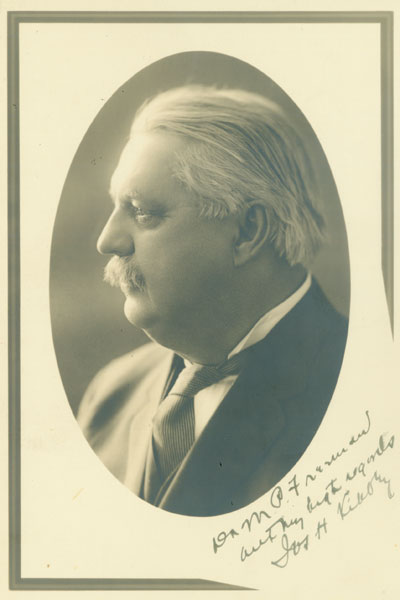
Judge Joseph H. Kibbey: Ruled on water law, fought school segregation
The son and grandson of judges, Kibbey came to Florence in 1888 and served the territory as a legislator, governor, attorney general and supreme court justice. As chief justice, he ruled in 1892 that water belongs to the land where it is used and that first users have priority. These ideas continue to guide Western water law. As governor, he argued that segregated black schools would be “less effective, less complete, less convenient or less pleasant.” He vetoed a segregation bill, but the Legislature overrode him in 1909. Courtesy of The University of Arizona Library, Special Collections (Arizona, Southwestern and Miscellaneous Photograph Collection/Folder 68: Kello-Kir)

Jacob Mansfeld: He opened the first public library and helped found the University of Arizona
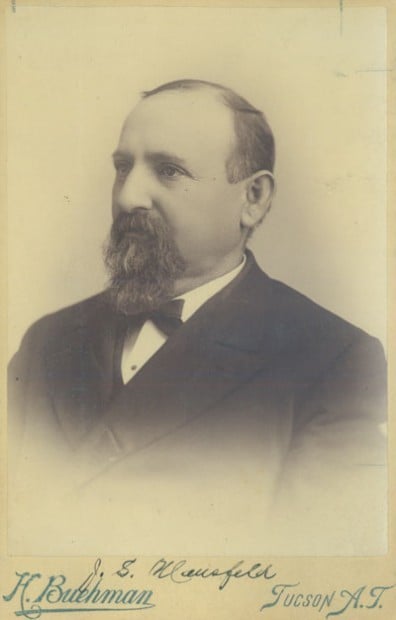
Jacob Mansfeld: He opened the first public library and helped found the University of Arizona
Mansfeld came to Tucson in 1870 and started the Pioneer News Depot and Bookstore. By the next year, he opened the territory’s first public library. It took two weeks for newspapers to arrive by mail via Yuma. Once, his Christmas merchandise arrived in February. Mansfeld’s greatest contribution was in finding men to donate land for the UA. Tucsonans had wanted the Legislature to award them the capital — not the university — and were of no mind to meet the territory’s requirement that a site be identified within a year. Mansfeld was appointed to the Board of Regents and worked tirelessly for the school’s creation. Mansfeld Middle School, on East Sixth Street across from the UA, is named for him. Courtesy of The University of Arizona Library Special Collections (Arizona, Southwestern and Miscellaneous Photograph Collection/Folder 78: M-Man)

Manuelito: Navajo warrior evolved later in life into statesman who embraced Americans
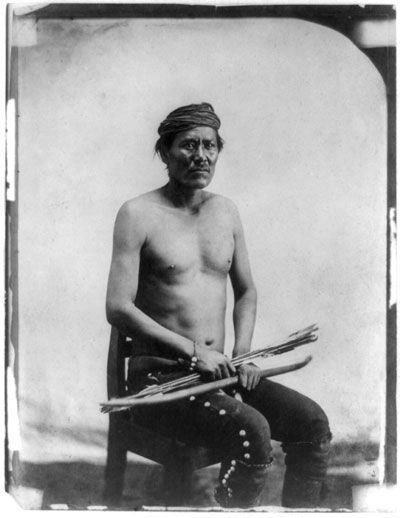
Manuelito: Navajo warrior evolved later in life into statesman who embraced Americans
During the tumultuous 19th century, Manuelito emerged as a Navajo leader willing to fight, compromise and look ahead. Manuelito was born in 1818, in an era of conflict between the Navajo and their neighbors, especially the Spanish and later Mexicans in what is now New Mexico, who often took Navajos as slaves. In 1835, the young Manuelito fought in two battles against Mexican soldiers. He emerged as a leader in the 1840s, opposing treaties with Mexico made by other Navajos. After 1848, a new enemy began flooding into Navajo lands — the Americans who had just won a war with Mexico. Manuelito led attacks on Fort Defiance in 1860 and 1861, but he was eventually forced by Col. Kit Carson into the infamous “Long Walk” of Navajos to Fort Sumner in New Mexico. In 1868, Manuelito signed a treaty allowing Navajos to return to their ancestral home. Then, in 1876, he helped negotiate additions to the reservation. Before his death in 1893, Manuelito encouraged Navajos to advance by getting American educations. Courtesy of Library of Congress Prints and Photographs Division

Nampeyo: A great Hopi potter, she revived a historic style
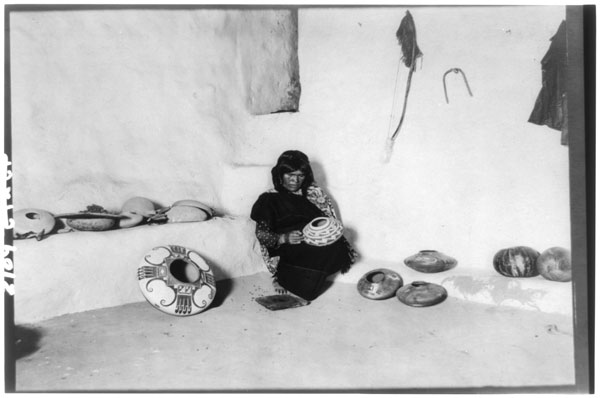
Nampeyo: A great Hopi potter, she  revived a historic style
Nampeyo was born on First Mesa in about 1860 and learned from her grandmother to make pottery. By the time she was a young woman, her work was well-known. Her husband, Lesou, collected shards from ruins where pottery was made from the 11th to 16th centuries, including at Sikyatki, a village abandoned around 1500. They became an inspiration for her style and motifs. Nampeyo demonstrated her work at the Santa Fe Railway Exhibition in Chicago in 1898 and 1919. Collectors and museums prize her pottery to this day. Courtesy of Library of Congress Prints and Photographs Division

Esteban Ochoa: A merchant prince, and a generous and modest citizen
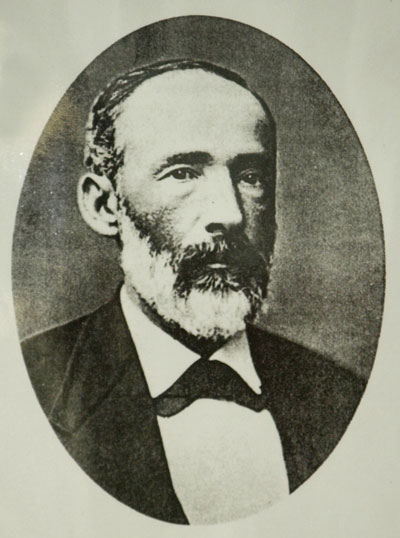
Esteban Ochoa: A merchant prince, and a generous and modest citizen
Ochoa earned his fortune in freighting throughout the Southwest and into Mexico. He and his partner, P.R. Tully, employed hundreds and at their peak in the 1870s owned $100,000 worth of wagons, stock and relay stations. Ochoa was proud of his Mexican heritage, but he credited his business success to the United States and refused to swear allegiance to the Confederacy when its soldiers entered Tucson in 1862. He was ordered from town with the few possessions he could carry on a horse. He returned after the Confederates were driven out and became deeply involved in civic life. Ochoa served twice in the Legislature and was a main advocate for the creation of public schools. He donated the land for Tucson’s first permanent public school, and in 1875 he was both school board president and mayor. Over the years, Ochoa quietly paid for books and other expenses for poor students. When the railroad arrived in Tucson in 1880, Ochoa presented the silver spike that represented its completion. It also symbolically marked the end of Tully and Ochoa, which couldn’t compete with the railroad’s rates. He died in 1888 at the age of 57. Arizona Daily Star archives

Federico José María Ronstadt: Tucson’s music maker
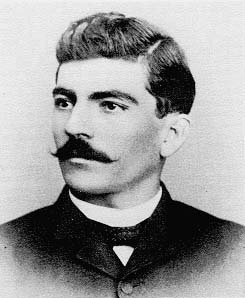
Federico José María Ronstadt: Tucson’s music maker
Ronstadt, whose business acumen is described in the introduction to this section, also left his mark on entertainment. In 1889 he and several buddies formed Club Filarmónico Tucsonense, a band that for nearly a decade performed once a week in the plaza, as well as at everything from church socials to parades. Ronstadt wrote music, played piccolo and clarinet, and conducted. He recalled later that their repertoire included danzas, mazurkas, polkas, songs and serenades. The demands of business forced him to resign, but Ronstadts continue to make music. One of his daughters, Luisa Espinel, sang around the world. Her niece, Linda Ronstadt, carries on the tradition. Courtesy of The University of Arizona Library Special Collections (Arizona, Southwestern and Miscellaneous Photograph Collection/People-Folder 119: Ronstadt)

Anson Pacely Killen Safford: Arizona’s 3rd territorial governor and the father of our schools
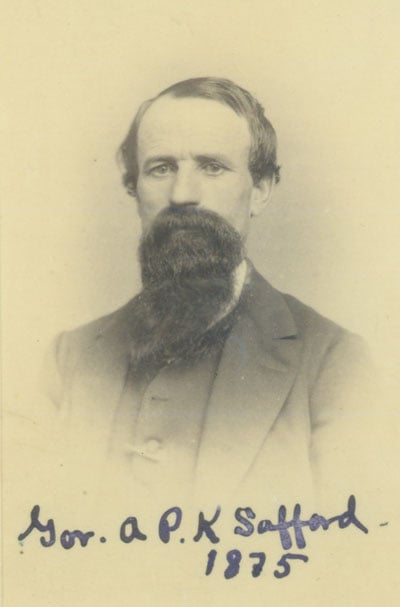
Anson Pacely Killen Safford: Arizona’s 3rd territorial governor and the father of our schools
From the moment he was appointed governor by President Ulysses S. Grant, Safford was determined to establish public schools. He wrote a bill, introduced by Tucsonan Estevan Ochoa, in 1871. Legislators were not sympathetic, arguing that the Apaches and criminals were much bigger problems than the lack of schools. The bill finally passed but without funding. Safford hit the road — such as it was — traveling with his buckboard and two mules to almost every corner of Arizona to talk to residents about the importance of schools. When the Legislature convened again in 1873, it passed a school tax. By the time Safford left office in 1877, Arizona had 28 public schools. Courtesy of The University of Arizona Library Special Collections (Arizona, Southwestern and Miscellaneous Photograph Collection/Folder 120: S-Sans)

Bishop John Baptist Salpointe: The cleric who built things

Bishop John Baptist Salpointe: The cleric who built things

There was no operating church in Arizona when Salpointe’s party of four — three priests and a teacher — came from New Mexico in 1866. Salpointe, newly named vicar general of the Arizona missions, was their leader. He was a Frenchman who had arrived in America as a missionary six years earlier. Within two years of his arrival in Tucson, Arizona’s status in the church was elevated to a vicariate apostolic and Salpointe was named bishop. His territory stretched east to El Paso and north to Utah. Over the next 15-plus years, he oversaw the establishment of many parishes and schools — Prescott, Phoenix and Tombstone among them. He eventually became archbishop of Santa Fe, but returned to Tucson after his retirement.

Courtesy of The University of Arizona Library Special Collections (Arizona, Southwestern and Miscellaneous Photograph Collection/Folder 120: S-Sans)

John William Swilling: His recycling project created what is now Phoenix
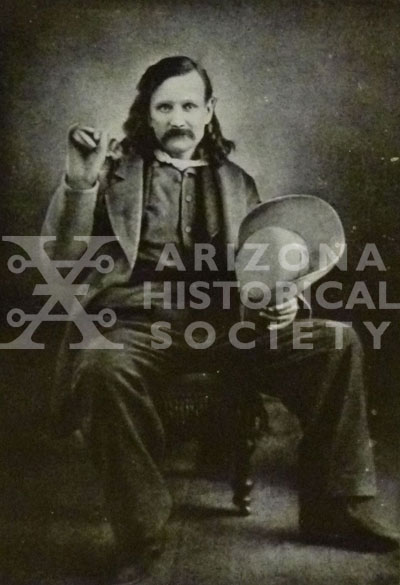
John William Swilling: His recycling project created what is now Phoenix

Swilling had been a Confederate soldier and deserter, a Union freighter and a prospector. During travels through the Salt River Valley, he noticed ancient Indian irrigation canals and figured they could be rebuilt to bring water to farms. He organized investors in 1867 and built the Swilling Ditch at the place we call Phoenix. Swilling found trouble in the alcohol and drugs he took to relieve headaches and back pain, and he was under investigation for stagecoach robbery when he died at the Yuma jail in 1878.

Courtesy of Arizona Historical Society, Tucson; #18127 (Portrait-Swilling, John William "Jack")

Godfrey & Stanley Sykes: Inventors, makers and menders of anything
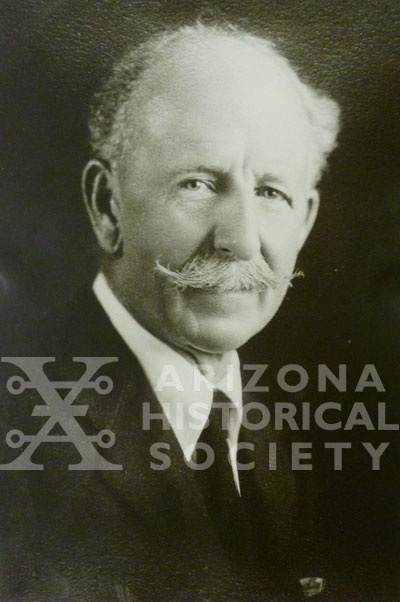
Godfrey & Stanley Sykes: Inventors, makers and menders of anything

The English-born brothers arrived in Flagstaff in 1886 and soon opened a bicycle shop, where they advertised that they could fix almost anything. They gathered around them a group called “The Busy Bees” to exchange the latest scientific gossip. That’s how they came to know many of Arizona’s leading minds of the day. Though they had no experience, the brothers designed and built domes for telescopes in Flagstaff and Tucson. Stanley worked at Flagstaff’s Lowell Observatory for 46 years, while Godfrey moved to Tucson in 1906 to become facilities manager for the Carnegie laboratory on Tumamoc Hill. Godfrey explored and wrote about our desert and the Colorado River delta, among other research. His autobiography, “A Westerly Trend,” told how the Western frontier looked to a Britisher.

Courtesy of Arizona Historical Society, Tucson; #44264 (Portrait-Sykes, Godfrey G.)

David King Udall: Mormon pioneer, polygamist, patriarch of leaders
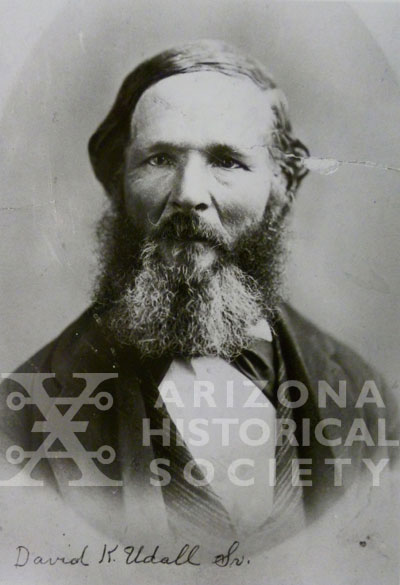
David King Udall: Mormon pioneer, polygamist, patriarch of leaders

Udall was 29 when he was called upon by Brigham Young in 1880 to lead 50 Mormon families to Northeast Arizona, where they founded the town of St. Johns. His group was one of many that came here starting in the 1870s. Mormons established Pinetop, Show Low, Mesa, Safford, Thatcher and St. David, among others. By 1890, the census showed 6,500 Mormons in the territory. Mormons were admired for their hard work and community-building, including the opening of many schools. There also was hostility toward them, though, for the polygamist practices of some members, Udall among them. That eased after the church officially abandoned polygamy in 1890. Udall and his two wives had 18 children. Two became Arizona Supreme Court justices, one a state legislator and one a mayor of Phoenix. The next generation included three mayors and two U.S. congressmen — Stewart and Morris. The current generation includes two U.S. senators — Tom and Mark.

Courtesy of Arizona Historical Society, Tucson; #28663 (Portrait-Udall, David King & Family)

Harry C. Wheeler: Final captain of Arizona Rangers; rejected by U.S. Military Academy because he was too short
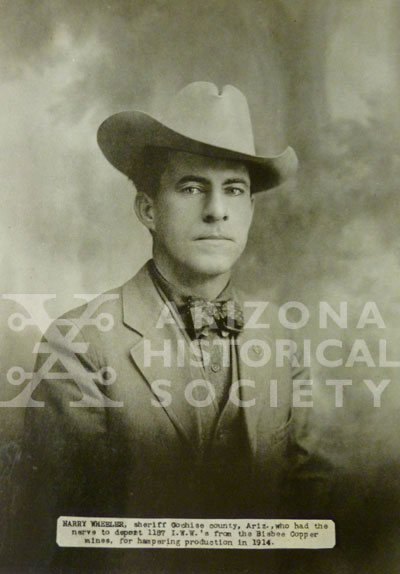
Harry C. Wheeler: Final captain of Arizona Rangers; rejected by U.S. Military Academy because he was too short

Taking a lead from Texas, Arizona’s Legislature in 1901 established a force of roving lawmen. It was called the Arizona Rangers, and it arrested thousands of cattle rustlers, train robbers, killers and others before it was disbanded eight years later. The Rangers concentrated their work in southeastern Arizona and had the cooperation of Mexican officials to cross the international line in pursuit of desperadoes. Wheeler was the third and final leader of the Rangers, a sometimes secretive bunch that included no more than 26 men at a time. He was paid $175 a month for the dangerous work and had to provide his own horse.

Courtesy of Arizona Historical Society, Tucson; #30224 (Portrait-Wheeler, Harry)

Henry Wickenburg: His mine produced riches, but not for him

Henry Wickenburg: His mine produced riches, but not for him

The Vulture Mine northwest of Phoenix had so much gold that at first it was visible to the eye. Or so the lore goes. Wickenburg discovered it in the early 1860s, but didn’t have the financial wherewithal to develop it. He sold for $100,000 or less. Estimates of the Vulture’s production vary from $3 million to $30 million. Wickenburg did obtain something of lasting value — a town named for him.

Courtesy of Arizona Historical Society, Tucson; #16551 (Portrait-Wickenburg, Henry)

Related to this collection

Telling it like it was:  The notable characters who saw us into statehood

Telling it like it was: The notable characters who saw us into statehood

George Wiley Paul Hunt walked from his Phoenix hotel to the Capitol on Feb. 14, 1912 to be sworn in as Arizona’s first governor.

City's Chinese marked their final New Year's

City's Chinese marked their final New Year's

In this year leading up to Arizona's centennial, on Feb. 14, 2012, we'll reprint a story or excerpts each day from the Arizona Daily Star or T…

Happy 110th birthday Arizona

Happy 110th birthday Arizona

PHOENIX — Arizona is marking 110 years of statehood.
Tales from the Morgue: Betty Flame's performance too torrid for Tucson

Tales from the Morgue: Betty Flame's performance too torrid for Tucson

From the Arizona Daily Star, May 8, 1954: 

Arizona Daily Star
  • Facebook
  • Twitter
  • Bluesky
  • YouTube
  • Instagram
  • Arizona Daily Star Store
  • This is Tucson
  • Saddlebag Notes
  • Tucson Festival of Books

Sites & Partners

  • E-edition
  • Classifieds
  • Events calendar
  • Careers @ Lee Enterprises
  • Careers @ Gannett
  • Online Features
  • Sponsored Blogs
  • Get Healthy

Services

  • Advertise with us
  • Register
  • Contact us
  • RSS feeds
  • Newsletters
  • Photo reprints
  • Subscriber services
  • Subscription FAQ
  • Licensing
  • Shopping
© Copyright 2026 Arizona Daily Star, PO Box 26887 Tucson, AZ 85726-6887
Terms of Use | Privacy Policy | Advertising Terms of Use | Do Not Sell My Info | Cookie Preferences
Powered by BLOX Content Management System from bloxdigital.com.
  • Notifications
  • Settings
You don't have any notifications.

Get up-to-the-minute news sent straight to your device.

Topics

News Alerts

Breaking News