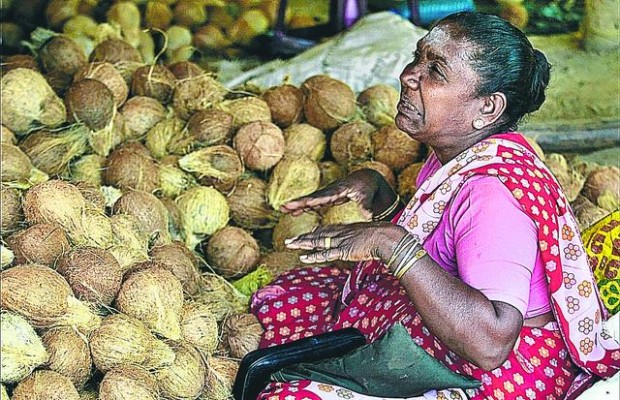
KILINOCHCHI, Sri Lanka — Palani Amma Subramaniyam sits in quiet despair, surrounded by woven baskets and terra cotta pots in her deserted market stall in rebel-controlled territory in northern Sri Lanka.
Just last year, her business was booming amid a cease-fire in the decades-long war between the government and the Liberation Tigers of Tamil Eelam rebels. Customers drove from hours away to buy crafts from her and other vendors in the market in Kilinochchi.
Now, the truce has all but collapsed, and so has her business, leaving her exasperated with both sides in the conflict.
"It doesn't matter who wins, whether it is the government or the LTTE (the rebels). What we want is peace, to live," she said.
The recent return to open warfare between the government, dominated by the Sinhalese Buddhist majority, and Tamil rebels demanding a separate state for the Hindu minority, has plunged the already poor people of the rebels' mini-state in parts of the north into financial despair.
People are also reading…
The government restricts access to the rebel areas, but in a rare visit by reporters, residents — usually frightened into silence by the authoritarian rebel regime — expressed growing frustration with the renewed fighting after a cease-fire from 2002 to 2005.
"That small period was the best time of my life. And now I'm getting close to dying and I don't know how things will turn out," said Subramaniyam, 66.
A partial economic blockade of the rebel areas that has been in place for nearly a year has badly damaged the economy. Unemployment has exploded, incomes have fallen, and the price of everything from chicken to baby formula has soared.
With a gas embargo imposed by the Sri Lankan government, the streets are nearly empty of cars and trucks. Instead, they are filled with bicycles and motorcycles that are rigged to run on kerosene and trail a thick, syrupy smell behind them.
With no fuel, the electrical system has shut down. Only hospital generators and small generators run by the rebels and powered by smuggled fuel are still running, residents said.
Construction has also ground to a halt with a government ban on importing cement and other building materials to the area.
"Economically, it's a disaster," said Kandiah Mylvaganam, a Tamil activist.
Many families are only able to survive on remittances from relatives who work abroad, he said.
Despite the growing suffering, the rebels are unlikely to face a popular revolt, said Jehan Perera of Sri Lanka's National Peace Council, a think tank.
"The problem is the people are very powerless. They are living in the midst of armies . . . there is no real possibility for public dissent," he said. "The people are just stranded. They are alienated from everything; they are helpless."
S.P. Tamilselvan, the head of the Tigers' political wing, gave only vague assurances the situation would get better.
"We have established a system to improve health, education and the economy, and to encourage people to produce goods with the resources available here," Tamilselvan said without elaboration.
If the Tigers achieve their goal of establishing an independent Tamil state in northeastern Sri Lanka, the people here will have to get used to being self-sufficient, he added.

 Lake Mead's drops raise prospect of unaffordable Hoover Dam electricity