

WASHINGTON – The Canadian government on Wednesday advised its citizens to avoid any unnecessary international travel amid a wave of Covid-19 infections, including some tied to the fast-spreading Omicron variant.
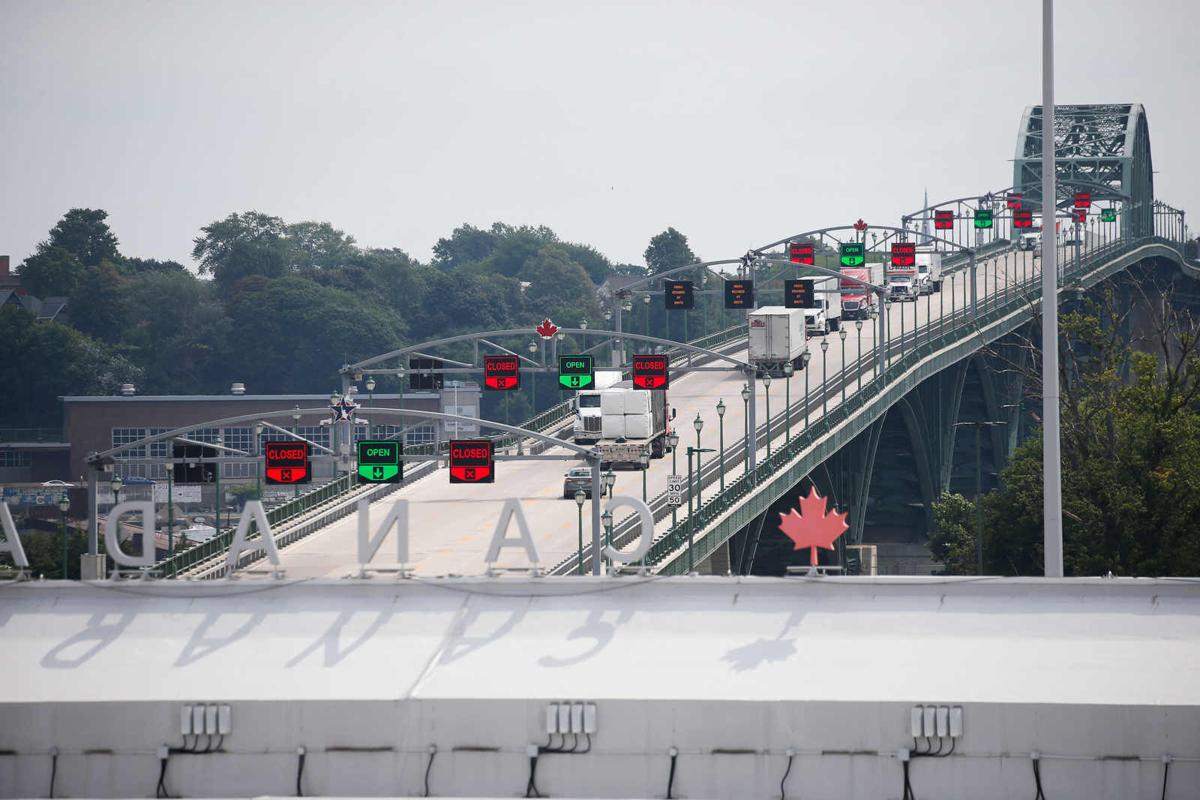
But officials stopped short of a renewed shutdown of the U.S.-Canada border.

Vaccinated Americans traveling to Canada will continue to have to show proof of a negative Covid-19 test upon crossing the border. And a number of Americans who have been able to enter Canada without being vaccinated against Covid-19 will have to show proof of vaccination starting Jan. 15.
"If you do not have to travel internationally, please do not," said Dominic LeBlanc, the Canadian minister for intergovernmental affairs.
The announcement came a day after rumors filled the Canadian press and social media that Prime Minister Justin Trudeau was considering once again shutting down nonessential travel across the U.S.-Canada land border – which was shut down between March 2020 and August 2021 because of the Covid-19 pandemic. And while officials did not announce such a drastic move, they noted it was a possibility if the recent wave of increased infections in Canada gets worse.
People are also reading…
Asked about possibly banning the entry of foreigners into Canada, Canadian Health Minister Jean-Yves Duclos said: "We will take the best action that we can with the information that's available to us."

Canadian border agents are randomly handing take-home testing kits to people arriving at border crossings and airports – and requiring that they take that Covid test on video with a nurse on the other end of a computer connection.
More likely, though, in the short term, is a bolstered testing requirement for those entering Canada.
"I can also confirm that we will continue to increase our testing capacity at the border and that we will have other announcements in that regard soon," Duclos said.
One possibility would be reinstating the requirement that residents of Canada who return to the country after a trip of less than 72 hours be required to pass or show proof of a negative PCR test at the border. That requirement was dropped last month.
Asked about the possibility of requiring returning Canadians to quarantine, the Canadian health minister said: "All options are on the table. ... We will continue to monitor the situation and to update the guidance as necessary."
But for now, Canadian officials are simply asking residents not to leave the country – including over the Christmas and New Year's holidays. The toughened travel advisory will last for at least for the next four weeks, at which point it will be re-evaluated.

Prime Minister Justin Trudeau said Canada would announce its new border plan in a day or two.
For the time being, though, it makes sense to stay put, Canadian officials said.
"Traveling Canadians could contract the virus or get stranded abroad," Duclos said.
The Canadian officials made their announcement amid what appears to be a wave of infections tied to the new Omicron variant, which is believed to be much more contagious than earlier forms of Covid-19, although its effects may be milder.
“The rapid spread of the Omicron variant on a global scale makes us fear the worst," Duclos said.
Covid-19 infections are up 79% in the past week in Ontario alone, provincial officials said Wednesday. As a result, the province announced plans to limit the capacity of venues seating more than 1,000 to 50% starting Monday, a move that will dramatically reduce the size of crowds at National Hockey League games played north of the border.

The first phase of the reopening will begin in early November, when fully vaccinated Canadians and Mexicans with proper travel documentation will be allowed to cross U.S. land borders for nonessential reasons.
The bad news about Covid-19 in Canada – and the possibility of tougher border restrictions – prompted disappointment from those who have been fighting to keep the crossing open.
"Anytime you tighten up travel restrictions for people that are fully vaccinated and boostered, I think that is detrimental to a sense of getting back to normalcy," said Rep. Brian Higgins, a Buffalo Democrat. "I have maintained many, many times that the coronavirus is not going away. All viruses mutate. This is no different, but we do have public health tools to help keep our people safe and continue the successful and safe opening or lifting of travel restrictions."
Any further border restrictions would be premature, at best, Higgins said.
"The severity and the spread of the Omicron variant has not been finally determined yet," he said. "There is, again, conflicting information."
Nick Dubanow, a Fort Erie town councilor who has been among the most outspoken Canadian officials calling for an open border, cited another reason for keeping the border open.
"With Omicron already everywhere, travel restrictions don't make a lot of common sense," he said.


