

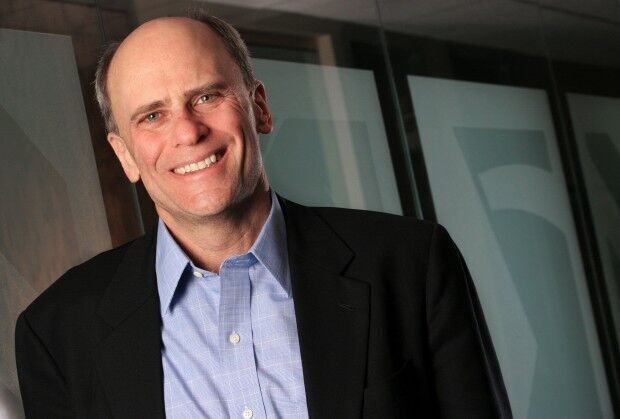
In 12 previous books, Larry Swedroe has used logic, academic research and charts to preach the gospel of passive investing.
Those books sold well, but they didn’t reach many busy, financially underconfident people who Swedroe thinks could benefit from his advice. So, he’s condensed his philosophy into a short, breezy book that glosses over the academic stuff, instead relying on a People-magazine-like tactic to lure readers in.
Put a celebrity on the cover and you can sell almost anything. And, in the business-book world, what sells better than America’s most famous investor? Swedroe’s new book is called “Think, Act and Invest Like Warren Buffett: The Winning Strategy to Help You Achieve Your Financial and Life Goals.”
People are also reading…
Swedroe, research director at Buckingham Asset Management in Clayton, cheerfully agrees the title amounts to a bait-and-switch tactic. Buffett is definitely not a passive investor; he makes large bets on stocks like Coca-Cola and Wells Fargo and prefers to buy whole companies when he can.
Swedroe says his publisher, McGraw Hill, chose the title. Buckingham uses his preferred title, “Playing the Winner’s Game,” on a paperback version that it gives to clients.
No ordinary mortal can really invest like Buffett. For one thing, no one else has his clout. During the financial crisis, Goldman Sachs sold him $5 billion of preferred stock with a fat 10 percent yield because it needed Buffett’s halo effect as much as his money.
If the title is something of a marketing trick, the book does pay appropriate homage to Buffett’s investment philosophy. The first chapter includes several quotes in which the Oracle of Omaha says individual investors should buy passive index funds and avoid trying to time the market.
If you can’t be Buffett, Swedroe argues, you should at least heed his advice. Buffett’s paeans to patience and discipline, repeated often in his shareholder letters, sound a lot like Swedroe’s message.
“I think Buffett is a great investor because he does one critical thing that most investors can’t do,” Swedroe says. “Anyone can stick to an investment plan when things are going well. The real test is whether you have the same discipline when the only light at the end of the tunnel looks like it’s a truck coming the other way.”
Swedroe says this little book may be his last. He still has plenty to say, but he’ll deliver the message in other ways, including his blog on the CBS News website.
Meanwhile, he’s gratified to think the message has been heard. In 1996, a year after Swedroe joined Buckingham and started writing, individual investors had 6.6 percent of their money in index funds. By 2011, that was up to 16.5 percent, according to the Investment Company Institute.
Clearly, what Swedroe refers to as “the winner’s game” is winning. That victory owes much to index fund pioneer John Bogle, the founder of Vanguard Group, but Swedroe has been influential too. Buckingham, which works on a fee basis and invests clients’ money in passive index-like funds, has grown from $11 million in assets when he joined to $5 billion now. A network of affiliate firms accounts for $12 billion more.
The passive-investing movement hasn’t driven traditional stockbrokers, who charge commissions and try to beat the market, out of business, but Swedroe thinks they are on the decline.
“The same as the ocean comes in and erodes the beaches, it’s happening,” he says. “I think that business model is dead men walking; they just don’t know it.”
David Nicklaus is business columnist at the St. Louis Post-Dispatch. Subscribe to his Facebook page or follow him on Twitter @dnickbiz.


