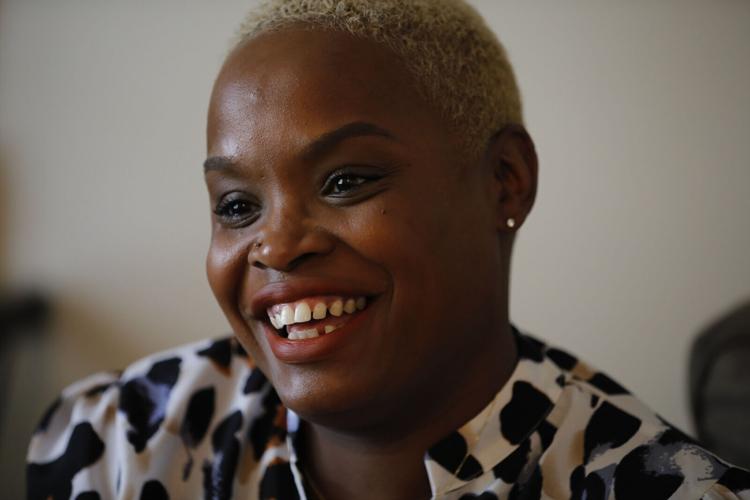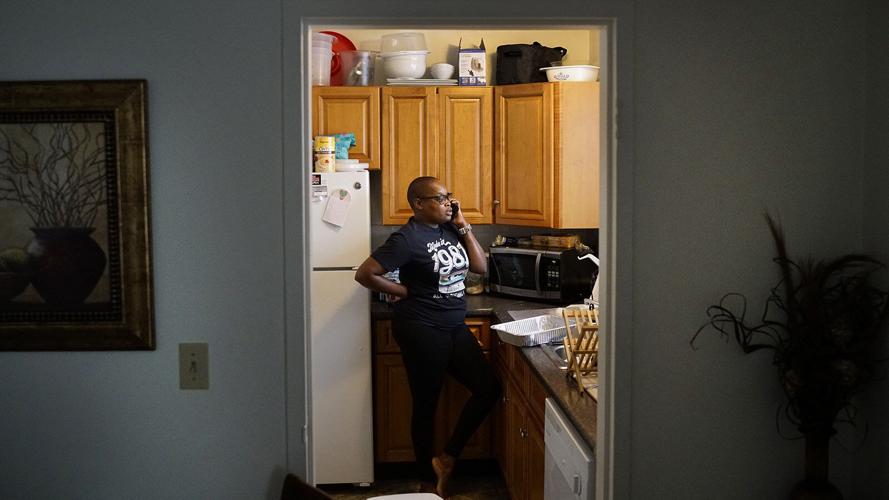
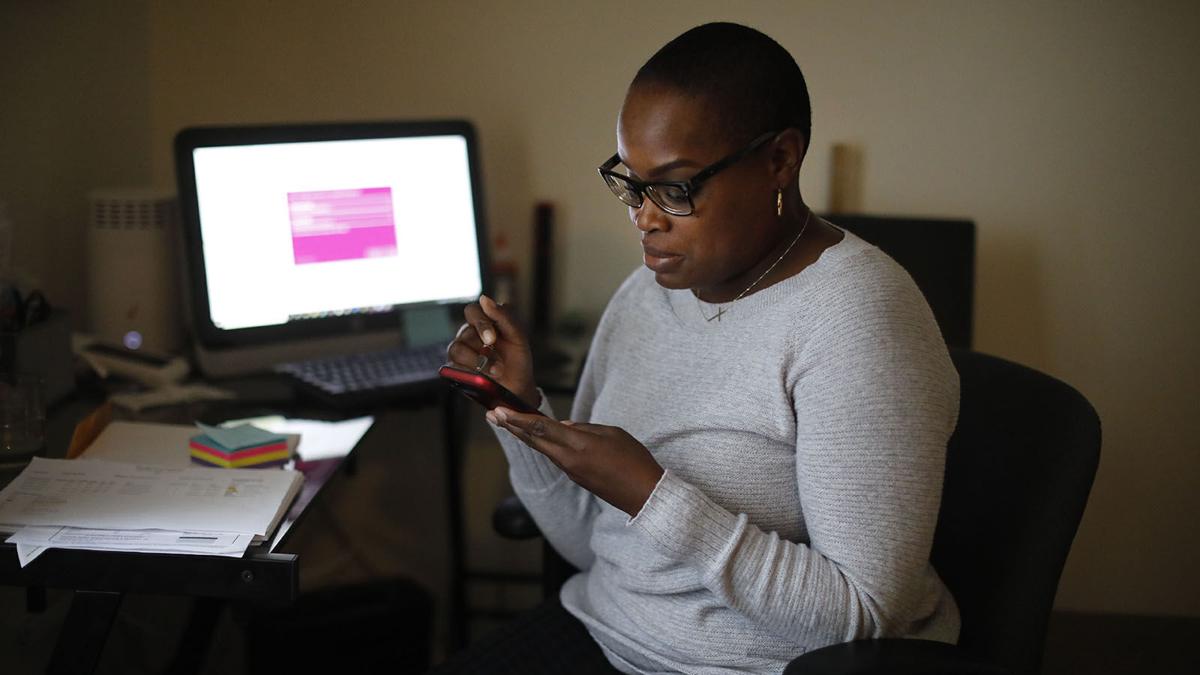
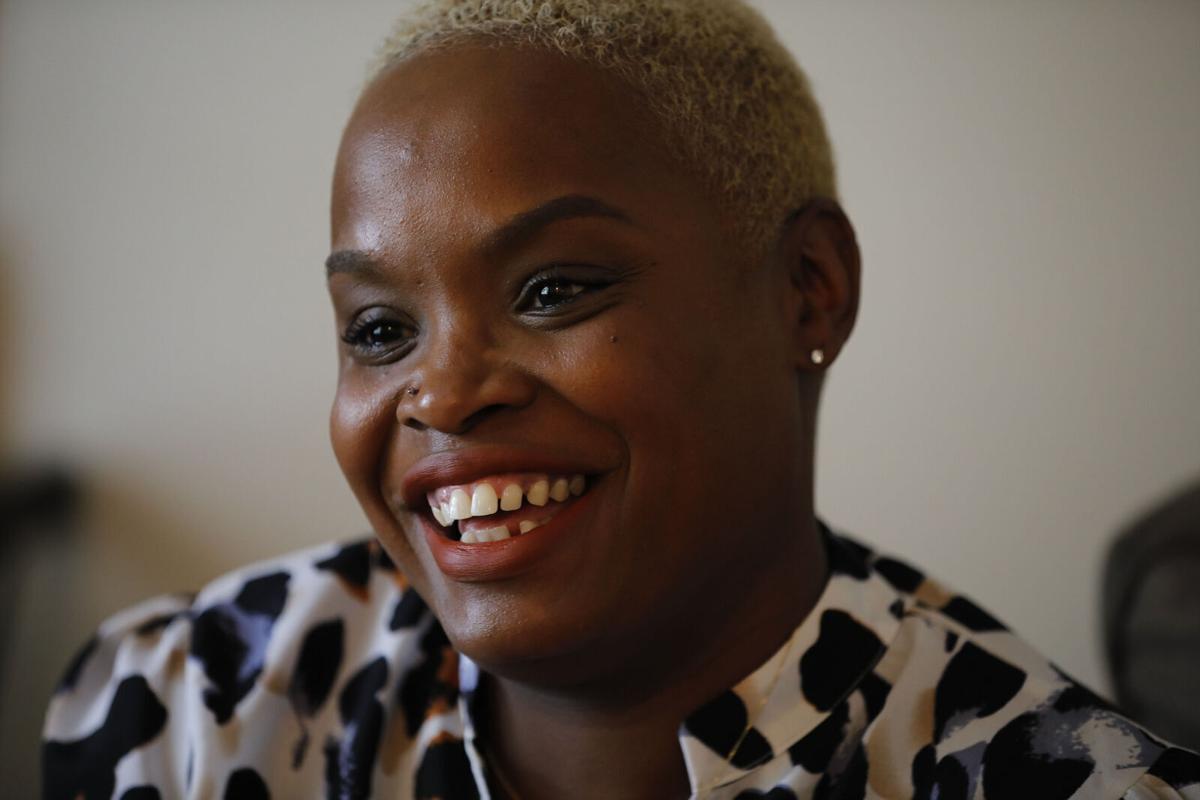
Evetta Applewhite, 39
The day I got laid off, in March, I was supposed to have an 11 a.m. training. All of the sudden an 11 a.m. conference call popped up on my calendar instead. I knew a bunch of people were on this call, because as I’m dialing in the line keeps chiming: boop, boop, boop. And then the HR manager said that, due to everything that’s going on, everyone on the call was being laid off.
I just hung up the phone. I sat back and I cried. You ask the question: Why me? What am I going to do now? I was 39 years old, working as a trainer at a law firm, training legal secretaries and paralegals. I wasn't worried about the money – money will always come. But I felt like I was finally where I wanted (to be). Because I used to struggle.
I struggled financially – I worked all types of jobs, this that and the other, and for a long time I still wasn’t making all the ends meet. My son was born in January 2006. I was 23 when I got pregnant and 24 when I gave birth. After my son was born, I worked at a recruiting firm, making 10 bucks an hour. I had a baby, some credit cards and a car note for $504. I wasn’t making enough money to pay rent.
People are also reading…

"For a moment there, during Covid, it got really ugly: I started to feel like I was done. Those thoughts of helplessness – I would hear a voice, I would actually hear it, saying ‘Evetta, there’s nothing else for you to do.' "
But you know, I can always say that I’m very resourceful. I got another job and had my son’s father, or maybe a cousin, watch my son while I made these ends meet for us. I went back to school and got my associate degree. I needed to improve myself – that was a motivation. And knowing I had to take care of a child, that’s motivation enough, as well. I got a second job bartending. I drove for Uber sometimes, too. I went from $10 to $12 to $15 an hour at the recruiting firm, and then the law firm bumped me up to $18. I was in a comfortable place, you know?
It's emotional when I think about that, because there were times when I thought, "you’re not gonna make it." Then I did. Then I was torn right back down again. Losing my job at the law firm did something to my ego. For a moment there, during Covid, it got really ugly: I started to feel like I was done. Those thoughts of helplessness – I would hear a voice, I would actually hear it, saying "Evetta, there’s nothing else for you to do." I don’t know if it was depression, I don’t know what it was. I think it came from being idle.

"I’m making a hell of a lot less money than I was on unemployment, but I'm not the kind of person who wants to lay down and give up. I'm always going to fight, because that's just who I am."
But then I imagined my child having to tell someone that his mom “was.” My son is 14 and started high school in September. I couldn’t be a past tense in his life. I realized I couldn’t have those thoughts. I found things to do, things to keep my mind active, and that’s where I’m at now. It’s like, instead of making money for a company and them saying "this is what you’re worth," I’m finally determining my own value.
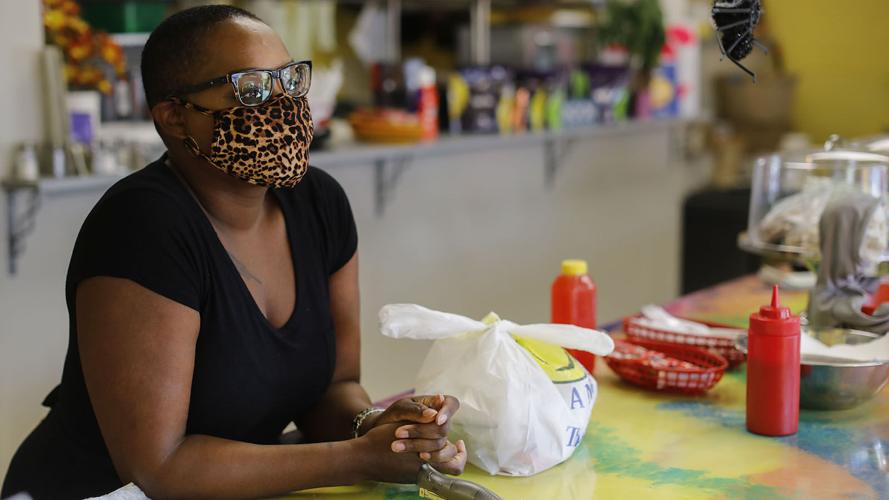
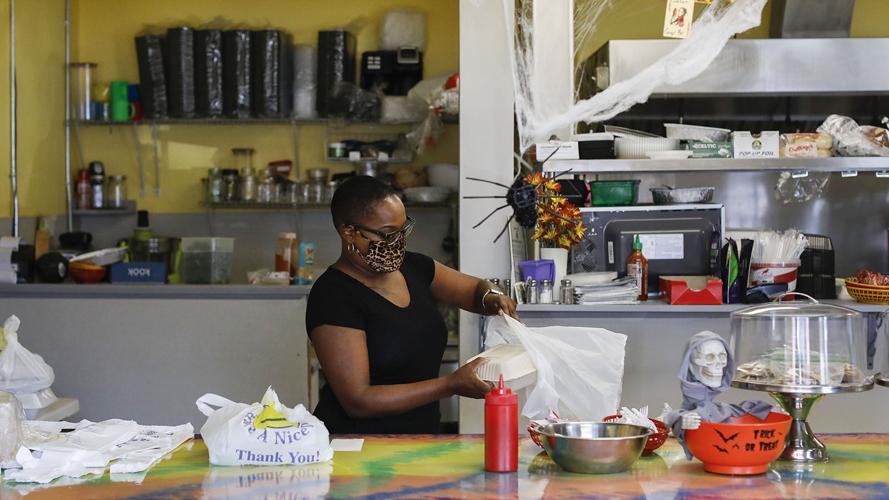
My days are timed now. I have to stick to a strict schedule – 20 minutes to do this, 30 minutes to do that. I’ve been taking classes at Bryant and Stratton every Saturday from 9 a.m. to 4 p.m. I paid an astronomical fee for this certification I'm working on, to become a small business consultant. Everywhere I've ever worked, I try to make things better and more effective. So this is a way to turn that skill into a business. I have two consulting clients now: a real estate firm and a vegan restaurant.

Evetta Applewhite said, "You can sit back and give in. Or you can figure it out. I made my decision, and I’m determined to make this work now."
I’m also taking evening classes to get my real estate license. And I Uber on Fridays, Saturdays and Sundays for two hours or $100, whichever comes first. I’m making a hell of a lot less money than I was on unemployment, but I'm not the kind of person who wants to lay down and give up. I'm always going to fight, because that's just who I am. So, you know, if I have to turn on Uber and drive, I will drive. I'm not worried about it. I can't worry about things that I can't control. So you just keep moving, you figure it out – it’ll work out, whatever it is.
Honestly, I think the economy will probably tank again at some point, but I think for now I’d be OK, because my clients are essential. Now will I feel differently two months from now? Maybe. But believe me when I tell you I have plans "B" through "Z." I could probably go bartend, there are plenty of bars. And don’t forget I still have my catering: Before Covid-19, I did a couple of catering events.

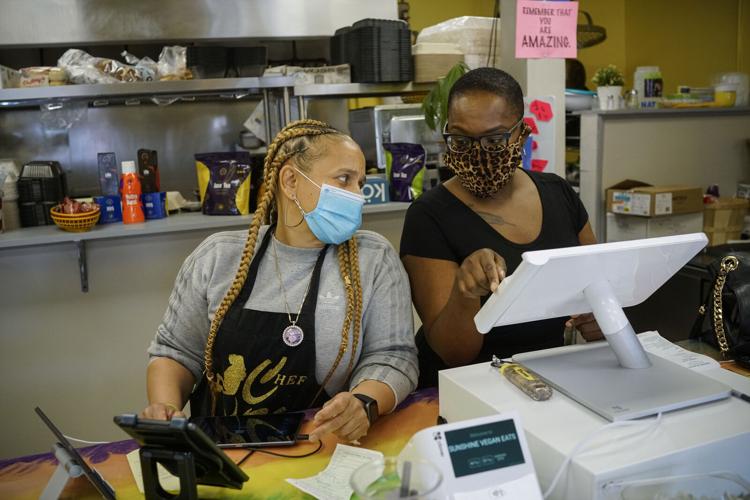
Sunshine Vegan Eats owner and chef Nikki Searles, left, and Evetta Applewhite go over the functions of the restaurant's new point-of-sale system. Applewhite is consulting for Searles as part of her new business.
Because what else are you gonna do, you know? What do you do about things you absolutely cannot change? That phrase, "what are you going to do?" is a real and powerful thing. You can sit back and give in. Or you can figure it out. I made my decision, and I’m determined to make this work now.
I’m realizing that my measure of success is not a long title or a huge salary. People make you feel like you have to have the corporate title to be relevant. They look at you differently depending on your job; when people used to ask me what I did, I’d give them different answers just to see how they’d react.
But it doesn't matter what you do. It doesn't matter what your title is. I’m not making the amount of money that I used to. Absolutely not. But I can say I’m much happier and I’m not stressed about it.
—As told to Caitlin Dewey. Interviews have been condensed and edited for clarity.
About this series
Americans have endured economic crises before but none quite like this. To capture the depths of the suffering, The Buffalo News teamed up with the New York Times and 10 local news organizations across the country to document the lives of Americans who found themselves out of work.
For months, we followed them as they dialed unemployment hotlines, applied for hundreds of jobs and counted every dollar in their bank accounts for rent and food. All of it while trying to survive a pandemic.
Read stories from across the country in the New York Times: Out of Work in America
Read stories from Buffalo Niagara: Out of Work in Western New York