

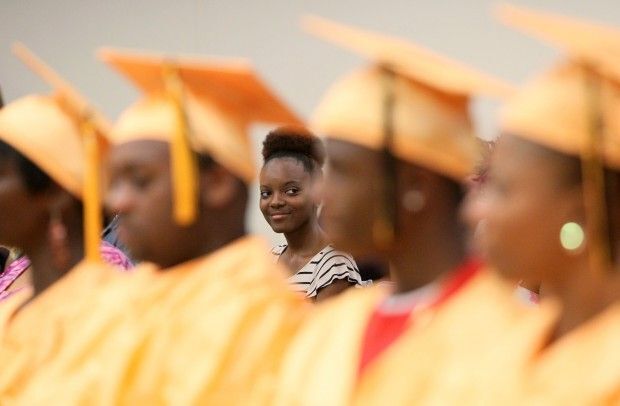
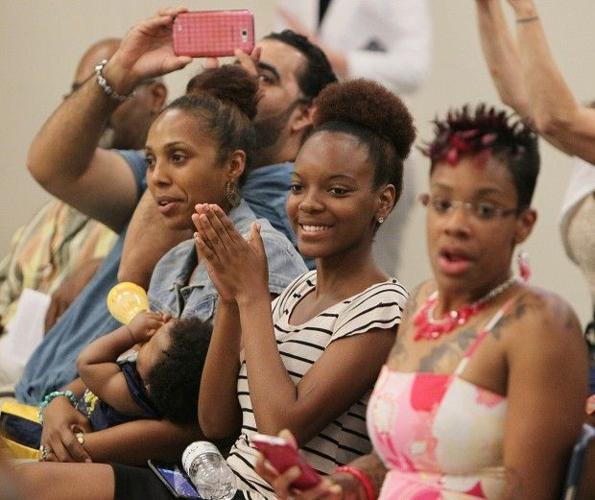
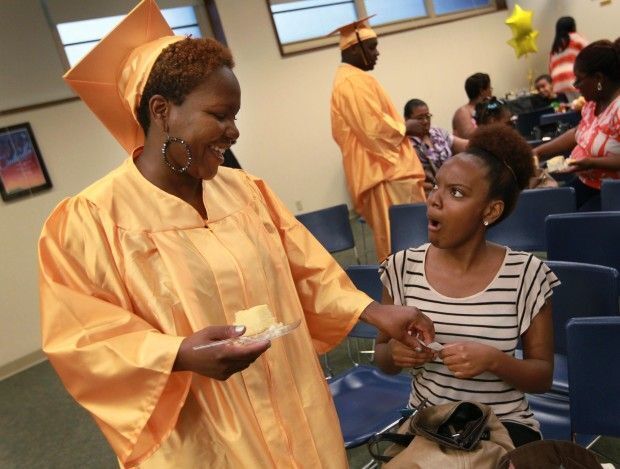
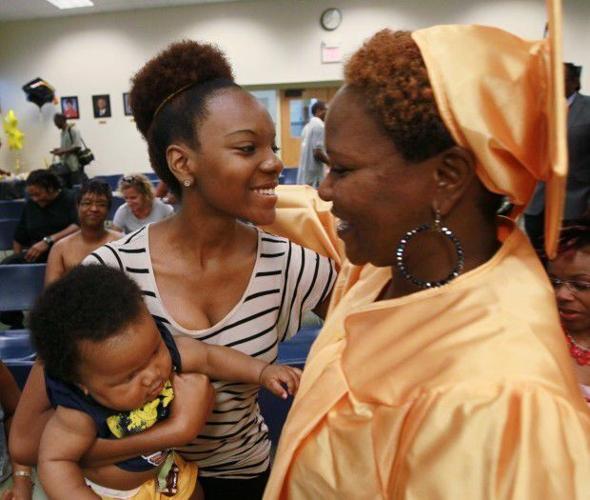
UNIVERSITY CITY • Eboni Boykin clutched the program with her mother’s name in her lap. A recording of Pomp and Circumstance began to play. She lifted her phone and began to take pictures.
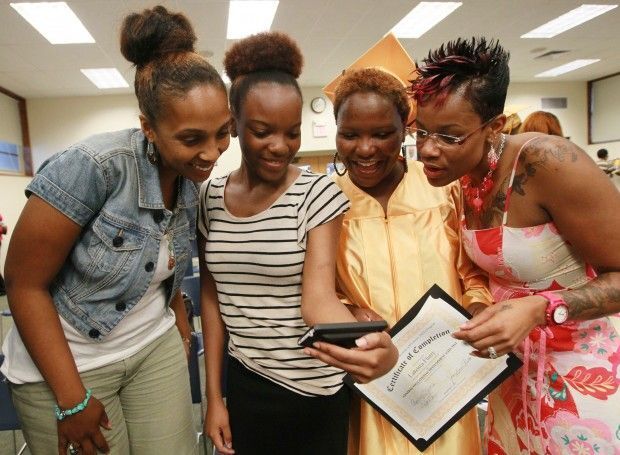
The 2012 graduate of Normandy High School was home for the summer, having finished her first year at Columbia University in New York where she’s on full scholarship. Now she sat among a crowd in a University City School District meeting room to watch her mother in a gold cap and gown complete something big — something that had been put on hold since 1994.
“It’s a bigger deal than my own graduation,” Boykin said.
Boykin always knew she would graduate high school. But she wasn’t sure about her mother, Lekista Flurry.
Boykin graduated last spring from the struggling Normandy High, in an unaccredited school district that, due to a court ruling, now faces an exodus of thousands of students.
People are also reading…
Boykin’s ascent to the Ivy League — which was the subject of a Post-Dispatch story last year — illustrated what’s possible, even at the most challenged schools, when students have a mindset different from their circumstances. This past year at Columbia, she wrestled with nuclear physics and math concepts far more accelerated than any material she encountered at Normandy. And she passed.
Even national news outlets have taken note of her scholastic climb, with Boykin appearing twice on cable news programs during her college year.
At the same time, her mother was pressing forward in the University City Adult Education and Literacy Program. Flurry was forced to drop out of Pattonville High School at age 16, so sick during her pregnancy with Boykin that she could barely function.
Flurry wiped away tears as she approached the podium. Ten others receiving their graduate equivalency diplomas were seated before her. And about 75 others sat in the blue plastic chairs were there to watch.
“It was hard, how I got here. My trip was hard,” Flurry said into the microphone.
LIFE ON HOLD
For 18 years, Flurry did her best as a single mother, ultimately bearing four children and barely scraping by with a ninth-grade education. There was a time she’d board city buses with her children before dawn to get them to school and day care so she could get to low-wage jobs. They bounced from one homeless shelter to the next, from one city to the next, in and out of schools.
When they moved into a three-bedroom home in Pagedale, life became more stable. But there was a shortage of food. Poverty kept its grip.
Boykin was determined to shed that life. At 13, she decided she wouldn’t just graduate from high school, but college. And not just any college, but an Ivy League university.
She read constantly, trying to make up for what she wasn’t getting from school. Columbia offered her a full scholarship.
This past year, Boykin became immersed in college life. She pledged a sorority. She began learning Italian, about world religions. She wrote for campus publications.
“I got to see what the greatest works of literature were,” Boykin said. “I felt I was being entered into a world of thought.”
And now, she was watching her mother picking up the pieces of the life she put on hold in 1994, when she became pregnant with Boykin.
“Everybody goes through something,” Flurry said into the microphone. “Yes, I had to wait. But it’s OK.”
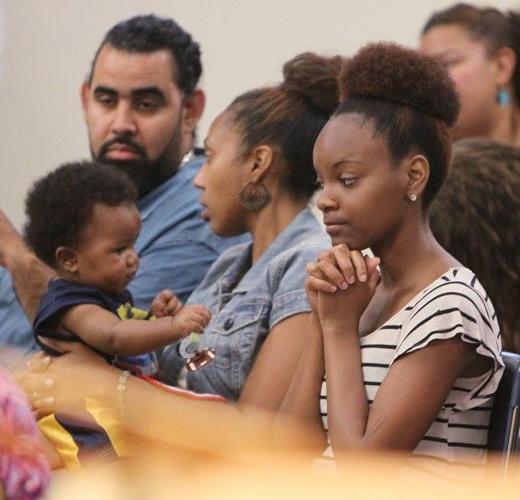
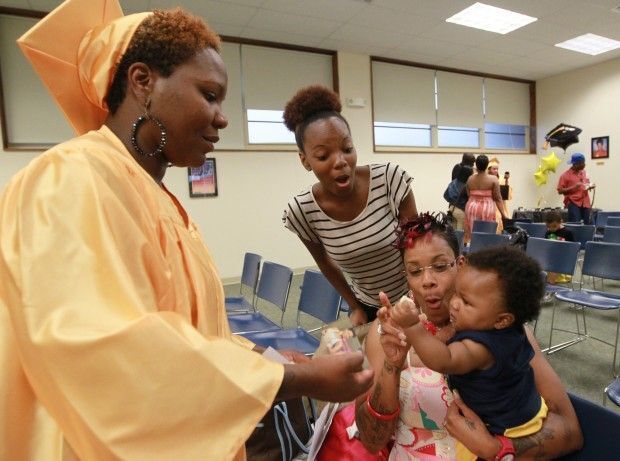
Flurry looked at her daughter. Two of Flurry’s friends from the St. Louis Dream Center held Eden, Flurry’s 6-month-old son. Her pregnancy with Eden last year made Flurry sick once again, putting her quest for a GED at risk.
“I couldn’t stay in class half the time,” Flurry told the crowd. “And embarrassed. I was embarrassed because I was 35 trying to do this.”
But during her hardest moments, she would think of her eldest daughter 900 miles away in New York — a city Flurry has never been to — trying to make it at an Ivy League school.
MEMORIES COME BACK
Boykin had never been so academically challenged. She pored over concepts for hours on end in her dorm room. During those moments of stress, the darkest days of her childhood would creep up — the nights spent sleeping in cars, boarding buses before dawn, feeling hungry on weekends. Boykin wants to forget these days, but they continue to motivate her.
Knowing that those times haunt her daughter, Flurry refused to fail.
“At the end of the day, you’re stuck with you,” Flurry told the crowd. “You have to deal with you.”
And so, as Flurry stood at the podium, Boykin clasped her hands under her chin.
“This is definitely the turning point,” she said. “Things will never be for my brother like they were for me growing up.”
In August, Boykin will return to Columbia for her sophomore year. She’s appeared on the cable news network MSNBC to speak about her journey to the Ivy League from Normandy, and issues surrounding children and homelessness.
Meanwhile, Normandy schools have slipped further into crisis. In the unaccredited district, parents are now entitled under a recent Missouri Supreme Court ruling to transfer their children to nearby districts at no expense.
Boykin sees the transfers as an opportunity, though she knows that many students will struggle as they move into more rigorous classrooms.
“It’s going to be a big adjustment for a lot of the kids,” she said.
Her own mother is planning to make use of the transfers, sending Boykin’s two younger siblings out of the district.
For Boykin, the plight of schools such as Normandy’s and the students who attend them is more than just a cause — it’s a key part of her past.
But there are times she’d rather blend in with the rest of Columbia’s more affluent student body — students who can’t relate to her childhood. It was a struggle that dominated much of her freshman year.
“So those memories come back in my dreams, when I’m alone and when I’m stressed,” Boykin wrote last October in the Columbia Spectator, the campus newspaper. “The past was trying to catch up with me, and I was trying to outrun it. But if I kept running, who would ever learn from or be inspired by what I went through? And what would all those years be worth, if I don’t share them so people struggling with poverty can know that social mobility is possible?”
It’s a story her own mother has learned from as she works to shed the life of poverty and raise her three other children. In January, she expects to graduate from barber school and begin a career.
“I’m working on my dream as we speak,” Flurry said into the microphone. “I’ve always wanted to be a beautician.”


