

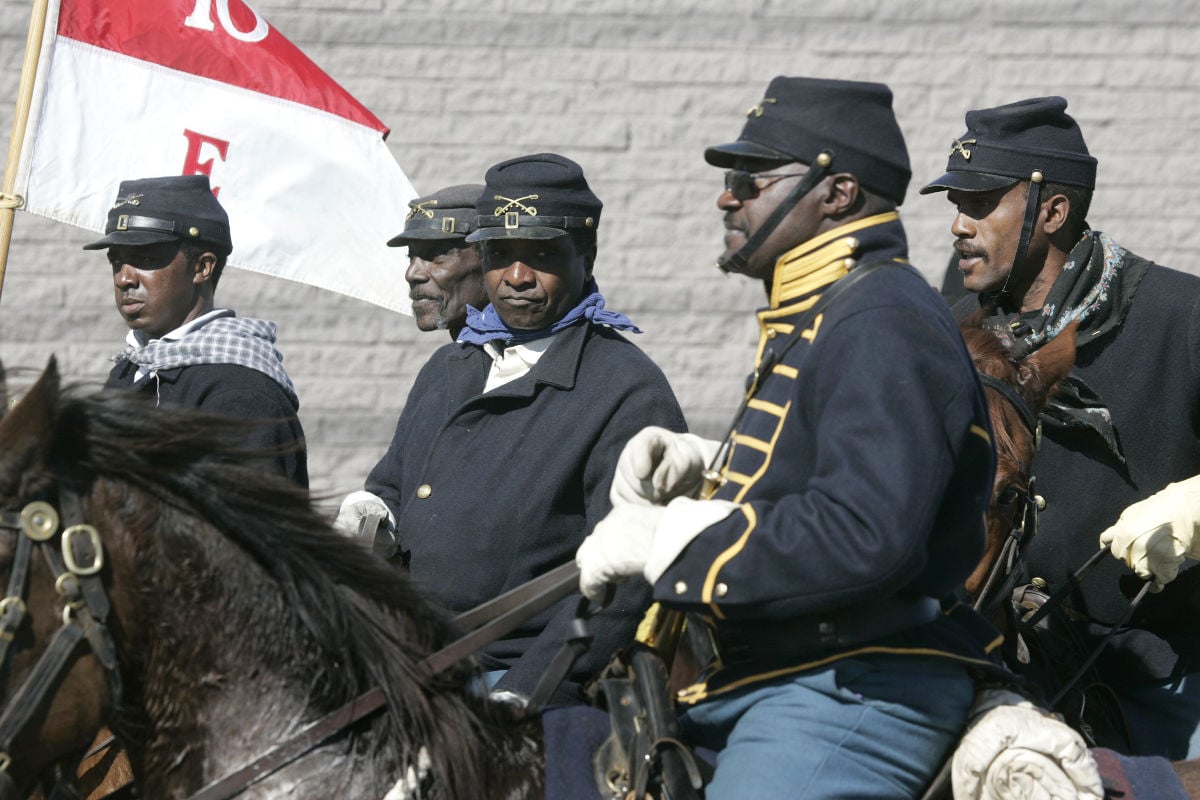
It’s Black History Month, so I might as well tell one more story involving the 10th Cavalry Regiment — the famed Buffalo Soldiers of Fort Huachuca.
The scene was Bear Valley in Santa Cruz County just west of the Atascosa Mountains, and a few miles north of the border. Near Bear Valley is Sycamore Canyon, which remains an important smuggling route to this day.
In January 1918, a detachment of troopers moved from Nogales to Bear Valley to patrol that part of the border. Yaquis, who were then fighting the Mexican government for the sovereignty of their traditional homeland, were crossing the border into Sonora and bringing arms and ammunition to support their cause.
On Jan. 8 a lookout sighted a group of armed men. The soldiers mounted up and began a pursuit. Eventually the detachment caught up with the Yaquis and came under fire from concealed positions. After a running battle of about forty minutes, the rear guard of ten Yaquis surrendered, having bought time for the rest of the party, some twenty men, to escape to the border. Among the group was an eleven-year-old boy who fought as bravely and well as the men. The leader of the group was badly wounded, and died later in hospital in Nogales.
People are also reading…
The Wikipedia article about the encounter includes a first-person account of the battle and its aftermath, and is worth reading. What impressed me was the respect the troopers showed for the Yaquis (“just as good fighting men as any Apache”) and the apparently amicable relations between troopers and Indians. One Yaqui was quoted as telling a soldier that they (the Yaquis) only opened fire because they thought the troopers were Mexicans.
About a week after the skirmish, the Yaqui prisoners were moved to Arivaca, where they were held while the government decided what to do with them. Each received three meals a day, a straw mattress and a G.I. blanket.
All ten prisoners, including the boy, offered to enlist in the U.S. Army, but it was decided that they should be taken to Tucson and tried in Federal court for attempting to smuggle weapons across the border. They all pled guilty, and Judge William Henry Sawtelle, having dismissed charges against the boy, sentenced each of the others to thirty days in jail. It was considered probable that, had they been deported to Mexico, they would have been shot.
I am indebted to Bob Teso, whose family is from Arivaca, for introducing me to this story.


