

We recently asked what books should be read to be “well-read” from a Southern Arizona perspective and presented 18 books that capture and enhance readers’ understanding of the heart and soul of Southern Arizona.
We’ve also asked readers to share their favorites — books that are exceptionally informative with a distinct regional emphasis. We also favor authors who’ve had a presence at the Tucson Festival of Books.
You can still let us know what should be included by adding a comment at the end of the Tucson.com version of this story or on our Facebook page (facebook.com/ArizonaDailyStar).
Here are some of the most recent suggestions
Melvina Strijdonk of Oro Valley says, “I have been enjoying reading the lists of books appearing in this continuing article. One wonderful book to add, in my opinion, is a book I found at a Friends of the Library book sale in Oro Valley. I bought the signed book ‘Home Is The Desert’ by Ann Woodin (University of Arizona Press, 1984) and have been enjoying it ever since.
People are also reading…
“It is the story of a couple’s raising of their four sons in the rural area above Tucson and introduces the flora and fauna of the desert in a most interesting way,” says Strijdonk. “A gentle, sweet, nostalgic view of desert life in the 1960s, but all the scientific information is valid today and a great tutorial for those moving to our area.”
Pat Eisenberg of Tucson suggests:
- “A Beautiful, Cruel Country” by Eva Antonia Wilbur-Cruce
- (University of Arizona Press; reprint edition,1990)
- “The Desert Year” by Joseph Wood Krutch
- University of Iowa Press, 2010)
- “The Turquoise Ledge: A memoir” by Leslie Marmon Silko
- (Penguin Books; Reprint edition, 2011)
- “
- The Peacocks of Baboquivari” by Erma Fisk and illustrated by Louise Russell
- (W.W. Norton & Co., 1987)
- “Vanished Arizona: Recollections of the Army Life of a New England Woman”
- by Martha Summerhayes (ReadaClassic.com, 2010)
“They are all all well worth reading and all greatly informative,” Eisenberg says.
Patricia McElroy says on Twitter that Robert Houston’s “Bisbee ’17” (University of Arizona Press, 1999) should be on your list. It brings local history to life, says McElroy. Houston, professor emeritus of creative writing at UA, has written nine novels and numerous nonfiction works in addition to “Bisbee ’17,” a class-war Western that pits a general strike against a large posse.
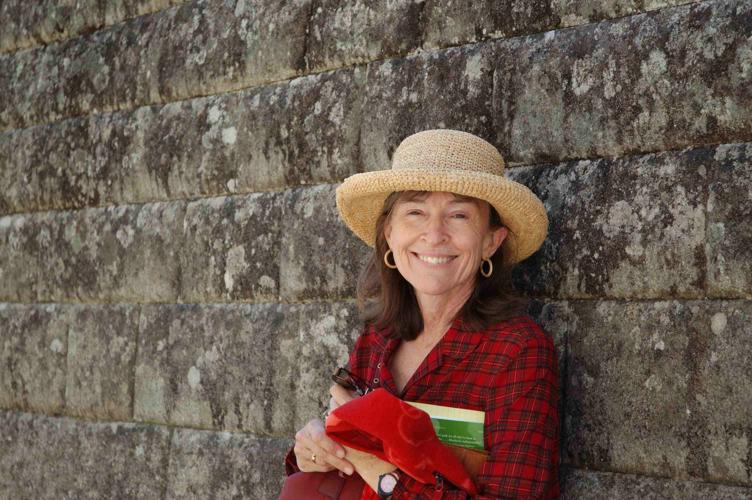
Ford Burkhart recommends “The Piano Player” by his wife, Carolyn Niethammer. “It’s a rich, rambunctious history-fiction of our region. Hell-raising stuff, says Burkhart, who taught journalism at the University of Arizona and is now a freelance writer.
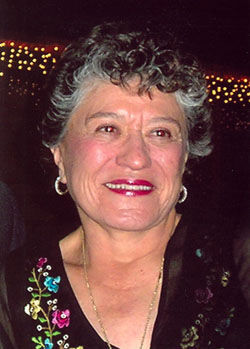
Las Vegas resident Jane Scott Newton, a former teacher in the Catalina Foothills School District, suggests “Songs My Mother Sang to Me: An Oral History of Mexican American Women” by Patricia Preciado Martin.
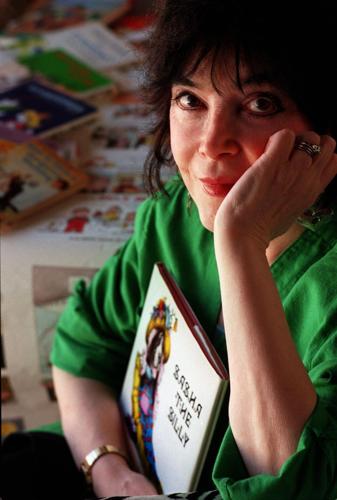
For the younger well-read set, Newton suggests old favorites by locals: “Gila Monsters Meet You at the Airport” by Marjorie Weinman Sharmat (Aladdin Paperbacks, 1990) and “Three Little Javelinas” by Susan Lowell (Cooper Square Publishing, 1992).
Lori Punske, a teacher at Sahuarita High School, recommends “Southern Arizona Nature Almanac” by Roseann Hanson and Jonathon Hanson (University of Arizona Press, 2003). It’s a month-by-month look at life, critters, astronomy, plants in Pima County-area, Punske says.
Judy Showers offered “A Beautiful Cruel Country by Eve Antonia Wilbur-Cruce” and illustrated by Michael McCurdy (University of Arizona Press; reprint edition, 1990) set in Arivaca Valley when Arizona Territory was America’s last frontier.


