


“Organic eggs just taste better.”
“Happy hens lay more eggs.”
“Free-range chickens produce healthier eggs.”
That’s the conventional wisdom, but is it really true? Organically grown eggs are said to be lower in cholesterol and saturated fat, and higher in vitamins A and E.
I’m not a nutritionist, but it’s certainly true for veggies — homegrown are better for you and the planet. So it’s probably true for eggs, right? But what about taste? That at least should be easy to find out, I thought.
So one morning I put it to a blind, albeit unscientific, taste test with two “volunteers.” The contenders were:
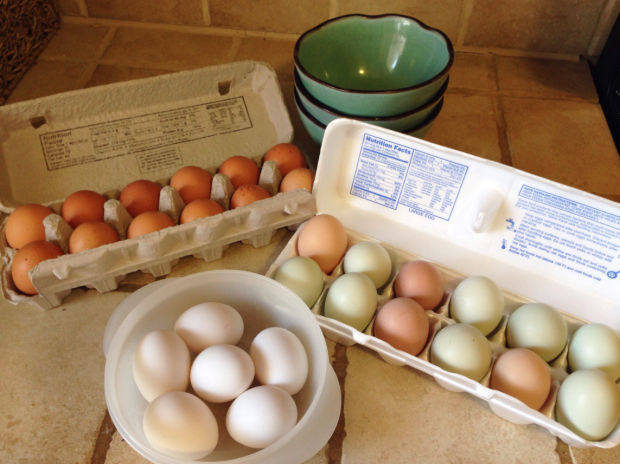
- Costco’s cheapest, conventionally raised eggs. (Price varies based on quantity)
- Trader Joe’s organic, free-range chicken eggs. ($4.49 a dozen)
- Backyard, free-range chicken eggs from the Santa Cruz Farmers Market. ($5 a dozen)
People are also reading…
I prepared three sets of eggs the same way — scrambled, with a dash of salt and cooked in a half-teaspoon of olive oil. I didn’t doctor them up like I usually do in order to ensure the egg flavor could shine through on its own. I served them immediately, one batch at a time. And I asked my tasters to take notes.
Here’s what they said:
- Batch No. 1: Good flavor and texture. Color was light. Taster A said it was his favorite. Taster B: Too salty (oops, my bad), color a little dark, firm texture. (Trader Joe's)
- Batch No. 2: Taster A: Firm texture, good flavor, good consistency, yellower. Taster B said this was her least favorite — first she said the flavor was good but the eggs were drier. After the third taste test, she changed her mind and said the No. 2 eggs weren’t as good. (Costco)
- No. 3: This was Taster B’s favorite but Taster A said it was his least favorite — “the flavor just isn’t there.” Taster B: Best flavor, good texture, softer, very yellow. (Local)
What’s my takeaway? I didn’t like the factory eggs — I found them tasteless compared with the other two. They had a runny, uneven and gloppy consistency when scrambled, and they cooked up flat with smaller curds. Shells were a bright white. (I ended up giving the leftovers to my dog Max.)
Trader Joe's eggs had the most intense, egg-y flavor. (They did taste saltier but that was probably a CE — cook’s error.) The shells were all a similar medium brown color with cute freckles. TJ’s eggs produced big, fluffy curds.
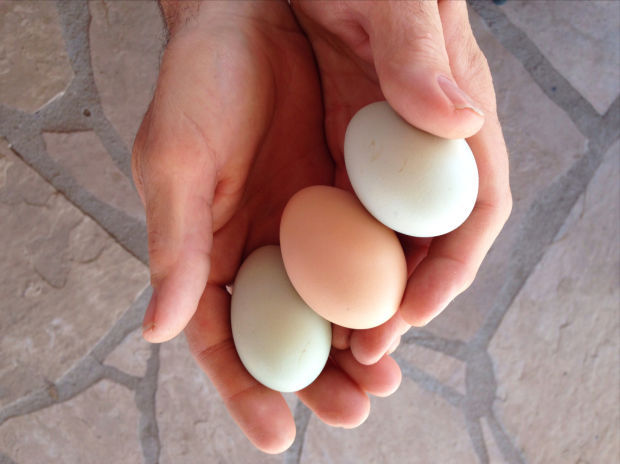
The local, backyard eggs, which were a mix of light brown and light green shells, were fluffy and a bit mellower than those from Trader Joe's. The curds were big and fluffy, too. Interesting side note: They had the hardest shells to crack, whereas the Costco eggs were fragile and cracked easily.
Overall, I would choose the backyard eggs for just 51 cents more than Trader Joe's. Usually, I buy TJ’s organic, free-range eggs but I prefer to buy from local chicken farmers when possible. It’s important to support local farmers and backyard egg producers — at least until I get my own chickens someday.
Just to be clear, I’m not knocking Costco. I love its products and prices — although my wallet never makes it out alive. I think its conventionally grown eggs would be similar to what you’d find at any major supermarket.
Also, a big thank-you to my tasters — my mom and my boyfriend, Pat, who said it best: “When’s the bacon test? Bring it on.”
PS: I resisted the urge to write “egg-speriment.” You’re welcome.


