


Gardeners around Tucson are starting to complain about the sudden death of their zucchini and other squash.
One day the plant is fine, and the next it's wilted and yellowing, clearly on the brink of death.
What it is: A wasp-like moth that lays its eggs on the stems of squash, zucchini and pumpkins. They may attack your cucumbers and melons, too.
The larvae, which look like white grubs with a blackish head, burrow into the stems to feed, killing the plant. Look at the bottom of the stems for holes and sawdust-like droppings.
Prevention, according to the Old Farmer's Almanac:
- Cover the stems with a barrier, such as strips of nylon stockings, to prevent egg laying.
- Cover lower stems with floating row covers to prevent egg laying. (Remove once the flowers appear or hand-pollinate the flowers and replace the cover.)
- Get rid of the vines as soon as all of the squash is harvested.
- Don't bother using Bt, as it's not effective.
People are also reading…
Other ideas:
Some local gardeners suggest planting a ring of radishes around the plants to keep borers at bay.
Onions are thought to be deterrents, too. I planted my zucchini and cukes where onions had been growing all winter and spring, so maybe that will help. So far, so good.
Carolyn Smith, who works at Harlow Gardens, suggests mixing garlic powder with water and spraying the stems every two weeks to repel the moths.
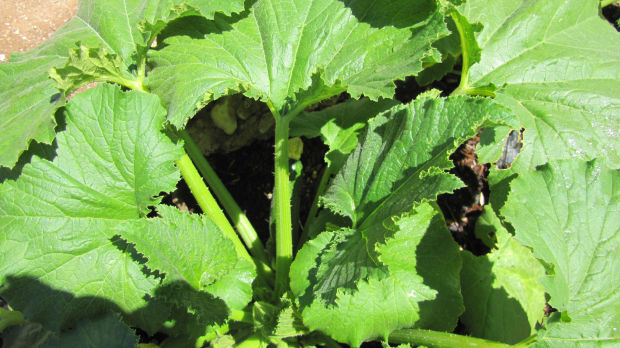
A baby zucchini is partially hidden among the leaves of a healthy plant.
Recovery:
If you see the destruction early enough, you might be able to save the plant. Here's a helpful video from Southwest Victory Gardens in Tucson. Owner Brandon Merchant shows how to find and fish them out.
If they die:
If you can't prevent the plant's death in time, try again. Experienced gardeners say you can replant later in the summer, when squash vine borers are not as active. Rotate the crop, if possible.
Or, plant butternut and acorn squash, which are much more resistant to the squash vine borer.


