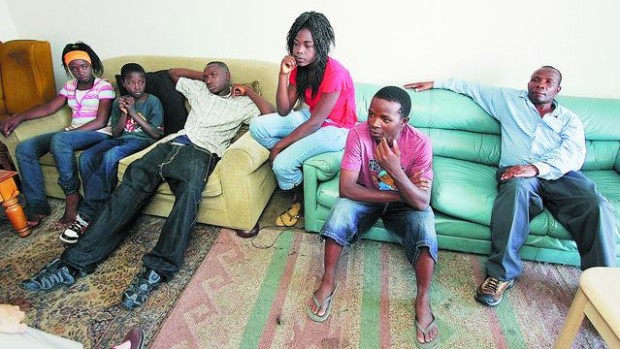
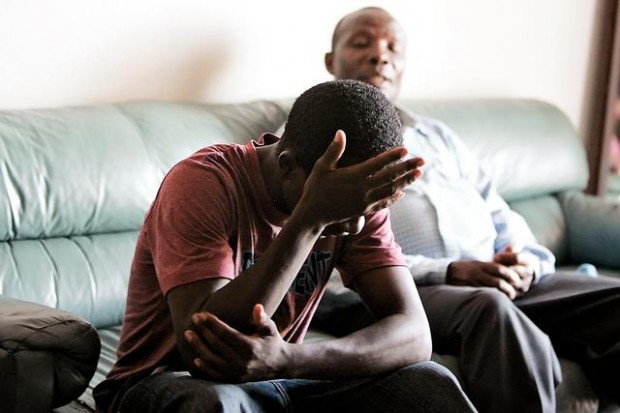
In the month since a van rollover on Interstate 10 killed his mother, 19-year-old Jonas Nyandwi has had to grow up fast.
The eldest of five siblings, Nyandwi now feels he must drop out of school in order to help pay the rent. He was supposed to be starting his senior year at Amphitheater High School in August.
The family members — all Burundian refugees — have been in Tucson for two years. Their mother, 45-year-old Elizabeth Minani, was one of six people who died in the June 3 crash — five women and one man.
Eleven others were injured, and though they are all out of the hospital now, several will be recovering for a long time — their injuries range from broken bones to brain trauma. All 17 occupants of the van were either Burundian or Congolese refugees.
Refugees like Nyandwi who were affected by the rollover continue to struggle. Some landlords have been understanding, others not so much. The landlord of a family that had to move out of its second-story apartment — the father can no longer use stairs because of his injury — is charging them $1,200 for breaking their lease.
People are also reading…
Yet there is some good news. Local refugee-resettlement workers say that overall, Tucson has come through for the refugees and without the community's outpouring of help, the situation would be extremely dire. Donations have given Nyandwi's family, for example, much-needed help paying rent.
"The community has really stepped up to the plate for these people. It has been astounding," said Jill Rich, a Realtor who works with Jewish Refugee Resettlement of Southern Arizona. "It has been a beautiful thing to see the Tucson community in this light."
All four local refugee-resettlement agencies have collected a total of more than $5,000 in donations. The Tucson Racquet Club held a fundraiser that raised more than $2,000.
Donations have been coming in from every area of the community, including African- American churches and random individuals.
"A lot of different cells around down have done large and small fundraisers for people they don't even know. Every day I come home and there's a check or two — sometimes $10 and sometimes $100," Rich said.
The funds have been much-needed by the refugees, who were already struggling to adjust to Tucson. Cars, automated teller machines and ovens are all new to them.
The refugees' van crashed as they were on their way back to Tucson from Willcox, where they had been applying for jobs that pay about $9 an hour at Eurofresh, a hydroponic vegetable grower. The driver of the van lost control of the vehicle shortly after 2 p.m. and it rolled, according to the Arizona Department of Public Safety, which has yet to release any further information about the crash.
The Burundian and Congolese refugees had been living in camps in Tanzania, seeking shelter from violence and persecution in their own countries, before moving to the United States. Local agencies report the Burundian refugee population here at 213, and the Congolese refugees at 99. The African refugees first began coming to the Southwest in 2000 and have been resettled in Tucson by four local agencies.
Like Jonas Nyandwi, 18-year-old Joseph Leonidas has had to assume a leadership role in his family since his mother died in the rollover. His father, Ndururukije Leonidas, suffered a broken back and other serious injuries. The elder Leonidas was released from the hospital last week, and Joseph has been caring for his three younger siblings. He, too, wonders about staying in school when there's a family to support.
Community support has helped the Leonidas family so far. Horizon Moving Systems moved them from an upstairs apartment to a ground-floor unit in a different building for free, and their help included packing up the apartment.
Several English as a Second Language teachers came forward offering to help teach English to the elder Leonidas, who is hoping he will be able to find a job that does not require physical labor.
Chairman Richard Elías of the Pima County Board of Supervisors organized funerals for the six who died, coordinating with Bishop Gerald Kicanas of the Roman Catholic Diocese of Tucson to ensure they all had burial plots, and that the families were able to see the bodies — something extremely important to them.
"You had two fiduciary offices, a number of churches, a cemetery, families with language difficulties and incredible, incredible trauma going on," Elías said. "It's a terrible tragedy for these families to endure after all the struggle they've had coming to the U.S. . . . It's a very difficult time for them still, and we should keep them in our hearts and minds."
Elizabeth Minani had been hoping to get more regular work the day she went to Willcox, her children said. She'd been working two days a week as a dishwasher, but it wasn't covering all the family's expenses. The day she died, her children vividly remember she got up at 4 a.m. to make food for their dinner, including homemade bread. She left at 7:30 a.m., and they never saw her again.
Minani's husband, 49-year-old Bigirimana Venance, was not in the van. He's been taking classes at Pima Community College to improve his English. But he's had four eye surgeries since the family arrived in Tucson two years ago, and Jonas Nyandwi worries that his father, who isn't currently working, won't be able to support them all.
"We miss our mom. She was a very kind, gentle lady. She got along with all the people, with everyone," Nyandwi said. "We have a difficult time."
The five siblings — who range in age from 11 to 19 — sat quietly on two worn-out sofas inside their tired, ground-floor apartment on Monday along with their father. The loudest noise was the swamp cooler's hum.
Their television isn't working, they don't have any Internet connection, and the family doesn't have a car.
And there isn't a lot to say, said Nyandwi, who has been doing some work for a landscaper and applying for other jobs.
Several family members did smile when asked about their mother. She cooked, she comforted. They remembered watching a movie together.
"It was 'George of the Jungle,' " Jonas' brother Ghadi Tuyizere, 17, said with enthusiasm. "Our mom was there with us."
Did you know
About 400 refugees settle in Tucson each year from Africa, the Middle East, Eastern Europe and South America.