

Tensions in Nogales were running high. Several years of rumors that German agents could infiltrate into the United States were rampant, putting American soldiers on alert. Mexicans crossing north complained of harsher treatment and threats.
Then it exploded.
Shots were fired across the border. A Mexican customs agent fell mortally wounded.
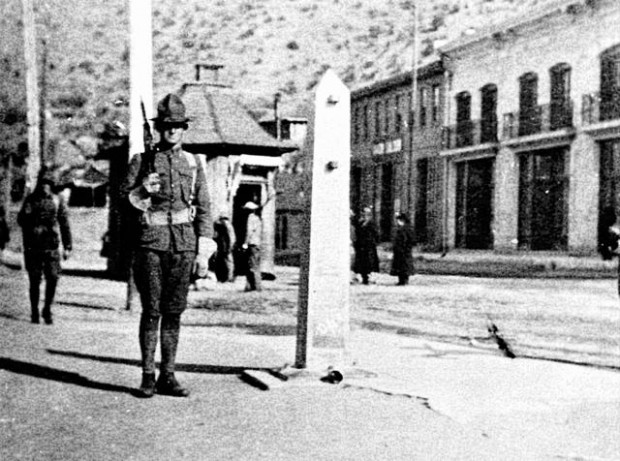
People from both towns of Nogales rushed to the border. American soldiers aimed their rifles. Mexican residents drew weapons.
Most Nogales residents hid as shots rang down from the hills and along the gullies that ripple through both towns.
When the shooting ceased on Aug. 27, 1918, more than 30 people, including the Mexican side's mayor, civilians and several U.S. soldiers, lay fatally shot on both sides of the line.
People are also reading…
At the end of the day cooler heads prevailed, calm came to the towns and the incident disappeared into historical obscurity.
Decades later, this World I-era incident puzzled Carlos Francisco Parra, a 20-year-old University of Arizona student and native of Nogales. While he had heard pieces of the story from his grandparents, la batalla de Ambos Nogales, as it is known in Spanish, had eluded popular history.
So when Parra, a bilingual education major, was accepted earlier this year into a UA summer research program, he knew what his topic would be.
In conducting his research, Parra found that the battle resulted in more than deaths.
As a fellow for the McNair Achievement Program, Parra has made several presentations of his research.
Earlier this year he spoke at a California conference attended by several hundred McNair fellows from across the country. The scholars' program is named after Ronald Erwin McNair, one of seven people who died Jan. 28, 1986, while aboard the space shuttle Challenger when it exploded shortly after launch from the Kennedy Space Center.
Parra also presented his research last week on the UA campus in the César E. Chávez Building, in an event sponsored by the office of Chicano/Hispano Student Affairs.
The presentations are part of the McNair training for its budding scholars, like Parra, a junior, who plans to enter graduate school after a few years teaching in the classroom.
What is unique about Parra was his decision to research local history. He didn't look to Europe, Latin America or Asia. He picked a somewhat obscure topic, which in fact was a seminal event in Southern Arizona, one that would immediately change the face of the border.
"Carlos is doing original research like a beginning Ph.D. student," said Maria Teresa Velez, director of the McNair program.
Parra said he finds history intriguing because it's an ongoing story, with fascinating characters and unpredictable storylines.
"It's like a telenovela," Parra said, referring to the Spanish-language television soaps.
When it came time to pick a research topic, Parra recalled that in addition to his family's recounting of the daylong battle, a Nogales High School teacher had made reference to it also.
The teacher, Ricardo Ojeda, piqued Parra's intellectual curiosity when he talked about the violence, its cause and consequences.
"He really opened my eyes and that of other students about the history of Nogales," Parra said.
Parra spent the summer poring over aging pages of the defunct Nogales Daily Herald, which documented the 90-year-old incident. He also read oral histories of now-deceased eyewitnesses, whose accounts are preserved in the Pimería Alta Historical Society Museum in Nogales. And he read descriptions from the Sonora perspective as well as U.S. Army battle accounts and investigations.
It's all there, but all but ignored.
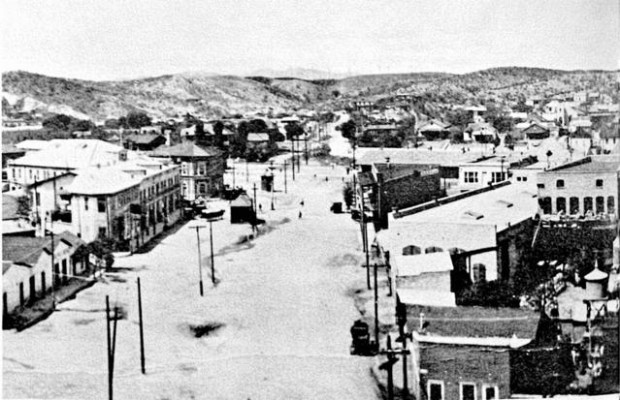
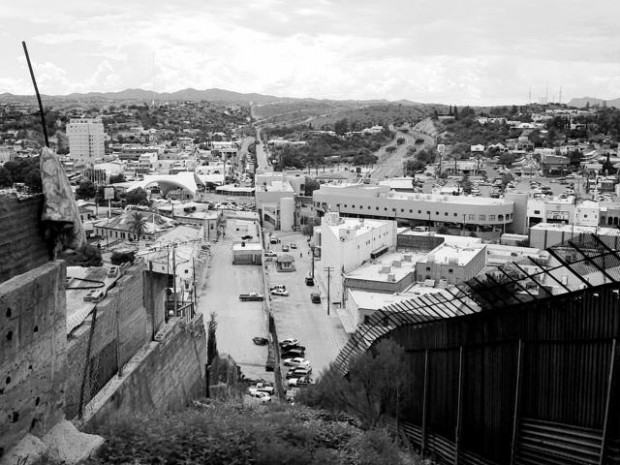
Parra said he learned that in the aftermath of the battle, the face of the border changed forever. Ambos Nogales, which shared common history, family ties and geography, was physically separated.
The first fence was put up, shadowing the concrete monuments that up until then delineated the border.
The battle of Nogales may usually be treated as a footnote in Southern Arizona history, but for the future historian it represents more.
Said Parra: "I have a personal stake in this."
Neto's Tucson
Ernesto
Portillo jr.
"He (Ricardo Ojeda, Nogales High School teacher) really opened my eyes and that of other students about the history of Nogales."
Carlos Parra, University of Arizona student


 Faculty concerned about changes to U of A admissions policy


