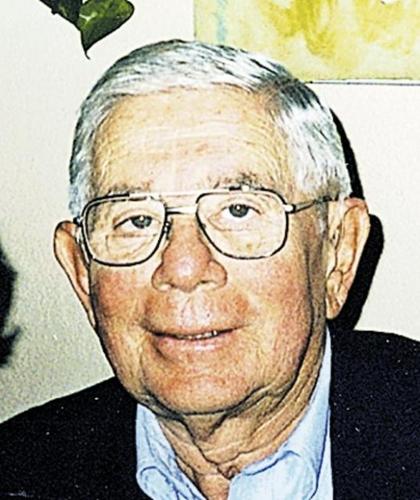
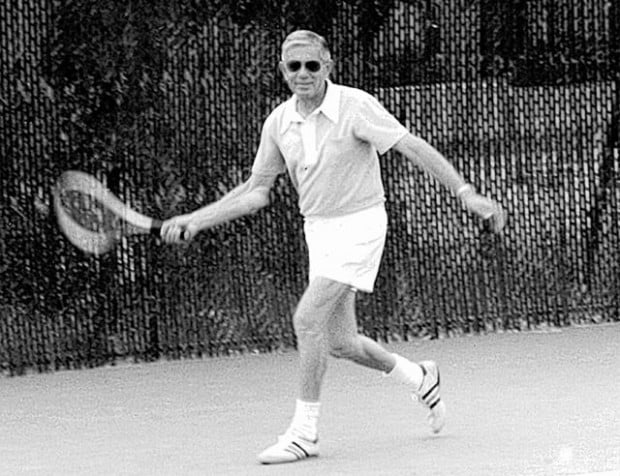
Joseph Tofel's entrepreneurial success came from thinking outside the box and inside the court.
Decades before the development of big-box specialty stores, Tofel started a one-stop hardware and housewares store and an arts and crafts supply shop.
He was ahead of the trend when he put a drive-through in his laundry and dry-cleaning shop.
And his enjoyment of tennis prompted him to build the family-oriented Tucson Racquet & Fitness Club in the 1960s, luring world-class professional tennis tournaments to Tucson.
Not all his ideas were winners. He never could sell North Oracle Road residents on the merits of opening a teen nightclub in their neighborhood.
And a hot spot he opened on East 22nd Street for patrons of drinking age had its share of troubles.
People are also reading…
But, overall, Tofel was a self-made success.
"He taught me a lot about business and managing people," said one of his three children, Steven, who runs Tofel Construction with his twin, Richard. "Probably the biggest thing he taught me is to think creatively."
Family and friends, no doubt, will compare notes on Joe Tofel's business acumen Sunday, when they gather at the Tofel home for a private celebration of his life. Tofel died April 4 as a result of a heart ailment. He was 89.
Tofel was born in Plainfield, N.J. When he was 10, he and his mother moved to Poughkeepsie, N.Y. After graduating from high school, Tofel left home and got his first job at a variety store. He started as a stock clerk in the basement and within two years was managing the place, Steven Tofel said.
Using the business knowledge he acquired at the store, he opened his own dress company while still in his 20s. By the time he moved to Tucson in 1950 following a vacation in Arizona, he had started a family.
Tofel's first business in the Old Pueblo was The Wash Well Laundry and Dry Cleaning, on the corner of North Campbell Avenue and East Grant Road, where a Walgreens drugstore is today.
The launderette was so successful, Tofel soon moved to a larger location on East Speedway. That's where "he decided to take it to the next level," his son said, by adding a drive-through.
"It was the first drive-through laundry and dry cleaning (in Tucson), and this was in competition with typical companies that picked up and dropped off laundry," Steven Tofel said. Drop-off service allowed The Wash Well to offer one-day service at lower prices.
His next venture was Handy Andy, which sold lumber, hardware, housewares and gifts — a precursor to today's Home Depot and Lowe's megastores.
After he sold the hardware business, he and his second wife, Marian, opened The Copy Cat, an arts and crafts retail shop that offered in-store classes, a forerunner of the Michaels-type chain stores.
"He had the ability, in business, to see the end in the beginning. If you have that vision, you're an entrepreneur. If you don't, you work for somebody else," Steven Tofel said.
Mercy Castro Rhodes has known the Tofel family since she was a teenager. During her sophomore year at Tucson High School, her mother, Maria Montaño, took a job with the family.
They lived on the premises, where Montaño, a single mother, cooked and cleaned.
"I was very fortunate to have such a beautiful home to live in and a real family with a dad there," Castro Rhodes said. "Joe Tofel was a father figure to me."
Tofel accompanied teenage Mercy to traffic court when she got a ticket. He took her Downtown to register to vote. He gave her away at her wedding, which Tofel hosted in the garden of his home.
And he offered to fund her education at the University of Arizona if the scholarships, grants and loans she needed didn't come through.
"He was a man who did not go to college but really knew the value of college," said Castro Rhodes, who earned bachelor's and master's degrees in education and will retire this year after 35 years of teaching.
"This is a person who was willing to give us opportunities and open doors for people so they would become good citizens."
The one thing Tofel couldn't give Castro Rhodes was a decent tennis swing.
"He told me, when he watched me play tennis, that I needed to take tennis pills. Tennis was not my thing," she said.
She did enjoy meeting the tennis greats and Hollywood celebrities who visited the Tofel home during the many tournaments hosted by the Tucson Racquet Club, she said.
It was in the 1950s that a small group of businessmen, Tofel included, decided to build a tennis club on leased land across from the old El Conquistador Hotel, which stood where El Con Mall now sits, on East Broadway.
The tennis courts were in what is now the northwest parking lot, Steven Tofel said.
To finance the project, the businessmen sold memberships that would make the buyers part-owners in the club.
Though the club was successful, at the end of its 10-year lease, the property owners decided to build the mall instead of renewing the Racquet Club's lease.
Tofel was game to rebuild in a new location, but his business partners were reluctant, so in 1968, Tofel launched the venture himself.
He built the new club on the bank of the Rillito River on North Country Club Road, a location it still occupies.
Within a few years, the club had expanded to 34 courts and was a full-fledged tennis resort.
In a 1973 Arizona Daily Star article, Joe Tofel said it was the first tennis ranch in Arizona and, when completed, would be "the largest tennis complex in the world."
For a few years, the club was the official practice venue for the University of Arizona tennis team, and it continues to host community and regional tennis tourneys for juniors and adults.
Professional players were drawn to the club, too.
Under Tofel's oversight, the American Airlines competition — the first big-money tourney in professional tennis — came to the Racquet Club, along with several Davis Cup events, the L'eggs women's tennis event, the Avon Futures tournament and other feeder competitions on the Virginia Slims — and other — circuits, said Racquet Club tennis pro Gary Engelbrecht, whom Tofel hired 30 years ago.
All the top names in tennis in the 1960s, '70s and '80s played at the Racquet Club, including Arthur Ashe, Bjorn Borg, Billie Jean King, Bobby Riggs, John Newcombe, Chris Evert, Martina Navratilova, Fred Stolle and Ricardo "Pancho" Gonzáles.
"Joe was a great businessman and, in particular, he had a lot of insight and foresight into the tennis business and what it was going to grow into," Engelbrecht said.
"He was on the leading edge of the tennis revolution in this country."
Life Stories
This feature chronicles the lives of recently deceased Tucsonans. Some were well-known across the community. Others had an impact on a smaller sphere of friends, family and acquaintances. Many of these people led interesting — and sometimes extraordinary — lives with little or no fanfare. Now you'll hear their stories. Past "Life Stories" are online at go.azstarnet. com/lifestories.

 Lake Mead's drops raise prospect of unaffordable Hoover Dam electricity